Fresh spring water flow

175 results
Illustrative onsen mood image
Nagano · Nozawa OnsenTattoos: Allowed

O-yu (Nozawa outer bath)

The centerpiece of Nozawa's 13 public baths, a traditional bathhouse in the middle of the village. Local 'yunakama' associations have cleaned it daily since the Edo period; payment is a donation in the box at the door. Two pools, hot and 'mild' — though even the mild one exceeds 42°C. Adding cold water is bad manners: rinse first, then keep soaks short. No soap or shampoo.

Public bathhouse (sento)Natural hot springDay use Donation / free
Illustrative onsen mood image
Kumamoto · Kurokawa OnsenTattoos: Ask ahead

Kurokawa Onsen Nyuto Tegata (bath-hopping pass)

One cedar 'nyuto tegata' pass (¥1,500) admits you to any three of the rotenburo at Kurokawa's 26-odd ryokan. Valid for six months, and one of the three stickers can be spent on food or souvenirs instead. Most inns accept bathers roughly 8:30–21:00, but hours vary and some close for cleaning or when full. Buy the pass at any ryokan or the association office 'Kaze no Ya'.

Onsen townDay-trip onsenDay use ¥1,500
Illustrative onsen mood image
Okayama · Yubara OnsenTattoos: Ask ahead

Yubara Onsen Sunayu

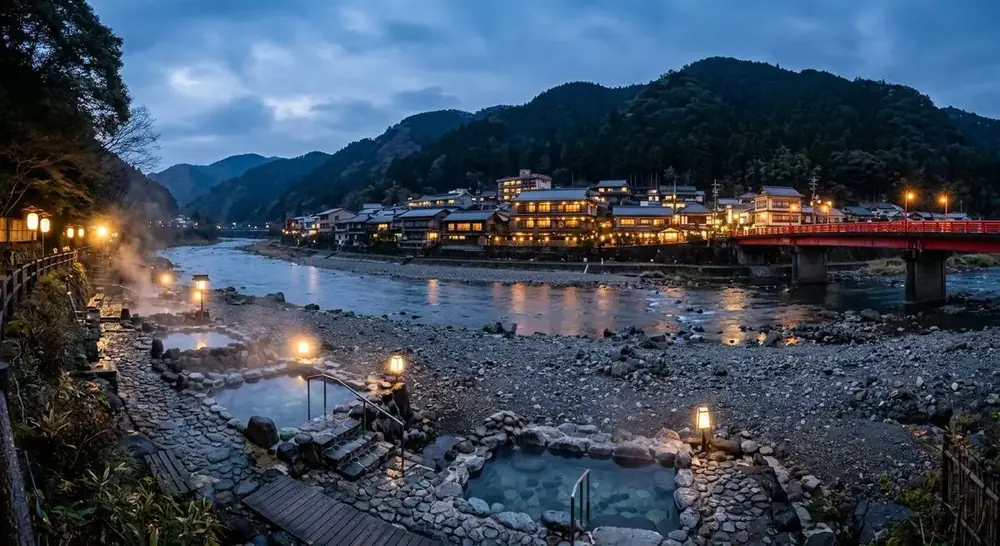
A natural open-air bath on the Asahi River gravel bed right below Yubara Dam, where water bubbles up through the riverbed itself — ranked the 'western grand champion' of Japan's rotenburo. Three pools at different temperatures; mixed, free and open 24 hours. Only a simple changing hut, so women are advised to wear a bathing garment (sold and rented in town). Closed Wednesday mornings for cleaning. Photography strictly forbidden.

Day-trip onsenRemote onsenDay use Donation / free
Illustrative onsen mood image
Fukuoka · Futsukaichi OnsenTattoos: Ask ahead

Futsukaichi Onsen Hakatayu

Thirty minutes by train from Fukuoka, next to Dazaifu, this communal bath belongs to Futsukaichi Onsen, a spring with 1,300 years of history. A single tub in a wooden building, but 100% free-flowing alkaline water leaves skin slick and smooth, and locals keep coming. ¥350 weekdays, ¥450 weekends. Upstairs rest room, plus onsen coffee and hot-spring eggs. Increasingly paired with a visit to Dazaifu Tenmangu.

Day-trip onsenPublic bathhouse (sento)Day use ¥350
Illustrative onsen mood image
Iwate · Hanamaki OnsenTattoos: Ask ahead

Osawa Onsen Jisuibu Tojiya

A wooden toji (therapeutic stay) inn over 200 years old on the Toyosawa River in the Hanamaki-Minami onsen area, once frequented by poet Kenji Miyazawa. Its signature is 'Osawa-no-yu', a mixed open-air bath jutting over the river, with women-only hours. Day bathing from 7 am; ¥700 covers three baths. Many linger for lunch and sake at the 'Yahagi' dining room. Free shuttle from Hanamaki Station.

Day-trip onsenOnsen ryokanDay use ¥700
Illustrative onsen mood image
Nara · Totsukawa OnsenTattoos: Ask ahead

Totsukawa Onsen Iori-no-yu

At the southern tip of Nara, directly opposite the Totsukawa Onsen bus center where Japan's longest local bus route (Yagi–Shingu) stops. A small all-timber bathhouse looking down on the Futatsuno dam lake. The whole village has pledged 'free-flowing spring water only', so nothing is recirculated. Free foot bath, hand bath and drinking fountain. Combine with the Kumano Kodo and Tanize suspension bridge.

Day-trip onsenPublic bathhouse (sento)Day use ¥600
Illustrative onsen mood image
Yamaguchi · Nagato-Yumoto OnsenTattoos: Ask ahead

Nagato-Yumoto Onsen Onto

The source bath of Yamaguchi's oldest hot spring, opened some 600 years ago. Local volunteers rebuilt the aging public bath in 2020; the bathroom sits directly on the spring, so you stand chest-deep in a 1-m pool watching water seep from the bedrock. Around 39°C — made for long soaks. The riverside lounge doubles as a café open to non-bathers. Pair with a stroll through the town redeveloped around Hoshino Resorts' KAI Nagato.

Day-trip onsenPublic bathhouse (sento)Day use ¥990
Illustrative onsen mood image
Fukuoka · Harazuru OnsenTattoos: Ask ahead

Harazuru Onsen Kosen

An hour by car from Fukuoka city, a day-bathing facility in Harazuru Onsen, where ryokan line the Chikugo River. The water is both alkaline and sulfurous — a 'double beauty bath' — for ¥600, 10:00–19:00. Day packages with a rest room are also offered. Combine with summer cormorant fishing on the river or the triple waterwheels of Asakura in spring. Registered with the Fukuoka onsen association. Closed Wednesdays.

Day-trip onsenNatural hot springDay use ¥600
Illustrative onsen mood image
Fukuoka · Fukuoka CityTattoos: Not allowed

Minato Onsen Namiha-no-yu

A natural onsen inside Bayside Place Hakata at the port, 15 minutes by bus from Hakata Station. Chloride 'heat water' gushes at 400 litres a minute from 800 m down, filling a free-flowing lukewarm pool and a hot outdoor bath. Sauna, seven stone-sauna rooms and private baths (¥3,900 for 90 min, up to four people). It shares the site with the ferry terminal for Shikanoshima and Nokonoshima. ¥1,100 weekdays, open until midnight.

Day-trip onsenSuper sentoDay use ¥1,100
Illustrative onsen mood image
Shimane · Yunotsu OnsenTattoos: Ask ahead

Yunotsu Onsen Yakushi-yu

The communal bath of Yunotsu, once the shipping port for the World Heritage Iwami Ginzan silver mine. Rated a perfect 'all fives' by the Japan Spa Association, it is 100% free-flowing, and iron-rich mineral deposits coat the tub in thick brown crusts. Next door is 'Shin-yu', a Western-style wooden building from 1919 whose retro café and rooftop terrace are open to bathers. ¥600. The whole street is a preserved historic district.

Day-trip onsenPublic bathhouse (sento)Day use ¥600
Illustrative onsen mood image
Fukushima · Iizaka OnsenTattoos: Ask ahead

Iizaka Onsen Sabako-yu

Twenty-five minutes by local train from Fukushima, the emblematic communal bath of Iizaka Onsen, where the poet Basho is said to have bathed. Rebuilt in 1993 as a faithful copy of one of Japan's oldest wooden bathhouses, its granite tub runs with free-flowing spring water above 45°C. Locals don't cool it with tap water; visitors get guidance. ¥400, from 6 am. No soap or shampoo. Start here for a crawl of the town's nine public baths.

Day-trip onsenPublic bathhouse (sento)Day use ¥400
Illustrative onsen mood image
Iwate · Hanamaki OnsenTattoos: Ask ahead

Namari Onsen Fujisan Ryokan

A wooden ryokan founded in 1841 on the Toyosawa River at the far end of the Hanamaki onsen villages. Its signature is 'Hakuen-no-yu', a self-welling rock pool about 1.25 m deep that you stand in — billed as Japan's deepest rock bath. Five springs feed four bathhouses, all 100% free-flowing. Day use ¥800, 10:00–21:00. Hakuen-no-yu is mixed bathing with women-only hours. Free shuttle from Hanamaki Station by reservation.

Day-trip onsenOnsen ryokanDay use ¥800
Illustrative onsen mood image
Nara · Totsukawa OnsenTattoos: Ask ahead

Totsukawa Onsen Ikoi-no-yu

A village-run public bath on the shore of Futatsuno Dam lake in Totsukawa, the village that declared all its baths 100% free-flowing. Attached to a seniors' centre, it's plain but pours 70°C bicarbonate-chloride water straight in with no recirculation. Handy on Tuesdays when nearby Iori-no-yu is closed. ¥600, 9:00–21:00, closed only Jan 1–2. Five minutes' walk from Totsukawa-Onsen bus stop.

Day-trip onsenPublic bathhouse (sento)Day use ¥600
Illustrative onsen mood image
Mie · Sakakibara OnsenTattoos: Ask ahead

Yumoto Sakakibarakan — Yu-no-sho Day Spa

Sakakibara Onsen was praised in the 11th-century Pillow Book as one of Japan's three finest baths. Tucked in the hills of Tsu, it flourished as a purification stop for pilgrims to Ise Shrine and is known as a 'beauty bath'. The day-use wing of this old ryokan lets you feel the silky pH 9.6 house spring unheated in the dedicated 'gensen' tub. ¥1,000 (face towel included, 2-hour limit). Shuttle from Sakakibara-Onsenguchi Station.

Day-trip onsenOnsen ryokanDay use ¥1,000
Illustrative onsen mood image
Kagawa · Busshozan Onsen (Takamatsu)Tattoos: Ask ahead

Busshozan Onsen Tenpyo-yu

Fifteen minutes by Kotoden train from central Takamatsu, an architect-designed modern wooden bathhouse. Every tub is free-flowing, and the lukewarm bicarbonate water leaves skin silky. Inside are a second-hand book corner and veranda-like lounges where people linger reading after their soak. ¥700; 11:00–24:00 weekdays, from 9:00 on weekends and holidays. Ten minutes' walk from Busshozan Station.

Day-trip onsenNatural hot springDay use ¥700
Illustrative onsen mood image
Kōchi · Tosa & UsaTattoos: Ask ahead

Tosaryu Onsen Sanyoso

Forty minutes by car from Kochi city, a hot-spring inn beside Shoryuji, temple 36 of the Shikoku pilgrimage. It claims Kochi's only high-concentration, high-temperature spring; the golden chloride water is nicknamed 'the heat bath' for how long it keeps you warm. The rotenburo looks over Usa Bay and the Pacific, and there's a free seaside footbath. Day use in two sessions — 5:30–9:00 and 14:00–21:00 — ¥750 on weekdays.

Day-trip onsenOnsen ryokanDay use ¥750
Illustrative onsen mood image
Chiba · Kameyama Onsen (Kimitsu)Tattoos: Ask ahead

Kameyama Onsen Hotel

About 70 minutes from central Tokyo via the Aqua-Line, a hot-spring inn founded in 1950 on the shore of Lake Kameyama in the Boso hills. Its chocolate-brown 'kuroyu' bicarbonate water — billed as Boso's finest beauty bath — flows freely into a large bath with lake and forest views. Day use 11:30–18:00, ¥1,000 on weekdays; no day bathing Thursdays and Fridays. In autumn pair it with a foliage cruise on the lake.

Day-trip onsenOnsen ryokanDay use ¥1,000
Illustrative onsen mood image
Tochigi · Kinugawa OnsenTattoos: Ask ahead

Kinugawa Onsen Niouson Plaza (day bathing)

A small riverside hotel on the south side of Kinugawa Onsen, five minutes from Tobu World Square Station. While the big hotels stop day bathing around 15:00, this one welcomes walk-ins 9:00–21:00 for ¥700. Its own alkaline sulfur spring (43.6 °C) flows 100% free into a quirky set of baths: a rotenburo made from an actual Kinugawa river-cruise boat, a rock rotenburo, indoor baths and a swimsuit mixed bath. The slightly cool, silky water is highly rated by onsen fans.

Day-trip onsenOnsen ryokanDay use ¥700
Illustrative onsen mood image
Miyagi · Akiu OnsenTattoos: Ask ahead

Akiu Onsen Public Bath

The only communal bath in Akiu Onsen, Sendai's classic hot-spring retreat. Among upscale ryokan charging ¥1,000-plus for day use, this humble bathhouse offers free-flowing chloride spring water for ¥300. Near the Yakushi-do temple at the source, it has a single tub and a mostly local crowd; soap is sold, not provided, and a sign asks for 40-minute stays. About 55 minutes by bus from Sendai Station, right by the Yumoto stop.

Day-trip onsenPublic bathhouse (sento)Day use ¥300
Illustrative onsen mood image
Nagasaki · Obama Onsen (Nagasaki)Tattoos: Ask ahead

Obama Onsen Wakihama Public Bath (Otasshan-yu)

A communal bath in Obama Onsen on Tachibana Bay, whose ~100°C springs release more heat than any in Japan. The single-storey wooden building from 1937 feels like a museum of Showa-era life and is a designated prefectural townscape asset. Pay at the old-style counter, then choose between the hot and very hot tubs of free-flowing chloride water. Open from 6 am; part of the Kyushu 88 Onsen trail. About an hour from Nagasaki city, on the way back from Unzen.

Day-trip onsenPublic bathhouse (sento)Day use ¥400
Illustrative onsen mood image
Hiroshima · Yuki OnsenTattoos: Ask ahead

Yuki Onsen Yuki Lodge

An hour by car from central Hiroshima, a city-run lodge at Yuki Onsen, 'Hiroshima's back parlour'. The rotenburo above the clear Minochi River and the timber-lined main bath are all free-flowing, with a rare mildly radioactive (radon) spring. ¥750 per visit or ¥1,000 for an all-day pass. Open till 21:00 in summer, 20:00 in winter. Direct buses run from Hiroshima city — an easy hot-spring break between Miyajima and the Peace Park.

Day-trip onsenOnsen ryokanDay use ¥750
Illustrative onsen mood image
Aomori · Tsuta Onsen & OiraseTattoos: Ask ahead

Tsuta Onsen Ryokan

A lone inn in a primeval beech forest on the southern flank of Mt. Hakkoda. Spring water wells up directly through the gaps in the hiba-cypress boards on the tub floor — 'free-welling', so you bathe in water that has never touched air, a rarity even in Japan. The all-hiba 'Kyuan-no-yu' bathhouse from 1918 is magnificent. Day use 10:00–15:00, ¥1,000; may close early when busy. Combine with the hour-long trail around Tsuta-numa pond, famous for autumn colour. Closed in winter.

Day-trip onsenOnsen ryokanDay use ¥1,000
Illustrative onsen mood image
Fukushima · Takayu OnsenTattoos: Ask ahead

Takayu Onsen Attaka-yu

Thirty minutes by car from Fukushima city, the communal bath of Takayu Onsen at 750 m on Mt. Azuma. Every bath is open-air, filled with milky-white sulfur water that is neither diluted nor heated. There's a timber men's bath, a rock women's bath and a reservable private rotenburo. A ¥500 gateway to a spa town that has kept its water free-flowing for 400 years. Closed Thursdays; one-hour limit. At the foot of the Bandai-Azuma Skyline — ideal with an autumn drive.

Day-trip onsenPublic bathhouse (sento)Day use ¥500
Illustrative onsen mood image
Iwate · Oshuku & Tsunagi OnsenTattoos: Ask ahead

Oshuku Onsen Hotel Uguisu

Fifty minutes by bus from Morioka, a family-run hotel in Oshuku Onsen, a 450-year-old spa where legend says a bush warbler healed its wounds. The area is rich in hot water, and the clear alkaline spring flows freely into the indoor and open-air baths — day use just ¥600, 11:00–19:00, half price on the 26th of each month. Easy to add after Koiwai Farm, Shizukuishi ski slopes or Morioka sightseeing.

Day-trip onsenOnsen ryokanDay use ¥600
Illustrative onsen mood image
Tottori · Iwai OnsenTattoos: Ask ahead

Iwai Yukamuri Onsen Public Bath

Twenty minutes by car from the Tottori Sand Dunes, the communal bath of Iwai Onsen, one of San'in's oldest springs at 1,300 years. It preserves 'yukamuri', a quirky custom of singing while ladling water over a towel on your head. The 47.6°C source in a corner of the car park flows in 100% untreated. ¥380, open 6:00–22:00. A humble soak to pair with the Uradome coast or the dunes.

Day-trip onsenPublic bathhouse (sento)Day use ¥380
Illustrative onsen mood image
Miyazaki · Kyomachi Onsen (Ebino)Tattoos: Ask ahead

Kyomachi Onsen Gyokusenkan

A ryokan founded in the early Taishō era, five minutes on foot from Kyomachi-Onsen Station at the foot of the Ebino plateau. Every tub is free-flowing simple spring water, and a day soak costs just ¥300. Highlights are a cave-style private bath (¥500/hour) and an atmospheric open-air bath that alternates men/women after 18:00. A hidden gem 40 minutes by car from Kagoshima Airport on the way to the Kirishima range.

Day-trip onsenOnsen ryokanDay use ¥300
Illustrative onsen mood image
Nara · Totsukawa OnsenTattoos: Ask ahead

Tōsenji Onsen Izumi-yu (Totsukawa)

The village-run public bath of Tōsenji Onsen, the oldest spring in Totsukawa. pH 9.1 alkaline sulfur water flows fresh from the source even through the taps, leaving a faint sulfur scent and slippery skin. Just a stone open-air bath facing the gorge and an indoor tub—simple and ¥600. Handy on Route 168 en route to the Tanize suspension bridge or Kumano Hongū Taisha.

Day-trip onsenPublic bathhouse (sento)Day use ¥600
Illustrative onsen mood image
Toyama · Uozu / Kintarō OnsenTattoos: Ask ahead

Kintarō Onsen Karuna no Yakata

Ten minutes by car from Kurobe-Unazuki-Onsen Station on the Hokuriku Shinkansen, a large day-spa wing of the lone inn Kintarō Onsen in Uozu. Its sulfur-rich sodium-calcium chloride water is among the most concentrated in Hokuriku, gushing at 1,800 litres a minute. A giant rock bath built from Tateyama boulders, open-air baths, a carbonated bath, rock-bath rooms and four private baths; open daily 8:30–23:30. Admission ¥1,100.

Day-trip onsenSuper sentoDay use ¥1,100
Illustrative onsen mood image
Akita · Tamagawa OnsenTattoos: Ask ahead

Shin-Tamagawa Onsen

A modern cure-bath inn fed by Tamagawa Onsen, Japan's most acidic spring at pH 1.2. The hiba-cypress bathhouse lines up 15 tubs — 100% source, 50% diluted, mildly acidic and more — so you can choose by condition. Day use 10:00–15:00, ¥1,000 (revised April 2026). An indoor stone-slab bath (¥800) is also available, and unlike the original Tamagawa it stays open all winter for snowbound soaking. About 70 min by bus from Tazawako Station.

Day-trip onsenOnsen ryokanDay use ¥1,000
Illustrative onsen mood image
Niigata · Matsunoyama OnsenTattoos: Ask ahead

Matsunoyama Onsen Center Taka-no-yu

The public day bath at the heart of Matsunoyama, counted with Arima and Kusatsu among Japan's 'three great medicinal springs'. The water is fossil seawater some 12 million years old, heated geothermally — salty, slightly oily and hot enough to warm you to the core. Indoor bath plus a small open-air tub, ¥600 (¥500 after 17:00). In this heavy-snow region it becomes a snow bath in winter. Used by inn guests for bath-hopping too, and close to the site of the famous 'groom-tossing' festival.

Day-trip onsenNatural hot springDay use ¥600
Illustrative onsen mood image
Tochigi · Nasu OnsenTattoos: Ask ahead

Ōmaru Onsen Ryokan, Oku-Nasu (River Bath)

A lone inn at 1,300 m, the last stop in the Nasu hot-spring range. Spring water gushes out behind the building in such volume that it forms a river, dammed into the vast outdoor 'Kawa-no-yu' — nothing else like it in Japan. Mixed bathing since the inn's founding, but bathing wear is included so beginners can relax. Day use is limited to three hours (reception 11:30–14:30), ¥1,300 with face towel and bathing wear. The outdoor bath closes in bad weather or for cleaning, so phone ahead. Autumn colour and snow seasons are the draw.

Day-trip onsenOnsen ryokanDay use ¥1,300
Illustrative onsen mood image
Miyagi · Tōgatta OnsenTattoos: Ask ahead

Tōgatta Onsen Kami-no-yu Communal Bath

The signature communal bath of Tōgatta, gateway to the Zao range on the Miyagi side. A wooden bathhouse with nothing but two indoor tubs — a 'hot' one around 44°C and a 'mild' one at 42°C — fed free-flowing by a 400-year-old source. The sodium-calcium sulfate-chloride water is reputed for cuts and skin complaints and keeps you warm long afterwards. ¥400, 9:00–20:30. The source and Tōgatta Shrine sit behind it and a free footbath in front; combine with a stroll through the kokeshi-doll village.

Day-trip onsenPublic bathhouse (sento)Day use ¥400
Illustrative onsen mood image
Aomori · Furōfushi Onsen, FukauraTattoos: Ask ahead

Koganezaki Furōfushi Onsen

The highlight of any Gonō Line journey: a lone inn famous nationwide for its 'seaside open-air bath' set right at the water's edge of the Sea of Japan. Iron-rich chloride water, rust-red and cloudy, seems to merge with sea and sky. Day use is ¥600 — the seaside bath 8:00–16:00 (last entry 15:30), the main-building indoor 'Kogane-no-yu' 8:00–20:00. The mixed outdoor bath allows bathing wear (rental fee); a women-only outdoor bath sits alongside. Sunset soaks are for overnight guests only, so stay if you want one of Japan's 100 best sunsets from the tub.

Day-trip onsenOnsen ryokanDay use ¥600
Illustrative onsen mood image
Wakayama · Kumano Hongu Onsen (Yunomine & Kawayu)Tattoos: Ask ahead

Yunomine Onsen Tsuboyu

The only hot spring inscribed as a World Heritage Site that you can actually bathe in, listed together with the Kumano Kodo pilgrimage routes. A tiny hut over the stream in Yunomine — said to be Japan's oldest onsen at 1,800 years — shelters a tub hollowed from natural rock that fits two adults. The sulfurous water is said to change colour seven times a day and served pilgrims for ritual purification. Private 30-minute slots, ¥800, sign up at the public bathhouse (6:00–21:00). Waits of several hours are common on holidays; boil onsen eggs in the hot-spring trough while you wait.

Day-trip onsenNatural hot springDay use ¥800
Illustrative onsen mood image
Wakayama · Kumano Hongu Onsen (Yunomine & Kawayu)Tattoos: Ask ahead

Kawayu Onsen Sennin-buro (winter only)

At Kawayu, where 73°C spring water bubbles up through the bed of the Ōtō River, a giant outdoor bath is created every December to February by damming the river. Roughly 50 by 15 metres — big enough for 'a thousand people', as the name says — it's tempered to perfection by the river's cold flow. Free (donation box), 6:30–22:00, swimwear required, open to everyone. Bathing is suspended in bad weather or high water and opening dates shift from year to year. In summer you can dig your own pool in the gravel. Combine with Yunomine and Watarase for the three Hongu baths.

Day-trip onsenNatural hot springDay use Donation / free
Illustrative onsen mood image
Kagoshima · SakurajimaTattoos: Ask ahead

Sakurajima Magma Onsen (Rainbow Sakurajima)

A day bath inside a public inn 15 minutes by ferry from Kagoshima port and 8 minutes' walk from Sakurajima port. Water rises at 51°C from a magma layer 1,000 m below, clouded rust-brown with iron, and flows freely through a bath hall looking across Kinkō Bay to the city. ¥460, 11:00–21:00 — a bargain after touring the volcano or the lava seaside trail. The free 100-metre Lava Nagisa Park footbath is within walking distance. Operations may be affected by volcanic alert levels.

Day-trip onsenOnsen ryokanDay use ¥460
Illustrative onsen mood image
Fukushima · Aizu Higashiyama OnsenTattoos: Ask ahead

Aizu Higashiyama Onsen Harataki

An inn with its own spring midway along the Yukawa gorge, where the ryokan of Higashiyama Onsen line the river 10 minutes by car from central Aizu-Wakamatsu. Day visitors get the riverside open-air bath facing a waterfall and the main bath for ¥1,100 including a small towel, 13:00–20:00. Private panoramic baths (¥1,650) and lunch packages are also offered. With 1,300 years of history, Higashiyama was the retreat of artists such as Takehisa Yumeji and poet Yosano Akiko — a natural finish to a day at Tsuruga Castle and the Byakkotai sites on Iimoriyama. Reception hours may shorten when busy.

Day-trip onsenOnsen ryokanDay use ¥1,100
Illustrative onsen mood image
Shimane · Arifuku OnsenTattoos: Ask ahead

Arifuku Onsen Gozen-yu

The landmark of Arifuku, a stair-stepped hamlet of wooden inns tucked into the San'in hills. A 1928 reinforced-concrete bathhouse with Western arched windows, it pours colourless alkaline simple-spring water undiluted into the tub — slippery 'beauty water'. ¥400 with soap and shampoo, open 7:00–22:00 for early soaks. A family bath rents for ¥1,200 an hour, and the tatami rest room upstairs displays pre-war photographs. Cars can't enter the sloping village, which also has the Satsuki-yu and Yayoi-yu public baths for a three-bath circuit.

Day-trip onsenPublic bathhouse (sento)Day use ¥400
Illustrative onsen mood image
Saitama · KawagoeTattoos: Not allowed

Kuranoyu Koedo Hatsukari Onsen Kawagoe

A super-sento 15 minutes by car from Kawagoe's 'Little Edo' warehouse streets, where brown natural spring water pumped from 1,200 m flows freely through both indoor and outdoor tubs. Nine baths per side plus two saunas, a carbonated bath and the signature 'Zabūn' water feature; the Zabūn and Sarasara wings swap between men and women on odd and even days. ¥900 weekdays, ¥1,000 weekends, ¥100 off 8–9 am and after 22:00. Open 8:00–25:00 every day with 200 parking spaces — a proper onsen near Tokyo to end a Kawagoe day.

Day-trip onsenSuper sentoDay use ¥900
Illustrative onsen mood image
Miyazaki · Kitago Onsen (Nichinan)Tattoos: Ask ahead

Kitago Onsen Marushinsō

A ryokan in Kitago Onsen, the quiet inland retreat behind the castle town of Obi and the Nichinan coast. Bicarbonate water rising at 51°C from 800 m below lives up to the 'beauty bath' name — skin feels slick, and you can drink it too. The bubble-jet main bath and separate open-air baths are all free-flowing. Day use ¥600 (revised June 2026), 11:00–19:50 (last entry 19:00). The dining room's spiny-lobster set (autumn–winter) is popular; combine with Obi's old town or Udo Shrine. Five minutes by car from JR Kitago Station.

Day-trip onsenOnsen ryokanDay use ¥600
Illustrative onsen mood image
Tottori · Hawai & Tōgō OnsenTattoos: Ask ahead

Hawai Onsen Sennentei

A ryokan built out over Lake Tōgō, known as the 'inn on the lake': lobby and baths are surrounded by water on three sides, and the open-air Kōsuke-yu sits almost level with the surface. Free-flowing simple spring water. Day bathing runs on an irregular basis, roughly 11:00–14:00, ¥1,000 cash only — phone the same day to confirm. Private open-air baths are ¥1,650 per 45 minutes, booked by phone from 9:00 that morning. 18 minutes by bus from Kurayoshi Station to the Hawai Onsen stop. No restaurant inside, so eat in the onsen town or at the Enchōen roadside station.

Day-trip onsenOnsen ryokanDay use ¥1,000
Illustrative onsen mood image
Nagasaki · Shimabara OnsenTattoos: Ask ahead

Shimabara Onsen Yutorogi-no-yu

A municipal day-use onsen entered straight from the Shimabara Ichibangai shopping arcade in this spring-water castle town. Magnesium-sodium bicarbonate water (source 61.8 °C) is used free-flowing — clear, colourless and soft on the skin. The building has a retro Shōwa-era bathhouse feel, with a sauna and tatami rest hall; admission ¥530, or ¥320 for over-70s. Open 10:00–21:00 (last entry 20:30), closed Wednesdays. Within walking distance of Shimabara Castle, the samurai quarter and the carp-stream streets, and a handy stop between Shimabara port and Unzen. Parking free for two hours.

Day-trip onsenPublic bathhouse (sento)Day use ¥530
Illustrative onsen mood image
Ibaraki · Izura Onsen, Kita-IbarakiTattoos: Ask ahead

Izura Kankō Hotel Taikansō (Taikan-no-yu)

A long-established hotel on the cliffs of the Izura coast, the scenic spot beloved of art historian Okakura Tenshin. The main building and the Taikansō annex flank the Rokkakudō pavilion; day bathers use Taikan-no-yu in the annex. The open-air bath, refurbished in 2012, sits right above the Pacific — free-flowing spring water, the horizon and the sound of breaking waves. The indoor hall also looks out to sea through big windows. Day use in two sessions, 11:00–15:00 (last entry 14:30) and 18:00–21:00 (last entry 20:30), ¥1,100. Closure days are irregular, so check the official notice page. Five minutes by car from JR Ōtsukō Station; combine with the Tenshin Memorial Museum and Rokkakudō.

Day-trip onsenOnsen ryokanDay use ¥1,100
Illustrative onsen mood image
Iwate · Sukawa Onsen, Mt KurikomaTattoos: Ask ahead

Sukawa Kōgen Onsen – Dainichi-yu open-air bath

One of Tōhoku's highest hot springs, at 1,126 m on the northern slopes of Mt Kurikoma. Some 6,000 litres a minute flow like a stream; the strongly acidic alum-vitriol water (pH around 2) carries white mineral flakes and tingles on the skin. The famous big open-air Dainichi-yu is an open, rock-backed pool; day use 6:00–21:00 (until 20:00 on Wednesdays), ¥900. The indoor baths and the 'oiran' steam bath run 9:00–16:00. Because of the altitude, the road and the onsen close in winter (early November to early May). About 95 minutes by bus from Ichinoseki Station to the Sukawa Onsen terminus; it is also the Kurikoma trailhead, busiest in autumn colour season (late Sept–early Oct).

Day-trip onsenOnsen ryokanDay use ¥900
Illustrative onsen mood image
Akita · Nyūtō OnsenTattoos: Ask ahead

Nyūtō Onsen Ganiba Onsen

A single inn at the end of the Nyūtō bus line, wrapped in old-growth beech forest and named for the river crabs once abundant in the nearby stream. Unusually for Nyūtō, the water is clear and colourless — a bicarbonate spring with drifting white flakes and a gentle feel. The signature is Karako-no-yu, a mixed open-air pool some 50 m from the building in the woods, magical in snow season; there are also separate indoor wooden and rock baths. Day use 9:00–16:30, ¥800. Covered by the Yumeguri-chō pass (¥2,500, valid one year) for all seven Nyūtō inns — the classic combo is with Tsuru-no-yu and Taenoyu. About 50 minutes by bus from Tazawako Station to the Nyūtō Onsen stop.

Day-trip onsenOnsen ryokanDay use ¥800
Illustrative onsen mood image
Hokkaido · Toyotomi Onsen (far north)Tattoos: Ask ahead

Toyotomi Onsen Fureai Center

The town-run bathhouse at the heart of Toyotomi Onsen, Japan's northernmost hot-spring village, an hour by car from Wakkanai airport. The spring was struck during oil exploration in 1926 and still carries traces of petroleum — a rarity worldwide, with an oily smell and slippery feel. It is famed as a 'miracle bath' that draws people from across Japan seeking relief from atopic dermatitis and psoriasis. Besides the general bath there is a cooler cure bath for long soaks. Admission is a cheap ¥510; open 10:00–21:00 (last entry 20:30), closed every other Thursday. The canteen serves jingisukan lamb and set meals. Fit it into a far-north drive with the Sarobetsu wetlands and views of Mt Rishiri. About 10 minutes by bus from JR Toyotomi Station.

Day-trip onsenPublic bathhouse (sento)Day use ¥510
Illustrative onsen mood image
Kanagawa · Hakone OnsenTattoos: Ask ahead

Tenzan Tōjikyō – Kayoi Tōji Ikkyū

A quiet bath-only annex within the Tenzan Tōjikyō grounds along the Sukumo River, up the valley from Hakone-Yumoto. Where neighbouring 'Higana Tōji Tenzan' is a full-day complex with lounges and dining, Ikkyū has no indoor bath at all — just open-air tubs of wood and stone fed free-flowing by two springs, a sodium-chloride and an alkaline simple spring. Silver-ion sterilisation (no chlorine smell), spare design and a hushed, no-chatter atmosphere keep regulars loyal. ¥1,200; open 11:00–20:00 (until 21:00 weekends and holidays, last entry one hour before), closed Thursdays. On weekdays a ¥300 'hashigo' ticket lets you add Tenzan next door. About 5 minutes from Hakone-Yumoto Station by the inns' shuttle bus or taxi, or a 25-minute walk.

Day-trip onsenNatural hot springDay use ¥1,200
Illustrative onsen mood image
Nagano · Bessho Onsen, UedaTattoos: Ask ahead

Bessho Onsen Ishiyu public bath

One of the three public 'outer baths' of Bessho Onsen near Ueda, the spa village nicknamed 'Kamakura of Shinshū'. Ishiyu is famed as the hidden bath of warrior Sanada Yukimura in Ikenami Shōtarō's novel Sanada Taiheiki; its tub is built around natural bedrock, filled free-flowing with faintly sulphurous, mildly alkaline water. Open 6:30–21:30 (last entry 21:00), closed Tuesdays, a modest ¥300 with free lockable lockers. Pair it with the other two — Ōyu (closed 1st & 3rd Wed) and Daishiyu (closed 1st & 3rd Thu) — plus Kitamuki Kannon temple and the National Treasure octagonal pagoda of Anrakuji, all on foot. Ten minutes' walk from Bessho-Onsen Station on the Ueda Dentetsu line.

Day-trip onsenPublic bathhouse (sento)Day use ¥300
Illustrative onsen mood image
Hyōgo · Yumura Onsen (Shin'onsen)Tattoos: Ask ahead

Yumura Onsen Yakushi-yu

The town-run communal bath at the heart of Yumura Onsen in northern Hyōgo, where the 98 °C 'Arayu' source boils eggs and vegetables for visitors on the banks of the Haruki River. Bicarbonate water flows freely through separate men's and women's main baths, with an open-air tub, sauna, an assisted bath and an upstairs rest room. ¥500 for non-residents; open 9:00–21:00, closed on the 15th of each month. No towels or soap are provided — bring your own or buy at reception. Parking is free for two hours for bathers. About an hour by car from Kinosaki; pairs well with the San'in Kaigan Geopark or Hamasaka's snow crab season (Nov–Mar).

Day-trip onsenPublic bathhouse (sento)Day use ¥500
Illustrative onsen mood image
Kumamoto · Yamaga & Hirayama OnsenTattoos: Ask ahead

Yamaga Onsen Sakura-yu

One of Kyūshū's largest wooden bathhouses, in the centre of the old castle town of Yamaga in northern Kumamoto. Built in the Edo period as a rest house for the Hosokawa lords, its Meiji-era rebuild is attributed to Sakamoto Matahachirō, the master carpenter of Dōgo Onsen Honkan. Faithfully reconstructed in 2012, the curved-gable entrance, dragon transoms and high-ceilinged bath hall feel far grander than the ¥350 admission. The water is a clear, silky alkaline simple spring, with a drinking fountain. Open long hours, 6:00–24:00 (last entry 23:30), closed the 3rd Wednesday. Soap and towels from the vending machine. Combine with the Yachiyoza theatre (Important Cultural Property), the Buzen Kaidō streetscape and the August lantern festival.

Day-trip onsenPublic bathhouse (sento)Day use ¥350
Illustrative onsen mood image
Kumamoto · Yamaga & Hirayama OnsenTattoos: Ask ahead

Hirayama Onsen Motoyu

The communal bath at the centre of Hirayama Onsen, a scatter of quiet inns in the hills ten minutes by car from Yamaga. The 1961 Hirayama Onsen Center was rebuilt in 2016 with an open-air bath added to the indoor one. The water is Hirayama's signature slippery alkaline sulphur spring — called one of Kyūshū's finest skin-beautifying baths — used 100% free-flowing. You can drink it or take some home, and the lobby sells local vegetables and eggs. ¥400; open 6:00–21:30, every day. About 11 minutes by bus from Yamaga bus centre to Hirayama-Onsen-mae, then a minute on foot. Combine with Sakura-yu for a Yamaga bath-hop.

Day-trip onsenPublic bathhouse (sento)Day use ¥400
Illustrative onsen mood image
Gifu · Hida-TakayamaTattoos: Ask ahead

Hida-Takayama Onsen Spa Resort Hidamari-no-yu

Takayama's largest day-use onsen, ten minutes by car from the old town, using free-flowing mildly alkaline water from 1,000 m underground. A 'hot-spring health land' with ten kinds of baths — indoor, open-air, walking bath, electric bath — plus sauna, a cheap restaurant with a hundred Japanese, Western and Chinese dishes, basic lodging from ¥2,500 a night, karaoke and Korean-style body care. Open 7:30–23:00 (last entry 22:30; open-air bath 15:30–22:00), every day; ¥1,150, or ¥750 for the night bath after 21:00. About 10 minutes by car from Takayama Station, with local buses too. Handy for guesthouse stayers with tiny bathrooms, or on the way back from Shirakawa-gō and Okuhida drives.

Day-trip onsenSuper sentoDay use ¥1,150
Illustrative onsen mood image
Gunma · Shima OnsenTattoos: OK if covered

Shima Onsen Sekizenkan – Genroku-no-yu (day use)

Founded in 1691 and regarded as Japan's oldest surviving hot-spring inn building, this Shima Onsen institution in Gunma stands across a red bridge; the main house, said to be one of the models for the bathhouse in Spirited Away, is an Important Cultural Property. The celebrated Genroku-no-yu, built in 1930 in Taishō-romantic style, has five tubs set into a stone floor lit by arched windows, with water welling up from below. Shima's sulphate water is counted among Japan's three great baths for digestive ailments and can be drunk. Day use 10:00–17:30 (last entry 17:00), ¥1,500 with face towel, covering Genroku-no-yu, the mixed rock bath and private baths. Tattoos accepted if covered with stickers. About 40 minutes by bus from Nakanojō Station to the Shima Onsen terminus.

Day-trip onsenOnsen ryokanDay use ¥1,500
Illustrative onsen mood image
Shizuoka · Atami OnsenTattoos: Ask ahead

Izusan Onsen Hama Bathhouse (Hashiriyu)

A neighbourhood-run communal bath at the foot of the stone stairway to Izusan Shrine, north of Atami Station and linked to Minamoto no Yoritomo and Hōjō Masako. The water comes from Hashiriyu, one of Japan's three ancient springs — a cave source where hot water once 'ran' down to the sea — a 71 °C calcium-sodium chloride spring, free-flowing with only water added to cool it. Inside it is pure Shōwa: an attendant's counter and two tubs, one hot, one lukewarm. ¥350; open afternoons only, roughly 14:00–20:00, closed Thursdays. Bring towel and soap. Pair with the free Hashiriyu cave just below and the 837-step climb to Izusan Shrine for a slice of Atami history. About 7 minutes by bus from Atami Station to Aizomebashi.

Day-trip onsenPublic bathhouse (sento)Day use ¥350
Illustrative onsen mood image
Gifu · Okuhida Onsen (Hirayu, Shinhotaka)Tattoos: Ask ahead

Tochio Onsen Kōjin-no-yu riverside open-air bath

An open-air-only public bath on the gravel banks of the Gamata River at Tochio Onsen in the Okuhida valley. The rock-ringed men's and women's pools have no screen on the river side, so the rushing Gamata and the Northern Alps fill the view — starry skies at night, snow scenes in winter, wild Okuhida all year. Free-flowing simple spring water; there are changing huts but no reception — drop a donation (about ¥300) in the wooden box at the entrance. Open 8:00–22:00 (from 12:00 Mon, Wed and Fri for cleaning); no closing days, but suspended when the river is high. Bring a towel. An easy stop between the Shinhotaka Ropeway and Hirayu, or a night soak for anyone staying in Tochio's inns.

Day-trip onsenPublic bathhouse (sento)Day use ¥300
Illustrative onsen mood image
Miyagi · Kamasaki Onsen, ShiroishiTattoos: Ask ahead

Kamasaki Onsen Mogamiya Ryokan

A wooden inn founded in 1789 at Kamasaki Onsen, a mountain cure spa in Shiroishi, Miyagi, where villagers are said to have struck hot water with the tip of a sickle more than 600 years ago. Its iron-bearing sulphate water, known as the 'medicinal bath of Ōu', turns tea-brown and has long been trusted for cuts and bruises. Gleaming dark corridors, glass shōji and traces of the old self-catering cure wing make it irresistible to lovers of retro Japan. Day use 11:00–14:00, ¥800; bring a towel. Fifteen minutes by car from Shiroishi-Zaō Station — a convenient stop with Shiroishi Castle, the Yajirō kokeshi village or the start of the Zaō Echo Line. Day bathing is sometimes suspended when busy or for cleaning, so phone ahead.

Day-trip onsenOnsen ryokanDay use ¥800
Illustrative onsen mood image
Kumamoto · Kurokawa OnsenTattoos: Ask ahead

Kurokawa Onsen Ryokan Sanga (open-air baths)

A solitary forest inn five minutes by car from central Kurokawa, where the only sound is the headwaters of the Chikugo River. On roughly 10,000 m² of grounds sit the mixed open-air Moyai-no-yu and the women-only Shiki-no-yu, fed free-flowing from two private springs; the indoor bath has a faint blue tint. Day use covers the open-air baths only, 08:30–21:00, ¥600 for adults, and Kurokawa's 'nyūtō tegata' bath-hopping pass (¥1,500 for three baths) is accepted, so pairing it with inns in the village is the classic plan. There is a free rest corner after bathing. Closures are irregular — phone ahead.

Day-trip onsenOnsen ryokanDay use ¥600
Illustrative onsen mood image
Ōita · Nagayu OnsenTattoos: Ask ahead

Nagayu Onsen Gozen-yu

The flagship bathhouse of Nagayu Onsen in Ōita, which bills itself as Japan's best carbonated spring. Its European look comes from a sister-city tie with Bad Krozingen in Germany, and inside the water flows straight from the source with no heating or dilution. The rust-brown sodium-bicarbonate water is rich in iron and CO₂, and fine bubbles cling to your skin in the tub. Gender-separated indoor and open-air baths on the 1st and 3rd floors swap daily. Open 06:00–21:00 (last entry 20:00) — great for an early soak; closed the 3rd Wednesday of each month. Adults from outside the city pay ¥700; a private family bath is ¥2,400 for 50 minutes. Cards and QR payment accepted. 25 minutes by car from JR Bungo-Taketa Station.

Day-trip onsenPublic bathhouse (sento)Day use ¥700
Illustrative onsen mood image
Ōita · Nagayu OnsenTattoos: Ask ahead

Nagayu Onsen Chōsei-yu communal bath

Three minutes on foot from Gozen-yu, this is the gender-separated communal bath locals use every day. You pay ¥300 at a ticket machine and walk in — no attendant, and the bathroom holds just one indoor tub. Nagayu's bicarbonate water flows freely and has stained the spout area brown with mineral deposits. Open 06:00–22:00 (last entry 21:30), closed the 4th Wednesday. No soap or shampoo, so bring your own. If you are walking around Nagayu, add this ¥300 locals' bath to Gozen-yu and the free riverside Gani-yu.

Day-trip onsenPublic bathhouse (sento)Day use ¥300
Illustrative onsen mood image
Gunma · Manza OnsenTattoos: Ask ahead

Manza Onsen Yunohana Ryokan

At 1,800 m in Manza Onsen — said to have the highest sulphur content in Japan — this is the most rustic of the old spa-cure inns. The wooden bathhouse holds just one indoor tub per gender, but the milky acidic sulphur water is thick and hot enough to leave you drowsy afterwards. It is known for its 'Sarunokoshikake-yu', in which extract of a bracket fungus has long been added to the water. Day use 10:00–16:00, ¥700 for adults, towels sold for ¥250. For onsen fans who want an old-school cure-bath feel amid Manza's big resort hotels. The building has tilted due to ground subsidence, so phone ahead to confirm it is operating. About 40 minutes by bus from Manza-Kazawaguchi Station.

Day-trip onsenOnsen ryokanDay use ¥700
Illustrative onsen mood image
Fukushima · Dake Onsen, NihonmatsuTattoos: Ask ahead

Dake Onsen Dake-no-yu

A public bathhouse (doubling as a self-catering lodge) in the centre of Dake Onsen, about 600 m up the slopes of Mt Adatara. The acidic spring is rare nationally; piped roughly 8 km from the source, the water cools on the way and arrives milky white with a slight tingle. The basement bath is indoor only but 100% free-flowing. Day use 10:00–19:00 (last entry), ¥400 for adults, closed Tuesdays. The sloping resort street keeps traces of the town's playful 'Nikoniko Republic' era and has a free foot bath. About 25 minutes by bus from Nihonmatsu Station; popular with hikers coming down Mt Adatara and skiers.

Day-trip onsenPublic bathhouse (sento)Day use ¥400
Illustrative onsen mood image
Niigata · Echigo-Yuzawa OnsenTattoos: Ask ahead

Echigo-Yuzawa Yamano-yu communal bath

The oldest communal bath in Echigo-Yuzawa, near the inn where Kawabata Yasunari wrote Snow Country — he is said to have bathed here himself. The tub fits only five or six people, but the sulphur-scented free-flowing spring is a rarity in Yuzawa and the star of the town's five-bath 'sotoyu' circuit. Adults pay ¥850 including bathing tax (revised 2026); open 10:00–21:00 (last entry 20:30), closed Tuesdays. Soap and shampoo provided, towels sold for ¥200. It sits up a slope 25 minutes' walk from Echigo-Yuzawa Station, or 10 minutes from Gala-Yuzawa Station; only 10 parking spaces.

Day-trip onsenPublic bathhouse (sento)Day use ¥850
Illustrative onsen mood image
Toyama · Murodō, Tateyama (Mikurigaike)Tattoos: Ask ahead

Mikurigaike Onsen (Murodō, Tateyama)

About 12 minutes on foot from Murodō terminal, the hub of the Tateyama-Kurobe Alpine Route, this inn at 2,410 m is Japan's highest hot-spring lodging. Milky acidic sulphur water piped from Jigokudani flows 100% free, and outside the window is another world: the 3,000-metre Tateyama range and the volcanic lake Mikurigaike. The bath is indoor only; day use 09:00–16:00, ¥1,100 for adults. The café's blueberry soft-serve and curry are favourites. Open only during the mountain season, mid-April to late November; closed in winter. Especially busy during the Snow Corridor (Apr–Jun) and autumn colours (late Sep–early Oct). With the altitude and strong water, keep your soak short.

Day-trip onsenOnsen ryokanDay use ¥1,100
Illustrative onsen mood image
Iwate · Matsukawa Onsen, HachimantaiTattoos: Ask ahead

Matsukawa Onsen Kyōunsō

A lone inn of the Japan Association of Secluded Hot Springs, deep in Hachimantai National Park amid beech and oak forest. The open-air bath is an unusual greenish milky white — free-flowing simple hydrogen-sulphide water — with a mixed outdoor bath, a women-only outdoor bath and separate indoor baths; from the rotenburo you can see the steam of Japan's first geothermal power station. Day use 08:30–19:00 (last entry 18:00), ¥700 for adults, or ¥900 with hall rest 10:00–15:00. Open year-round, and the snow-buried outdoor bath in winter is the highlight. About 1 h 50 min by Iwate Kenpoku bus from Morioka Station to the Matsukawa Onsen terminus.

Day-trip onsenOnsen ryokanDay use ¥700
Illustrative onsen mood image
Tokyo · Tokyo CityTattoos: Ask ahead

Musashi-Koyama Onsen Shimizu-yu

Five minutes on foot from Musashi-Koyama Station on the Tōkyū Meguro line, this rare central-Tokyo bathhouse offers two different natural hot springs. The indoor bath is coffee-coloured 'kuroyu' (sodium-bicarbonate water); the open-air bath uses salty rust-brown 'golden water' pumped from 1,500 m below and left free-flowing — both certified as therapeutic springs. Admission is Tokyo's standard sentō rate of ¥550, with sauna and bedrock bath extra. Open 12:00–24:00, from 08:00 on Sundays; closed Mondays (open if a holiday). Close to Meguro and Gotanda, it pairs perfectly with snacking along the Palm shopping arcade. Soap and shampoo provided.

Day-trip onsenNatural hot springDay use ¥550
Illustrative onsen mood image
Nara · Totsukawa OnsenTattoos: Ask ahead

Tōsenji Onsen Taki-no-yu public bath

Near the village office of Totsukawa, Japan's largest village, this is the public bath of Tōsenji Onsen, the oldest spring in the village. True to Totsukawa — the first place in Japan to declare all its baths 100% free-flowing — the roughly 60°C sulphur water is cooled without dilution and left to overflow. As the name suggests, the big draw is the streamside open-air bath at the bottom of a long staircase, where you soak facing a small waterfall; the water runs hot. There are also an indoor bath and sauna. ¥800 for adults, open 08:30–20:00, closed Thursdays. The lunch-only diner is known for its 'dam curry'. The nearby Izumi-yu is ¥100 cheaper, but come here for the waterfall. A remote spot about 3 h 40 min from Yamato-Yagi Station on Japan's longest local bus route.

Day-trip onsenPublic bathhouse (sento)Day use ¥800
Illustrative onsen mood image
Shiga · Kōnan (Jūnibō Onsen)Tattoos: Ask ahead

Jūnibō Onsen Yurara

A day-use hot spring in the Jūnibō forest of Kōnan, Shiga, near Ishibe, an old post town on the Tōkaidō. The two bathing areas, Shugen-no-yu and Momotsute-no-yu, alternate between men and women daily, each with an indoor bath, dry sauna and free-flowing open-air bath; the high-pH alkaline water feels slippery on the skin. Adults pay ¥800, and the complex also has a restaurant, gym, massage, pottery and craft workshops, an indoor onsen pool (late Apr–mid-Oct, extra) and a reservation-only campground. Open 10:00–22:00 (last entry 21:20); closed only over New Year and for maintenance. About 10 minutes by car from Kōsei Station on the JR Kusatsu line and close to Ritto-Kōnan IC — pairs well with the autumn-leaf temples of the 'Kōnan Sanzan'.

Day-trip onsenNatural hot springDay use ¥800
Illustrative onsen mood image
Yamaguchi · Tawarayama OnsenTattoos: Ask ahead

Tawarayama Onsen Hakuen-no-yu

Tawarayama Onsen, in the hills of Nagato, Yamaguchi, has 1,100 years of history and still lives by 'sotoyu' culture: the inns have no baths of their own, so even overnight guests walk in yukata to the two communal bathhouses, Machi-no-yu and Hakuen-no-yu. Hakuen-no-yu is the newer of the pair, with three tubs — a lukewarm No.1 bath straight from the source, a heated hotter No.2 bath and an open-air bath — showcasing silky pH 9.9 alkaline water. ¥850 for adults, open 12:00–21:00, closed Tuesday to Thursday (Machi-no-yu runs daily 06:00–22:00 for ¥650). A free foot bath sits halfway up the entrance stairs. About 20 minutes by bus from Nagato-Yumoto Station.

Day-trip onsenPublic bathhouse (sento)Day use ¥850
Illustrative onsen mood image
Okayama · Yubara OnsenTattoos: Ask ahead

Maga Onsenkan (Yubara Onsen area)

The communal bath of Maga Onsen, a tiny hamlet of stone stairways on a slope above a tributary of the Asahi River in the Yubara Onsen area. Legend says a defeated warrior healed his wounds here some 700 years ago. The star is the 'Makuyu', a mixed rock bath of about 1.6 × 2 m and 1.2 m deep, so you soak standing up — often called Japan's smallest mixed bath — with lukewarm 39°C water bubbling up through cracks in the rock floor. The men's and women's baths connect to it and cost ¥250; the Makuyu is ¥400 (max 8 people, one hour) and a private bath ¥1,300 for up to three. Open 08:00–21:00 (last entry 20:10), closed Tuesdays (open on holidays). No towels allowed in the mixed bath, so be prepared. About 20 minutes by car from Chūgoku-Katsuyama Station.

Day-trip onsenPublic bathhouse (sento)Day use ¥250
Illustrative onsen mood image
Ōita · Beppu OnsenTattoos: Ask ahead

Kannawa Onsen Shibu-no-yu

Halfway along Ideyu-zaka, the steam-wreathed main street of Beppu's Kannawa district, this communal bath is run by the local residents' association. In typical Beppu style the changing area and bath share one room, and hot sodium-chloride water rich in metasilicic acid flows freely. Visitors pay only ¥100 — technically a coin-locker fee rather than admission. Open 06:30–21:00 daily. No soap or shampoo and minimal washing space, so follow local manners: quiet and quick. There is a toilet on the little square out front, and the Jigoku-mushi steam-cooking workshop and Umi-jigoku are two minutes away, making it an easy stop on a Kannawa stroll. Counts toward the Beppu Hattō Onsen-dō stamp rally.

Day-trip onsenPublic bathhouse (sento)Day use ¥100
Illustrative onsen mood image
Mie · Kumano (Yunokuchi & Iruka)Tattoos: Ask ahead

Yunokuchi Onsen (Yumoto Sansō)

A hidden spring on the site of an old copper mine in the hills of Kumano, Mie. The abundant water is entirely free-flowing with no dilution or heating; the clear sodium-chloride spring warms you to the core. The cedar-scented bathhouse, rebuilt in 2015, has an indoor bath, an open-air area with standing, half-body and lying baths, and a private bath for ¥1,080 per hour. Admission ¥600 for adults, open 09:00–21:00 (last entry 20:15), irregular closures. A trolley train through the old mine tunnel (about 10 minutes) links it with Iruka Onsen Seiryūsō and is a famous ride in itself — but as of 2026 it is suspended for safety inspections, so check ahead. Half-price admission on the 26th of each month. About 40 minutes by car from Kumano-Ōdomari IC.

Day-trip onsenPublic bathhouse (sento)Day use ¥600
Illustrative onsen mood image
Tochigi · Kawaji OnsenTattoos: Ask ahead

Kawaji Onsen Yakushi-no-yu

The communal bath of Kawaji Onsen, upstream of Kinugawa on the clear Ojika River. An old cure spa — 'burns to Kinugawa, wounds to Kawaji' went the saying — it uses its own mildly alkaline spring 100% free-flowing with no chlorination. Besides separate indoor and open-air baths there is a mixed rock bath open to the river, where you soak in lukewarm water facing the stream and hills (bathing garments allowed). A low-temperature sauna, private bath (¥4,000 / 50 min) and rest room complete it. Adults pay ¥1,000 (¥500 for Nikkō residents); open 10:00–20:00 (last entry 19:30), closed Wednesdays (next day if a holiday; open through Golden Week). Fifteen minutes on foot from Kawaji-Yumoto Station on the Yagan Railway, or about 15 minutes by car from Kinugawa-Onsen Station — easy to combine with Kinugawa.

Day-trip onsenPublic bathhouse (sento)Day use ¥1,000
Illustrative onsen mood image
Wakayama · Nanki-Shirahama OnsenTattoos: Ask ahead

Shirahama Onsen Shirara-yu

A town-run bathhouse right in front of Shirara-hama, the famous white-sand beach. Built like an old-fashioned sentō with an attendant's counter, its second-floor bathroom opens through big windows onto the beach, blue sea and sky — a ¥420 view bath you would never expect in a resort. The 66.8°C sodium-chloride 'Suzushi-yu' source flows freely, and the strongly salty water keeps you warm long after. Open 09:00–11:00 and 14:00–21:30 (last entry 21:00; 07:00–09:00 is residents only), closed Thursdays. Soap and shampoo sold for ¥40; no hair dryers. One of Shirahama's 'sotoyu' circuit with Saki-no-yu and Muro-no-yu — locals rinse off the sand after a swim and come straight in. About 15 minutes by bus from Shirahama Station to 'Shirarahama'.

Day-trip onsenPublic bathhouse (sento)Day use ¥420
Illustrative onsen mood image
Kagoshima · Ibusuki OnsenTattoos: Ask ahead

Ibusuki Onsen Mura-no-yu

In the town centre of Ibusuki, famous for its sand baths, this is one of the oldest communal baths, dating from 1882. Locals call it 'Muran-yu'. Its pride is the wooden bathhouse and the spring that wells up straight through the floor of the tub; there are no taps — you scoop the emerging water with a bucket to rinse, the old way — and there are two tubs, hot and lukewarm. The sodium-chloride water is strongly salty in true Ibusuki fashion and keeps you warm for ages. Adults drop ¥350 into the unattended fee box; open 08:00–22:00. No soap provided, so bring your own. About 13 minutes on foot from Ibusuki Station. For onsen fans who want a 'real locals' bath' after the Saraku sand-bath hall; entry may not be possible during cleaning or crowding, so check closure days in advance.

Day-trip onsenPublic bathhouse (sento)Day use ¥350
Illustrative onsen mood image
Yamagata · Hijiori OnsenTattoos: Ask ahead

Hijiori Onsen Kami-no-yu communal bath

Hijiori Onsen, 1,200 years old, is a cure-spa where inns huddle at the bottom of a caldera in Ōkura village, Yamagata. Right in the middle of the street stands Kami-no-yu, the only communal bath open to visitors. A small bathhouse with an attendant's counter, it has slightly hot free-flowing sodium-chloride/bicarbonate water and a tiny Yakushi shrine in the corner of the tub. Adults pay ¥400 (free for guests of the village inns); open 08:00–18:00 (until 17:00 in winter), no bathing on Thursday mornings for cleaning. The Hijiori way is to pair it with the morning market that sets up from about 5–6 am (Apr–Nov). In winter this is one of Japan's snowiest places, and just walking the street between snow walls is an experience. About 55 minutes by bus from Shinjō Station.

Day-trip onsenPublic bathhouse (sento)Day use ¥400
Illustrative onsen mood image
Aomori · Nuruyu Onsen (Kuroishi)Tattoos: Ask ahead

Nuruyu Onsen Tsuru-no-meitō communal bath

The communal bath at the heart of Nuruyu Onsen in Kuroishi, Aomori, a spa with more than 400 years of history. It is ringed by 'kyakusha' — simple self-catering cure lodgings with no baths of their own, whose guests all walk over here — a form of spa life now rare even in Tōhoku. The bathroom is as roomy as a sentō, with 100% source water (sodium chloride-sulphate) cooled by a special method without dilution and split into hot and lukewarm tubs. Adults pay ¥350; open long hours from 05:00 to 22:00 (last entry 21:30), daily (occasional closures in April and November). No soap provided. Kokeshi-doll workshops and the Tsugaru Kokeshi Museum are nearby. About 25 minutes by bus from Kuroishi Station.

Day-trip onsenPublic bathhouse (sento)Day use ¥350
Illustrative onsen mood image
Akita · Goshōgake Onsen, HachimantaiTattoos: Ask ahead

Goshōgake Onsen (day use)

A lone inn in a steaming fumarole field at about 1,000 m on the Akita side of Hachimantai. One of Tōhoku's great cure spas — 'arrive on horseback, leave on your own two feet', as the saying went — it is also famous for its ondol-heated cure wing. The main bathhouse lines up seven kinds of tubs: the signature box steam bath, a mud bath, a cascade bath, a 'volcano bath' and an open-air bath, all fed by milky acidic sulphur water. Day use 10:30–15:00 (last entry 14:00), ¥800 for adults, closed Tuesdays (plus maintenance days). Behind the inn a nature trail loops past mud volcanoes and vents in about 40 minutes. About 1 h 55 min by bus from Tazawako Station on the Hachimantai summit line (usually late Apr–mid-Oct); in winter come by local bus from Kazuno-Hanawa Station or by car.

Day-trip onsenOnsen ryokanDay use ¥800
Illustrative onsen mood image
Niigata · Tsubame Onsen, MyōkōTattoos: Ask ahead

Tsubame Onsen Kogane-no-yu (free open-air bath)

A free, gender-separated open-air bath at the top of Tsubame Onsen, a trailhead village at about 1,100 m on Mt Myōkō. Five minutes up a mountain path from the village you find only a simple plank changing hut and a rock tub, where flakes of 'yunohana' drift in milky sulphur water. Known as a 'triple beauty bath' for combining sulphur, bicarbonate and sulphate, it faces the flanks of Myōkō. Free of charge from sunrise to sunset, open April to November (closed in winter; boots needed while snow lingers); no bathing on Monday and Friday mornings for cleaning. Fifteen minutes further along the gorge is the mixed 'Kawara-no-yu' (Jul–Nov). No soap allowed and minimal changing space, so follow local etiquette. Walk from the terminus of the bus (about 21 min) from Sekiyama Station.

Day-trip onsenPublic bathhouse (sento)Day use Donation / free
Illustrative onsen mood image
Kumamoto · Tsuetate OnsenTattoos: Ask ahead

Tsuetate Onsen Moto-yu communal bath

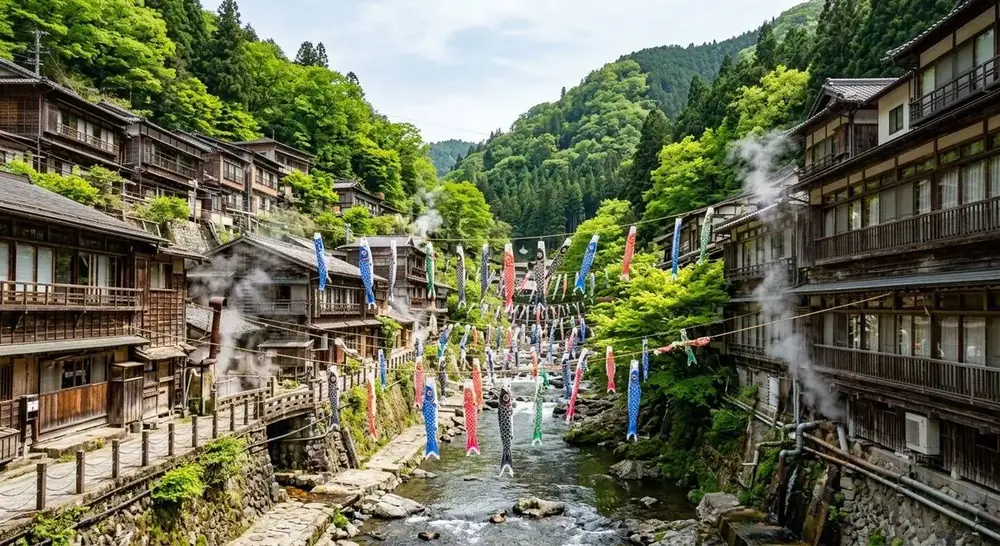
Tsuetate Onsen, where inns line both banks of the Tsuetate River on the Kumamoto–Ōita border, claims 1,800 years of history as the bath water of the infant Emperor Ōjin. Moto-yu is the communal bath said to be its origin: a single half-open tub carved into the rock face beside the riverside promenade — mixed, free and open 24 hours, nothing more. The sodium-chloride water, cooled from a 98°C source, leaves the skin soft. Changing space is basic and screening minimal, so many people wear bathing garments or a wrapped towel; early morning or night is the best time. Combine it with a wander through the 'sedoya' back alleys and, in May–June, the 3,500 carp streamers strung across the river. About 50 minutes by bus from Hita Station.

Day-trip onsenPublic bathhouse (sento)Day use Donation / free
Illustrative onsen mood image
Yamagata · Yunohama Onsen, TsuruokaTattoos: Ask ahead

Yunohama Onsen Shimoku public bath (Cospa)

Yunohama Onsen is a seaside spa on the Sea of Japan in Yamagata's Shōnai region. This municipal communal bath sits on the ground floor of the 'Cospa' community centre on the roundabout at the centre of the resort and is the locals' everyday bath. It uses a blend of Yunohama's springs — sodium-calcium chloride water — free-flowing with only a little dilution, in a single no-frills indoor tub. Adults pay ¥400; open in two sessions, 06:00–07:00 and 10:00–21:30, closed 2nd and 4th Thursdays. Soap and shampoo sold for ¥200, towels ¥100. The beach is two or three minutes' walk away, and the best plan is to watch the famous Yunohama sunset before soaking. About 35 minutes by bus from Tsuruoka Station.

Day-trip onsenPublic bathhouse (sento)Day use ¥400
Illustrative onsen mood image
Ōita · Amagase Onsen, HitaTattoos: Ask ahead

Amagase Onsen Yakushi-yu open-air communal bath

Amagase Onsen, where steam rises along the Kusu River in Hita, Ōita, is counted with Beppu and Yufuin among the 'three great springs of Bungo'. Its trademark is the communal open-air baths dotted along the riverbed, and Yakushi-yu is one of the most approachable: a single rock tub, mixed bathing, ¥100 dropped into an unattended box. The 75°C simple sulphur spring is diluted to a comfortable temperature, with a faint whiff of sulphur and a view of the spa street across the river. Open 10:00–22:00 daily; wrapping a bath towel is allowed, which makes it easy for first-timers, and it is lit and atmospheric at night. Stroll the town, rebuilt after the 2020 floods, and try the other riverside baths such as Kanda-yu and Ekimae Onsen. About 10 minutes on foot from JR Amagase Station.

Day-trip onsenPublic bathhouse (sento)Day use ¥100
Illustrative onsen mood image
Ehime · Dōgo OnsenTattoos: Ask ahead

Okudōgo Ichiyu-no-mori (day use)

A large hot-spring hotel in the Ishite River gorge about 8 km inland from Dōgo Onsen. Its great open-air bath 'Suimei-no-yu', billed as one of the largest in western Japan, terraces some 26 tubs down the slope, where you soak in free-flowing alkaline simple sulphur water to the sound of the river — a 'beauty bath' with a clearer sulphur scent than Dōgo. Day use 15:00–20:00 (last entry 19:00), ¥1,100 for adults, irregular closures. The no-reservation private open-air baths 'Yunose' (¥4,400 for 45 min, 2–4 people, towels included) run until 23:00 and suit families or tattooed guests. A cold-spring pool operates in summer. About 50 minutes by bus from Matsuyama Station to 'Okudōgo', or 15 minutes by car from Dōgo Onsen Station.

Day-trip onsenOnsen ryokanDay use ¥1,100
Illustrative onsen mood image
Ishikawa · Yamashiro Onsen, KagaTattoos: Ask ahead

Yamashiro Onsen Sōyu

The public bathhouse at the heart of Yamashiro Onsen's 'Yu-no-gawa' square in the Kaga hot-spring region, a spa 1,300 years old. In Kaga communal baths are called 'sōyu', and even ryokan guests walk over in yukata. The entrance reuses the gate of the old Yoshinoya inn; inside is spacious and clean, with one big tub of fresh undiluted water (sodium-calcium sulphate-chloride) flowing freely. Adults ¥500, open 06:00–22:00, closed only on the morning of the 4th Wednesday. A ¥900 combined ticket includes the 'Ko-sōyu' opposite (¥700), a recreation of the Meiji-era bathhouse with Kutani-ware tiles and stained glass — comparing the two is the classic plan. Soap and shampoo are sold, not provided. About 10 minutes by bus from Kaga-Onsen Station.

Day-trip onsenPublic bathhouse (sento)Day use ¥500
Illustrative onsen mood image
Saitama · KumagayaTattoos: Not allowed

Kumagaya Hanayu Spa Resort

One of the largest spa complexes in Saitama, in Kumagaya in the north of the prefecture. Its own alkaline simple spring, pumped from 1,500 m at over 600 litres a minute, feeds a wide range of tubs — a free-flowing open-air 'raw source' bath, pot baths, lie-down baths and a high-concentration carbonated bath. There is a löyly sauna, cold plunge and a garden-view outdoor rest deck. The optional 'Onkatsu Café Nest' adds eight kinds of bedrock-bath rooms, manga and free drinks for an all-day stay. Admission ¥950 on weekdays, ¥1,100 on weekends and holidays; open 10:00–23:00 (last entry 22:30), no closing days. Private rooms with an open-air pot bath can be reserved by phone. About 10 minutes by bus or taxi from JR Kumagaya Station; 300 free parking spaces. Kumagaya is about 40 minutes from central Tokyo by Shinkansen — combine with rugby at the stadium or Menuma Shōdenzan temple.

Day-trip onsenSuper sentoDay use ¥950
Illustrative onsen mood image
Saitama · KawagoeTattoos: Not allowed

Chiisana Tabi Kawagoe Onsen

A natural hot spring to visit after strolling Kawagoe's 'Little Edo' warehouse street. Its own sodium-chloride spring from 1,200 m fills indoor and open-air baths in two zones, 'Wood' and 'Stone', which swap between men and women daily. Nine baths and three saunas in all — a carbonated bath made by dissolving CO₂ into the spring water, a free-flowing source bath, bedrock-bath rooms and a private family bath — make for an in-house bath-hopping course. Adults ¥850 on weekdays, ¥950 on weekends and holidays; open 10:00–24:00 (from 09:00 on weekends and holidays, last entry 23:00), no regular closing day apart from maintenance. Body soap and shampoo provided; a soba-and-udon restaurant, massage and body scrub are on site. Seibu bus from Hon-Kawagoe Station (Seibu Shinjuku Line) to the 'Hōmukyoku' stop; 150 free parking spaces.

Day-trip onsenSuper sentoDay use ¥850
Illustrative onsen mood image
Shizuoka · Itō OnsenTattoos: Ask ahead

Itō Onsen Wada Jurōjin-no-yu (Wada-yu Kaikan)

The oldest of Itō Onsen's 'Seven Lucky Gods' communal baths, a true locals' bathhouse. The spring is said to have been presented to the third shōgun Tokugawa Iemitsu in the Edo period, and today it runs as the ward-operated Wada-yu Kaikan. The layout is simple — a single indoor bath each for men and women — but the clear, simple-type spring flows in freely and the atmosphere is that of an old-fashioned neighbourhood bath full of regulars. Adults ¥400, children ¥200; open 14:00–22:00, closed Wednesdays (with extra days off in even months — check ahead). Soap and towels are sold, so bring your own. About 15 minutes on foot from JR Itō Station; pair it with the Tōkaikan building and Kinema-dōri street as one stop on the Seven Lucky Gods bath circuit. Parking for 11 cars.

Day-trip onsenPublic bathhouse (sento)Day use ¥400
Illustrative onsen mood image
Fukushima · Dake Onsen, NihonmatsuTattoos: Ask ahead

Dake Onsen Yui-no-Sato Azumakan

The signature 92-room ryokan of Dake Onsen, at about 600 m on the flank of Mt Adatara. The source is piped 8 km from near the Kurogane hut in the mountains and cools naturally in a yubatake on the way, arriving at bathing temperature — a nationally rare acidic spring with a bracing, skin-tightening feel. The 'Haiku' main bath and the 'Moon-viewing' and 'Blossom-viewing' open-air baths look out on the Adatara range. Day bathing: adults ¥1,000, children ¥500, 12:00–20:00 (last entry 19:30; from 15:00 on Wednesdays, 12:00–16:00 on Saturdays and days before holidays), with entry limits when crowded. Day plans with a buffet are popular too. About 15 minutes by car from Nihonmatsu IC or 25 minutes by bus from JR Nihonmatsu Station. Combine with the cherry-tree avenue of Himalaya-dōri and Chieko's hometown sights.

Day-trip onsenOnsen ryokanDay use ¥1,000
Illustrative onsen mood image
Yamaguchi · Tawarayama OnsenTattoos: Ask ahead

Tawarayama Onsen Machi-no-yu

One of the two public bathhouses of Tawarayama Onsen in Nagato, Yamaguchi, a cure-spa founded over 1,100 years ago. Most inns here have no bath of their own, so guests still pad through the streets in yukata to the outside baths, and Machi-no-yu is the hub of that life. The silky alkaline simple spring flows in untreated, and there is a drinking fountain. Just a plain indoor bath, but it is open right through from 06:00 to 22:00 and costs only ¥650. A bookable private family bath (¥3,500 for three, 08:00–21:00) is attached. There is no regular closing day — only cleaning breaks in July and December. The other bathhouse, Hakuen-no-yu (¥850, with an open-air bath), closes Tuesday to Thursday, so on weekdays Machi-no-yu is the one to count on. About 25 minutes by bus from JR Nagato-shi Station to 'Tawarayama Onsen', then 3 minutes on foot.

Day-trip onsenPublic bathhouse (sento)Day use ¥650
Illustrative onsen mood image
Mie · Yunoyama OnsenTattoos: Ask ahead

Yunoyama Onsen Green Hotel

An inn at the foot of Mt Gozaisho in 1,300-year-old Yunoyama Onsen, proud of its own spring gushing 500 litres a minute. It insists on free-flowing source water, constantly refreshed, and the viscous alkaline simple spring is known as 'beauty water'. The big open-air bath opening onto the mountains through the seasons is the draw, especially in autumn colour. Day-bathing prices were cut in July 2026 for the inn's 60th anniversary: adults ¥700 on weekdays, ¥800 on weekends and holidays, children ¥400/¥500; open 10:00–19:30 (last entry 18:30), closed Fridays. Lunch (makomo udon and more) and day kaiseki plans with bathing are offered, and it pairs easily with the Gozaisho Ropeway or Aqua Ignis. About 10 minutes by Mie Kōtsū bus from Kintetsu Yunoyama-Onsen Station; about 20 minutes by car from Yokkaichi IC; 150 parking spaces.

Day-trip onsenOnsen ryokanDay use ¥700
Illustrative onsen mood image
Gunma · Manza OnsenTattoos: Ask ahead

Manza Prince Hotel 'Above-the-Clouds' open-air bath

The flagship hotel of Manza Onsen, which at 1,800 m is among the highest hot-spring resorts in Japan reachable by car all year. Perched on a rise, its famous 'Komakusa-no-yu' open-air bath juts from the mountainside so you soak in milky sulphur water while gazing at a sea of clouds, the Jōshin'etsu ranges and, in winter, unbroken snow — literally a bath above the clouds. Besides separate men's and women's sections there is a mixed zone where a wrap towel is worn, making this one of the few Manza inns where mixed bathing is possible. The sulphur content is among Japan's highest and the scent lingers after. Day bathing: adults ¥1,500, children ¥750, reception 11:00–16:00 (bath entry until 15:00), face towel included (bath towel hire ¥300). Weekdays are far quieter than weekends. About 2 hours by Seibu bus from Karuizawa Station, or about 40 minutes by bus from Manza-Kazawaguchi Station; direct ski-slope access in winter.

Day-trip onsenOnsen ryokanDay use ¥1,500
Illustrative onsen mood image
Gifu · Okuhida Onsen (Hirayu, Shinhotaka)Tattoos: Ask ahead

Nakazaki Sansō Okuhida-no-yu

A day-use bathhouse right beside the Shinhotaka Ropeway base at the trailhead into the Northern Alps. Descended from a mountain hut, it is unusual in having two different springs — a simple spring and a bicarbonate spring — each served free-flowing. The open-air bath, with the murmur of the Gamata River and the rock peaks of Kasa-ga-take and Shakujō-dake in view, fills with hikers coming off the mountain and sightseers back from the ropeway. Adults ¥1,000, children ¥500; open 09:00–18:00 (last entry one hour before closing), irregular closing days. There is a rest room and a restaurant serving Okuhida fare such as Hida beef and soba. About 90 minutes by bus from Takayama Nōhi Bus Center to 'Shinhotaka Onsen', then 2 minutes on foot; parking for 11 cars (pay car parks nearby).

Day-trip onsenPublic bathhouse (sento)Day use ¥900
Illustrative onsen mood image
Aichi · Owari Onsen, KanieTattoos: Ask ahead

Owari Onsen Tōkai Center

A big bathhouse in Kanie, just west of Nagoya, open since the 1960s and known among Tōkai-region onsen fans as 'the real thing'. Two of its own springs, one cool and one hot, are blended to bathing temperature and run untouched — no dilution, no recirculation — into both indoor and outdoor baths. The showpiece is a garden-style indoor hall of a scale you would not expect, with pools of various sizes among rocks and greenery. The clear simple spring is soft and leaves you refreshed. Adults ¥700 on weekdays, ¥800 on weekends and holidays; open 13:00–23:00 (last entry 22:30), no closing day apart from occasional maintenance. Soap and shampoo provided; a tatami hall and restaurant on site. About 7 minutes by taxi from Kintetsu Kanie Station or 17 minutes on foot from JR Eiwa Station; 250 free parking spaces. A rare chance at free-flowing source water within 30 minutes of Nagoya Station.

Day-trip onsenPublic bathhouse (sento)Day use ¥700
Illustrative onsen mood image
Shimane · Yunotsu OnsenTattoos: Ask ahead

Yunotsu Onsen Motoyu Sen'yakutō

The founding bath of Yunotsu, the port town that once shipped silver from the World Heritage Iwami Ginzan mine, with a history said to go back 1,300 years. It stands in the preserved townscape district and has a legend of a tanuki healing its wounds here. Two pools: the 'hot' one fed directly by the source and a 'cooler' one that is still around 43°C. The strong sodium-calcium-chloride water, thick with rust-brown mineral flakes, is renowned as a therapeutic spring and can be drunk. Adults ¥450, children ¥200; open 06:00–20:00, irregular closures (closed from 15:00 on the 3rd Monday). No soap and no showers — bathe the old way. Comparing it with the other outside bath, Yakushi-yu (¥500), is the classic routine. About 20 minutes on foot or 5 by bus from JR Yunotsu Station.

Day-trip onsenPublic bathhouse (sento)Day use ¥450
Illustrative onsen mood image
Yamanashi · Hottarakashi Onsen (Yamanashi)Tattoos: Ask ahead

Hayabusa Onsen

A day-use bathhouse among the vineyards and peach orchards of Makioka in Yamanashi city, cherished by onsen fans as one of the prefecture's finest 'fresh from the source' springs. About 500 litres a minute of 42°C alkaline simple water wells up naturally and goes straight into the tubs — no heating, no dilution, no recirculation — so fresh water overflows constantly at the spout. The feel is silky; from the cypress indoor bath and the rock open-air bath you can sometimes see Mt Fuji across the Kōfu basin. Adults ¥700 for up to two hours, children ¥500 (four hours with tatami-hall rest ¥1,300; all day ¥1,800); open 10:00–21:00 (last entry 20:15), closed Tuesdays and the New Year period. A restaurant serves hōtō noodles and tempura, and Erin-ji temple and the local wineries are close. About 25 minutes by car from Katsunuma IC or 15 minutes by taxi from JR Yamanashi-shi Station.

Day-trip onsenPublic bathhouse (sento)Day use ¥700
Illustrative onsen mood image
Nagasaki · Unzen OnsenTattoos: Ask ahead

Unzen Yunosato communal bath (Dankyū-buro)

Because drilling is banned inside the national park, every bath in Unzen runs on naturally rising water. This little communal bath on the edge of the spa town, known locally as 'Dankyū-buro', has just one deep oval pool into which the acidic hydrogen-sulphide spring flows fresh; depending on the season and the day it may be milky white or nearly clear. It is hot, 43–44°C, with a faint sulphur scent. Adults ¥200, children ¥100; open 09:00–22:00, closed Tuesdays. No dryers or amenities — soap is sold — but there are lockers, and parking for four cars. After touring the Unzen Hells, a rare chance to taste the local bath for ¥200, a world apart from the big tourist bathhouses.

Day-trip onsenPublic bathhouse (sento)Day use ¥200
Illustrative onsen mood image
Nara · Soni Kōgen OnsenTattoos: Ask ahead

Soni Kōgen Onsen Okame-no-yu

A village-run day spa inside the Soni Kōgen Farm Garden at the foot of the Soni plateau, on Nara's eastern edge, where the pampas-grass meadows turn gold in autumn. The sodium-bicarbonate water is remarkably slippery and lives up to its 'beauty bath' reputation, leaving skin silky. The indoor hall has a free-flowing source tub, and the open-air bath looks out to the rock peaks of Kabuto-dake and Yoroi-dake and across the highland (a wood bathroom and a stone bathroom alternate weekly between men and women). Adults ¥900, children ¥500; open 11:00–21:00 (until 20:30 December–March; last entry one hour before), closed Wednesdays (open if a holiday, then closed the next day) and over New Year. A craft brewery, farm shop and restaurant share the site; it gets very busy in pampas season (October–November). About 45 minutes by bus from Nabari Station; about 1 h 50 min by car from Osaka.

Day-trip onsenPublic bathhouse (sento)Day use ¥900
Illustrative onsen mood image
Iwate · Matsukawa Onsen, HachimantaiTattoos: Ask ahead

Tōshichi Onsen Saiunsō, Hachimantai (1,400 m)

The highest hot-spring inn in Tōhoku, at 1,400 m near the top of the Hachimantai Aspite Line. It opens only from Golden Week to late October; in winter it is buried in snow. Five mixed open-air baths scattered down the slope (plus a women-only open-air bath and separate indoor baths) are fed by sulphur water bubbling up directly through the ground, milky white, and the trademark is smearing the mud from the bottom on your skin as a 'mud pack'. Below spread Mt Iwate and a sea of forest; at dawn, cloud seas and sunrise — truly a bath above the clouds. Simple sulphur water at temperatures from tepid to hot. Day bathing: adults ¥650, children ¥350, with a long 08:00–18:00 window, busy with hikers back from the Hachimantai summit trail. The open-air baths are mixed, so bathing garments and wrap towels are allowed. About 2 hours by bus from Morioka Station or 40 minutes by car from Matsuo-Hachimantai IC. Mobile reception is poor.

Day-trip onsenOnsen ryokanDay use ¥650
Illustrative onsen mood image
Fukuoka · Chikugogawa Onsen, UkihaTattoos: OK if covered

Chikugogawa Onsen Fukusenka

A hot-spring inn on a rise above the Chikugo River in Ukiha, Fukuoka, whose pH 8.7 alkaline simple-sulphur water is so silky people say it feels like bathing in skin lotion. Chikugogawa Onsen lies across the river from Harazuru, a quiet designated health resort, and this inn actively welcomes day bathers. Besides the main and open-air baths there are characterful private family baths — 'Stone', 'Rock', even one with a slide — at ¥2,500 for 60 minutes, booked at the desk on the day; the inn states that guests with tattoos may use the private baths only. Day bathing: adults ¥800, children ¥600, 13:00–21:00, closed Wednesdays plus irregular days. The Harazuru–Chikugo River area is known for cormorant fishing and fruit picking, and many families drop in on the way home from the orchards. About 5 minutes by taxi from JR Chikugo-Ōishi Station or 3 minutes by car from Haki IC.

Day-trip onsenOnsen ryokanDay use ¥800
Illustrative onsen mood image
Miyazaki · Gokuraku Onsen, TakaharuTattoos: Ask ahead

Gokuraku Onsen Takumi-no-Yado, Takaharu

The lone inn at Gokuraku Onsen, in the hills of Takaharu on the eastern foot of the Kirishima range, with water distinctive enough to be listed among Japan's 'hundred famous springs'. It is a carbonated iron spring (carbon dioxide-iron-calcium-bicarbonate), and the speciality is alternating between the free-flowing tubs, turned rust-red on contact with air, and a 'source cold bath' filled with the highly carbonated mineral water straight from the ground. Sitting in the cold fizzing water as tiny bubbles cling to your skin, then returning to the warm bath, is a routine sauna lovers adore. There is also an open-air bath, a sauna and a reservable private bath. Day bathing: adults ¥600, children ¥250, with long hours from 07:00 to 21:00 (last entry 20:30), except Wednesdays when it pauses 10:00–15:00 for cleaning. A dining room serves Kyushu mountain-and-river cuisine, and private rest rooms and overnight stays suit a cure-style visit. About 15 minutes by car from JR Takaharu Station or Takaharu IC. A hidden gem for Ebino Plateau and Kirishima trips.

Day-trip onsenOnsen ryokanDay use ¥600
Illustrative onsen mood image
Shimane · Chihara Onsen, MisatoTattoos: Ask ahead

Chihara Onsen Yudani Tōjiba

A cure-bath founded in the Meiji era, tucked in the hills of Misato, Shimane, up a tributary of the Gō River. The spring bubbles up directly through gaps in the wooden floor of the tub — 'footspring' water that onsen devotees rank among the finest sources in western Japan. The carbonated iron-bicarbonate water is tepid at around 34 °C, faintly yellow-brown, and coats the body in tiny bubbles. There is one small wooden tub each for men and women, no washing area, soap and shampoo are forbidden, and bathing is limited to an hour: this is a place purely for soaking. Afterwards you can warm up in a heated goemon iron-kettle bath. Adults ¥500; open 08:00–18:00 April–October (last entry 17:00) and 08:00–17:00 November–March (last entry 16:00), closed Thursdays. Room rest is available. With the Sankō rail line gone, driving is realistic: about 1 hour from JR Gōtsu Station or 50 minutes from Ōasa IC on the Hamada Expressway, with a narrow mountain road at the end. Not for those wanting facilities, but unforgettable for those who care about the water itself.

Day-trip onsenRemote onsenDay use ¥500
Illustrative onsen mood image
Aomori · Ikarigaseki & Furutōbe, HirakawaTattoos: Ask ahead

Furutōbe Onsen, Ikarigaseki

A lone hidden spring at the end of a forest road in the hills of Ikarigaseki, Hirakawa, near the Aomori–Akita border. Famed nationwide for its gushing flow — said to be 500 litres a minute — the overflow from the tub streams across the entire washing floor like a river, and the place once topped a fan vote for the best free-flowing bath in Japan. The sodium-calcium-chloride-sulphate water is pale yellow-brown with an iron tang, and the local way to enjoy it is 'todo-ne': lying flat on the floor and letting the running water wash over you like a sea lion. After a long closure it reopened, renovated, in December 2025: day bathing adults ¥600, children ¥200, 09:00–20:30. Lodging is bed-and-breakfast or room only. Pick-ups from Ikarigaseki Station and Yunosawa can be arranged (contact in advance). Facilities are basic and days and hours can change, so check by phone or on the official social media. About 15 minutes by car from JR Ikarigaseki Station or Ikarigaseki IC; beware of deep snow in winter.

Day-trip onsenOnsen ryokanDay use ¥600
Illustrative onsen mood image
Saga · Karatsu & Niji-no-MatsubaraTattoos: Ask ahead

Kagamiyama Onsen Chaya Bijin-no-Yu, Karatsu

A day spa on Route 202 in Karatsu, right beside Niji-no-Matsubara, one of Japan's three great pine groves, and an easy 10-minute walk from JR Niji-no-Matsubara Station. The mildly alkaline simple spring is used free-flowing and lives up to its 'beauty bath' name with a silky feel. There are tepid and hot tubs, an open-air bath, sauna and cold plunge, plus three private family baths (rock, barrel and so on; extra charge, booking until 20:00). Adults ¥800, children ¥450; open 10:00–22:00 (last entry 21:30), closed the third Thursday (open daily in January, February and August; special closure on December 31). The restaurant serves set meals with Karatsu fish, and as a pilgrimage spot for the anime 'Yuri!!! on Ice' the building has a fan display corner. Fits between Karatsu Castle, the Yobuko morning market and a drive along the pines, or as the finish to a day trip from Fukuoka — about an hour by car from the city. 50 parking spaces.

Day-trip onsenPublic bathhouse (sento)Day use ¥800
Illustrative onsen mood image
Tokyo · Inagi & the Tama hillsTattoos: Not allowed

Inagi Onsen Toki-no-Irodori

A natural-spring bath complex about 5 minutes on foot from Minami-Tama Station (JR Nambu Line) in Inagi, amid the greenery of the Tama hills. The mildly alkaline water from 1,700 m down is pale amber and soft on the skin; the outdoor area has a free-flowing rock bath, pot baths, lie-down baths, a carbonated bath and seasonal specials, while indoors are a high-concentration carbonated bath, jet baths, a sauna with löyly sessions and a cold plunge. With more room than central-Tokyo spas, its outdoor rest deck among trees is a real draw. Entry: adults ¥1,000 on weekdays, ¥1,200 on weekends and holidays; children ¥520/¥680; bedrock baths extra (¥750 on weekdays). Open 09:00–01:00 on weekdays and 07:00–01:00 on weekends and holidays (last entry midnight). Closed only on the third Tuesday of March, June, September and December. Restaurant, body care and a manga corner on site. About 40 minutes from Shinjuku via the Keiō and Nambu lines, easy to pair with Yomiuriland or a walk in the Tama hills.

Day-trip onsenSuper sentoDay use ¥1,000
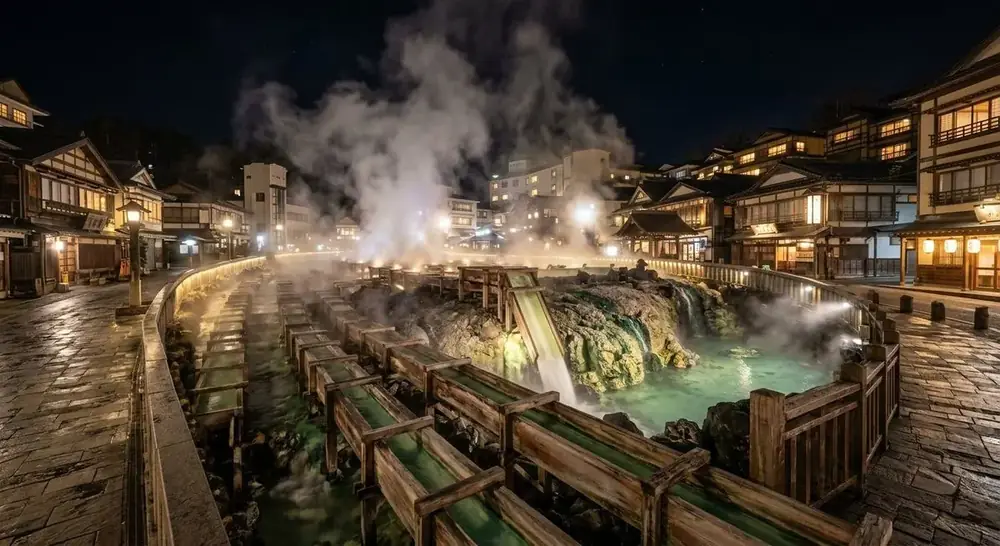
Illustrative onsen mood image
Akita · Mizusawa Onsen, Tazawako plateauTattoos: Ask ahead

Rotenburo Mizusawa Onsen, Tazawako Kōgen

The representative drop-in bath of the Mizusawa spa cluster on the Tazawako plateau, on the road up to Nyūtō Onsen. Less famous than Nyūtō's hidden inns, it nonetheless runs an abundant sulphur-calcium-magnesium-sulphate-chloride spring free-flowing, and its bluish milky water is praised as 'silky and moisturising'. The standout is an open-air bath about a metre deep in which you soak standing up — one of only two such deep outdoor baths in the area. Men and women each have two indoor and two outdoor baths, and the waterfall massage runs all the time. Adults ¥900, primary-school children and under free; open 10:00–20:00 (building closes 21:00), irregular closures (open through Golden Week, Obon and New Year). Lodging is available, and it makes a good alternative when Nyūtō is crowded or a stop after Tazawako ski slopes or a climb of Mt Akita-Komagatake. About 25 minutes by Ugo Kōtsū bus for Nyūtō Onsen from JR Tazawako Station to 'Mizusawa Onsenkyō', right by the stop; 60 parking spaces.

Day-trip onsenOnsen ryokanDay use ¥900
Illustrative onsen mood image
Kagoshima · Hinatayama Onsen, KirishimaTattoos: Ask ahead

Hinatayama Onsen Segodon-yu

The oldest naturally rising spring of Hinatayama Onsen, the spa district along the Amori River in Hayato, Kirishima, about 15 minutes by car from Kagoshima Airport. Saigō Takamori is said to have favoured it between hunts, and locals call it 'Segodon's bath'. It is unstaffed — you drop your fee in the box at the entrance — and the price is frozen in the Shōwa era: ¥250 for adults, ¥100 for children. Inside is a simple indoor bathroom with two tubs, hot and moderate, filled free-flowing with clear, slippery bicarbonate water; there is a drinking fountain of the spring too. No open-air bath or restaurant, but it opens 06:00–21:00 (last entry 20:30) and a room-only lodge next door costs ¥1,800 including the bath — a boon for travellers. Closed the fourth Monday. About 5 minutes on foot from JR Hinatayama Station; 10 parking spaces. For anyone wanting an unadorned everyday Kagoshima bath before or after Kirishima Shrine or the airport.

Day-trip onsenPublic bathhouse (sento)Day use ¥250
Illustrative onsen mood image
Fukushima · Tsuchiyu OnsenTattoos: Ask ahead

Tsuchiyu Onsen Naka-no-Yu Public Bath

The public bath at the centre of Tsuchiyu Onsen, a spa village in the fold of the Azuma range about 40 minutes by bus from Fukushima Station. Rebuilt in 2018 in fragrant timber, it faces the Arakawa mountain stream. The alkaline bicarbonate water is used free-flowing without heating or recirculation — clear and soft but decidedly hot, so adding cold water to taste is the local custom. Besides separate indoor baths there is a private bath (¥1,500), handy for families and couples. Adults ¥500, children ¥250; open 09:00–21:00 (last entry 20:30), closed Tuesdays (open over New Year). The village has foot baths, workshops making Tsuchiyu kokeshi dolls, the steaming Arakawa source and another communal bath, Kajika-no-yu, so a stroll with a kokeshi-painting session fills a pleasant half day. 82 free parking spaces. About 20 minutes by car from Fukushima-nishi IC, and a convenient gateway to the Bandai-Azuma Skyline.

Day-trip onsenPublic bathhouse (sento)Day use ¥500
Illustrative onsen mood image
Niigata · Senami Onsen, MurakamiTattoos: Ask ahead

Senami Onsen Yumoto Ryūsen

A mainly day-use hot-spring house at Senami Onsen in Murakami, Niigata, famous for sunsets over the Sea of Japan. Its own source 180 m down yields abundant water at about 94 °C, and although it is a seaside spa the water has a faint whiff of sulphur and leaves the skin silky. There is an indoor bath, a rugged rock-built outdoor bath and a mist sauna, and even the showers run spring water; in winter the outdoor bath becomes a snow-viewing bath. Private family baths, rentable rooms, weekday day plans with a meal (from ¥4,800) and overnight stays are also available. Adults ¥900, children ¥500, towel hire ¥210; open 09:00–22:00 (last entry 21:00), irregular closures. About 10 minutes by bus from JR Murakami Station or 12 minutes by car from Murakami-Senami-Onsen IC; 100 parking spaces. Combine with Murakami's salmon cuisine, its merchant townhouses and a sunset walk on Senami beach.

Day-trip onsenOnsen ryokanDay use ¥900
Illustrative onsen mood image
Iwate · Hanamaki OnsenTattoos: Ask ahead

Dai Onsen Seika-no-Yu

A small wooden day bath in Dai Onsen, an old spa hamlet where inns huddle along a narrow valley beyond Hanamaki Onsen. Dai Onsen, over 600 years old, is known for its many hot sources, and here too the free-flowing water is served hot in a little bathroom — a tub that holds ten at a squeeze and five washing stations. There is no lounge or shop, but it opens every day from 06:00 to 22:00 (last entry 21:30) and charges only ¥480 for adults and ¥250 for children — a place that made news by cutting its price when everyone else was raising theirs. Shampoo and body soap are provided, and a handmade soba house next door serves lunch (booking needed). Under 10 minutes by car from Hanamaki Onsen, about 20 minutes by taxi from JR Hanamaki Station; 30 parking spaces. An easy way to feel the cure-resort air of Dai Onsen, a world apart from the big hotels of Hanamaki.

Day-trip onsenPublic bathhouse (sento)Day use ¥480
Illustrative onsen mood image
Saitama · Saitama cityTattoos: Not allowed

Saitama Seiganji Onsen

A natural-spring bath complex on a wooded Musashino plot in Saitama's Nishi ward. The source, over 600 litres a minute from 1,500 m down, is a faintly green-tinged amber sodium-chloride water; in the outdoor area the rock bath and 'source tepid bath' are filled free-flowing without heating or dilution, and the place is famous among enthusiasts for its 'nuru-yu culture' of long soaks at around 38 °C. There are also raw-source pot baths, lie-down baths, a high-concentration carbonated bath, a sauna with löyly and a deep cold plunge, and an outdoor rest area facing the trees — remarkably quiet for the suburbs. Adults ¥880 on weekdays, ¥980 on weekends and holidays; children ¥500/¥550; open 10:00–24:00 (last entry 23:30), irregular closures. Restaurant, body care and scrub treatments on site. About 25 minutes by bus from JR Ōmiya Station to 'Seiganji', or by taxi from Ageo or Sashiōgi stations. A must for tepid-bath lovers in the Tokyo area; large car park.

Day-trip onsenSuper sentoDay use ¥880
Illustrative onsen mood image
Miyagi · Sakunami Onsen, SendaiTattoos: Ask ahead

Sakunami Onsen Miyako-no-Yu

A day bath at the entrance to Sakunami Onsen, 'Sendai's back parlour' up the Hirose River about 40 minutes by car from Sendai Station. Among Sakunami's large ryokan it is a rare place to drop in without staying, though it has lodging too. The bathroom is compact, but the clear, soft water is 100 % natural spring, free-flowing and quietly overflowing. A set with the natural-stone bedrock bath costs ¥2,000, and the women's powder room stocks cosmetics and even face masks, which guests appreciate. Day bathing: adults ¥800, children ¥600 (a ¥500 rate for under an hour); open 10:00–19:00 (last entry 17:00), closed Wednesdays and Thursdays. Bath towels can be hired. About 5 minutes by car from Sakunami Station on the Senzan Line, or by Sendai city bus to 'Sakunami Onsen Iriguchi', right by the stop. Combine with a tour of the Nikka Miyagikyo whisky distillery or the autumn colours of the Hōmei Forty-eight Falls.

Day-trip onsenNatural hot springDay use ¥800
Illustrative onsen mood image
Yamagata · Kaminoyama OnsenTattoos: Ask ahead

Kaminoyama Onsen Shimo-Ōyu Public Bath

The oldest of the communal baths surviving in the spa town of Kaminoyama, a former castle and post town about 10 minutes on foot from Kaminoyama-Onsen Station on the Yamagata Shinkansen. Moved to its present site in 1624, it is said to have been used by the Zen master Takuan. The big tub is split into hot and tepid halves, filled free-flowing with clear sodium-calcium-chloride-sulphate water. With its flagstone washing area and old-style attendant's counter, it charges an astonishing ¥150 for adults and ¥100 for children (hair washing ¥100 extra), and the tatami hall upstairs can be used for a day's rest for ¥300. Open 06:00–22:00 (from 06:30 December–February; last entry 21:30), every day. Take a morning or evening dip with locals while touring Kaminoyama Castle, the samurai-house street and the town's five foot baths. About 25 minutes by car from Yamagata city, 40 minutes from Zaō Onsen. No soap is provided, so bring your own; park in the shopping-street car park opposite.

Day-trip onsenPublic bathhouse (sento)Day use ¥150
Illustrative onsen mood image
Wakayama · Kumano Hongu Onsen (Yunomine & Kawayu)Tattoos: Ask ahead

Yunomine Onsen Public Bath (Ippan-yu, Kusuri-yu, Family Bath)

The public bath at the heart of Yunomine Onsen, one of Japan's oldest springs, where pilgrims purified themselves before Kumano Hongū Taisha. The building, renovated in 2022, also serves as reception for the World Heritage 'Tsuboyu'. There are three bathrooms: the 'Ippan-yu' with hot and tepid tubs (adults ¥400, shampoo provided), the concentrated 'Kusuri-yu' filled with undiluted source water (¥600, no soap allowed) and a 30-minute private family bath (¥700), all sulphur-scented sodium-bicarbonate-chloride water ranging from milky to clear. Tsuboyu (¥800, 30-minute slots) can mean a wait of hours when busy, so the clever order is to take a number and warm up in the public bath first. Open 06:00–21:00 (last entry 20:30), irregular cleaning closures. The village also has the 'Yuzutsu', a 90 °C source where you boil eggs and vegetables, and is the trailhead of the Dainichi-goe section of the Kumano Kodō. About 2 hours by bus from JR Kii-Tanabe or Shingū stations to 'Yunomine Onsen', right by the stop; 46 parking spaces.

Day-trip onsenPublic bathhouse (sento)Day use ¥400
Illustrative onsen mood image
Tochigi · Shiobara OnsenTattoos: Ask ahead

Shiobara Akatsuki-no-Yu

A day-use hot spring in Sekiya, Nasushiobara, near the Yunoka Shiobara roadside station at the gateway to the Shiobara spa valley. The source flows at 68.4°C and 250 litres a minute, so the open-air bath runs 100% free-flowing spring water. The slightly tea-coloured, silky alkaline simple spring is known as a skin-beautifying bath; the indoor pool seats about 20 and the outdoor one about 10, both roomy. There are a sauna, cold plunge, jet lounger and a swimwear spa pool popular with families. Adults pay ¥800 on weekdays and ¥1,000 on weekends and holidays (children 4 to elementary age ¥400/¥500); after 5 pm on weekdays the evening rate drops to ¥600. Open 10:00–22:00 (last entry 21:00), closed the third Wednesday (next day if a holiday). Restaurant, rest room, massage and free parking for 150 cars. About 20 minutes by car from JR Nishi-Nasuno Station or 10 minutes from the Nishinasuno-Shiobara IC on the Tōhoku Expressway – a handy last stop after a drive through the Shiobara gorge or Nasu.
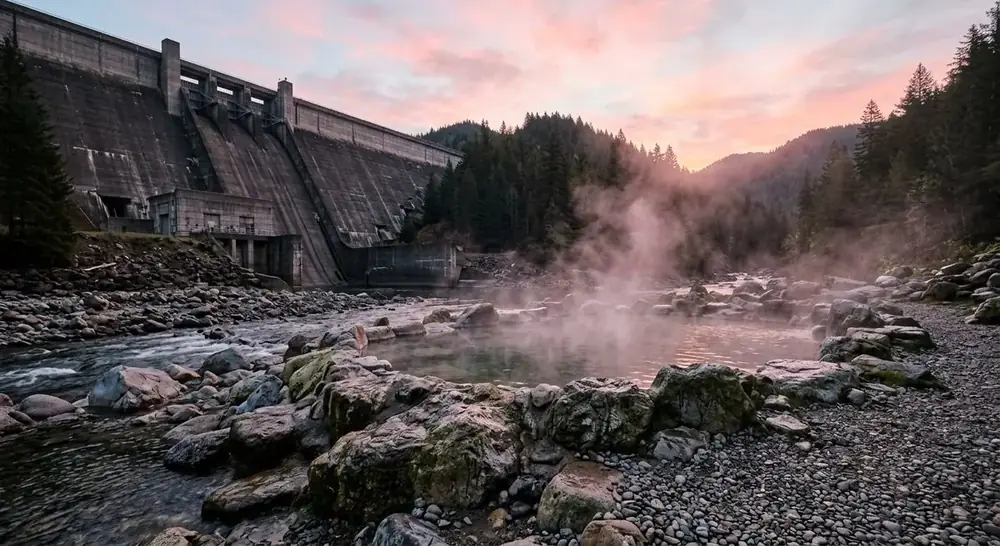
Day-trip onsenNatural hot springDay use ¥800
Illustrative onsen mood image
Hiroshima · Jinseki Kōgen OnsenTattoos: Ask ahead

Jinseki Kōgen Onsen

A day-use hot spring in Jinsekikōgen, a plateau town at 500–700 m in eastern Hiroshima. The source, discovered in 1994 in the Iseki district of former Sanwa, is a rare pH 10.2 strongly alkaline, weakly radioactive cold mineral spring – low in irritants and gentle on the skin. The slightly cloudy, viscous water lifts excess oil and leaves skin smooth, which locals call a 'natural beauty serum'. Inside are an indoor bath, open-air bath, sauna and cold plunge, plus a rock-bed spa, carbonated tub and a private family bath, with a rest area and restaurant. Adults pay ¥900 and children of elementary age or under ¥500; coupon books and a monthly pass keep the regulars coming. Open 10:00–21:00, closed Tuesdays, parking for 20 cars. About an hour by car from central Fukuyama via Route 182, or 2 minutes on foot from the Iseki-naka bus stop. Pair it with Taishaku Gorge, Jinseki beef and stargazing on a drive across the highlands.

Day-trip onsenNatural hot springDay use ¥900
Illustrative onsen mood image
Miyazaki · Gokuraku Onsen, TakaharuTattoos: Ask ahead

Yunomoto Onsen, Takaharu

A lone hot spring inn at Kamuta in Takaharu, Miyazaki, on the eastern foot of the Kirishima range. A therapeutic bathing spot since the Meiji era, its pride is an extremely carbonated spring with 1,314 mg/kg of free carbon dioxide. Ease into the unheated, chilly carbonated pool and fine bubbles cling to every inch of skin – a concentration said to equal 10–25 bath-fizz tablets. The heated indoor and open-air baths glow golden with iron-rich cloudy water, and alternating between them and the cold spring is the house ritual; a drinking fountain lets you taste the sharply fizzy, iron-flavoured source too. Day bathing costs ¥650 for adults and ¥300 for ages 3–12, 10:00–21:00 (last entry 20:30), closed as a rule on the first and third Wednesdays (subject to change). Day-rest rooms, tatami rooms and detached cottages for overnight stays, and meals of local produce are available. About 10 minutes by car from Takaharu IC on the Miyazaki Expressway, with parking for about 60 cars. Combine it with Kirishima Shrine, a climb of Takachiho-no-mine or the Ebino plateau.

Day-trip onsenOnsen ryokanDay use ¥650
Illustrative onsen mood image
Shimane · Yunokawa Onsen, IzumoTattoos: Ask ahead

Yumoto Yunokawa – One of Japan's Three Beauty Springs

About 7 minutes by car from Izumo Enmusubi Airport, Yunokawa Onsen in Hikawa, Izumo, is counted with Kawanaka (Gunma) and Ryūjin (Wakayama) as one of Japan's Three Beauty Springs. Legend says the goddess Yagami-hime soothed her skin here, and the inn Yumoto Yunokawa, founded in 1877, sits at the source. Its sodium-calcium sulfate and chloride water flows straight from the spring without dilution, and the silky bath is famed for leaving skin smooth. Day bathing is 10:00–15:30 (last entry 15:00) for ¥900 per adult and ¥500 per child, free under 3 (day visitors may be turned away when busy). Three private baths can be booked by day guests too – ¥2,500 for 50 minutes plus admission – with reservations from 9 am the day before. Irregular closures, free parking. About 20 minutes on foot from Shōbara Station on the JR San'in Line or 7 minutes from Shinji IC on the San'in Expressway. A perfect soak between Izumo Taisha, Matsue and your flight home.

Onsen ryokanDay-trip onsenDay use ¥900
Illustrative onsen mood image
Yamanashi · Nirasaki & Asahi OnsenTattoos: Ask ahead

Nirasaki Asahi Onsen

A lone day-bath building among the fields on the outskirts of Nirasaki, north-west of the Kōfu basin, and a nationally known pilgrimage spot for onsen lovers. Nothing is added or altered – no dilution, heating, recirculation or chlorine – and as you settle into the tepid 38°C sodium chloride-bicarbonate spring, your whole body is coated in fine bubbles, said to be among the most abundant in Japan. The faintly greenish-yellow water carries a whisper of sulfur and iron, and the source running from a tap in the bathroom can be drunk (fizzy, iron-tinged). There is no open-air bath or sauna – just one big indoor pool and washing stations, like a sentō – but the windows frame the Yatsugatake and Kayagatake peaks, and the mild water makes an hour disappear. Adults pay ¥600, children ¥300, soap and shampoo provided. Open 10:00–20:00, closed Tuesdays (next day if a holiday) and Fridays, with free parking for 25 cars. About 10 minutes by taxi from Nirasaki Station on the JR Chūō Line or 15 minutes from Nirasaki IC on the Chūō Expressway.

Day-trip onsenPublic bathhouse (sento)Day use ¥600
Illustrative onsen mood image
Nagasaki · Obama Onsen (Nagasaki)Tattoos: Ask ahead

Obama Onsen Hama-no-Yu Municipal Bath

Obama Onsen in Unzen, Nagasaki, is famed for sunsets over Tachibana Bay and for spring water near 100°C – the highest heat output of any onsen town in Japan. Hama-no-Yu is the city-run, old-fashioned public bath of this seaside spa: a classic sentō layout with an attendant's booth and two deep tubs, hot and tepid, brimming with alkaline simple spring water. No soap or shampoo is provided (sachets are sold) – there is nothing here but the water, and bath lovers cherish that purity. Admission is an astonishing ¥150 for ages 6 and up (Unzen residents ¥100), free under 6; open 6:00–22:00 (last entry 21:30), irregular closures. Park free at the nearby Yūhi-no-Hiroba lot (10 spaces). Along the shore are Japan's longest footbath, the 105 m 'Hot Foot 105', and steam cookers, and it is fun to bath-hop to the Wakihama public bath (¥200). About an hour from Isahaya Station by Shimabara Railway and Shimatetsu bus, or an hour by car from Nagasaki city. Taste Unzen's mountain baths and Obama's sea baths in a single day.

Public bathhouse (sento)Day-trip onsenDay use ¥150
Illustrative onsen mood image
Niigata · Iwamuro Onsen, NiigataTattoos: Ask ahead

Iwamuro Onsen Yorinare

A city-run day spa (Niigata City Iwamuro Health Promotion Centre) at Iwamuro Onsen, a spa at the eastern foot of Mt. Yahiko in Niigata's Nishikan ward, often called 'Niigata's back parlour'. Set on a rise at the edge of the spa town, its main bath and open-air bath look out over the Echigo plain toward Mt. Kakuda and Mt. Yahiko. The indoor pool is heated tap water, but the small rock-lined outdoor tub is fed with rich, free-flowing sulfur-bearing sodium-calcium chloride spring (hypertonic, mildly alkaline) whose faint sulfur scent and floating mineral flakes feel unmistakably like real onsen. Admission is ¥650 for adults and ¥390 for children, and a face and bath towel set is included, so arrive empty-handed. Open 10:00–20:00 (last entry 19:30), closed the second and fourth Wednesdays (next day if a holiday) and 29 December to 3 January. An upstairs lounge allows re-entry, and there are rental rooms and a snack corner; free parking for 80 cars. About 10 minutes by car from Iwamuro Station on the JR Echigo Line or 20 minutes from Maki-Katahigashi IC. Pair it with Yahiko Shrine and Niigata's sake breweries.

Day-trip onsenPublic bathhouse (sento)Day use ¥650
Illustrative onsen mood image
Toyama · Ogawa Onsen, AsahiTattoos: Ask ahead

Ogawa Onsen Motoyu Hotel Ogawa

A 400-year-old hot spring inn standing alone deep in the Ogawa river gorge that runs down from the Northern Alps in Asahi, the easternmost town of Toyama. Known as a fertility and therapeutic spa, it offers a circuit of five different baths. The great curiosity is the 'natural cave open-air bath', a dome of travertine built up over centuries from the spring's own mineral deposits and designated a prefectural natural monument – bathing inside it is an experience found nowhere else in Japan. There are also the streamside Renge-no-Yu outdoor bath, a rock bath and a cypress tub, all with free-flowing bicarbonate spring water that keeps you glowing long after. Day bathing runs 9:00–15:00 (reception until 14:30) for ¥1,000 per adult and ¥500 per child, or half price for the outdoor baths only. Irregular closures, and the two outdoor baths shut for winter from 1 December until the mid-April thaw. About 15 minutes by car from Tomari Station on the Ainokaze Toyama Railway, 30 minutes from Kurobe-Unazuki-Onsen Station on the Hokuriku Shinkansen (shuttle for overnight guests) or 15 minutes from Asahi IC. A hidden spring to pair with the Jade Coast and Unazuki on a drive along the Niigata border.
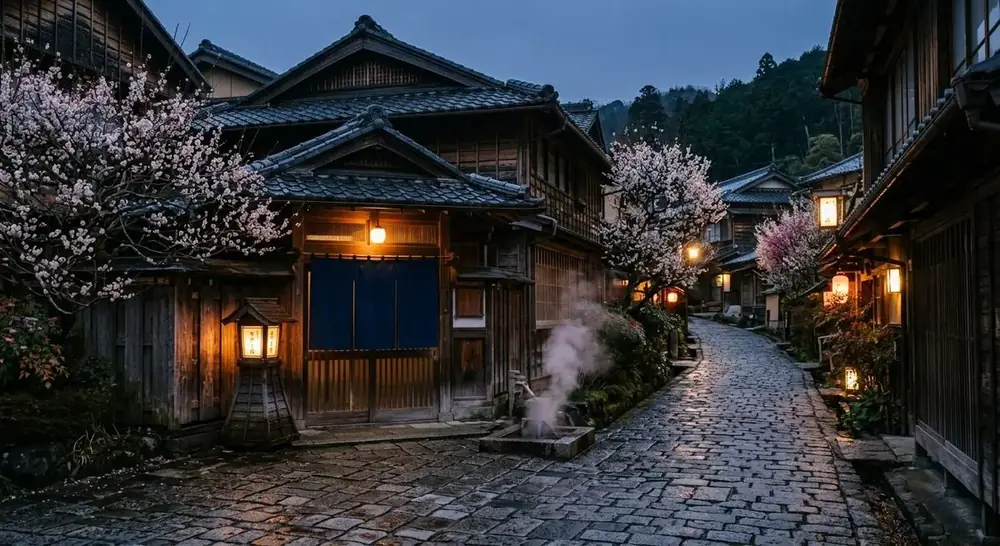
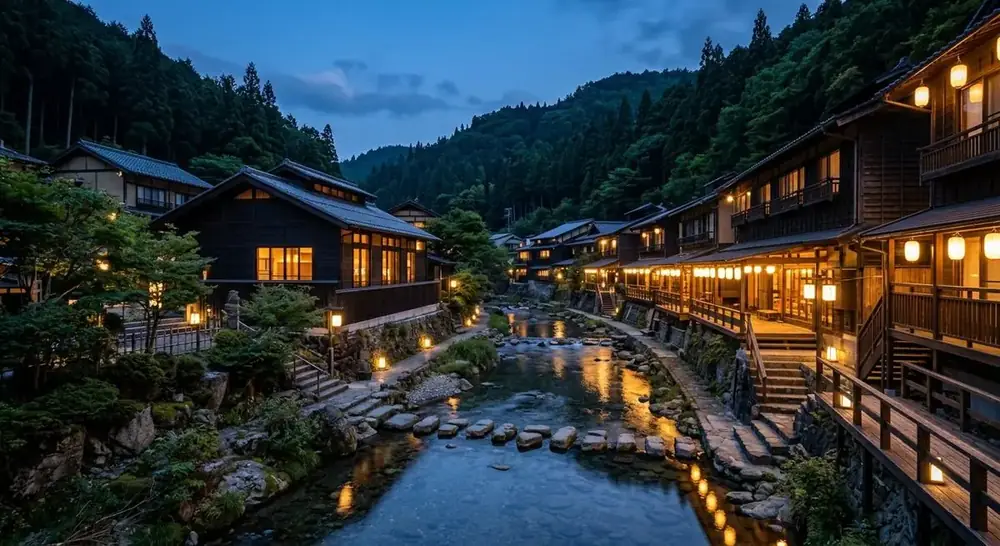
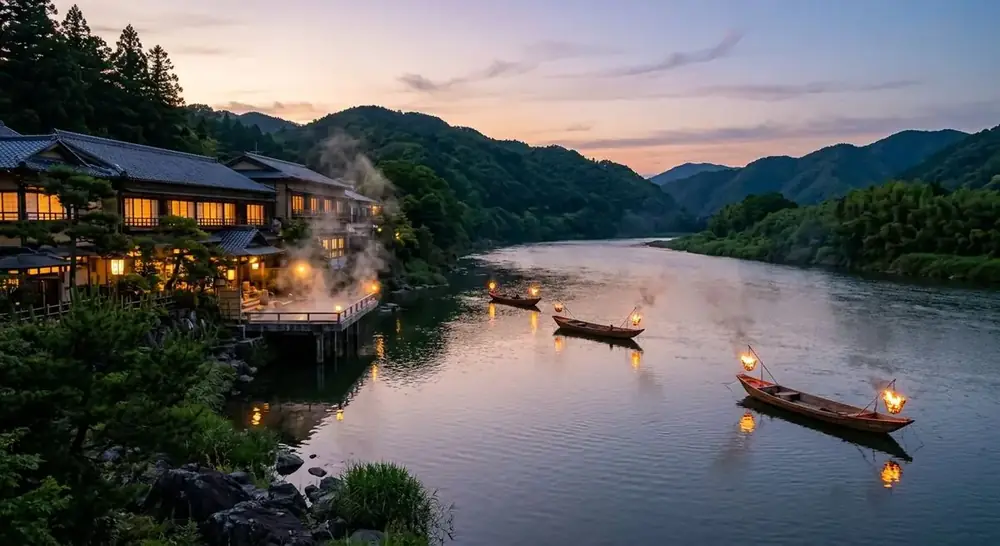
Onsen ryokanDay-trip onsenDay use ¥1,000