Kagoshima · Hinatayama Onsen, Kirishima
Hinatayama Onsen Segodon-yu
日当山温泉 西郷どん湯
The oldest naturally rising spring of Hinatayama Onsen, the spa district along the Amori River in Hayato, Kirishima, about 15 minutes by car from Kagoshima Airport. Saigō Takamori is said to have favoured it between hunts, and locals call it 'Segodon's bath'. It is unstaffed — you drop your fee in the box at the entrance — and the price is frozen in the Shōwa era: ¥250 for adults, ¥100 for children. Inside is a simple indoor bathroom with two tubs, hot and moderate, filled free-flowing with clear, slippery bicarbonate water; there is a drinking fountain of the spring too. No open-air bath or restaurant, but it opens 06:00–21:00 (last entry 20:30) and a room-only lodge next door costs ¥1,800 including the bath — a boon for travellers. Closed the fourth Monday. About 5 minutes on foot from JR Hinatayama Station; 10 parking spaces. For anyone wanting an unadorned everyday Kagoshima bath before or after Kirishima Shrine or the airport.
- Price (adult)
- ¥250
- Hours
- 06:00–21:00 (last entry 20:30)
- Closed
- 4th Mon
- Access
- About 5 min on foot from Hinatayama Station (JR Hisatsu Line); about 15 min by car from Mizobe-Kagoshima-Kūkō IC via Routes 504 and 223; about 15 min from Kagoshima Airport
- Water type
- Bicarbonate spring
- Tattoos
- Ask ahead
- Admission
- Day bathing ¥250 for adults and ¥100 for elementary-school children. It is unstaffed, so you drop your money into the honesty box at the entrance (no change — bring coins). Bring toiletries and towels; there are no lockers, so mind your valuables. There is a tap for drinking the spring water. The separate cure lodge next door is ¥1,800 for room only (bathing included; TV and air conditioning). Cash only
- Baths
- In Hinatayama Onsen, Kirishima; founded in 1825 and known locally as the 'moto-yu', the oldest naturally flowing communal bath in the spa village. There is a single indoor bath for each sex, with two tubs at different temperatures (hot and regular) side by side and the spring running straight into them free-flowing. There is no rotenburo, sauna or restaurant, but the boarded changing room and the Chinese poem by Saigō Takamori on the wall keep the look of a Shōwa-era communal bath. Open from 6 a.m., it is an everyday bath that local seniors visit two or three times a day
- Spring water
- Hinatayama Onsen, a sodium bicarbonate-chloride spring. Colourless and clear with a slight slickness, gentle and good for a long soak, and with high heat retention so the warmth stays after you get out. Indicated for neuralgia, muscle and joint pain, dry skin, stomach complaints and diabetes. You can also draw spring water from the tap in the bathroom and drink it
- Access & parking
- About 5 minutes on foot from Hinatayama Station on the JR Hisatsu Line. By car 15 min from Mizobe-Kagoshima-Airport IC on the Kyūshū Expressway via Routes 504 and 223, 15 min from Kagoshima Airport, 20 min from Kirishima Shrine, 15 min from the Kirishima spa village. Free parking for about 10. As it is unstaffed, check the hours (6:00–21:00, last entry 20:30) and the closure on the fourth Monday
- Phone
- 0995-43-3870
- Open in Google Maps
- Google Maps ↗
Essentials
Find a stay on Trip.com
Search and book accommodation across Japan on Trip.com. Day-use bathing needs no booking.
Opens partner booking site (affiliate)
Why go
- Hinatayama's oldest spring, loved by Saigō
- Unstaffed; ¥250 honesty box
- From 6 am; ¥1,800 lodge next door
The original bath of Hinatayama, once frequented by Saigō
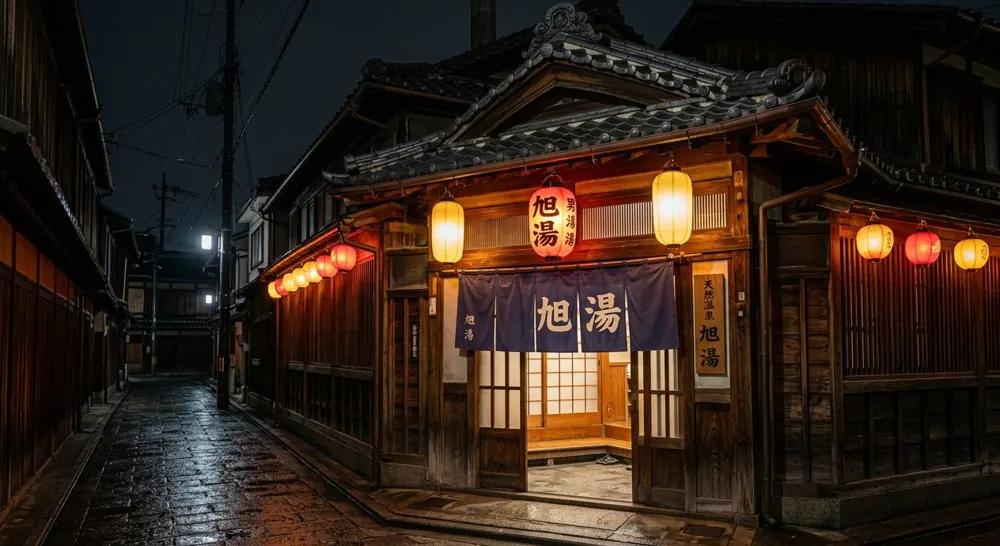
Segodon-yu is a communal bathhouse standing in the middle of Hinatayama Onsen in Kirishima, Kagoshima, along the Amorigawa river some 15 minutes by car from Kagoshima Airport. Founded in 1825, it is the oldest naturally flowing spring in the village, known locally as the 'moto-yu'. Its name comes from Saigō Takamori, the central figure of the Meiji Restoration: fond of fishing and hunting, he is said to have stayed at a friend's house here and bathed daily, so locals have long called it 'Saigō-yu'. The small sign and honesty box at the entrance, the boarded changing room and the Chinese poem by Saigō on the wall all preserve the look of a Shōwa-era communal bath almost unchanged. There is a single indoor bath for each sex, with two tubs side by side at different temperatures — hot and regular — so those who dislike very hot water can start in the regular tub and move across once used to it, and because the spring runs straight in free-flowing the water is always fresh. There is no rotenburo, no sauna and no restaurant, but in their place there is a fee of ¥250, hard to match anywhere in the country, and one undecorated tub. The water is a sodium bicarbonate-chloride spring, colourless with a slight slickness and little irritation; seniors come two or three times a day, and you can draw drinking water from the tap in the bathroom. Open from 6 a.m. to 9 p.m., it suits a visit just after landing, before a flight, or around a visit to Kirishima Shrine.
A ¥250 honesty box, two tubs and a drinking-water tap
On arrival, put ¥250 (¥100 for elementary-school children) into the honesty box at the entrance and open the door. Staff are often absent, so have coins ready and note that no change is given. The changing room is a plain boarded space with no lockers, so bring as few valuables as possible. Inside the bathroom the washing area is on the left and the two tubs at different temperatures face you. A sensible order is: rinse with the bath water; 10 minutes in the regular-temperature tub; once used to it, 5–8 minutes in the hot tub; rest in the changing room or outside the entrance, then go back in. The water is a sodium bicarbonate-chloride spring, colourless and clearly slick when stirred; with little irritation it does not tire you even after a long stay, and the warmth lingers afterwards. There is a tap in the bathroom for drawing spring water into a paper cup or bottle to drink — a tradition held to help stomach complaints and diabetes, and local seniors use it too (about 100–200 ml at a time). The facility has no rotenburo, sauna, restaurant or shop, and there are hours when towels are not sold, so bring towels and toiletries. In the separate building next door is a cure lodge at ¥1,800 for room only, bathing included, with TV and air conditioning — few places are cheaper for the old cure journey of staying several days and bathing two or three times daily. Notes: unstaffed (self-service honesty box); bring cash and coins; no lockers; closed the fourth Monday; last entry 20:30. For ¥250 you meet the essence of a 200-year-old onsen — the plainest and most satisfying bath in Kagoshima.
Practical details and a Kirishima and airport route
Hours are 6:00–21:00 (last entry 20:30), closed the fourth Monday; ¥250 for adults and ¥100 for elementary-school children, and the cure lodge next door is ¥1,800 for room only with bathing included. Access is 5 minutes on foot from Hinatayama Station, 15 minutes from Mizobe-Kagoshima-Airport IC, 15 minutes from Kagoshima Airport, with free parking for about 10. Suggested routes: (1) around a flight — land at Kagoshima Airport, collect a rental car, take a morning bath at Segodon-yu, visit Kirishima Shrine, then move on to the Kirishima spa village; (2) half a day in Kirishima — Kirishima Shrine, Kirishima East Shrine, Segodon-yu, a walk along the Amorigawa, then day bathing at a Kirishima hotel to compare waters; (3) a cure stay — two or three nights in the lodge beside Segodon-yu (¥1,800 a night), bathing and drinking the spring daily and walking the village; (4) a Saigō Takamori trail — Segodon-yu, then Kagoshima city (Sengan-en, the Nanshu cemetery) and the Shiroyama lookout; (5) crossing Kyūshū — Kumamoto, Hitoyoshi, Hinatayama for a bath, then Kagoshima city. Notes: unstaffed, cash and coins; bring towels; no lockers; closed the fourth Monday; do not overdrink the spring water. Hinatayama Onsen is famous for the story of Saigō Takamori, but the real substance of the village is the dozen or so plain communal bathhouses that residents still use every day. Segodon-yu is the oldest of them, and if you want one taste of an undecorated Japanese onsen during a trip to Kagoshima, this is the best place.
Before you go
- No official tattoo policy is published — ask at reception.
- As a communal bath there is no soap or shampoo — bring your own or buy at the shop.
- Payment is usually by ticket machine in cash — bring coins.
- Last entry is 30–60 minutes before closing.
Features
Mood & scenery
Price
Who with
Convenience
Amenities
✔ Verified operating: 2026-09 Operating status and rates cross-checked against the official site and onsen guides (full source notes in Japanese on the JA page)
Prices and hours change. Check official sources before visiting.
More in this area

Sunamushi Kaikan Saraku
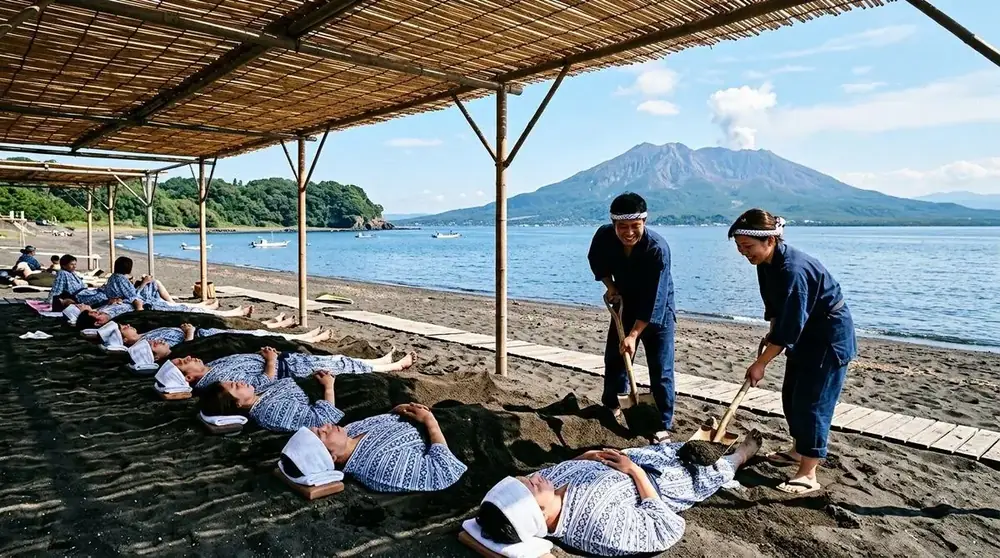
The municipal facility for Ibusuki's famous natural sand bath. Change into a rental yukata, walk down to the beach, and staff bury you in hot sand for about ten minutes; afterwards rinse off in the indoor onsen. At high tide the sand baths move under a roof. ¥1,500 includes the yukata; bring or buy a towel. 20 minutes on foot or 5 by bus from Ibusuki Station.

Kirishima Hotel Iōdani Garden Bath
A vast garden bath hall fed by 14 sources at 1,400 litres a minute, with four water types — sulfur, alum, saline and iron — in one place. The central pool is mixed-gender (women-only hours; bathing garments allowed).

Nigatsuden Onsen Tonosama-yu
A public bath from the early Shōwa era beside the ruins of the Shimazu lords' private bathhouse. The Shimazu crest decorates the tub; the salty water runs hot and free-flowing. Free drinking spring too — a local follow-up to the sand bath.