Historic building

95 results
Illustrative onsen mood image
Nagano · Nozawa OnsenTattoos: Allowed

O-yu (Nozawa outer bath)

The centerpiece of Nozawa's 13 public baths, a traditional bathhouse in the middle of the village. Local 'yunakama' associations have cleaned it daily since the Edo period; payment is a donation in the box at the door. Two pools, hot and 'mild' — though even the mild one exceeds 42°C. Adding cold water is bad manners: rinse first, then keep soaks short. No soap or shampoo.

Public bathhouse (sento)Natural hot springDay use Donation / free
Illustrative onsen mood image
Okayama · Yubara OnsenTattoos: Ask ahead

Yubara Onsen Sunayu

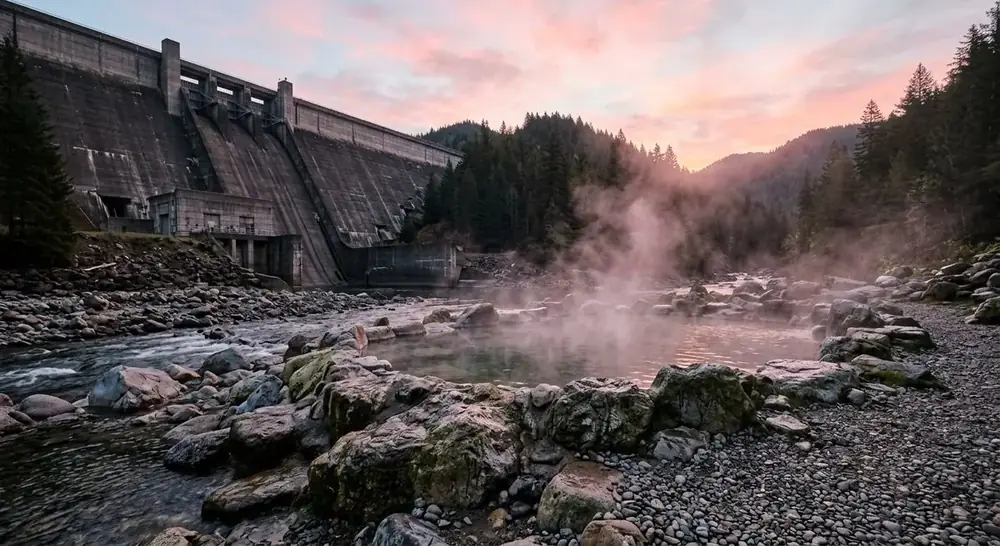
A natural open-air bath on the Asahi River gravel bed right below Yubara Dam, where water bubbles up through the riverbed itself — ranked the 'western grand champion' of Japan's rotenburo. Three pools at different temperatures; mixed, free and open 24 hours. Only a simple changing hut, so women are advised to wear a bathing garment (sold and rented in town). Closed Wednesday mornings for cleaning. Photography strictly forbidden.

Day-trip onsenRemote onsenDay use Donation / free
Illustrative onsen mood image
Fukuoka · Futsukaichi OnsenTattoos: Ask ahead

Futsukaichi Onsen Hakatayu

Thirty minutes by train from Fukuoka, next to Dazaifu, this communal bath belongs to Futsukaichi Onsen, a spring with 1,300 years of history. A single tub in a wooden building, but 100% free-flowing alkaline water leaves skin slick and smooth, and locals keep coming. ¥350 weekdays, ¥450 weekends. Upstairs rest room, plus onsen coffee and hot-spring eggs. Increasingly paired with a visit to Dazaifu Tenmangu.

Day-trip onsenPublic bathhouse (sento)Day use ¥350
Illustrative onsen mood image
Iwate · Hanamaki OnsenTattoos: Ask ahead

Osawa Onsen Jisuibu Tojiya

A wooden toji (therapeutic stay) inn over 200 years old on the Toyosawa River in the Hanamaki-Minami onsen area, once frequented by poet Kenji Miyazawa. Its signature is 'Osawa-no-yu', a mixed open-air bath jutting over the river, with women-only hours. Day bathing from 7 am; ¥700 covers three baths. Many linger for lunch and sake at the 'Yahagi' dining room. Free shuttle from Hanamaki Station.

Day-trip onsenOnsen ryokanDay use ¥700
Illustrative onsen mood image
Yamaguchi · Nagato-Yumoto OnsenTattoos: Ask ahead

Nagato-Yumoto Onsen Onto

The source bath of Yamaguchi's oldest hot spring, opened some 600 years ago. Local volunteers rebuilt the aging public bath in 2020; the bathroom sits directly on the spring, so you stand chest-deep in a 1-m pool watching water seep from the bedrock. Around 39°C — made for long soaks. The riverside lounge doubles as a café open to non-bathers. Pair with a stroll through the town redeveloped around Hoshino Resorts' KAI Nagato.

Day-trip onsenPublic bathhouse (sento)Day use ¥990
Illustrative onsen mood image
Kōchi · Kochi CityTattoos: Ask ahead

Sansuien Suisaikaku Onsen

The bath wing of a historic hotel built on the site of the Yamauchi lords' residence below Kochi Castle. A rare natural hot spring in central Kochi, with a rotenburo facing the Kagami River and Mt. Hitsuzan, a large indoor bath and sauna. Day use is daytime only, 10:00–16:00. Fifteen minutes on foot from Harimaya Bridge — easy between sightseeing and the Sunday market. ¥1,200; bring or rent a towel.

Day-trip onsenOnsen ryokanDay use ¥1,200
Illustrative onsen mood image
Shimane · Yunotsu OnsenTattoos: Ask ahead

Yunotsu Onsen Yakushi-yu

The communal bath of Yunotsu, once the shipping port for the World Heritage Iwami Ginzan silver mine. Rated a perfect 'all fives' by the Japan Spa Association, it is 100% free-flowing, and iron-rich mineral deposits coat the tub in thick brown crusts. Next door is 'Shin-yu', a Western-style wooden building from 1919 whose retro café and rooftop terrace are open to bathers. ¥600. The whole street is a preserved historic district.

Day-trip onsenPublic bathhouse (sento)Day use ¥600
Illustrative onsen mood image
Fukushima · Iizaka OnsenTattoos: Ask ahead

Iizaka Onsen Sabako-yu

Twenty-five minutes by local train from Fukushima, the emblematic communal bath of Iizaka Onsen, where the poet Basho is said to have bathed. Rebuilt in 1993 as a faithful copy of one of Japan's oldest wooden bathhouses, its granite tub runs with free-flowing spring water above 45°C. Locals don't cool it with tap water; visitors get guidance. ¥400, from 6 am. No soap or shampoo. Start here for a crawl of the town's nine public baths.

Day-trip onsenPublic bathhouse (sento)Day use ¥400
Illustrative onsen mood image
Iwate · Hanamaki OnsenTattoos: Ask ahead

Namari Onsen Fujisan Ryokan

A wooden ryokan founded in 1841 on the Toyosawa River at the far end of the Hanamaki onsen villages. Its signature is 'Hakuen-no-yu', a self-welling rock pool about 1.25 m deep that you stand in — billed as Japan's deepest rock bath. Five springs feed four bathhouses, all 100% free-flowing. Day use ¥800, 10:00–21:00. Hakuen-no-yu is mixed bathing with women-only hours. Free shuttle from Hanamaki Station by reservation.

Day-trip onsenOnsen ryokanDay use ¥800
Illustrative onsen mood image
Okayama · Yunogo OnsenTattoos: Ask ahead

Yunogo Onsen Sagi Onsen-kan

The source bath of Yunogo Onsen, where legend says the monk Ennin found an egret healing its wounds some 1,200 years ago. One of the three famed Mimasaka hot springs, an hour by car from Okayama. The town-run bathhouse charges ¥800 for indoor and open-air baths across two bathing wings linked by a moving walkway, alternating daily. Open 8:00–21:00; the 'all-day rest' plan lets you come and go until closing. Bring your own food.

Day-trip onsenPublic bathhouse (sento)Day use ¥800
Illustrative onsen mood image
Mie · Sakakibara OnsenTattoos: Ask ahead

Yumoto Sakakibarakan — Yu-no-sho Day Spa

Sakakibara Onsen was praised in the 11th-century Pillow Book as one of Japan's three finest baths. Tucked in the hills of Tsu, it flourished as a purification stop for pilgrims to Ise Shrine and is known as a 'beauty bath'. The day-use wing of this old ryokan lets you feel the silky pH 9.6 house spring unheated in the dedicated 'gensen' tub. ¥1,000 (face towel included, 2-hour limit). Shuttle from Sakakibara-Onsenguchi Station.

Day-trip onsenOnsen ryokanDay use ¥1,000
Illustrative onsen mood image
Miyagi · Akiu OnsenTattoos: Ask ahead

Akiu Onsen Public Bath

The only communal bath in Akiu Onsen, Sendai's classic hot-spring retreat. Among upscale ryokan charging ¥1,000-plus for day use, this humble bathhouse offers free-flowing chloride spring water for ¥300. Near the Yakushi-do temple at the source, it has a single tub and a mostly local crowd; soap is sold, not provided, and a sign asks for 40-minute stays. About 55 minutes by bus from Sendai Station, right by the Yumoto stop.

Day-trip onsenPublic bathhouse (sento)Day use ¥300
Illustrative onsen mood image
Nagasaki · Obama Onsen (Nagasaki)Tattoos: Ask ahead

Obama Onsen Wakihama Public Bath (Otasshan-yu)

A communal bath in Obama Onsen on Tachibana Bay, whose ~100°C springs release more heat than any in Japan. The single-storey wooden building from 1937 feels like a museum of Showa-era life and is a designated prefectural townscape asset. Pay at the old-style counter, then choose between the hot and very hot tubs of free-flowing chloride water. Open from 6 am; part of the Kyushu 88 Onsen trail. About an hour from Nagasaki city, on the way back from Unzen.

Day-trip onsenPublic bathhouse (sento)Day use ¥400
Illustrative onsen mood image
Wakayama · Ryujin OnsenTattoos: Ask ahead

Ryujin Onsen Motoyu

The source bath of Ryujin Onsen, counted with Yunokawa and Kawanaka among Japan's 'three beauty baths'. It stands on the Hidaka River deep in the Kii mountains, with a cypress indoor bath and a rock rotenburo overlooking the stream. The silky bicarbonate water is famous for leaving skin smooth. ¥800, 7:00–21:00, open daily. An hour by car from Koyasan via the Koya-Ryujin Skyline, or about 80 minutes by bus from Kii-Tanabe.

Day-trip onsenPublic bathhouse (sento)Day use ¥800
Illustrative onsen mood image
Aomori · Tsuta Onsen & OiraseTattoos: Ask ahead

Tsuta Onsen Ryokan

A lone inn in a primeval beech forest on the southern flank of Mt. Hakkoda. Spring water wells up directly through the gaps in the hiba-cypress boards on the tub floor — 'free-welling', so you bathe in water that has never touched air, a rarity even in Japan. The all-hiba 'Kyuan-no-yu' bathhouse from 1918 is magnificent. Day use 10:00–15:00, ¥1,000; may close early when busy. Combine with the hour-long trail around Tsuta-numa pond, famous for autumn colour. Closed in winter.

Day-trip onsenOnsen ryokanDay use ¥1,000
Illustrative onsen mood image
Tottori · Iwai OnsenTattoos: Ask ahead

Iwai Yukamuri Onsen Public Bath

Twenty minutes by car from the Tottori Sand Dunes, the communal bath of Iwai Onsen, one of San'in's oldest springs at 1,300 years. It preserves 'yukamuri', a quirky custom of singing while ladling water over a towel on your head. The 47.6°C source in a corner of the car park flows in 100% untreated. ¥380, open 6:00–22:00. A humble soak to pair with the Uradome coast or the dunes.

Day-trip onsenPublic bathhouse (sento)Day use ¥380
Illustrative onsen mood image
Kagawa · Konpira Onsen (Kotohira)Tattoos: Ask ahead

Konpira Onsen Yumoto Yachiyo

A hot-spring ryokan in the heart of the temple town below Kotohira-gū, close to the foot of the famous stone steps. Perfect for easing your legs with a day soak (¥750, 11:00–16:00) after climbing the 785 steps; the open-air bath looks out on the Konpira hills. Bicarbonate spring. About 10 minutes on foot from Kotohira Station and easy to pair with udon-shop hopping. Baths are occasionally closed for maintenance—check ahead.

Day-trip onsenOnsen ryokanDay use ¥750
Illustrative onsen mood image
Ishikawa · Katayamazu Onsen, KagaTattoos: Ask ahead

Katayamazu Onsen Sōyu

An all-glass communal bath on the shore of Lake Shibayama in Katayamazu, part of the Kaga onsen cluster, designed by architect Yoshio Taniguchi. The lake-facing 'Kata-no-yu' and garden-facing 'Mori-no-yu' swap between men and women on odd and even days; for ¥500 you get the Hakusan peaks and the lake to yourself. The salty chloride water keeps you warm long after. Open from 6:00 to 22:00, with a café upstairs (closed Thursdays) selling onsen eggs. About 10 min by bus from Kaga-Onsen Station.

Day-trip onsenNatural hot springDay use ¥500
Illustrative onsen mood image
Wakayama · Kumano Hongu Onsen (Yunomine & Kawayu)Tattoos: Ask ahead

Yunomine Onsen Tsuboyu

The only hot spring inscribed as a World Heritage Site that you can actually bathe in, listed together with the Kumano Kodo pilgrimage routes. A tiny hut over the stream in Yunomine — said to be Japan's oldest onsen at 1,800 years — shelters a tub hollowed from natural rock that fits two adults. The sulfurous water is said to change colour seven times a day and served pilgrims for ritual purification. Private 30-minute slots, ¥800, sign up at the public bathhouse (6:00–21:00). Waits of several hours are common on holidays; boil onsen eggs in the hot-spring trough while you wait.

Day-trip onsenNatural hot springDay use ¥800
Illustrative onsen mood image
Shimane · Arifuku OnsenTattoos: Ask ahead

Arifuku Onsen Gozen-yu

The landmark of Arifuku, a stair-stepped hamlet of wooden inns tucked into the San'in hills. A 1928 reinforced-concrete bathhouse with Western arched windows, it pours colourless alkaline simple-spring water undiluted into the tub — slippery 'beauty water'. ¥400 with soap and shampoo, open 7:00–22:00 for early soaks. A family bath rents for ¥1,200 an hour, and the tatami rest room upstairs displays pre-war photographs. Cars can't enter the sloping village, which also has the Satsuki-yu and Yayoi-yu public baths for a three-bath circuit.

Day-trip onsenPublic bathhouse (sento)Day use ¥400
Illustrative onsen mood image
Shizuoka · Itō OnsenTattoos: Ask ahead

Itō Onsen Tōkaikan (weekend bathing)

A three-storey wooden former inn built in 1928 on the Matsukawa River, now run by Itō city as a cultural facility and a masterpiece of early-Shōwa architecture. The carved transoms, rooftop lookout and guest rooms where rival carpenters showed off are worth the ¥200 admission alone — but on Saturdays, Sundays and holidays, 11:00–19:00, you can also bathe in the tiled 'large' and 'small' bath halls (¥500 adults including admission; halls swap by gender). The water is Itō's simple spring. Note the baths are closed on weekdays. Seven minutes on foot from Itō Station; combine with the riverside promenade and the old spa quarter opposite — a treat for lovers of retro buildings.

Day-trip onsenPublic bathhouse (sento)Day use ¥500
Illustrative onsen mood image
Nagano · Bessho Onsen, UedaTattoos: Ask ahead

Bessho Onsen Ishiyu public bath

One of the three public 'outer baths' of Bessho Onsen near Ueda, the spa village nicknamed 'Kamakura of Shinshū'. Ishiyu is famed as the hidden bath of warrior Sanada Yukimura in Ikenami Shōtarō's novel Sanada Taiheiki; its tub is built around natural bedrock, filled free-flowing with faintly sulphurous, mildly alkaline water. Open 6:30–21:30 (last entry 21:00), closed Tuesdays, a modest ¥300 with free lockable lockers. Pair it with the other two — Ōyu (closed 1st & 3rd Wed) and Daishiyu (closed 1st & 3rd Thu) — plus Kitamuki Kannon temple and the National Treasure octagonal pagoda of Anrakuji, all on foot. Ten minutes' walk from Bessho-Onsen Station on the Ueda Dentetsu line.

Day-trip onsenPublic bathhouse (sento)Day use ¥300
Illustrative onsen mood image
Nagano · Asama Onsen, MatsumotoTattoos: Ask ahead

Asama Onsen Yūyūan Biwa-no-yu

In Asama Onsen, Matsumoto's spa hinterland, this day-use bath occupies the house of the hereditary bath-keepers who guarded the lords' private 'Goten-yu' for 400 years, since castle lord Ishikawa Kazumasa. Old garden trees and displays on the bath-keepers' history give the place the feel of a heritage site; the clear, mildly alkaline simple spring is fine-textured on the skin. Besides the main hall there is an open-air bath in a separate wing and a rest room, and many visitors come straight from Matsumoto Castle. Open 9:00–21:00 (last entry 20:00), closed Mondays (or the next day after a holiday), ¥900. About 20 minutes by bus from Matsumoto Station to Asama-Onsen Bunka Center-mae, then 10 minutes on foot.

Day-trip onsenNatural hot springDay use ¥900
Illustrative onsen mood image
Kumamoto · Yamaga & Hirayama OnsenTattoos: Ask ahead

Yamaga Onsen Sakura-yu

One of Kyūshū's largest wooden bathhouses, in the centre of the old castle town of Yamaga in northern Kumamoto. Built in the Edo period as a rest house for the Hosokawa lords, its Meiji-era rebuild is attributed to Sakamoto Matahachirō, the master carpenter of Dōgo Onsen Honkan. Faithfully reconstructed in 2012, the curved-gable entrance, dragon transoms and high-ceilinged bath hall feel far grander than the ¥350 admission. The water is a clear, silky alkaline simple spring, with a drinking fountain. Open long hours, 6:00–24:00 (last entry 23:30), closed the 3rd Wednesday. Soap and towels from the vending machine. Combine with the Yachiyoza theatre (Important Cultural Property), the Buzen Kaidō streetscape and the August lantern festival.

Day-trip onsenPublic bathhouse (sento)Day use ¥350
Illustrative onsen mood image
Gunma · Shima OnsenTattoos: OK if covered

Shima Onsen Sekizenkan – Genroku-no-yu (day use)

Founded in 1691 and regarded as Japan's oldest surviving hot-spring inn building, this Shima Onsen institution in Gunma stands across a red bridge; the main house, said to be one of the models for the bathhouse in Spirited Away, is an Important Cultural Property. The celebrated Genroku-no-yu, built in 1930 in Taishō-romantic style, has five tubs set into a stone floor lit by arched windows, with water welling up from below. Shima's sulphate water is counted among Japan's three great baths for digestive ailments and can be drunk. Day use 10:00–17:30 (last entry 17:00), ¥1,500 with face towel, covering Genroku-no-yu, the mixed rock bath and private baths. Tattoos accepted if covered with stickers. About 40 minutes by bus from Nakanojō Station to the Shima Onsen terminus.

Day-trip onsenOnsen ryokanDay use ¥1,500
Illustrative onsen mood image
Shizuoka · Atami OnsenTattoos: Ask ahead

Izusan Onsen Hama Bathhouse (Hashiriyu)

A neighbourhood-run communal bath at the foot of the stone stairway to Izusan Shrine, north of Atami Station and linked to Minamoto no Yoritomo and Hōjō Masako. The water comes from Hashiriyu, one of Japan's three ancient springs — a cave source where hot water once 'ran' down to the sea — a 71 °C calcium-sodium chloride spring, free-flowing with only water added to cool it. Inside it is pure Shōwa: an attendant's counter and two tubs, one hot, one lukewarm. ¥350; open afternoons only, roughly 14:00–20:00, closed Thursdays. Bring towel and soap. Pair with the free Hashiriyu cave just below and the 837-step climb to Izusan Shrine for a slice of Atami history. About 7 minutes by bus from Atami Station to Aizomebashi.

Day-trip onsenPublic bathhouse (sento)Day use ¥350
Illustrative onsen mood image
Miyagi · Kamasaki Onsen, ShiroishiTattoos: Ask ahead

Kamasaki Onsen Mogamiya Ryokan

A wooden inn founded in 1789 at Kamasaki Onsen, a mountain cure spa in Shiroishi, Miyagi, where villagers are said to have struck hot water with the tip of a sickle more than 600 years ago. Its iron-bearing sulphate water, known as the 'medicinal bath of Ōu', turns tea-brown and has long been trusted for cuts and bruises. Gleaming dark corridors, glass shōji and traces of the old self-catering cure wing make it irresistible to lovers of retro Japan. Day use 11:00–14:00, ¥800; bring a towel. Fifteen minutes by car from Shiroishi-Zaō Station — a convenient stop with Shiroishi Castle, the Yajirō kokeshi village or the start of the Zaō Echo Line. Day bathing is sometimes suspended when busy or for cleaning, so phone ahead.

Day-trip onsenOnsen ryokanDay use ¥800
Illustrative onsen mood image
Gunma · Manza OnsenTattoos: Ask ahead

Manza Onsen Yunohana Ryokan

At 1,800 m in Manza Onsen — said to have the highest sulphur content in Japan — this is the most rustic of the old spa-cure inns. The wooden bathhouse holds just one indoor tub per gender, but the milky acidic sulphur water is thick and hot enough to leave you drowsy afterwards. It is known for its 'Sarunokoshikake-yu', in which extract of a bracket fungus has long been added to the water. Day use 10:00–16:00, ¥700 for adults, towels sold for ¥250. For onsen fans who want an old-school cure-bath feel amid Manza's big resort hotels. The building has tilted due to ground subsidence, so phone ahead to confirm it is operating. About 40 minutes by bus from Manza-Kazawaguchi Station.

Day-trip onsenOnsen ryokanDay use ¥700
Illustrative onsen mood image
Niigata · Echigo-Yuzawa OnsenTattoos: Ask ahead

Echigo-Yuzawa Yamano-yu communal bath

The oldest communal bath in Echigo-Yuzawa, near the inn where Kawabata Yasunari wrote Snow Country — he is said to have bathed here himself. The tub fits only five or six people, but the sulphur-scented free-flowing spring is a rarity in Yuzawa and the star of the town's five-bath 'sotoyu' circuit. Adults pay ¥850 including bathing tax (revised 2026); open 10:00–21:00 (last entry 20:30), closed Tuesdays. Soap and shampoo provided, towels sold for ¥200. It sits up a slope 25 minutes' walk from Echigo-Yuzawa Station, or 10 minutes from Gala-Yuzawa Station; only 10 parking spaces.

Day-trip onsenPublic bathhouse (sento)Day use ¥850
Illustrative onsen mood image
Yamaguchi · Tawarayama OnsenTattoos: Ask ahead

Tawarayama Onsen Hakuen-no-yu

Tawarayama Onsen, in the hills of Nagato, Yamaguchi, has 1,100 years of history and still lives by 'sotoyu' culture: the inns have no baths of their own, so even overnight guests walk in yukata to the two communal bathhouses, Machi-no-yu and Hakuen-no-yu. Hakuen-no-yu is the newer of the pair, with three tubs — a lukewarm No.1 bath straight from the source, a heated hotter No.2 bath and an open-air bath — showcasing silky pH 9.9 alkaline water. ¥850 for adults, open 12:00–21:00, closed Tuesday to Thursday (Machi-no-yu runs daily 06:00–22:00 for ¥650). A free foot bath sits halfway up the entrance stairs. About 20 minutes by bus from Nagato-Yumoto Station.

Day-trip onsenPublic bathhouse (sento)Day use ¥850
Illustrative onsen mood image
Okayama · Yubara OnsenTattoos: Ask ahead

Maga Onsenkan (Yubara Onsen area)

The communal bath of Maga Onsen, a tiny hamlet of stone stairways on a slope above a tributary of the Asahi River in the Yubara Onsen area. Legend says a defeated warrior healed his wounds here some 700 years ago. The star is the 'Makuyu', a mixed rock bath of about 1.6 × 2 m and 1.2 m deep, so you soak standing up — often called Japan's smallest mixed bath — with lukewarm 39°C water bubbling up through cracks in the rock floor. The men's and women's baths connect to it and cost ¥250; the Makuyu is ¥400 (max 8 people, one hour) and a private bath ¥1,300 for up to three. Open 08:00–21:00 (last entry 20:10), closed Tuesdays (open on holidays). No towels allowed in the mixed bath, so be prepared. About 20 minutes by car from Chūgoku-Katsuyama Station.

Day-trip onsenPublic bathhouse (sento)Day use ¥250
Illustrative onsen mood image
Ōita · Beppu OnsenTattoos: Ask ahead

Kannawa Onsen Shibu-no-yu

Halfway along Ideyu-zaka, the steam-wreathed main street of Beppu's Kannawa district, this communal bath is run by the local residents' association. In typical Beppu style the changing area and bath share one room, and hot sodium-chloride water rich in metasilicic acid flows freely. Visitors pay only ¥100 — technically a coin-locker fee rather than admission. Open 06:30–21:00 daily. No soap or shampoo and minimal washing space, so follow local manners: quiet and quick. There is a toilet on the little square out front, and the Jigoku-mushi steam-cooking workshop and Umi-jigoku are two minutes away, making it an easy stop on a Kannawa stroll. Counts toward the Beppu Hattō Onsen-dō stamp rally.

Day-trip onsenPublic bathhouse (sento)Day use ¥100
Illustrative onsen mood image
Kagoshima · Ibusuki OnsenTattoos: Ask ahead

Ibusuki Onsen Mura-no-yu

In the town centre of Ibusuki, famous for its sand baths, this is one of the oldest communal baths, dating from 1882. Locals call it 'Muran-yu'. Its pride is the wooden bathhouse and the spring that wells up straight through the floor of the tub; there are no taps — you scoop the emerging water with a bucket to rinse, the old way — and there are two tubs, hot and lukewarm. The sodium-chloride water is strongly salty in true Ibusuki fashion and keeps you warm for ages. Adults drop ¥350 into the unattended fee box; open 08:00–22:00. No soap provided, so bring your own. About 13 minutes on foot from Ibusuki Station. For onsen fans who want a 'real locals' bath' after the Saraku sand-bath hall; entry may not be possible during cleaning or crowding, so check closure days in advance.

Day-trip onsenPublic bathhouse (sento)Day use ¥350
Illustrative onsen mood image
Yamagata · Hijiori OnsenTattoos: Ask ahead

Hijiori Onsen Kami-no-yu communal bath

Hijiori Onsen, 1,200 years old, is a cure-spa where inns huddle at the bottom of a caldera in Ōkura village, Yamagata. Right in the middle of the street stands Kami-no-yu, the only communal bath open to visitors. A small bathhouse with an attendant's counter, it has slightly hot free-flowing sodium-chloride/bicarbonate water and a tiny Yakushi shrine in the corner of the tub. Adults pay ¥400 (free for guests of the village inns); open 08:00–18:00 (until 17:00 in winter), no bathing on Thursday mornings for cleaning. The Hijiori way is to pair it with the morning market that sets up from about 5–6 am (Apr–Nov). In winter this is one of Japan's snowiest places, and just walking the street between snow walls is an experience. About 55 minutes by bus from Shinjō Station.

Day-trip onsenPublic bathhouse (sento)Day use ¥400
Illustrative onsen mood image
Aomori · Nuruyu Onsen (Kuroishi)Tattoos: Ask ahead

Nuruyu Onsen Tsuru-no-meitō communal bath

The communal bath at the heart of Nuruyu Onsen in Kuroishi, Aomori, a spa with more than 400 years of history. It is ringed by 'kyakusha' — simple self-catering cure lodgings with no baths of their own, whose guests all walk over here — a form of spa life now rare even in Tōhoku. The bathroom is as roomy as a sentō, with 100% source water (sodium chloride-sulphate) cooled by a special method without dilution and split into hot and lukewarm tubs. Adults pay ¥350; open long hours from 05:00 to 22:00 (last entry 21:30), daily (occasional closures in April and November). No soap provided. Kokeshi-doll workshops and the Tsugaru Kokeshi Museum are nearby. About 25 minutes by bus from Kuroishi Station.

Day-trip onsenPublic bathhouse (sento)Day use ¥350
Illustrative onsen mood image
Akita · Goshōgake Onsen, HachimantaiTattoos: Ask ahead

Goshōgake Onsen (day use)

A lone inn in a steaming fumarole field at about 1,000 m on the Akita side of Hachimantai. One of Tōhoku's great cure spas — 'arrive on horseback, leave on your own two feet', as the saying went — it is also famous for its ondol-heated cure wing. The main bathhouse lines up seven kinds of tubs: the signature box steam bath, a mud bath, a cascade bath, a 'volcano bath' and an open-air bath, all fed by milky acidic sulphur water. Day use 10:30–15:00 (last entry 14:00), ¥800 for adults, closed Tuesdays (plus maintenance days). Behind the inn a nature trail loops past mud volcanoes and vents in about 40 minutes. About 1 h 55 min by bus from Tazawako Station on the Hachimantai summit line (usually late Apr–mid-Oct); in winter come by local bus from Kazuno-Hanawa Station or by car.

Day-trip onsenOnsen ryokanDay use ¥800
Illustrative onsen mood image
Kumamoto · Tsuetate OnsenTattoos: Ask ahead

Tsuetate Onsen Moto-yu communal bath

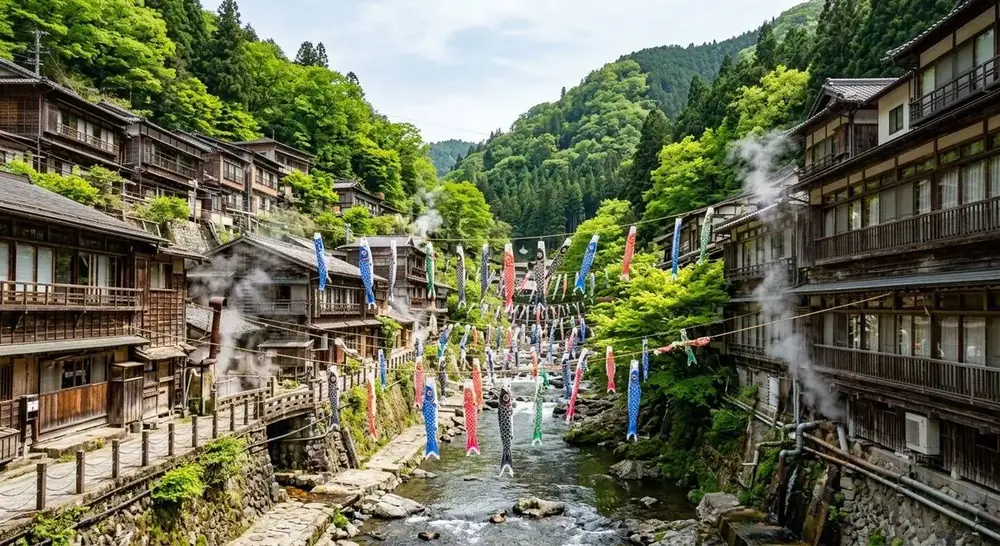
Tsuetate Onsen, where inns line both banks of the Tsuetate River on the Kumamoto–Ōita border, claims 1,800 years of history as the bath water of the infant Emperor Ōjin. Moto-yu is the communal bath said to be its origin: a single half-open tub carved into the rock face beside the riverside promenade — mixed, free and open 24 hours, nothing more. The sodium-chloride water, cooled from a 98°C source, leaves the skin soft. Changing space is basic and screening minimal, so many people wear bathing garments or a wrapped towel; early morning or night is the best time. Combine it with a wander through the 'sedoya' back alleys and, in May–June, the 3,500 carp streamers strung across the river. About 50 minutes by bus from Hita Station.

Day-trip onsenPublic bathhouse (sento)Day use Donation / free
Illustrative onsen mood image
Nagano · Kamisuwa Onsen, Lake SuwaTattoos: Ask ahead

Katakurakan Sennin-buro

A Western-style bathhouse on the shore of Lake Suwa, built in 1928 by the Katakura silk dynasty for the welfare of local residents and now an Important Cultural Property. Its famous Sennin-buro is a marble pool 1.1 m deep — you bathe standing, pebbles underfoot, surrounded by stained glass and sculpture — named for the hundred people it can hold at once. It uses Kamisuwa's spring water and also has a sauna and jet bath. Adults ¥750, open 10:00–20:00 (last entry 19:30), closed 2nd and 4th Tuesdays. The 2nd-floor rest room (until 19:00) and canteen (11:00–15:00) are open to bathers, and tours of the hall building are offered. Eight minutes on foot from Kami-Suwa Station, handy for Suwa Taisha shrine and Takashima Castle.

Day-trip onsenPublic bathhouse (sento)Day use ¥750
Illustrative onsen mood image
Ishikawa · Yamashiro Onsen, KagaTattoos: Ask ahead

Yamashiro Onsen Sōyu

The public bathhouse at the heart of Yamashiro Onsen's 'Yu-no-gawa' square in the Kaga hot-spring region, a spa 1,300 years old. In Kaga communal baths are called 'sōyu', and even ryokan guests walk over in yukata. The entrance reuses the gate of the old Yoshinoya inn; inside is spacious and clean, with one big tub of fresh undiluted water (sodium-calcium sulphate-chloride) flowing freely. Adults ¥500, open 06:00–22:00, closed only on the morning of the 4th Wednesday. A ¥900 combined ticket includes the 'Ko-sōyu' opposite (¥700), a recreation of the Meiji-era bathhouse with Kutani-ware tiles and stained glass — comparing the two is the classic plan. Soap and shampoo are sold, not provided. About 10 minutes by bus from Kaga-Onsen Station.

Day-trip onsenPublic bathhouse (sento)Day use ¥500
Illustrative onsen mood image
Shizuoka · Itō OnsenTattoos: Ask ahead

Itō Onsen Wada Jurōjin-no-yu (Wada-yu Kaikan)

The oldest of Itō Onsen's 'Seven Lucky Gods' communal baths, a true locals' bathhouse. The spring is said to have been presented to the third shōgun Tokugawa Iemitsu in the Edo period, and today it runs as the ward-operated Wada-yu Kaikan. The layout is simple — a single indoor bath each for men and women — but the clear, simple-type spring flows in freely and the atmosphere is that of an old-fashioned neighbourhood bath full of regulars. Adults ¥400, children ¥200; open 14:00–22:00, closed Wednesdays (with extra days off in even months — check ahead). Soap and towels are sold, so bring your own. About 15 minutes on foot from JR Itō Station; pair it with the Tōkaikan building and Kinema-dōri street as one stop on the Seven Lucky Gods bath circuit. Parking for 11 cars.

Day-trip onsenPublic bathhouse (sento)Day use ¥400
Illustrative onsen mood image
Yamaguchi · Tawarayama OnsenTattoos: Ask ahead

Tawarayama Onsen Machi-no-yu

One of the two public bathhouses of Tawarayama Onsen in Nagato, Yamaguchi, a cure-spa founded over 1,100 years ago. Most inns here have no bath of their own, so guests still pad through the streets in yukata to the outside baths, and Machi-no-yu is the hub of that life. The silky alkaline simple spring flows in untreated, and there is a drinking fountain. Just a plain indoor bath, but it is open right through from 06:00 to 22:00 and costs only ¥650. A bookable private family bath (¥3,500 for three, 08:00–21:00) is attached. There is no regular closing day — only cleaning breaks in July and December. The other bathhouse, Hakuen-no-yu (¥850, with an open-air bath), closes Tuesday to Thursday, so on weekdays Machi-no-yu is the one to count on. About 25 minutes by bus from JR Nagato-shi Station to 'Tawarayama Onsen', then 3 minutes on foot.

Day-trip onsenPublic bathhouse (sento)Day use ¥650
Illustrative onsen mood image
Shimane · Yunotsu OnsenTattoos: Ask ahead

Yunotsu Onsen Motoyu Sen'yakutō

The founding bath of Yunotsu, the port town that once shipped silver from the World Heritage Iwami Ginzan mine, with a history said to go back 1,300 years. It stands in the preserved townscape district and has a legend of a tanuki healing its wounds here. Two pools: the 'hot' one fed directly by the source and a 'cooler' one that is still around 43°C. The strong sodium-calcium-chloride water, thick with rust-brown mineral flakes, is renowned as a therapeutic spring and can be drunk. Adults ¥450, children ¥200; open 06:00–20:00, irregular closures (closed from 15:00 on the 3rd Monday). No soap and no showers — bathe the old way. Comparing it with the other outside bath, Yakushi-yu (¥500), is the classic routine. About 20 minutes on foot or 5 by bus from JR Yunotsu Station.

Day-trip onsenPublic bathhouse (sento)Day use ¥450
Illustrative onsen mood image
Tottori · Shikano Onsen, TottoriTattoos: Ask ahead

Shikano Onsen Hotpia Shikano

The communal bathhouse of Shikano, a castle town in western Tottori City laid out by the warlord Kamei Korenori. Light pours through glass-block walls into a bright bathroom with a main tub, jacuzzi, sauna, cold plunge and an open-air bath facing Mt Jūbō, all generously filled with clear, gentle simple spring water. Inexpensive at ¥550 for adults and ¥280 for children; open 10:00–22:00 and closed only on the first Thursday of the month (the following week if a holiday). There is no restaurant, but a rest area and souvenir counter, plus a roofed foot bath and the 'Omoshiro Market' soba house next door. Pair it with a stroll around the castle town's canals and paving, Shikano Castle ruins park and the Bird Theatre. About 4 minutes by car from Hamamura-Shikano-Onsen IC on the San'in Expressway, or 10 minutes by bus from JR Hamamura Station to 'Imamachi'. Handy on the way back from the Tottori dunes or Uradome coast.

Day-trip onsenPublic bathhouse (sento)Day use ¥550
Illustrative onsen mood image
Shimane · Chihara Onsen, MisatoTattoos: Ask ahead

Chihara Onsen Yudani Tōjiba

A cure-bath founded in the Meiji era, tucked in the hills of Misato, Shimane, up a tributary of the Gō River. The spring bubbles up directly through gaps in the wooden floor of the tub — 'footspring' water that onsen devotees rank among the finest sources in western Japan. The carbonated iron-bicarbonate water is tepid at around 34 °C, faintly yellow-brown, and coats the body in tiny bubbles. There is one small wooden tub each for men and women, no washing area, soap and shampoo are forbidden, and bathing is limited to an hour: this is a place purely for soaking. Afterwards you can warm up in a heated goemon iron-kettle bath. Adults ¥500; open 08:00–18:00 April–October (last entry 17:00) and 08:00–17:00 November–March (last entry 16:00), closed Thursdays. Room rest is available. With the Sankō rail line gone, driving is realistic: about 1 hour from JR Gōtsu Station or 50 minutes from Ōasa IC on the Hamada Expressway, with a narrow mountain road at the end. Not for those wanting facilities, but unforgettable for those who care about the water itself.

Day-trip onsenRemote onsenDay use ¥500
Illustrative onsen mood image
Ishikawa · Yuwaku Onsen, KanazawaTattoos: Ask ahead

Yuwaku Onsen Sōyu Shirasagi-no-Yu

The communal bath at the centre of Yuwaku Onsen, Kanazawa's 'back parlour', about 50 minutes by bus from Kanazawa Station. The spa dates back 1,300 years, prospered as the cure resort of the Kaga lords, and is remembered as where the Taishō-era artist Takehisa Yumeji stayed with his lover; the name comes from a legend of an egret healing its wounds here. Inside, the wood-rich building is calm, with clear, smooth sodium-calcium-chloride water served fairly hot in a simple bathroom (no open-air bath or sauna). Cheap at ¥490 for adults and ¥130 for children, and open 07:00–22:00, it suits a bath-hopping circuit from the ryokan or a finish to a Kanazawa day. Closed the third Thursday (plus occasional days). Combine with the Gyokusen Lake path, the Yumeji museum and the inns' restaurants. Known as the setting of the anime 'Hanasaku Iroha', the village holds the Bonbori lantern festival in October. About 30 minutes by car from Kanazawa-Morimoto IC; parking is limited.

Day-trip onsenPublic bathhouse (sento)Day use ¥490
Illustrative onsen mood image
Kagoshima · Hinatayama Onsen, KirishimaTattoos: Ask ahead

Hinatayama Onsen Segodon-yu

The oldest naturally rising spring of Hinatayama Onsen, the spa district along the Amori River in Hayato, Kirishima, about 15 minutes by car from Kagoshima Airport. Saigō Takamori is said to have favoured it between hunts, and locals call it 'Segodon's bath'. It is unstaffed — you drop your fee in the box at the entrance — and the price is frozen in the Shōwa era: ¥250 for adults, ¥100 for children. Inside is a simple indoor bathroom with two tubs, hot and moderate, filled free-flowing with clear, slippery bicarbonate water; there is a drinking fountain of the spring too. No open-air bath or restaurant, but it opens 06:00–21:00 (last entry 20:30) and a room-only lodge next door costs ¥1,800 including the bath — a boon for travellers. Closed the fourth Monday. About 5 minutes on foot from JR Hinatayama Station; 10 parking spaces. For anyone wanting an unadorned everyday Kagoshima bath before or after Kirishima Shrine or the airport.

Day-trip onsenPublic bathhouse (sento)Day use ¥250
Illustrative onsen mood image
Yamagata · Kaminoyama OnsenTattoos: Ask ahead

Kaminoyama Onsen Shimo-Ōyu Public Bath

The oldest of the communal baths surviving in the spa town of Kaminoyama, a former castle and post town about 10 minutes on foot from Kaminoyama-Onsen Station on the Yamagata Shinkansen. Moved to its present site in 1624, it is said to have been used by the Zen master Takuan. The big tub is split into hot and tepid halves, filled free-flowing with clear sodium-calcium-chloride-sulphate water. With its flagstone washing area and old-style attendant's counter, it charges an astonishing ¥150 for adults and ¥100 for children (hair washing ¥100 extra), and the tatami hall upstairs can be used for a day's rest for ¥300. Open 06:00–22:00 (from 06:30 December–February; last entry 21:30), every day. Take a morning or evening dip with locals while touring Kaminoyama Castle, the samurai-house street and the town's five foot baths. About 25 minutes by car from Yamagata city, 40 minutes from Zaō Onsen. No soap is provided, so bring your own; park in the shopping-street car park opposite.

Day-trip onsenPublic bathhouse (sento)Day use ¥150
Illustrative onsen mood image
Wakayama · Kumano Hongu Onsen (Yunomine & Kawayu)Tattoos: Ask ahead

Yunomine Onsen Public Bath (Ippan-yu, Kusuri-yu, Family Bath)

The public bath at the heart of Yunomine Onsen, one of Japan's oldest springs, where pilgrims purified themselves before Kumano Hongū Taisha. The building, renovated in 2022, also serves as reception for the World Heritage 'Tsuboyu'. There are three bathrooms: the 'Ippan-yu' with hot and tepid tubs (adults ¥400, shampoo provided), the concentrated 'Kusuri-yu' filled with undiluted source water (¥600, no soap allowed) and a 30-minute private family bath (¥700), all sulphur-scented sodium-bicarbonate-chloride water ranging from milky to clear. Tsuboyu (¥800, 30-minute slots) can mean a wait of hours when busy, so the clever order is to take a number and warm up in the public bath first. Open 06:00–21:00 (last entry 20:30), irregular cleaning closures. The village also has the 'Yuzutsu', a 90 °C source where you boil eggs and vegetables, and is the trailhead of the Dainichi-goe section of the Kumano Kodō. About 2 hours by bus from JR Kii-Tanabe or Shingū stations to 'Yunomine Onsen', right by the stop; 46 parking spaces.

Day-trip onsenPublic bathhouse (sento)Day use ¥400
Illustrative onsen mood image
Shimane · Yunokawa Onsen, IzumoTattoos: Ask ahead

Yumoto Yunokawa – One of Japan's Three Beauty Springs

About 7 minutes by car from Izumo Enmusubi Airport, Yunokawa Onsen in Hikawa, Izumo, is counted with Kawanaka (Gunma) and Ryūjin (Wakayama) as one of Japan's Three Beauty Springs. Legend says the goddess Yagami-hime soothed her skin here, and the inn Yumoto Yunokawa, founded in 1877, sits at the source. Its sodium-calcium sulfate and chloride water flows straight from the spring without dilution, and the silky bath is famed for leaving skin smooth. Day bathing is 10:00–15:30 (last entry 15:00) for ¥900 per adult and ¥500 per child, free under 3 (day visitors may be turned away when busy). Three private baths can be booked by day guests too – ¥2,500 for 50 minutes plus admission – with reservations from 9 am the day before. Irregular closures, free parking. About 20 minutes on foot from Shōbara Station on the JR San'in Line or 7 minutes from Shinji IC on the San'in Expressway. A perfect soak between Izumo Taisha, Matsue and your flight home.

Onsen ryokanDay-trip onsenDay use ¥900
Illustrative onsen mood image
Ishikawa · Awazu Onsen, KagaTattoos: Ask ahead

Awazu Onsen Sōyu (Public Bath)

The communal bathhouse at the heart of Awazu Onsen in Komatsu, Hokuriku's oldest spa, said to have been founded in 718 by the priest Taichō. It stands opposite Hōshi, known as the world's oldest inn, and makes a fitting finale to a tour of the four sōyu public baths of the Kaga spa region (Yamanaka, Yamashiro, Katayamazu and Awazu). The clear, silky sodium sulfate-chloride water (mildly alkaline, high-temperature) runs hot, and soaking shoulder to shoulder with locals warms you to the core. There is no open-air bath or sauna – just an indoor pool – but that simplicity lets the water speak for itself. Adults pay ¥500, elementary pupils ¥150 and infants ¥70; open 8:00–22:00 (last entry 21:30), closed Tuesdays, parking for 10 cars. From JR Awazu Station take the Komatsu Bus for Awazu Onsen to Awazu-Onsen Kitaguchi and walk 2 minutes, or drive about 15 minutes from Kaga IC on the Hokuriku Expressway. Combine with Natadera temple, Yunokuni-no-Mori craft village and Komatsu's aviation museum.

Public bathhouse (sento)Day-trip onsenDay use ¥500
Illustrative onsen mood image
Saga · Takeo OnsenTattoos: Ask ahead

Takeo Onsen Sagi-no-Yu Public Bath

Takeo Onsen is famous for its vermilion gate, a National Important Cultural Property designed by Tatsuno Kingo, architect of Tokyo Station. Beyond the gate lie three public baths – Motoyu, Hōraiyu and Sagi-no-Yu – plus the private Tonosama-yu and Karō-yu, and Sagi-no-Yu is the only one with an open-air bath and sauna. Named for the legend of a white heron (sagi) healing its wounds here, its clear, refreshing mildly alkaline simple spring leaves skin smooth. Alongside the stone indoor bath are a rock-lined outdoor tub, a hot sauna, cold plunge and rest room, and generous hours from 6:30 in the morning to midnight (last entry 23:00) suit travellers. Adults pay ¥740 and children from 3 to elementary age ¥370; open daily except a maintenance break in mid-December. Soap and shampoo are provided, towels sold. About 12 minutes on foot from Takeo-Onsen Station on the Nishi-Kyūshū Shinkansen – a base for Takeo City Library, Mifuneyama Rakuen garden and nearby Ureshino Onsen.

Public bathhouse (sento)Day-trip onsenDay use ¥740
Illustrative onsen mood image
Fukushima · Ashinomaki Onsen, AizuTattoos: Ask ahead

Ashinomaki Onsen Ōkawasō

The largest and most storied inn of Ashinomaki Onsen, a spa strung along the Aga (Ōkawa) river gorge south of Aizu-Wakamatsu. Its soaring lobby 'floating stage', where live shamisen echoes each evening, became famous for resembling the bathhouse of a beloved animated film. The star is the 'superb-view open-air bath' cantilevered over the gorge, looking down on the river and the mountainsides through the seasons – spectacular in autumn colour and winter snow. The clear sodium-calcium sulfate-chloride water warms deeply and holds its heat. Day bathing runs 11:00–15:00 (reception until 14:00) for ¥1,800 per adult and ¥900 for ages 3–12, tax and bathing tax included with a face towel, open every day. The 'sky open-air bath' can be booked privately for ¥3,300 per 45 minutes (two slots each at 13:00 and 14:00), and day plans with lunch in a private room from ¥5,500 are popular. Free parking for 150 cars, pick-up from Ashinomaki-Onsen Station on the Aizu Railway, or about 40 minutes by car from Aizu-Wakamatsu IC via Route 118. A natural stop between Ōuchi-juku and the Tō-no-Hetsuri cliffs.

Onsen ryokanDay-trip onsenDay use ¥1,800
Illustrative onsen mood image
Toyama · Ogawa Onsen, AsahiTattoos: Ask ahead

Ogawa Onsen Motoyu Hotel Ogawa

A 400-year-old hot spring inn standing alone deep in the Ogawa river gorge that runs down from the Northern Alps in Asahi, the easternmost town of Toyama. Known as a fertility and therapeutic spa, it offers a circuit of five different baths. The great curiosity is the 'natural cave open-air bath', a dome of travertine built up over centuries from the spring's own mineral deposits and designated a prefectural natural monument – bathing inside it is an experience found nowhere else in Japan. There are also the streamside Renge-no-Yu outdoor bath, a rock bath and a cypress tub, all with free-flowing bicarbonate spring water that keeps you glowing long after. Day bathing runs 9:00–15:00 (reception until 14:30) for ¥1,000 per adult and ¥500 per child, or half price for the outdoor baths only. Irregular closures, and the two outdoor baths shut for winter from 1 December until the mid-April thaw. About 15 minutes by car from Tomari Station on the Ainokaze Toyama Railway, 30 minutes from Kurobe-Unazuki-Onsen Station on the Hokuriku Shinkansen (shuttle for overnight guests) or 15 minutes from Asahi IC. A hidden spring to pair with the Jade Coast and Unazuki on a drive along the Niigata border.
Onsen ryokanDay-trip onsenDay use ¥1,000