Ōita · Beppu Onsen
Takegawara Onsen
竹瓦温泉
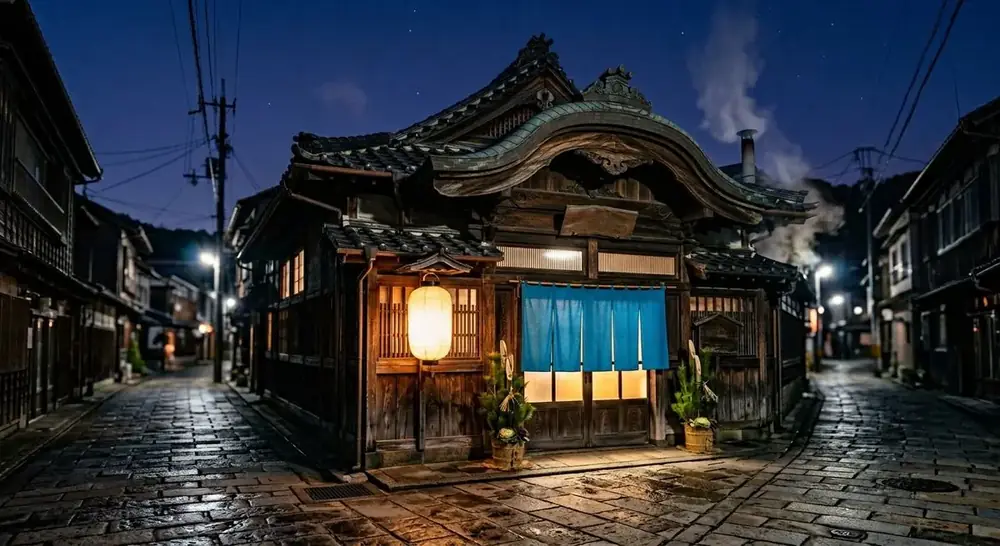
Founded in 1879, with its 1938 wooden building and curved gable, Takegawara is the symbol of Beppu Onsen. A regular bath costs ¥300 — a deep, hot pool down a flight of steps. The famous sand bath has you buried in warm sand by staff while wearing a yukata. Bring your own soap and shampoo.
- Price (adult)
- ¥300
- Hours
- Regular bath 06:30–22:30 / sand bath 08:00–22:30 (last entry 21:30)
- Closed
- 3rd Wednesday (next day if holiday)
- Access
- 10 min walk from JR Beppu Station
- Water type
- Simple spring
- Tattoos
- Allowed
- Spring type
- Men's bath: sodium-chloride spring (warming) / women's bath: sodium-bicarbonate spring (skin-softening) — a rare case of different sources for each side. Free-flowing, kept hot at about 43–45°C
- Price details
- Regular bath ¥300 adults (junior high and up), ¥100 children, preschoolers free / sand bath ¥1,500 (age 6+, yukata included) / 10-visit book ¥2,700 (bath) or ¥13,500 (sand bath)
- Sand bath
- Indoor. You change into a yukata, lie down and an attendant buries you in sand heated by hot-spring water for 10–15 minutes. Max 8 people at a time, same-day timed tickets in order of arrival — waits of 1–2 hours are common at weekends and last entry may close early
- Phone
- 0977-23-1585
- Official site
- www.city.beppu.oita.jp/sisetu/shieionsen/detail4.html ↗
- Open in Google Maps
- Google Maps ↗
Essentials
Stay in this onsen town
Compare and book stays in Beppu Onsen. Day bathing itself needs no booking.
Opens partner booking site (affiliate)
Why go
- Beppu's iconic wooden bathhouse
- Regular bath ¥300
- Famous sand bath
History & architecture
Founded in 1879, Takegawara is the symbol of Beppu's municipal baths; the name ('bamboo tile') recalls the original bamboo-roofed building, later re-roofed with tiles. The present hall dates from 1938: a temple-like timber building with an ornate karahafu gabled entrance, listed as a Registered Tangible Cultural Property in 2004 and a Heritage of Industrial Modernisation in 2009. Inside, a lofty lobby with a high ceiling keeps its early-Shōwa atmosphere; the regular baths are to the right, the sand bath to the left, and the upper floor serves as a community hall. It is No. 1 on the Beppu Hattō Onsen-dō stamp trail of 88 baths — the traditional first stop for anyone exploring Beppu's bathing culture.
The baths and how to use them
- The tubs sit a few steps below the changing area in a 'half-basement' layout, with no wall between the two — the classic Beppu community-bath design where you can see the pool while undressing.
- One indoor tub per side, nothing else: no open-air bath, sauna or cold plunge. There are taps but no showers; you scoop water from the tub with a basin to wash.
- The water is hot, 43–45°C. Always pour water over yourself first and ease in from the edge. Don't add cold water without asking if locals are present.
- Soap, shampoo, towels and hair dryers all cost extra (vending machine in the lobby). ¥100 lockers, non-refundable.
- For the sand bath, collect a yukata at reception and change in the sand-bath changing room (nothing worn underneath). Afterwards brush off the sand and rinse in the adjoining tub. You will sweat heavily — drink water.
Access and surroundings
About 10 minutes on foot from the east exit of JR Beppu Station: walk straight downhill towards the sea, turn right onto Nagarekawa-dōri, and the gabled roof appears beyond Takegawara-kōji, a wooden shopping arcade from 1921 that is among the oldest surviving in Japan. By bus, alight at Nagarekawa Yume Town-mae (2 min walk). No parking — use nearby coin car parks. Beppu Tower, the Kitahama seafront and the old nightlife quarter of yatai stalls and izakaya are all within walking distance, so locals combine an evening soak with dinner. The ¥2,700 ten-visit book is also valid at the Nagaishi, Tanoyu, Hamada and Hamawaki municipal baths — handy for a bath crawl.
Tips for your visit
- For the sand bath, come right at 8 am or on a weekday morning for the shortest wait. On weekend evenings only the 8 pm-plus slots may remain, so get your numbered ticket first and explore the town while you wait.
- The regular bath takes 20–30 minutes for ¥300 — Beppu-style 'just soak' bathing that fits easily between sights.
- Photography is fine in the lobby and outside, but not in the baths. The building is lit up at night, the best time for exterior shots.
- The nearby Ekimae Kōtō Onsen (1924, in front of Beppu Station) is another municipal bath; together they make a neat retro-architecture bath crawl.
- Tattoos are accepted (Beppu's municipal baths generally impose no restriction). Many foreign visitors; the ticket machine has multilingual display.
Before you go
- As a communal bath there is no soap or shampoo — bring your own or buy at the shop.
- Sand and steam baths are taken in a yukata — rent one or bring a T-shirt and shorts. You'll sweat, so hydrate.
- Last entry is 30–60 minutes before closing.
Features
Only here
Mood & scenery
Price
Convenience
✔ Verified operating: 2026-09 別府市公式・別府市観光協会 (普通浴300円/小人100円, 砂湯1,500円)
Prices and hours change. Check official sources before visiting.
More in this area
Hyotan Onsen
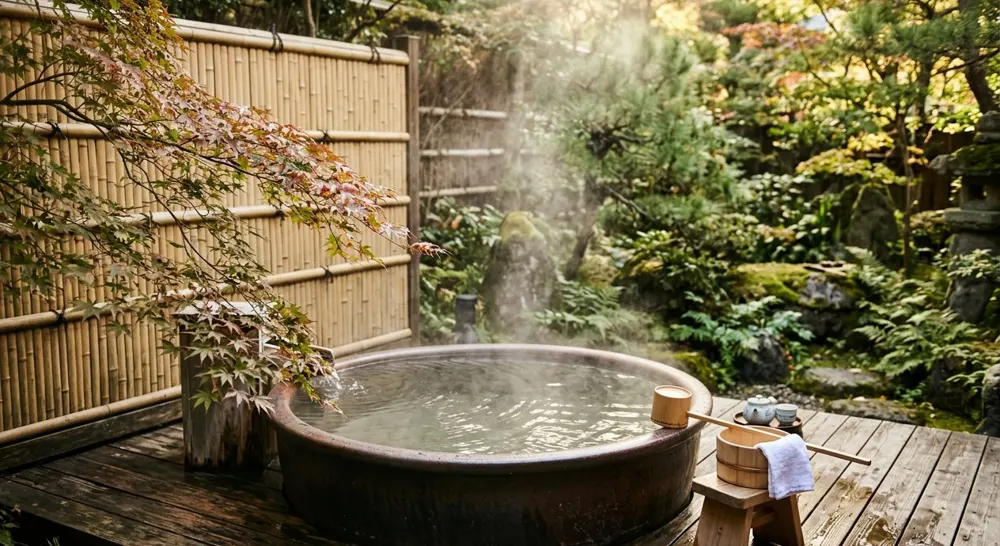
A large complex where you can try Kannawa's specialties — waterfall bath, sand bath and steam bath — in one place. It once earned three Michelin stars and is used to overseas guests. Many private family baths; tattooed visitors are directed to these. A restaurant serves hell-steamed dishes. Open until 1 am.
Shitan-yu at Lake Kinrin
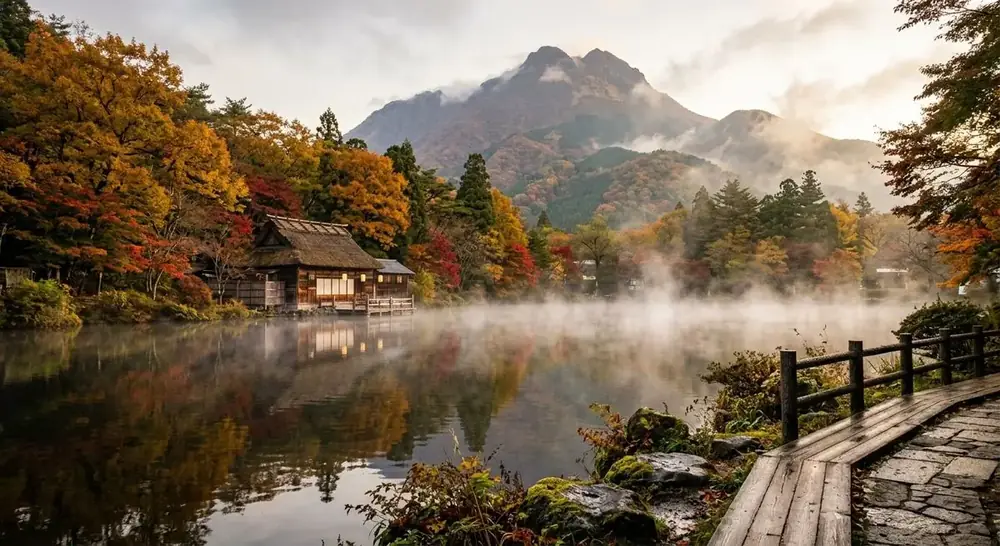
A thatched communal bath on the shore of Lake Kinrin. Unstaffed — drop ¥300 in the box at the door. Changing area and bath share one room; an indoor pool and a half-open pool facing the lake, and it is mixed bathing with clear water and little screening, so it's a challenge for women. Right in busy central Yufuin, but quiet at the 10 am opening.
Myōban Yu-no-Sato
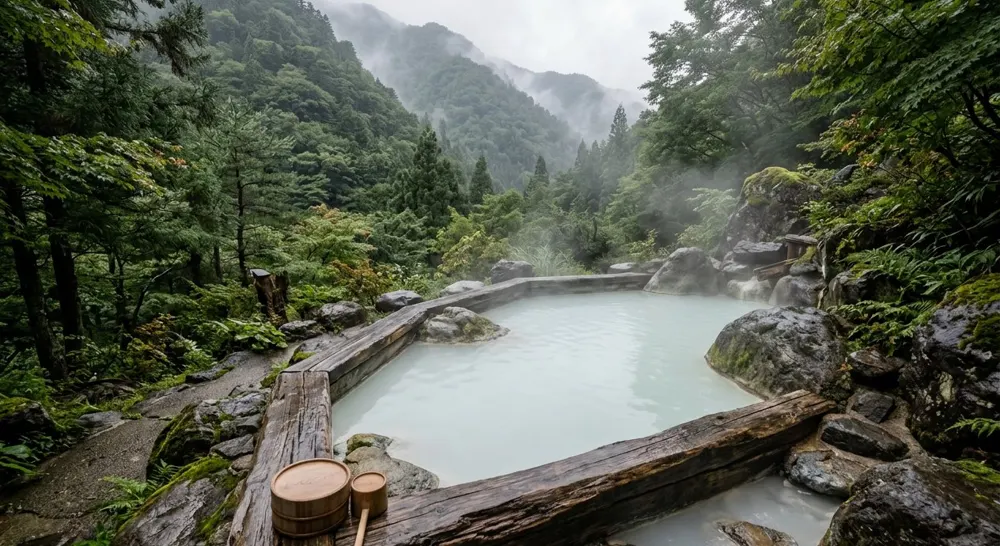
A milky open-air bath on a hillside above Beppu Bay. Thatched 'yunohana huts' where bath salts are harvested — a national cultural property — line the grounds and can be visited free. Hell-steamed food too.