Yamaguchi · Tawarayama Onsen
Tawarayama Onsen Machi-no-yu
俵山温泉 町の湯
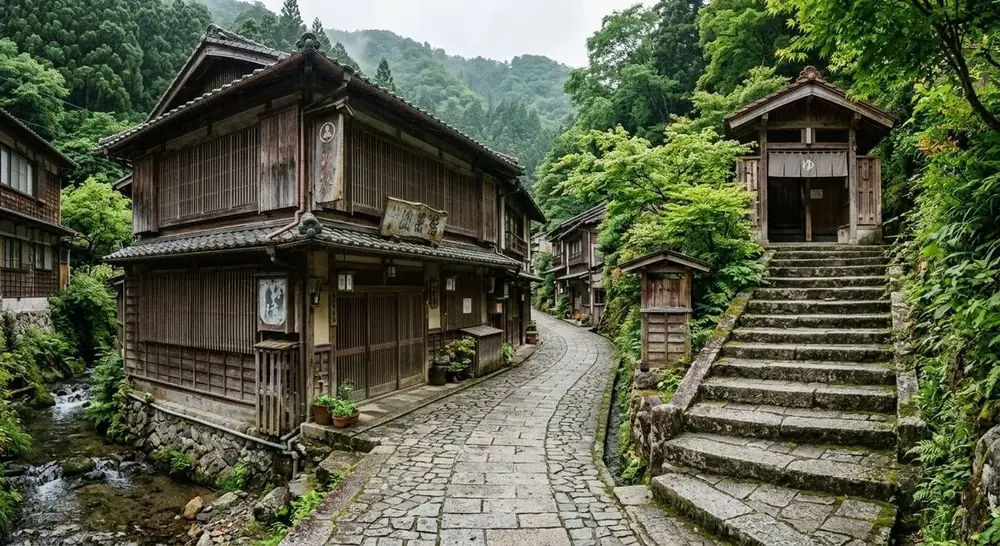
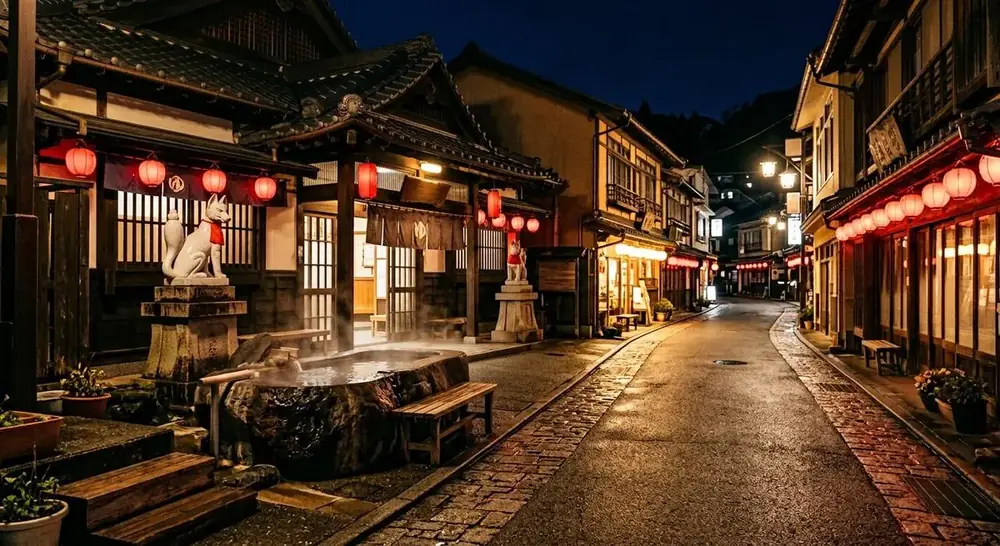
One of the two public bathhouses of Tawarayama Onsen in Nagato, Yamaguchi, a cure-spa founded over 1,100 years ago. Most inns here have no bath of their own, so guests still pad through the streets in yukata to the outside baths, and Machi-no-yu is the hub of that life. The silky alkaline simple spring flows in untreated, and there is a drinking fountain. Just a plain indoor bath, but it is open right through from 06:00 to 22:00 and costs only ¥650. A bookable private family bath (¥3,500 for three, 08:00–21:00) is attached. There is no regular closing day — only cleaning breaks in July and December. The other bathhouse, Hakuen-no-yu (¥850, with an open-air bath), closes Tuesday to Thursday, so on weekdays Machi-no-yu is the one to count on. About 25 minutes by bus from JR Nagato-shi Station to 'Tawarayama Onsen', then 3 minutes on foot.
- Price (adult)
- ¥650
- Hours
- 06:00–22:00
- Closed
- Open daily (closed for cleaning once in July and December)
- Access
- Sanden bus for Tawarayama Onsen from JR Nagato-shi Station, about 25 min to 'Tawarayama Onsen' then 3 min on foot; about 40 min by car from Mine IC
- Water type
- Alkaline simple
- Tattoos
- Ask ahead
- Admission
- Adults ¥650, elementary ¥350, infants ¥280 (raised 14 Nov 2025; formerly ¥420–530). Towels charged (bring your own), no soap or shampoo (bring), simple lockers. Rest room 9:00–17:00. Private family bath ('Sho-no-yu' source, 50 min, ¥3,500 for 3 adults or 3 adults + 2 children, +¥500 per extra person, by reservation, 8:00–21:00). Inn guests can buy a 'stay pass' at ¥1,500 per night for unlimited entry to Machi-no-yu and Hakuen-no-yu. Drinking fountain. No restaurant
- Baths
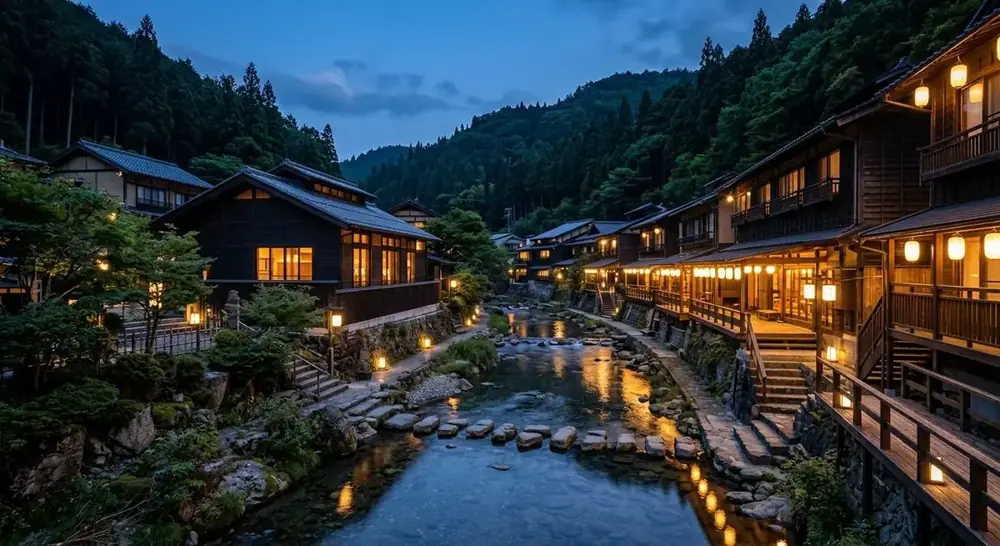
- The communal bath at the origin of Tawarayama Onsen, a cure-spa with 1,100 years of history in Nagato, Yamaguchi. Tawarayama is a nationally rare spa town that preserves the 'outside bath' system — most inns have no bath of their own and guests walk to the two public baths, Machi-no-yu and Hakuen-no-yu. Machi-no-yu stands in the centre of the spa street and bustles with cure-seekers from 6 a.m. — 'the heart of Tawarayama'. A plain building rebuilt in 1993 whose source rises on the premises and flows freely. The founding legend tells of a white monkey healing its wounds here. A base for Motonosumi Shrine (25 min by car) and Akiyoshidai (40 min)
- Spring water
- The Machi-no-yu source, an alkaline simple spring (hypotonic, alkaline, 41.3°C, pH 9.9), free-flowing with no dilution or heating. Colourless and odourless with an exceptionally slick 'torori' feel, promoted as 'hydrogen-rich water' with high reducing power. Indicated for neuralgia, rheumatism, joint pain, frozen shoulder, bruises, poor circulation and convalescence; drinking is said to help chronic digestive complaints, constipation and gout. At about 41°C it is ideal for long cure-bathing
- Access & parking
- From Nagato-Yumoto Station on the JR San'in Line, Sanden Kotsu bus to Tawarayama Onsen about 25 min to the terminus, then 3 min on foot (a few a day); 40 min by bus from Nagatoshi Station. By car 40 min from Mine IC on the Chugoku Expressway via Routes 316 and 435, 1 h 20 min from Yamaguchi-Ube Airport, 2 h 20 min from Fukuoka. Free public parking in the spa town (a few spaces in front). Hakuen-no-yu 3 min on foot, Motonosumi Shrine 25 min, Akiyoshidai 40 min by car
- Phone
- 0837-29-0001
- Official site
- tawarayamaonsen.com ↗
- Open in Google Maps
- Google Maps ↗
Essentials
Find a stay on Trip.com
Search and book accommodation across Japan on Trip.com. Day-use bathing needs no booking.
Opens partner booking site (affiliate)
Why go
- Outside-bath culture of a cure-spa town
- Silky alkaline spring, free-flowing; drinkable
- 6 am–10 pm, ¥650, no closing day
The heart of an 'outside-bath' spa town, where cure-seekers gather from 6 a.m.
Tawarayama Onsen Machi-no-yu is the communal bath at the origin of Tawarayama Onsen, a cure-spa in the mountains of Nagato, Yamaguchi, said to have been discovered 1,100 years ago when a white monkey was seen healing its wounds. Tawarayama is an exceptionally rare survivor of the old 'outside-bath' system: most inns have no bath of their own, and guests in yukata walk to the two communal baths on the spa street — this Machi-no-yu and the larger Hakuen-no-yu rebuilt in 2004. Machi-no-yu stands at the centre of that street, open every day of the year from 6 a.m. to 10 p.m. (closed only for the big clean in July and December), with cure-seekers and residents coming and going several times a day — truly 'the heart of Tawarayama'. The building, rebuilt in 1993, is plain and has no rotenburo, but the 41.3°C, pH 9.9 alkaline simple spring rising on the premises overflows untouched, with no dilution or heating; its remarkably slick 'torori' feel and high reducing power have cemented the connoisseurs' verdict that 'for the water, Machi-no-yu beats Hakuen-no-yu'. The fee rose to ¥650 in November 2025 yet remains cheap, and inn guests can buy a ¥1,500 'stay pass' for unlimited entry to both baths. There is no soap or shampoo and towels are bring-your-own, so prepare as the cure-spa rules require. Twenty-five minutes by bus from Nagato-Yumoto Station on the San'in Line, it is the core of a 'Nagato onsen journey' alongside Motonosumi Shrine (123 red torii) and Akiyoshidai, and one of the most fitting places in Japan for an old-style cure stay of several days, walking to the bath each morning.
The etiquette of a free-flowing cure bath: warm and long, drink it, several times a day
Three minutes' walk along the inn street from the bus stop brings you to a two-storey building with the 'Machi-no-yu' sign at its centre. Pay ¥650 at reception (bring a towel; otherwise charged) and the changing room has baskets and simple lockers; the bathroom is a plain tiled space with a main pool and a milder one, lit from the windows. Wash (bring soap; use only at the wash stations) and step in: at a comfortable 41°C or so the slick glide over the skin is unmistakable, and though odourless and tasteless the water feels 'thick' — the power of a free-flowing source. Cure-bath etiquette is not hot and short but 'warm and long': soak 10–15 minutes, get out and rest, repeat two or three times, and do not rinse off, leaving the minerals on the skin. A cup from the drinking fountain in the bathroom or at the entrance tastes soft and faintly slick; said to be good for the stomach, cure-seekers drink it on an empty stomach in the morning. From 6 to 8 a.m. the inn guests take their 'morning bath' and from 5 to 8 p.m. their 'evening bath', so for a quiet soak come between 10 a.m. and 3 p.m.; regulars go three or four times a day, so with a stay pass (¥1,500) come and go freely. The private family bath uses a separate source, 'Sho-no-yu', at ¥3,500 for 50 minutes (reserve) and suits families and those with limited mobility. You may rest in the lounge (9:00–17:00) but there is no restaurant, so eat at the spa street's eateries (kawara soba, Nagato yakitori) or at your inn, and compare the water with Hakuen-no-yu (3 min on foot, ¥850, with rotenburo, footbath and shop). Street lights are few at night, so a torch with your yukata is a cure-seeker's essential.
Practical details and a Nagato route
Hours are 6:00–22:00 (lounge 9:00–17:00), open year-round (closed for the big clean in July and December, announced on the official site); adults ¥650, elementary ¥350, infants ¥280 (revised 14 November 2025), private family bath ¥3,500 for 50 minutes (8:00–21:00, reserve on 0837-29-0001), stay pass ¥1,500 (from inns), bring soap and towel, parking free. The bus from Nagato-Yumoto Station takes 25 minutes but is infrequent, so a rental car is realistic: 40 minutes from Mine IC, 1 h 20 min from Yamaguchi-Ube Airport, 2 h 20 min from Fukuoka. Suggested routes: (1) two days in Nagato — from Fukuoka or Hiroshima to Motonosumi Shrine (123 torii above the sea, best in morning light), the Senjojiki meadows, Nagato-Yumoto Onsen (the Otozure River promenade and the communal bath Onto), a night at Tawarayama (bath-hopping, an evening yukata stroll), a morning bath at Machi-no-yu, then Akiyoshidai and the Akiyoshido cave before heading home; (2) a two- or three-night cure stay — a self-catering or meals-included inn plan, three or four trips a day between Machi-no-yu and Hakuen-no-yu, drinking the water, footbaths and local walks; (3) with Hagi — the Hagi castle town (1 h by car), Tawarayama, Nagato; (4) 'the two baths of Tawarayama' — experience the contrast between Machi-no-yu (¥650, indoor only, freshest water) and Hakuen-no-yu (¥850, rotenburo, footbath and shop, closed Tue–Thu). Notes: Hakuen-no-yu changed in November 2025 to 12:00–21:00 and Tue–Thu closures, so plan around Machi-no-yu; there is no convenience store in the spa town; mountain roads ice in winter; with many cure-seekers, quiet bathing is basic manners. Tawarayama is a place to experience 'water and daily life instead of glamour', and one of the most recommended spas for travellers who want to feel Japan's old cure culture deeply.
Before you go
- No official tattoo policy is published — ask at reception.
- As a communal bath there is no soap or shampoo — bring your own or buy at the shop.
- Payment is usually by ticket machine in cash — bring coins.
- Last entry is 30–60 minutes before closing.
Features
Mood & scenery
Rules & private
Price
Who with
Convenience
Only here
Amenities
✔ Verified operating: 2026-09 Operating status and rates cross-checked against the official site and onsen guides (full source notes in Japanese on the JA page)
Prices and hours change. Check official sources before visiting.
More in this area

Nagato-Yumoto Onsen Onto
The source bath of Yamaguchi's oldest hot spring, opened some 600 years ago. Local volunteers rebuilt the aging public bath in 2020; the bathroom sits directly on the spring, so you stand chest-deep in a 1-m pool watching water seep from the bedrock. Around 39°C — made for long soaks. The riverside lounge doubles as a café open to non-bathers. Pair with a stroll through the town redeveloped around Hoshino Resorts' KAI Nagato.

Yuda Onsen Onsen-no-Mori
A large day-spa at Yuda Onsen in Yamaguchi city. The men's 'Byakko-no-yu' faces a Japanese garden while the women's 'Xavier-no-yu' is Western in style; both offer rotenburo, lie-down and jet baths, a walking pool and sauna. The pH 9.2 alkaline water feels silky. ¥1,000 including a face towel, open 10:00–24:00 every day. Upstairs there's a manga and rest lounge plus a canteen. Ten minutes' walk from Yuda-Onsen Station.

Kawatana Onsen Peaceful Seiryūsen
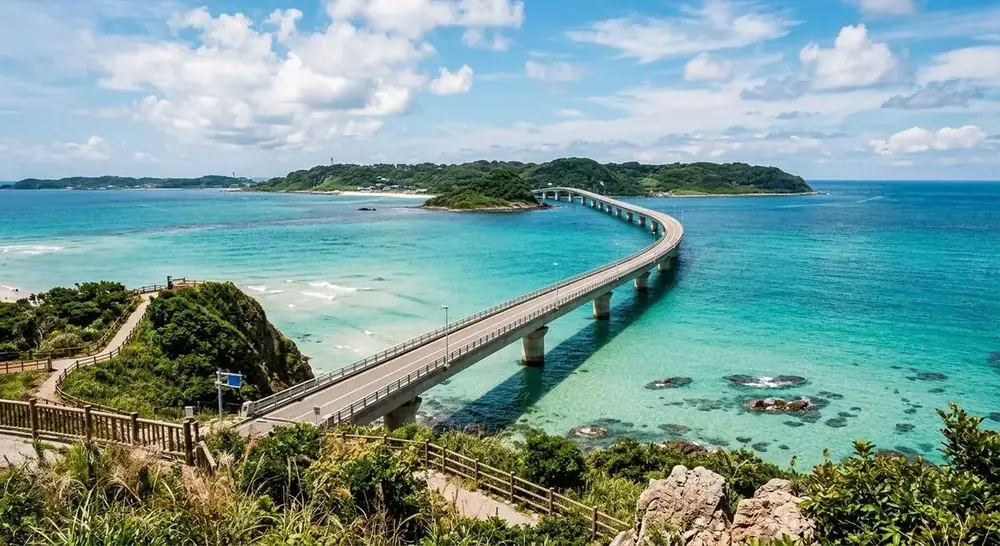
The municipal bathhouse that serves as the source bath of Kawatana Onsen, Shimonoseki's hinterland spa with some 800 years of history — the Mōri lords bathed here. Sodium-potassium chloride water (source about 41 °C) fills the indoor bath, with an open-air tub and sauna; adult admission is a modest ¥480. Family baths (from ¥1,100 for 80 min weekdays / 60 min weekends) and a rest-room package (¥800) allow a leisurely cure-style visit. Open 10:00–21:00 (last entry 20:30); closed the first Thursday of even-numbered months. Kawatana is the birthplace of kawara-soba, noodles grilled on a roof tile — try it after your bath. An easy stop on the way back from Tsunoshima Bridge.