Yamaguchi · Kawatana Onsen, Shimonoseki
Kawatana Onsen Peaceful Seiryūsen
川棚温泉 温泉銭湯 ぴーすふる青竜泉
The municipal bathhouse that serves as the source bath of Kawatana Onsen, Shimonoseki's hinterland spa with some 800 years of history — the Mōri lords bathed here. Sodium-potassium chloride water (source about 41 °C) fills the indoor bath, with an open-air tub and sauna; adult admission is a modest ¥480. Family baths (from ¥1,100 for 80 min weekdays / 60 min weekends) and a rest-room package (¥800) allow a leisurely cure-style visit. Open 10:00–21:00 (last entry 20:30); closed the first Thursday of even-numbered months. Kawatana is the birthplace of kawara-soba, noodles grilled on a roof tile — try it after your bath. An easy stop on the way back from Tsunoshima Bridge.
- Price (adult)
- ¥480
- Hours
- 10:00–21:00 (last entry 20:30)
- Closed
- 1st Thu of even-numbered months (occasional maintenance closures)
- Access
- 3 min by Blue Line bus from JR Kawatana-Onsen Station to Kawatana Onsen, then 5 min on foot; 30 min by car from Ozuki IC
- Water type
- Simple spring
- Tattoos
- Ask ahead
- Admission
- Adults ¥480, elementary ¥170, infants ¥90 (older sources quote ¥420/¥150/¥80) — public-bathhouse pricing. Private family bath adults ¥1,100, elementary ¥500, infants ¥300, 80 min on weekdays, 60 min at weekends and holidays. Bring your own shampoo and soap or buy on site (sento style); towels sold. Coin lockers ¥100. Rest room, vending machines. Books of tickets for locals
- Baths
- A public-run onsen bathhouse (renovated 2010) that serves as the 'motoyu', or original source bath, of Kawatana Onsen. The Japanese-style exterior recalls the roof tiles of Kawatana's famous 'kawara soba'. Gender-separated indoor baths (main tub and jets), a rock rotenburo, a mild sauna around 60°C (self-service loyly) with an 18°C plunge and outdoor rest chairs. Several private family baths. Rest room upstairs. Next door stand 'Kawatana-no-Mori', a community centre designed by architect Kuma Kengo, and Myosei-ji temple of the blue-dragon legend; the village has many kawara-soba restaurants
- Spring water
- Weakly radioactive sodium-calcium chloride spring (hypotonic, weakly alkaline, high-temperature), containing traces of radon — a rare radioactive spring in the San-in/San-yo region. Colourless and nearly odourless with a hint of salt, soft and heat-retaining, a 'warming bath' said through radon 'hormesis' to help gout, arteriosclerosis and high blood pressure. Heated and recirculated in part. Indicated for gout, arteriosclerosis, hypertension, chronic skin disease, neuralgia and poor circulation. Kawatana is an ancient spring with a legend of water gushing where a blue dragon ascended some 800 years ago, the bath of the Mori lords, and famous as the town beloved of pianist Alfred Cortot
- Access & parking
- 2.2 km from Kawatana-Onsen Station on the JR San-in Line (25 min on foot, 5 min by taxi), or the Blue Line bus from the station to 'Kawatana Onsen' then 2–6 min on foot. About 50 min by bus from Shimonoseki Station, about 40 min by car via Route 191. About 35 min from Ozuki IC on the Chugoku Expressway or Shimonoseki IC on the San-yo Expressway. Free parking for 44. 1 h 20 min by car from Fukuoka city via the Kanmon Bridge
- Phone
- 083-772-0047
- Official site
- kawatana.com ↗
- Open in Google Maps
- Google Maps ↗
Essentials
Find a stay on Trip.com
Search and book accommodation across Japan on Trip.com. Day-use bathing needs no booking.
Opens partner booking site (affiliate)
Why go
- Source bath of 800-year-old Kawatana Onsen
- ¥480 incl. open-air bath and sauna
- Birthplace of kawara-soba noodles
¥480 at the spring of the blue-dragon legend — with kawara soba on the side
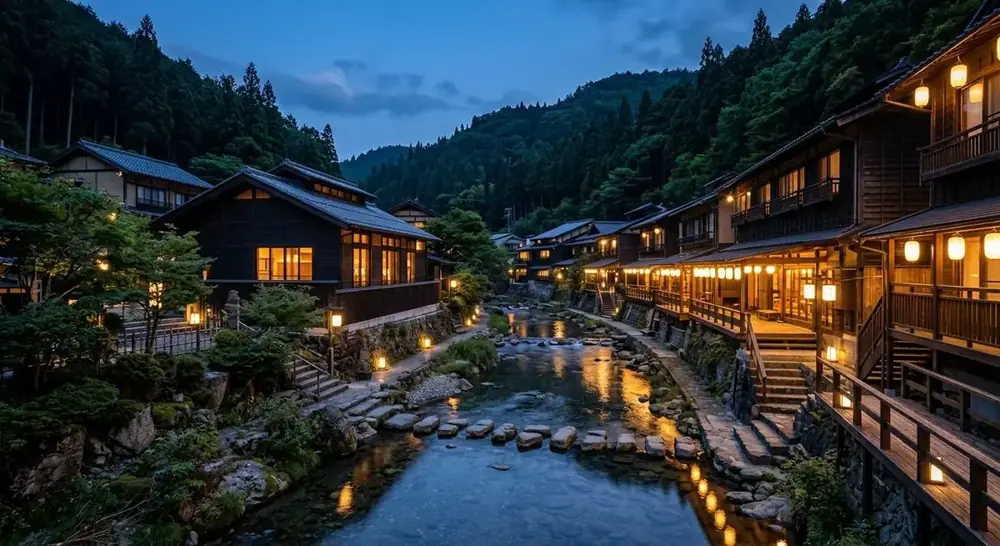
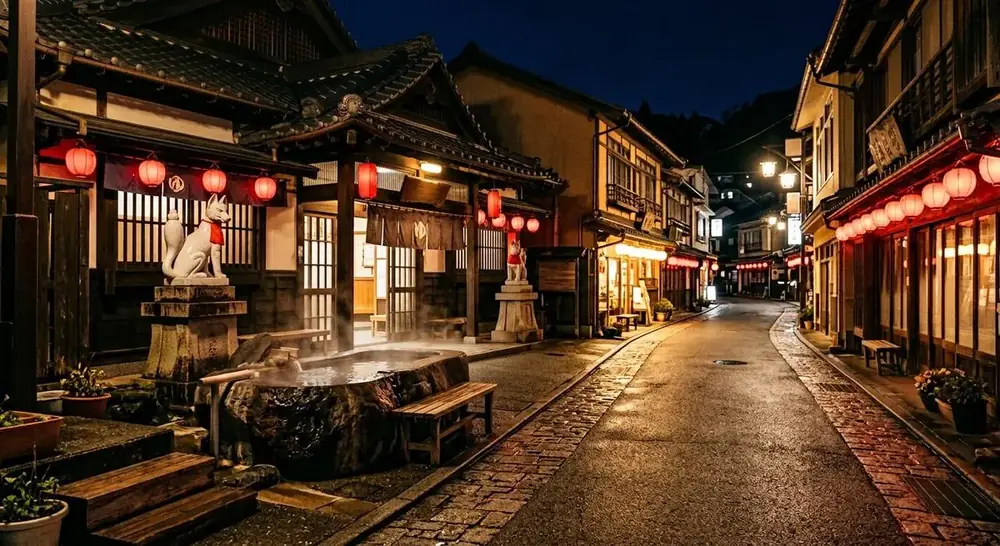
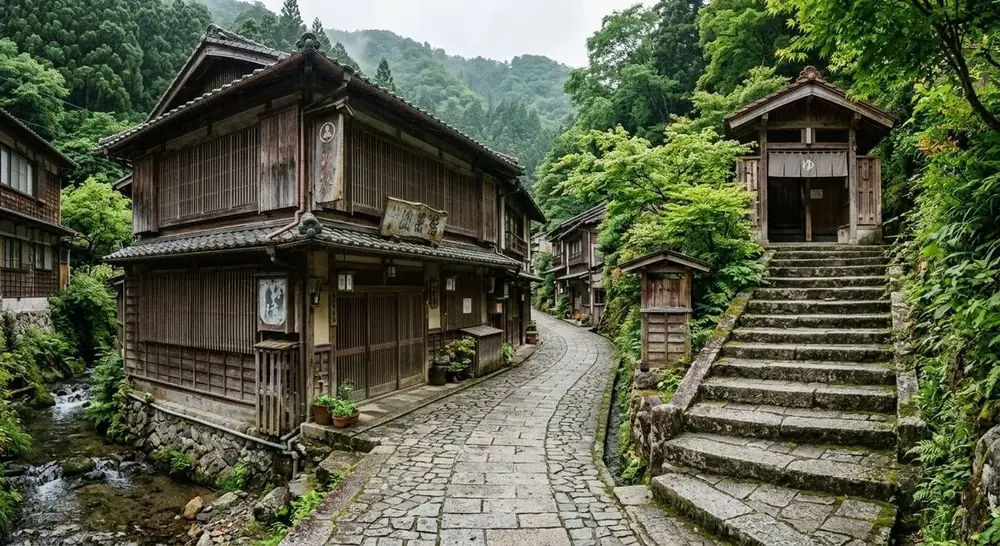
Kawatana Onsen's Peaceful Seiryusen is a public-run onsen bathhouse at the heart of Kawatana, a rural hot-spring town set a little inland from the Hibiki-nada coast at the western tip of Honshu in Toyoura, Shimonoseki, Yamaguchi. Kawatana is an ancient spring whose legend tells of water gushing where a blue dragon that lived in a marsh ascended to heaven some 800 years ago; in the Edo period it was the bath of the Mori lords of Choshu, and in the 1950s the great French pianist Alfred Cortot loved the town so much he dreamed of moving here. Seiryusen, named for that legend, is Kawatana's 'motoyu' — the original source bath — and its Japanese-style building, renovated in 2010, holds an indoor bath, a rock rotenburo, a mild sauna with cold plunge and family baths, yet charges a bathhouse price of ¥480 for adults. The water, a radon-bearing chloride spring rare in the San-yo region, is soft and long-warming and said to help gout and high blood pressure. Next door stand 'Kawatana-no-Mori', designed by architect Kuma Kengo, and Myosei-ji, where the dragon is enshrined, and the village is home to the original restaurant of 'kawara soba' — green-tea soba grilled on a hot roof tile — so 'a bath at Seiryusen plus kawara soba' is a classic drive for people from Shimonoseki and Fukuoka.
Rock rotenburo, a 60°C sauna and the ease of a bathhouse
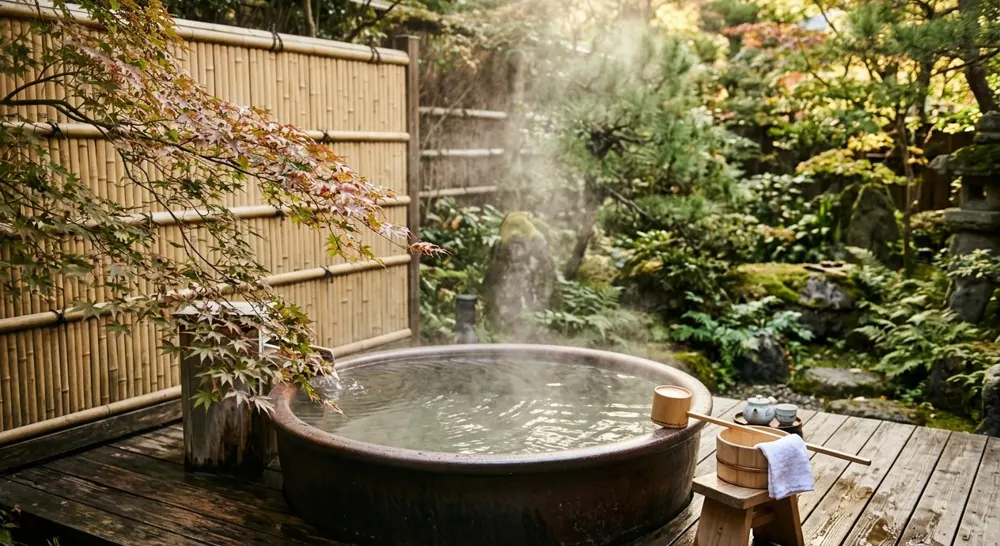
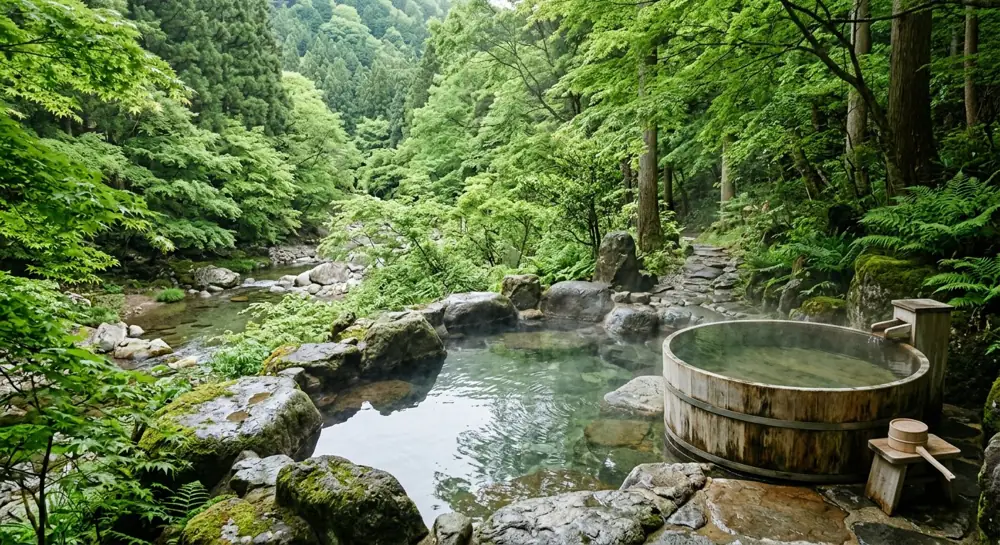
Enter the tiled-roof building, buy a ticket from the machine and hand it in at the counter. Sento-style, you bring shampoo and soap or buy them at the kiosk, and towels are sold too, so grab a set if you come empty-handed. The changing room has coin lockers (¥100) and baskets; the gender-separated baths comprise an indoor main tub and jet bath, a rock-built rotenburo beyond the glass door, and a sauna and cold plunge — generous for a local bathhouse. The water is clear and faintly salty, soft at 41–42°C, and as a chloride spring with a trace of radon it is a 'warming bath' that keeps you sweating long after. The rotenburo is small but open to the sky — stars at night — and the contrast of cold winter air and warm water is lovely. The sauna is a mild, humid 60°C or so, comfortable even for those who dislike fierce heat, with self-service loyly to raise it, and an 18°C plunge and outdoor chairs earn it respect among sauna fans. Family baths cost ¥1,100 for adults for 80 minutes on weekdays or 60 at weekends, handy for those with small children or tattoos (check on site for the main bath's tattoo policy). Evenings from 17:00 to 19:00 draw many locals and the few wash stations may mean a wait, so midday or after 20:00 is better; remember the closure on the first Thursday of even-numbered months. Rest upstairs, then make the classic two-minute walk to a kawara soba restaurant.
Practical details and a Shimonoseki–Kawatana itinerary
Hours are 10:00–21:00 (last entry 20:30), closed on the first Thursday of even-numbered months (February, April, June, August, October, December) plus occasional maintenance days. Adults ¥480, elementary ¥170, infants ¥90 (recently raised; older sources quote ¥420); family bath ¥1,100 for adults. From JR Kawatana-Onsen Station it is 2.2 km — 25 minutes on foot or 5 by bus or taxi — while by car it is 40 minutes from central Shimonoseki or 1 h 20 min from Fukuoka over the Kanmon Bridge, with 44 free parking spaces. A suggested drive along the western tip of San-in: Shimonoseki's Karato fish market (fugu and sushi; the weekend 'Iki-iki Bakangai' stalls) and Akama Shrine in the morning, north on Route 191 to Kawatana for kawara soba at the original restaurant, a bath at Seiryusen and a stroll past Kuma Kengo's Kawatana-no-Mori, Myosei-ji and the Cortot memorial, then in the afternoon the Tsunoshima Bridge (25 min by car, 1,780 m over emerald sea) and the 123 red torii of Motonosumi Shrine (50 min), ending at Yumoto Onsen or Nagato for the night or back in Shimonoseki. Kawatana has venerable inns (including the one where Cortot stayed), so an overnight with an evening walk through the village is pleasant; plum blossom comes in February–March and the Hibiki-nada beaches are near in summer. Seiryusen is a 'town bathhouse', not a resort, so bring shampoo, observe sento manners — wash first, keep towels out of the water — and enjoy the homely company of local elders.
Before you go
- No official tattoo policy is published — ask at reception.
- Payment is usually by ticket machine in cash — bring coins.
- Last entry is 30–60 minutes before closing.
Features
Sauna & wellness
Rules & private
Price
Convenience
Amenities
✔ Verified operating: 2026-09 Operating status and rates cross-checked against the official site and onsen guides (full source notes in Japanese on the JA page)
Prices and hours change. Check official sources before visiting.
More in this area

Nagato-Yumoto Onsen Onto
The source bath of Yamaguchi's oldest hot spring, opened some 600 years ago. Local volunteers rebuilt the aging public bath in 2020; the bathroom sits directly on the spring, so you stand chest-deep in a 1-m pool watching water seep from the bedrock. Around 39°C — made for long soaks. The riverside lounge doubles as a café open to non-bathers. Pair with a stroll through the town redeveloped around Hoshino Resorts' KAI Nagato.

Yuda Onsen Onsen-no-Mori
A large day-spa at Yuda Onsen in Yamaguchi city. The men's 'Byakko-no-yu' faces a Japanese garden while the women's 'Xavier-no-yu' is Western in style; both offer rotenburo, lie-down and jet baths, a walking pool and sauna. The pH 9.2 alkaline water feels silky. ¥1,000 including a face towel, open 10:00–24:00 every day. Upstairs there's a manga and rest lounge plus a canteen. Ten minutes' walk from Yuda-Onsen Station.

Tawarayama Onsen Hakuen-no-yu
Tawarayama Onsen, in the hills of Nagato, Yamaguchi, has 1,100 years of history and still lives by 'sotoyu' culture: the inns have no baths of their own, so even overnight guests walk in yukata to the two communal bathhouses, Machi-no-yu and Hakuen-no-yu. Hakuen-no-yu is the newer of the pair, with three tubs — a lukewarm No.1 bath straight from the source, a heated hotter No.2 bath and an open-air bath — showcasing silky pH 9.9 alkaline water. ¥850 for adults, open 12:00–21:00, closed Tuesday to Thursday (Machi-no-yu runs daily 06:00–22:00 for ¥650). A free foot bath sits halfway up the entrance stairs. About 20 minutes by bus from Nagato-Yumoto Station.