Yamaguchi · Tawarayama Onsen
Tawarayama Onsen Hakuen-no-yu
俵山温泉 白猿の湯
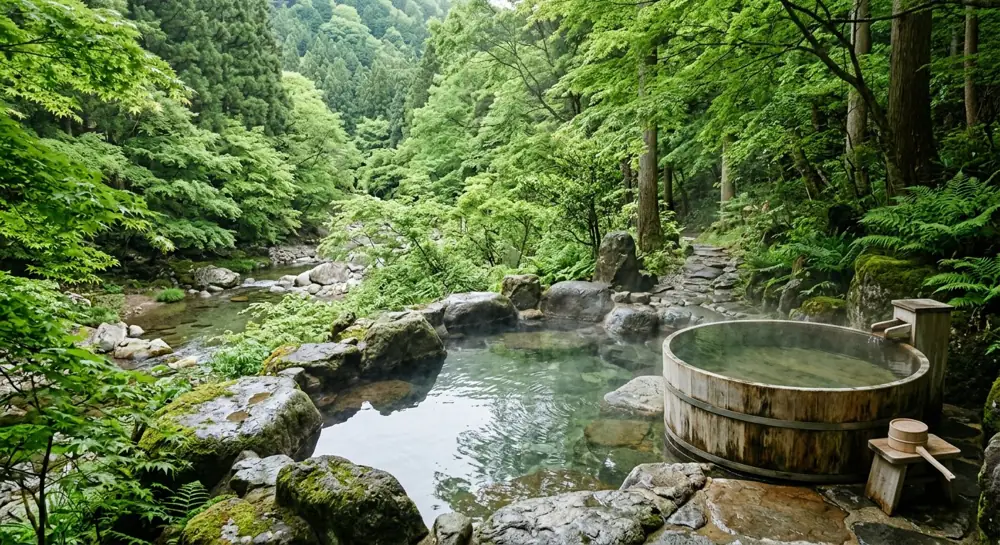
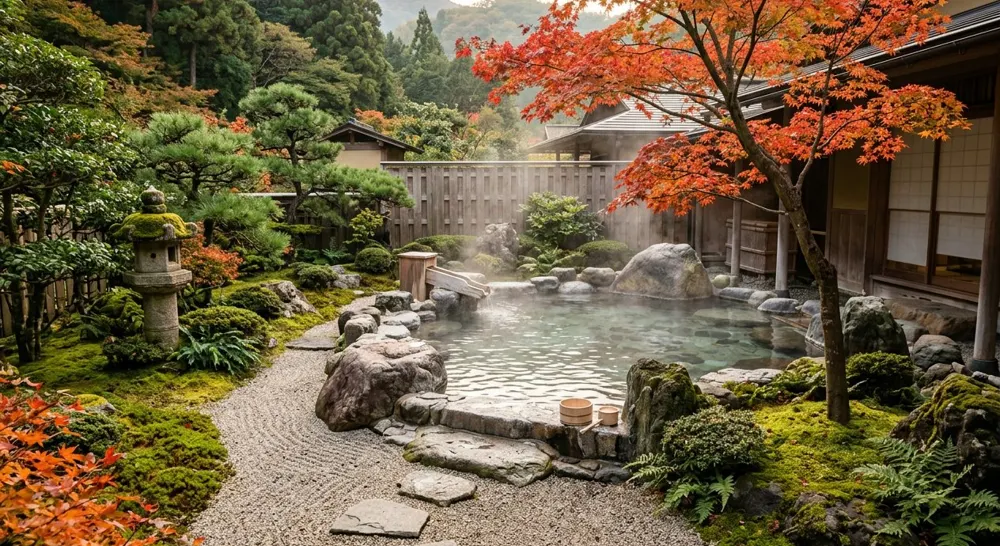
Tawarayama Onsen, in the hills of Nagato, Yamaguchi, has 1,100 years of history and still lives by 'sotoyu' culture: the inns have no baths of their own, so even overnight guests walk in yukata to the two communal bathhouses, Machi-no-yu and Hakuen-no-yu. Hakuen-no-yu is the newer of the pair, with three tubs — a lukewarm No.1 bath straight from the source, a heated hotter No.2 bath and an open-air bath — showcasing silky pH 9.9 alkaline water. ¥850 for adults, open 12:00–21:00, closed Tuesday to Thursday (Machi-no-yu runs daily 06:00–22:00 for ¥650). A free foot bath sits halfway up the entrance stairs. About 20 minutes by bus from Nagato-Yumoto Station.
- Price (adult)
- ¥850
- Hours
- 12:00–21:00
- Closed
- Tue/Wed/Thu (see calendar)
- Access
- About 20 min by Sanden bus (towards Shimonoseki) from JR Nagato-Yumoto Station to 'Tawarayama Onsen', then 7 min on foot; about 40 min by car from Ozuki IC
- Water type
- Alkaline simple
- Tattoos
- Ask ahead
- Admission
- Adults ¥850, elementary ¥620, infants ¥370, ¥100 off for JAF members. Rinse-in shampoo and body soap provided, lockers ¥20–30 (baskets free), towels ¥200 and bath towels ¥450 sold, dryers available. 2nd-floor rest room, restaurant (local dishes) and shop (onsen soap, local produce). Free foot bath beside the entrance steps. Overnight guests' 'lodging pass' ¥1,500 per night for unlimited use of Hakuen-no-yu and Machi-no-yu. Machi-no-yu (communal bath) ¥650, 6:00–22:00
- Baths
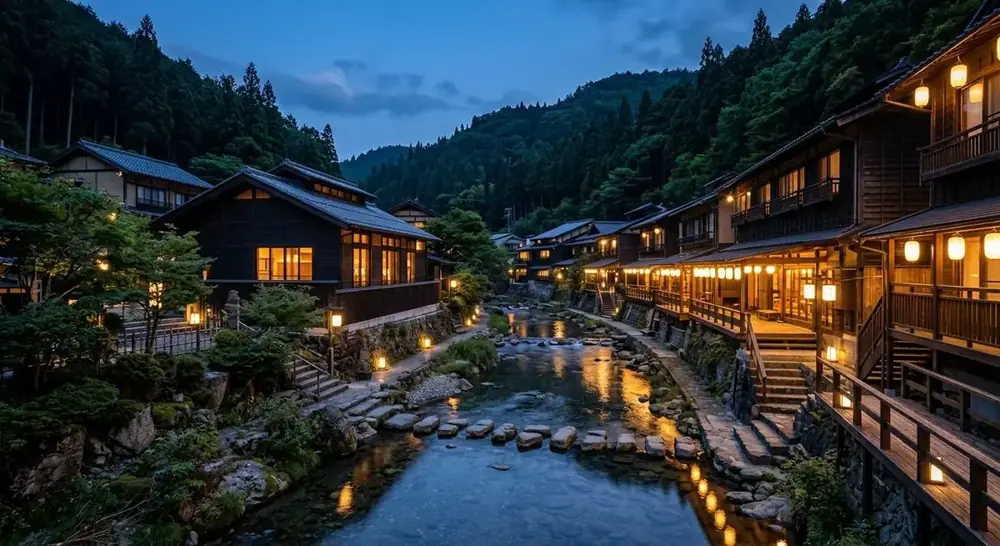
- Tawarayama Onsen, with 1,100 years of history, lies in the hills of Nagato, Yamaguchi. A toji spa village (a designated National Recreation Hot Spring) where the inns have no baths of their own and guests walk in yukata to the communal baths — one of western Japan's finest surviving 'soto-yu' cultures. Hakuen-no-yu, opened in 2004, is the large communal bath, named for the legend of a white monkey healing its wounds here, with indoor and outdoor baths, a drinking fountain, rest room and restaurant. The town's other bath, 'Machi-no-yu', is the plain toji bath. Fireflies in early summer, and a Showa-era streetscape of around seventeen small inns
- Spring water
- Tawarayama Onsen, an alkaline simple spring of around pH 9.9 (among Japan's most alkaline), 39–41°C at source, free-flowing (fully at Machi-no-yu, partly heated at Hakuen-no-yu). Colourless and nearly odourless with a 'torori' silky feel, mild enough for the toji tradition of long soaks. Drinkable (for digestive ailments). Indicated for rheumatism, neuralgia, joint pain, cuts and skin conditions — the 'western champion' among rheumatism cure-spas
- Access & parking
- From Nagato-Yumoto Station on the JR Mine Line, Sanden bus toward Shimonoseki about 20 min to 'Tawarayama Onsen' then 7 min on foot (a few a day); about 35 min by bus from Nagatoshi Station. By car 33 km / 40 min from Ozuki IC on the Chugoku Expressway via Routes 491 and 34, 30 min from Mine IC, about 2 h from Fukuoka. Free municipal car park for 80 (across the river, 3 min on foot). Yumoto Onsen 15 min, Motonosumi Shrine 25 min, Akiyoshidai 40 min by car
- Phone
- 0837-29-0036
- Official site
- tawarayamaonsen.com ↗
- Open in Google Maps
- Google Maps ↗
Essentials
Find a stay on Trip.com
Search and book accommodation across Japan on Trip.com. Day-use bathing needs no booking.
Opens partner booking site (affiliate)
Why go
- Inn-free 'sotoyu' spa culture
- Silky pH 9.9 water, unheated No.1 bath
- Pair with Machi-no-yu
A town whose inns have no baths: 1,100 years of walking in yukata to the communal bath
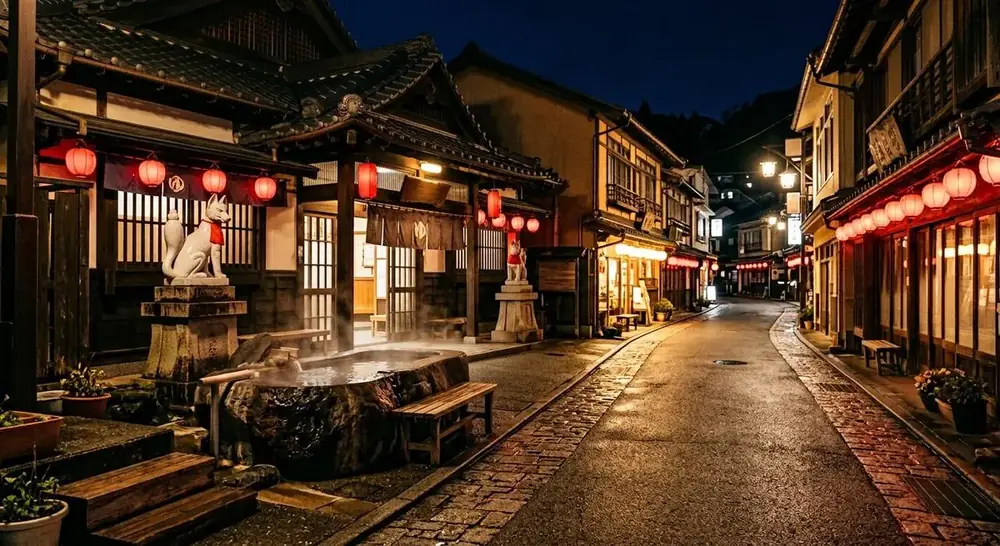
Tawarayama Onsen Hakuen-no-yu is the central communal bath of Tawarayama, a toji spa village with 1,100 years of history in the hills of Nagato, Yamaguchi. Most of Tawarayama's inns still have no baths of their own, and guests walk to the town's communal baths with yukata and towel — a rare survival in western Japan of the old 'soto-yu' culture (a designated National Recreation Hot Spring). Legend says a Heian-period hunter found the spring by following a white monkey that was healing its wounds; the bath named after it, built in 2004 at the town's entrance, is relatively new, with indoor and outdoor baths, a drinking fountain, a 2nd-floor rest room and restaurant, making it the easiest bath for visitors to use. The water is a highly alkaline simple spring of around pH 9.9, among Japan's most alkaline, known for a 'torori' silky feel, and the tradition of long soaks at mild temperatures to treat rheumatism and neuralgia earned it the title 'western champion' of cure-spas. Admission ¥850, 12:00–21:00, closed Tuesday to Thursday; the town's other bath, 'Machi-no-yu' (¥650, 6:00–22:00), is plainer and fully free-flowing, preferred by connoisseurs. Small inns line the narrow Showa-era spa street, fireflies dance in early summer, and it makes a hidden destination on a north-Yamaguchi drive with Motonosumi Shrine and Akiyoshidai.
The silky high-alkaline water: indoor, outdoor and drinking
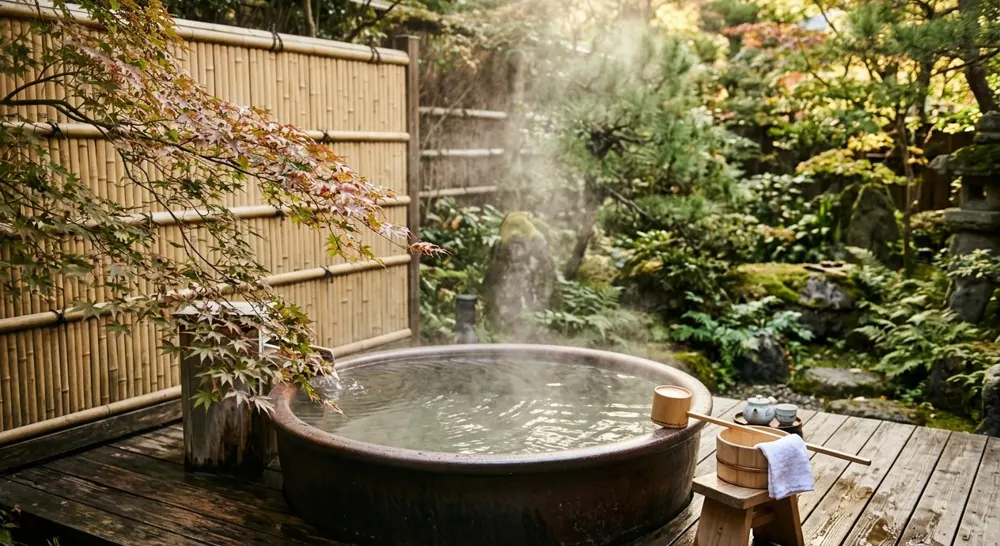
Park in the municipal lot, cross the footbridge over the river and Hakuen-no-yu stands right at the entrance to the spa street. A free foot bath beside the entrance steps lets you feel the silky 'torori' texture the moment your feet go in. Stow your shoes at the entrance (key free), buy an ¥850 ticket at the machine (¥750 with JAF) and head to the gender-separated baths. The changing room has free baskets, lockers for ¥20–30, and shampoo and body soap. The indoor hall is broad and bright, split into a mild main pool around 40°C and a slightly warmer tub; the Tawarayama way is to settle into the mild water for thirty minutes or more. The water is clear and nearly odourless, yet slides over the skin like lotion, and the drinking fountain's water is mellow and said to be good for the stomach — take a sip. The rotenburo is not large but mountain breezes drift in, and on early-summer evenings fireflies sometimes appear. Afterwards lie on the tatami in the 2nd-floor rest room, try Nagato's yakitori (Nagato is a yakitori town) or soba in the restaurant, and pick up spring-water lotion in the shop. Devotees should also visit 'Machi-no-yu' (¥650) deeper in the street to compare its fresher, fully free-flowing water — that is the real pleasure of Tawarayama — and overnight guests can use both baths without limit from noon on check-in day to 3 p.m. the next day with the ¥1,500 'lodging pass'. Hakuen-no-yu closes Tuesday to Thursday, so use Machi-no-yu (open almost daily) on those days.
Practical details and a Nagato / north-Yamaguchi route
Hakuen-no-yu is open 12:00–21:00, closed Tuesday to Thursday (check the official calendar); adults ¥850, elementary ¥620, infants ¥370. Machi-no-yu is 6:00–22:00, ¥650 (rest room 9:00–17:00, private family bath ¥3,500 by reservation). Access by bus from Nagato-Yumoto Station on the JR Mine Line is 20 minutes but only a few a day, so a rental car is realistic: 40 minutes from Ozuki IC on the Chugoku Expressway, 2 hours from Fukuoka, free municipal parking for 80. Suggested routes: (1) an overnight in north Yamaguchi — Motonosumi Shrine (123 red torii above the sea), the Senjojiki grassland, a stroll through Nagato-Yumoto Onsen (riverside decks on the Otozure), a night at a Tawarayama inn (bath rounds, fireflies on June nights), then the Akiyoshidai karst and Akiyoshido cave and the castle town of Hagi; (2) a day visit — drive from Shimonoseki or Fukuoka for both Hakuen-no-yu and Machi-no-yu plus a Nagato yakitori lunch; (3) a toji stay — two or three nights at a self-catering cure-inn, soaking long in the mild water two or three times a day in the old manner. In this soto-yu town it is natural to walk the street in your inn's yukata and geta, carrying towel and toiletries. There is no convenience store in these hills and shops close early, so stock up in Nagato town, and prepare for snow and ice in winter. Highly alkaline water can dry the skin, so moisturise after bathing, and by communal-bath custom keep tattoos discreet.
Before you go
- No official tattoo policy is published — ask at reception.
- Last entry is 30–60 minutes before closing.
Features
Mood & scenery
Price
Who with
Only here
Amenities
✔ Verified operating: 2026-09 Operating status and rates cross-checked against the official site and onsen guides (full source notes in Japanese on the JA page)
Prices and hours change. Check official sources before visiting.
More in this area

Nagato-Yumoto Onsen Onto
The source bath of Yamaguchi's oldest hot spring, opened some 600 years ago. Local volunteers rebuilt the aging public bath in 2020; the bathroom sits directly on the spring, so you stand chest-deep in a 1-m pool watching water seep from the bedrock. Around 39°C — made for long soaks. The riverside lounge doubles as a café open to non-bathers. Pair with a stroll through the town redeveloped around Hoshino Resorts' KAI Nagato.

Yuda Onsen Onsen-no-Mori
A large day-spa at Yuda Onsen in Yamaguchi city. The men's 'Byakko-no-yu' faces a Japanese garden while the women's 'Xavier-no-yu' is Western in style; both offer rotenburo, lie-down and jet baths, a walking pool and sauna. The pH 9.2 alkaline water feels silky. ¥1,000 including a face towel, open 10:00–24:00 every day. Upstairs there's a manga and rest lounge plus a canteen. Ten minutes' walk from Yuda-Onsen Station.

Kawatana Onsen Peaceful Seiryūsen
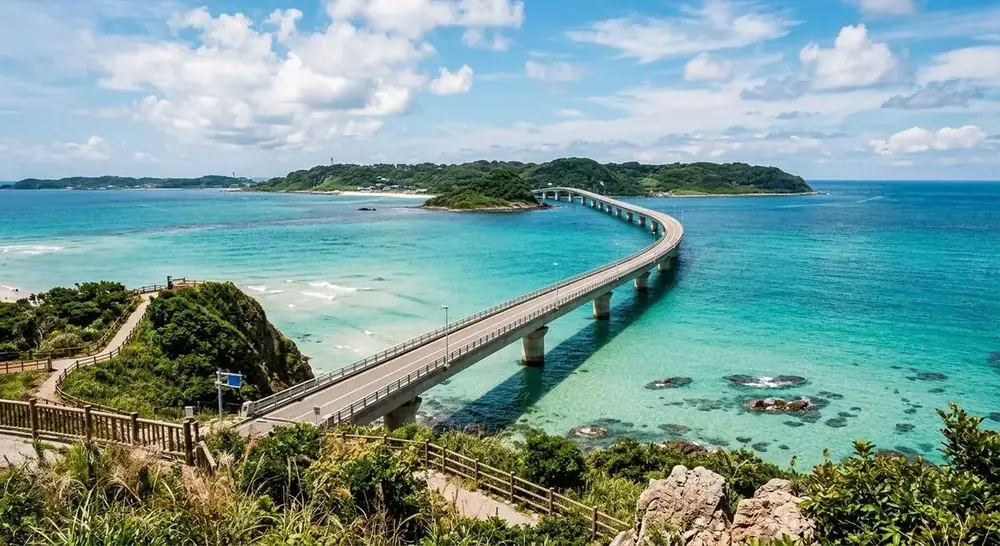
The municipal bathhouse that serves as the source bath of Kawatana Onsen, Shimonoseki's hinterland spa with some 800 years of history — the Mōri lords bathed here. Sodium-potassium chloride water (source about 41 °C) fills the indoor bath, with an open-air tub and sauna; adult admission is a modest ¥480. Family baths (from ¥1,100 for 80 min weekdays / 60 min weekends) and a rest-room package (¥800) allow a leisurely cure-style visit. Open 10:00–21:00 (last entry 20:30); closed the first Thursday of even-numbered months. Kawatana is the birthplace of kawara-soba, noodles grilled on a roof tile — try it after your bath. An easy stop on the way back from Tsunoshima Bridge.