Miyagi · Kamasaki Onsen, Shiroishi
Kamasaki Onsen Mogamiya Ryokan
鎌先温泉 最上屋旅館(奥羽の薬湯)
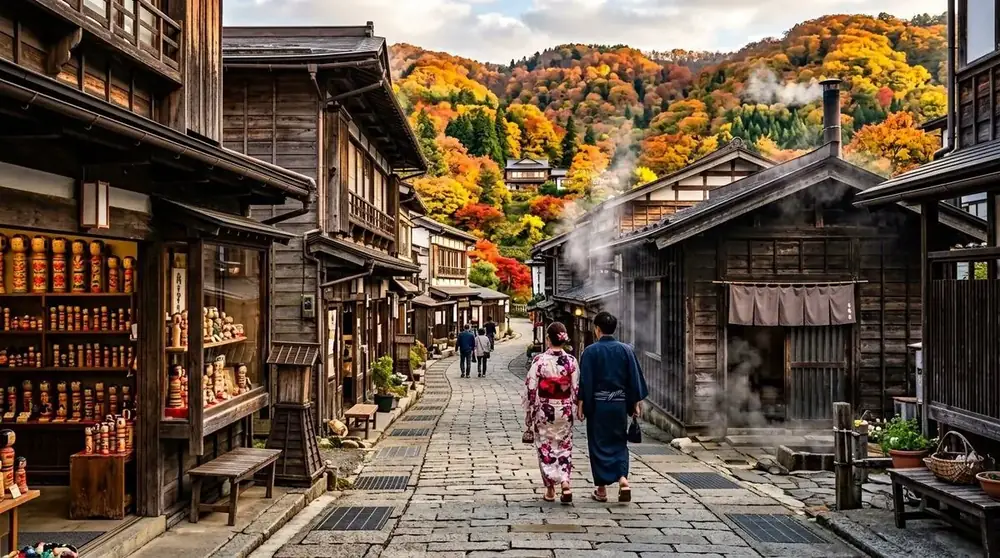
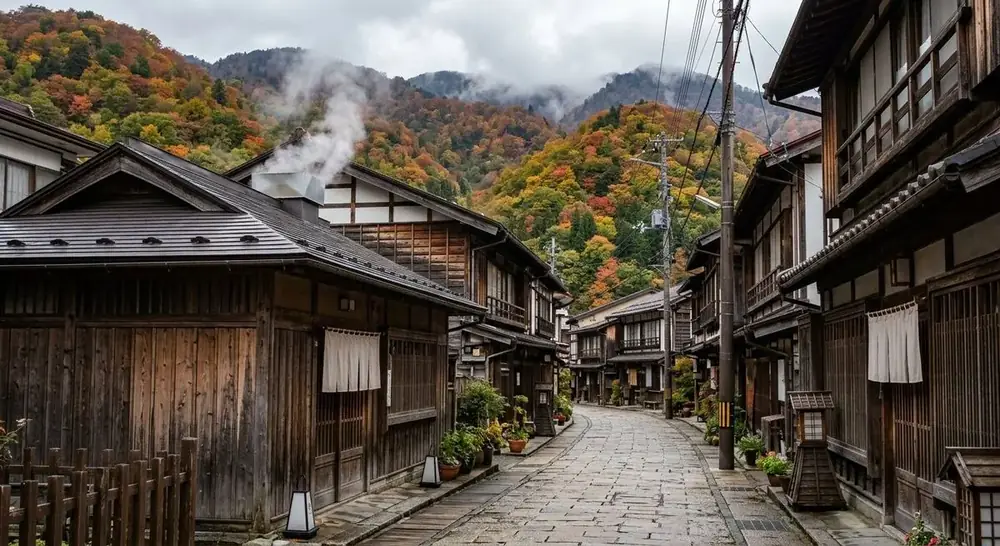
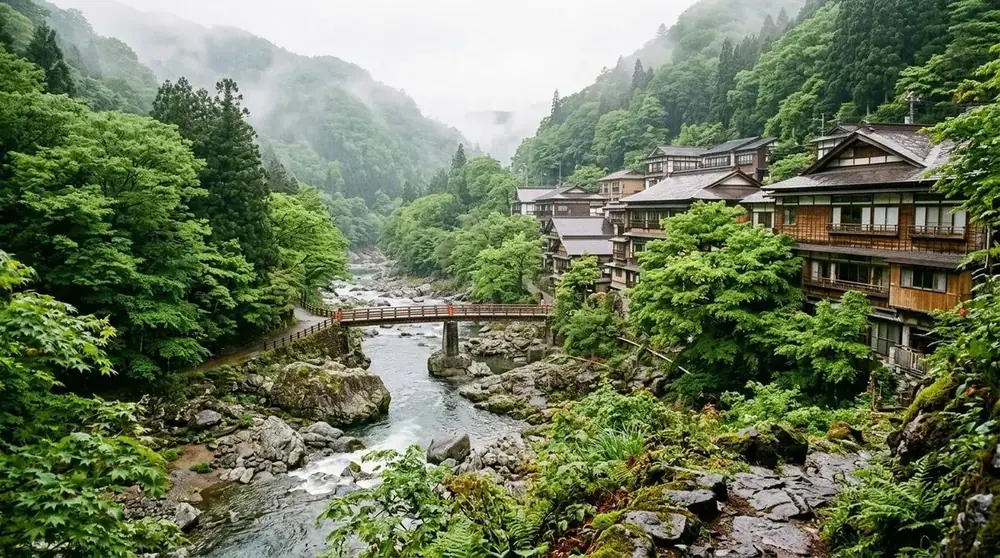
A wooden inn founded in 1789 at Kamasaki Onsen, a mountain cure spa in Shiroishi, Miyagi, where villagers are said to have struck hot water with the tip of a sickle more than 600 years ago. Its iron-bearing sulphate water, known as the 'medicinal bath of Ōu', turns tea-brown and has long been trusted for cuts and bruises. Gleaming dark corridors, glass shōji and traces of the old self-catering cure wing make it irresistible to lovers of retro Japan. Day use 11:00–14:00, ¥800; bring a towel. Fifteen minutes by car from Shiroishi-Zaō Station — a convenient stop with Shiroishi Castle, the Yajirō kokeshi village or the start of the Zaō Echo Line. Day bathing is sometimes suspended when busy or for cleaning, so phone ahead.
- Price (adult)
- ¥800
- Hours
- 11:00-14:00
- Closed
- Irregular (check ahead)
- Access
- 15 min by car from Shiroishi-Zaō Station (Tōhoku Shinkansen); or about 20 min by Shiroishi city bus (for Yajirō Kokeshi-mura, no weekend service) from JR Shiroishi Station to Kamasaki Onsen; 15 min by car from Shiroishi IC
- Water type
- Sulfate spring
- Tattoos
- Ask ahead
- Admission
- Day bathing adults ¥800 (raised from the former ¥500). Towel ¥300 (with logo). Cash. The private family bath 'Wago-no-yu' is for overnight guests only. Day plans with lunch available (reservation). Member of the Japan Association of Secluded Hot Springs
- Baths
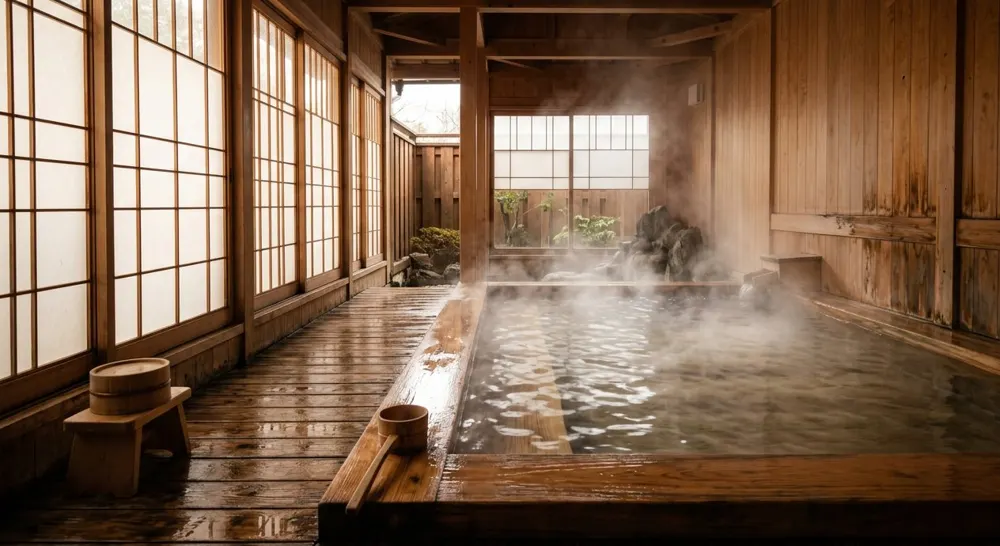
- Founded in 1789; a pure Japanese-style wooden two-storey inn built in the Taisho era. Gender-separated indoor baths 'Sanpo-no-yu' and 'Toko-no-yu' (cosy, about three wash stations, swapped at 22:00); no rotenburo or sauna. Of Kamasaki's three inns (Yunushi Ichijo, Suzukiya, Mogamiya) the only one that normally accepts day bathers. Cooking from its own vegetable garden
- Water
- Sodium chloride-sulphate spring (hypotonic, neutral; old name: glauber-salt spring), private source 'Sanpo-no-yu' at 36.1°C, pH 7.1, about 2,625 mg/kg total minerals. Iron-tinged, faintly cloudy light-brown water with a strong iron taste, a hint of salt and 54 mg of metaboric acid. Heated only, no dilution, free-flowing (tub about 40–42°C). Opened in 1428 as the 'medicinal bath of Oshu', famed for healing cuts. Indicated for cuts, burns, poor circulation and skin disease
- Parking & access
- Free parking: lot 1 for 11 cars, lot 2 for 30 (shared by the inns, numbered bays). About 15 min by Shiroishi city bus 'Castle-kun' (Fukuoka line) from JR Shiroishi Station on the Tohoku Main Line to 'Kamasaki Onsen', then 2 min on foot. About 15 min by car from Shiroishi-Zao Station on the Tohoku Shinkansen or from Shiroishi IC on the Tohoku Expressway
- Phone
- 0224-26-2131
- Official site
- mogamiya.com ↗
- Open in Google Maps
- Google Maps ↗
Essentials
Find a stay on Trip.com
Search and book accommodation across Japan on Trip.com. Day-use bathing needs no booking.
Opens partner booking site (affiliate)
Why go
- Wooden inn from 1789 with cure-spa air
- Tea-brown 'medicinal bath of Ōu'
- 11–14, ¥800; phone ahead
The 'medicinal bath of Oshu' since 1428, in a Taisho-era wooden inn
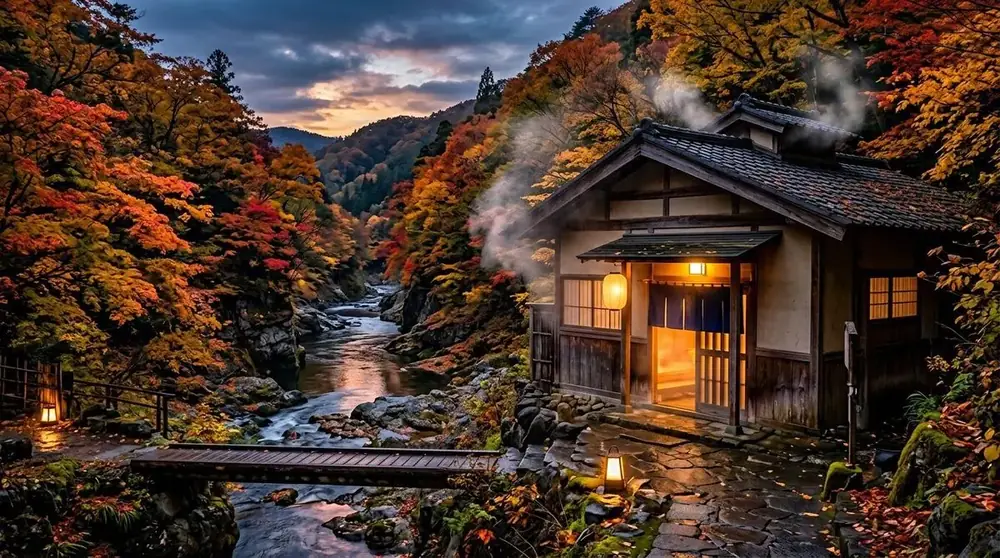
Kamasaki Onsen Mogamiya Ryokan is a long-established inn at Kamasaki Onsen, hidden in a quiet valley backed by the Zao range in Shiroishi, Miyagi. Kamasaki, nearly 600 years old, is said to have gushed forth in 1428 when a farmer dug with the tip of his sickle (kama); renowned as the 'medicinal bath of Oshu' for healing cuts, it reputedly bathed the warlord Date Masamune. Mogamiya, founded in 1789, is a pure Japanese-style inn whose Taisho-era wooden two-storey building survives intact, and a member of the Japan Association of Secluded Hot Springs. Of Kamasaki's three inns it is practically the only one that routinely admits day bathers, so despite the short 11:00–14:00 window it is a precious door to the iron-tinged, light-brown free-flowing water for ¥800.
Iron-tasting, faintly cloudy warm water, heated and nothing else
There are two gender-separated indoor baths, 'Sanpo-no-yu' and 'Toko-no-yu', cosy rooms with about three wash stations each, and no rotenburo or sauna. The private source 'Sanpo-no-yu' is a tepid 36.1°C, so it is heated, but never diluted, recirculated or disinfected — free-flowing, and a comfortable 40–42°C in the tub. Iron tints the water a faintly cloudy light brown; on the tongue it is strongly ferrous with a hint of salt. Salt and glauber salt heat you quickly and hold the warmth, so you break a sweat even in a winter blizzard, and a fair dose of metaboric acid lends credence to its reputation as a 'medicinal bath' for cuts. The tubs are small and the building old, so facilities are plain, but the creaking corridors and Taisho-era window glass — the patina of time — are the inn's real charm.
Practical details and cautions
Day bathing is a short 11:00–14:00, closures are irregular and some days are refused depending on bookings, so always phone ahead (older listings of 10:00–16:00 and ¥500 are out of date). The fee is ¥800; towels are sold for ¥300, so bring one. The private family bath is for overnight guests only and there is no rotenburo. Parking is shared by the inns with numbered bays — follow the signs. Fifteen minutes by city bus from JR Shiroishi Station, or 15 by car from Shiroishi-Zao Station or Shiroishi IC, it fits a southern Miyagi day with Shiroishi Castle, a lunch of umen noodles, Zao Fox Village and Togatta Onsen. To enjoy the water in peace, the best plan is to stay the night with dinner and breakfast and have Sanpo-no-yu to yourself after dark.
Before you go
- No official tattoo policy is published — ask at reception.
- Ryokan day-use hours are limited and may be suspended in peak season — phone the same morning.
- Payment is usually by ticket machine in cash — bring coins.
- Last entry is 30–60 minutes before closing.
Features
Mood & scenery
Price
Who with
Convenience
Amenities
✔ Verified operating: 2026-09 Operating status and rates cross-checked against the official site and onsen guides (full source notes in Japanese on the JA page)
Prices and hours change. Check official sources before visiting.
More in this area

Taki-no-Yu, Naruko
A communal bath with over a thousand years of history as the shrine's sacred spring. Milky acidic sulfur water pours like a waterfall from log flumes into cypress tubs. ¥300; bring your own soap.

Naruko Waseda Sajiki-yu
A communal bath using a spring that Waseda University students struck during fieldwork in 1948. Architect Osamu Ishiyama's yellow avant-garde building is unmistakable; descend the stepped 'sajiki' gallery to the bathroom. The modern counterpart to Taki-no-yu.

Akiu Onsen Public Bath
The only communal bath in Akiu Onsen, Sendai's classic hot-spring retreat. Among upscale ryokan charging ¥1,000-plus for day use, this humble bathhouse offers free-flowing chloride spring water for ¥300. Near the Yakushi-do temple at the source, it has a single tub and a mostly local crowd; soap is sold, not provided, and a sign asks for 40-minute stays. About 55 minutes by bus from Sendai Station, right by the Yumoto stop.