Toyama · Ogawa Onsen, Asahi
Ogawa Onsen Motoyu Hotel Ogawa
小川温泉元湯 ホテルおがわ
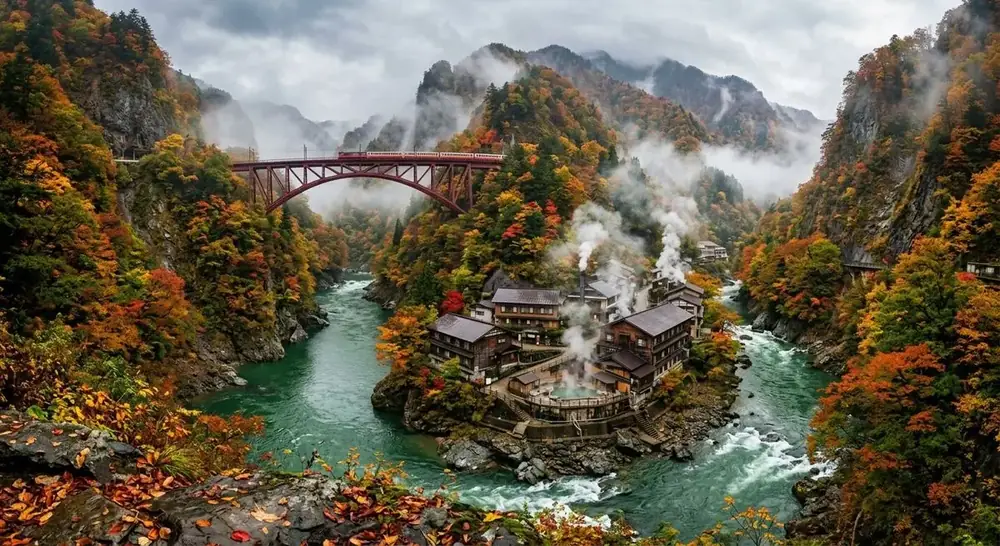
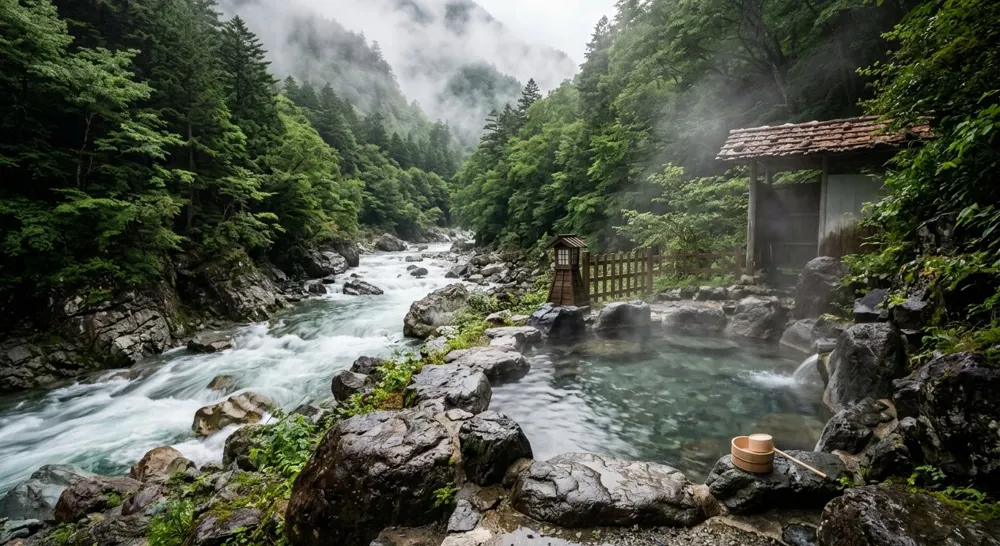
A 400-year-old hot spring inn standing alone deep in the Ogawa river gorge that runs down from the Northern Alps in Asahi, the easternmost town of Toyama. Known as a fertility and therapeutic spa, it offers a circuit of five different baths. The great curiosity is the 'natural cave open-air bath', a dome of travertine built up over centuries from the spring's own mineral deposits and designated a prefectural natural monument – bathing inside it is an experience found nowhere else in Japan. There are also the streamside Renge-no-Yu outdoor bath, a rock bath and a cypress tub, all with free-flowing bicarbonate spring water that keeps you glowing long after. Day bathing runs 9:00–15:00 (reception until 14:30) for ¥1,000 per adult and ¥500 per child, or half price for the outdoor baths only. Irregular closures, and the two outdoor baths shut for winter from 1 December until the mid-April thaw. About 15 minutes by car from Tomari Station on the Ainokaze Toyama Railway, 30 minutes from Kurobe-Unazuki-Onsen Station on the Hokuriku Shinkansen (shuttle for overnight guests) or 15 minutes from Asahi IC. A hidden spring to pair with the Jade Coast and Unazuki on a drive along the Niigata border.
- Price (adult)
- ¥1,000
- Hours
- 9:00–15:00 (reception until 14:30; 10:00–14:00 on some days)
- Closed
- Irregular (wild baths closed Dec–mid Apr; day bathing Thu–Sun only at some times)
- Access
- About 15 min by car from Tomari Station (Ainokaze Toyama Railway); about 30 min by car from Kurobe-Unazuki-Onsen Station (shuttle for overnight guests); about 15 min by car from Asahi IC on the Hokuriku Expressway
- Water type
- Bicarbonate spring
- Tattoos
- Ask ahead
- Admission
- Day bathing adults ¥1,000, elementary ¥500 (face towel included). Half price for the outdoor 'noten' baths only. Cash at the front desk. Discounts with the Yumeguri passport and similar. No private bath. Overnight from ¥19,800 with two meals
- Baths
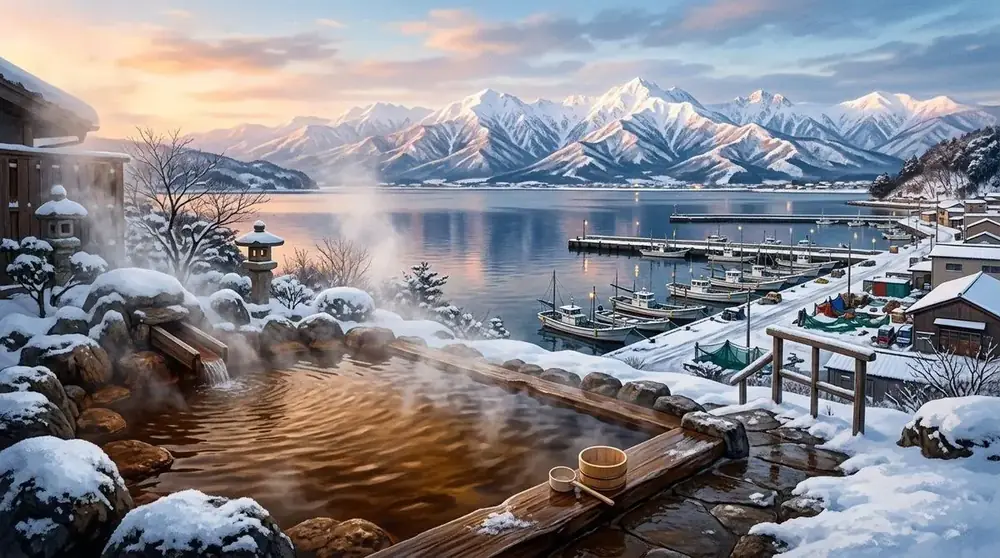
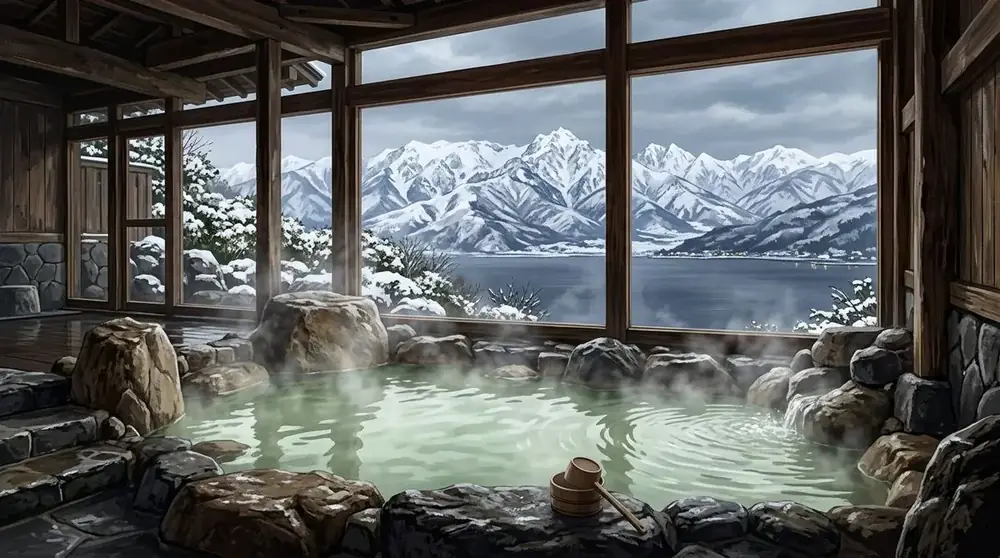
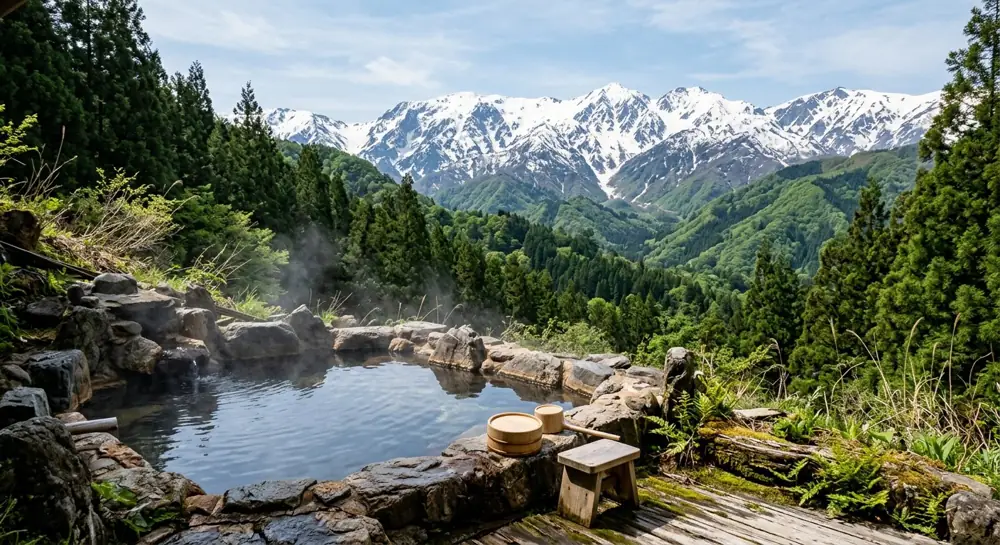
- Five baths: the indoor main bath (gorge views through big windows), a huge all-hinoki tub rotenburo, a rock rotenburo, and two 'noten' wild baths a 7-minute walk upstream — the 'Natural Cave Bath' inside a travertine cave designated a town natural monument (men-only for day visitors since September 2026; mixed with free bathing wear for overnight guests) and the women-only 'Renge-no-yu'. The wild baths open only mid-April to end of November, 7:00–18:00. Sauna suspended, no cold plunge. Choose-your-shampoo service; jade gelato sold
- Water
- Sodium chloride-bicarbonate spring (old name: soda-bearing salt spring), 53.5°C at source, about 1,363 mg/kg total minerals, colourless and almost odourless; about 400 L/min lets every tub run 100% free-flowing (slight dilution to keep a comfortable temperature). Drinkable. Discovered in 1617, one of the 'four famous springs of Etchu' and long called the 'fertility water'. Indicated for cuts, peripheral circulation, poor circulation, low mood and dry skin. A dedicated 'yumori' bath-keeper manages the temperature
- Parking & access
- Free parking. About 15 min by car from Tomari Station (Ainokaze Toyama Railway; shuttle for overnight guests, confirm). About 20 min from Asahi IC on the Hokuriku Expressway. About 35 min by car from Kurobe-Unazuki-Onsen Station on the Hokuriku Shinkansen. A lone inn deep in the gorge beyond a tunnel; beware snow in winter
- Phone
- 0765-84-8111
- Official site
- ogawaonsen.co.jp ↗
- Open in Google Maps
- Google Maps ↗
Essentials
Find a stay on Trip.com
Search and book accommodation across Japan on Trip.com. Day-use bathing needs no booking.
Opens partner booking site (affiliate)
Why go
- Japan's only bath inside a natural travertine cave
- 400-year inn; five streamside baths, free-flowing spring
- ¥1,000; 9:00–15:00; outdoor baths closed in winter
A 400-year-old spring kept by a 'yumori' in a hidden gorge
Ogawa Onsen Motoyu Hotel Ogawa is a lone inn in the V-shaped upper gorge of the Ogawa river, which runs from Mt Jokura to the Sea of Japan in Asahi, Toyama. Legend says a farmer found the spring bubbling from between rocks in 1617 after a vision of the Medicine Buddha; by the mid-Edo period it ranked among the 'four famous springs of Etchu' and was revered as a fertility water. Since its founding in 1886 the inn has kept a dedicated 'yumori' bath-keeper who opens and closes the inlets to suit the weather and the spring's mood. Some 400 litres a minute of bicarbonate water fill every tub free-flowing with no recirculation, and the star is the natural cave bath a 7-minute riverside walk from the inn — a travertine cave built up by the spring's own minerals and designated a town natural monument.
The cave bath, the hinoki tub and a September 2026 rule change
Indoors are the main bath with gorge views through big windows, the giant all-hinoki tub rotenburo beside it and a rock rotenburo; a 7-minute climb up the mountain path brings you to a changing hut, the natural cave bath and the women-only 'Renge-no-yu'. Inside the cave, water seeps from the rock walls at a rather hot 42–43°C, and outside there is nothing but wilderness. Note that from 20 September 2026 the cave bath is men-only for day visitors (overnight guests still bathe mixed in free bathing wear); women visiting for the day use Renge-no-yu and the indoor baths. The wild baths open only mid-April to end of November, 7:00–18:00, close in bad weather, and the price is unchanged on cleaning days when they cannot be used — so phone ahead. The water is clear, soft and, thanks to its salt, keeps you warm for a long time; the inn suggests not rinsing it off afterwards.
Practical details and tips
Day bathing is nominally 9:00–15:00 (reception until 14:30), but at times it is 10:00–14:00 (until 13:30) and Thursday to Sunday only, so the bar is fairly high — always check ahead. Irregular closures. Adults ¥1,000, elementary ¥500 (face towel included), half price for the wild baths only, paid in cash at the desk. The sauna is suspended and there is no cold plunge; you come here for the water itself. It is 15 minutes by car from Tomari Station and 35 from Kurobe-Unazuki-Onsen Station on the Shinkansen, so it pairs well with Unazuki Onsen, and many combine it with the nearby Jade Coast in summer. Overnight guests use the indoor baths freely 6:00–23:00, may bathe mixed in the cave, and every room faces the river.
Before you go
- No official tattoo policy is published — ask at reception.
- Ryokan day-use hours are limited and may be suspended in peak season — phone the same morning.
- Open seasonally only — check the official site for operating dates before you go.
- Last entry is 30–60 minutes before closing.
Features
Mood & scenery
Price
Who with
Amenities
✔ Verified operating: 2026-09 Operating status and rates cross-checked against the official site and onsen guides (full source notes in Japanese on the JA page)
Prices and hours change. Check official sources before visiting.
More in this area

Unazuki Onsen Soyu Yumedokoro
The town bathhouse in front of Unazuki Onsen Station, gateway to the Kurobe Gorge Railway. A bright white bathroom with tubs of Kurobe granite holds crystal-clear, mildly alkaline water said to be Japan's most transparent. Just ¥510, with a free foot bath, drinking fountain and rooftop terrace. Easy to fit in before or after the gorge train.

Himi Onsen Soyu
Next to the Himi Banya-gai seafood market near the port famous for winter yellowtail, a day spa fed by its own well 1,250 m down. The brown, strongly saline water flows freely, and on clear days the rotenburo frames the Tateyama range across Toyama Bay. Open 10:00–23:00, from 7:00 on weekends and holidays. ¥950. The classic routine: kaisen-don or conveyor sushi at the market, then a soak.

Kintarō Onsen Karuna no Yakata
Ten minutes by car from Kurobe-Unazuki-Onsen Station on the Hokuriku Shinkansen, a large day-spa wing of the lone inn Kintarō Onsen in Uozu. Its sulfur-rich sodium-calcium chloride water is among the most concentrated in Hokuriku, gushing at 1,800 litres a minute. A giant rock bath built from Tateyama boulders, open-air baths, a carbonated bath, rock-bath rooms and four private baths; open daily 8:30–23:30. Admission ¥1,100.