Akita · Tamagawa Onsen
Tamagawa Onsen (Main Hall)
玉川温泉(本館)
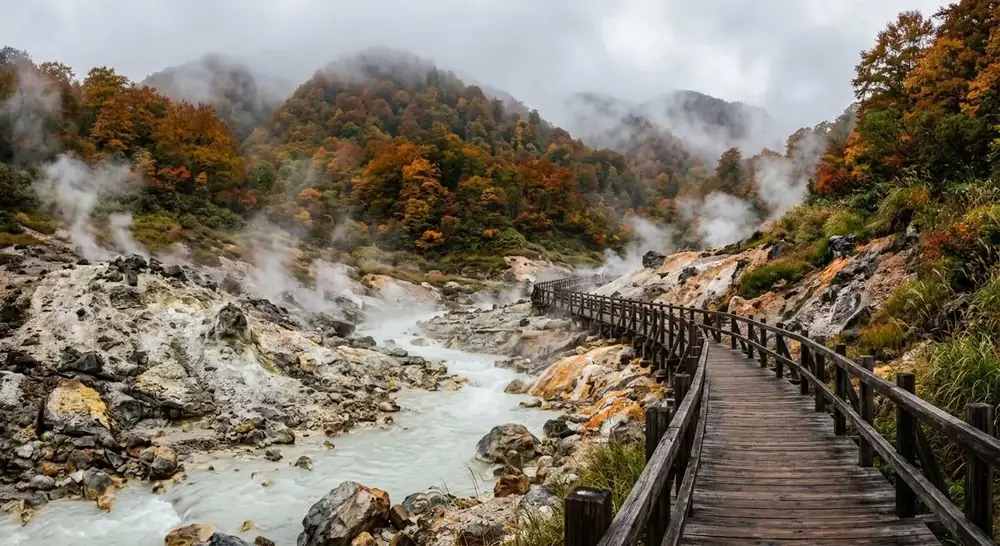
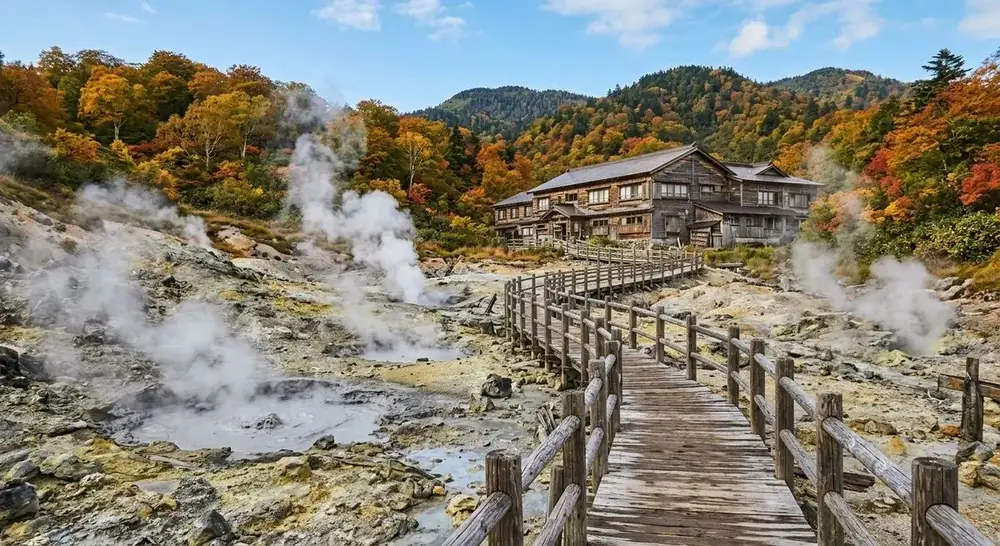
A leading toji spa of Japan, where a strongly acidic spring of pH 1.2 rises. Hokutolite, a mineral found nowhere else in the country, sits here along with outdoor rock bathing, a nature study path and the steam vent called Obuki, so the culture of curative bathing comes through intact. Day bathing is 1,000 yen for adults and 500 yen for children, accepted 10:00 to 15:00 with last entry at 14:30, and the large rest hall is 1,500 yen. Being a snowy highland, it opens only from mid-April to late November.
- Price (adult)
- ¥1,000
- Hours
- 10:00–15:00 (last entry 14:30)
- Closed
- Closed in winter (open mid-April to late November)
- Access
- Travel from Tazawako Station on the JR line by Ugo Kotsu local bus bound for Tamagawa Onsen. In winter there are road closures and timetable changes, so check the bus times and the condition of Route 341 before setting out.
- Water type
- Acidic spring
- Tattoos
- Ask ahead
- Admission
- Day bathing is 1,000 yen for adults and 500 yen for children, the rate revised on 16 April 2026. Reception closes at 14:30, and using the large rest hall adds 1,500 yen. During the winter closure, from late November to mid-April, day bathing is not available at all.
- Spring water
- A strongly acidic spring of about pH 1.2, among the most acidic in Japan. It is a chloride water carrying carbon dioxide, iron and aluminium, and the source reaches 98 degrees. The tubs of full-strength spring water are kept cooler because the water is harsh, and there are milder, weakly acidic tubs as well.
- Baths
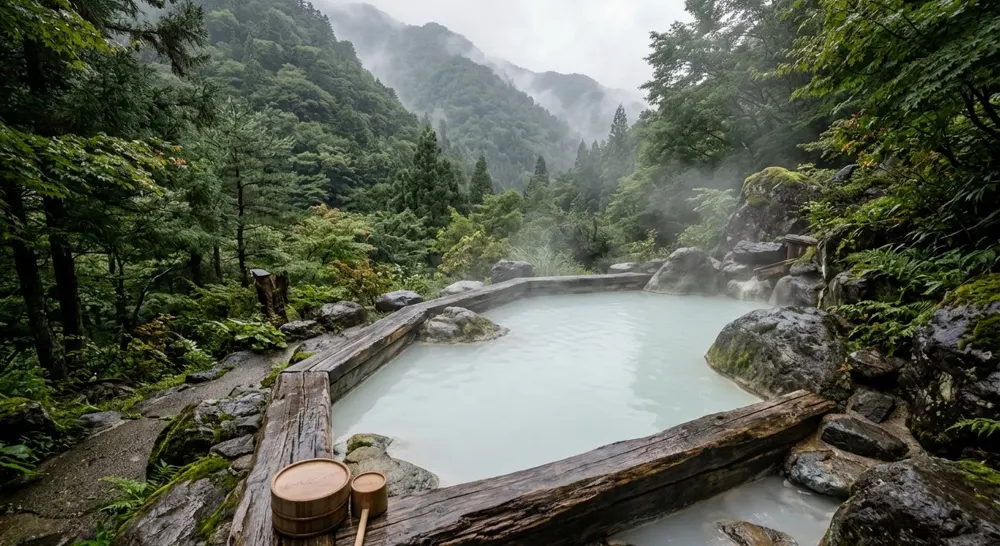
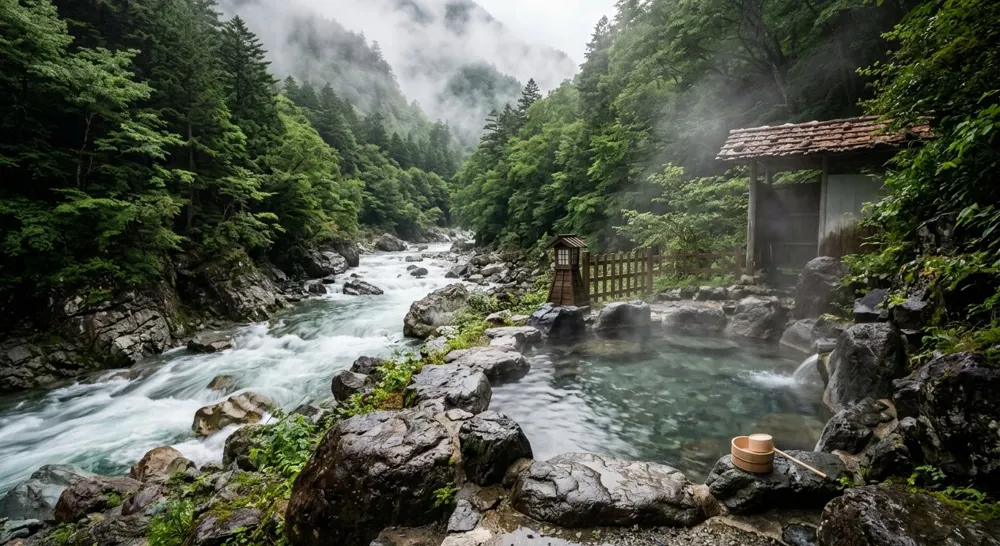
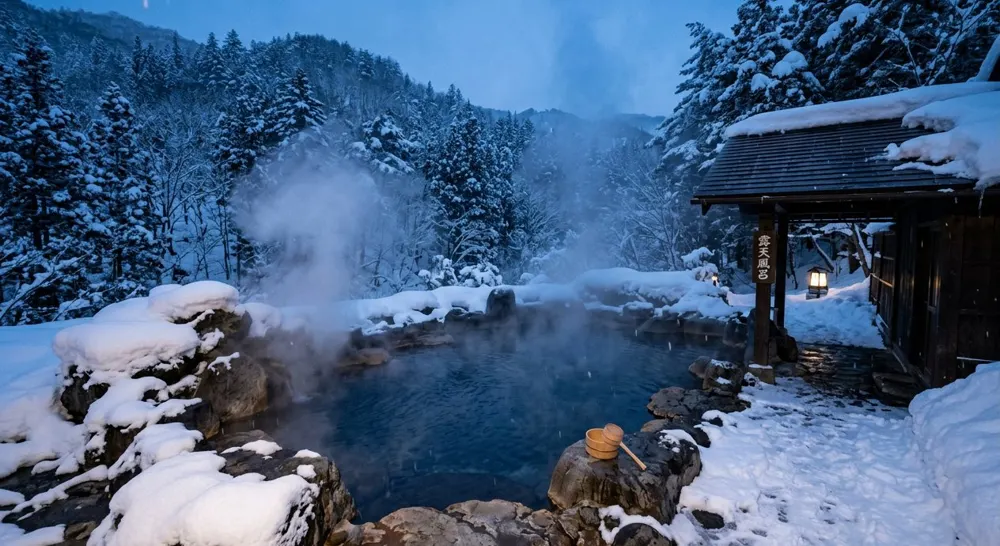
- There are indoor great baths, an open-air bath and private baths. Outside, on the riverbank, is a place for natural rock bathing that can be used without charge, and the ground there is strewn with hokutolite, a mineral found nowhere else in Japan. The steam vent called Obuki and a nature study path are close by, which makes it easy to combine bathing with a walk.
- Access & parking
- Travel from Tazawako Station on the JR line by Ugo Kotsu local bus bound for Tamagawa Onsen. Being deep in the mountains, road closures and timetable changes are frequent in winter, so check the bus times and the condition of Route 341 before setting out.
- Day bathing
- Day bathing runs 10:00 to 15:00, with reception closing at 14:30. Getting there through the mountains takes time, so arriving in the morning is safer. It shuts for the winter closure, when the nearby Shin-Tamagawa Onsen is open instead.
- Phone
- 0187-58-3000
- Official site
- tamagawa-onsen.jp ↗
- Open in Google Maps
- Google Maps ↗
Essentials
Find a stay on Trip.com
Search and book accommodation across Japan on Trip.com. Day-use bathing needs no booking.
Opens partner booking site (affiliate)
Why go
- A strongly acidic spring at pH 1.2
- Hokutolite and outdoor rock bathing
- Open only from mid-April to late November each year
Bathing in water of pH 1.2
The water is strongly acidic, so staying in it long with bare skin can sting. The bathing room separates tubs of full-strength spring water, tubs cooled down, and weakly acidic tubs, so begin with the mildest. Drink water before and after, and take several short soaks rather than one long one, which is the old way of this spa.
Natural rock bathing and hokutolite
On the rocks laid along the riverbank you can take a rock bath without charge. The hokutolite found only in this ground is known as a radioactive mineral, and people have lain their bodies here for a long time. In good weather many spread a towel on the stone and rest in the mountain air. Steam rises without pause from the vent called Obuki nearby.
How day bathing works
Day bathing is accepted only from mid-April to late November, between 10:00 and 15:00, with reception closing at 14:30. It costs 1,000 yen for adults and 500 yen for children, and the large rest hall can be hired for 1,500 yen. Anyone wanting this spa in winter should look instead at Shin-Tamagawa Onsen, which stays open.
Before you go
- No official tattoo policy is published — ask at reception.
- Strongly acidic water — rinse off afterwards, avoid long soaks, and remove silver jewellery.
- Ryokan day-use hours are limited and may be suspended in peak season — phone the same morning.
- Last entry is 30–60 minutes before closing.
Features
Sauna & wellness
Mood & scenery
Who with
Price
Amenities
✔ Verified operating: 2026-10 Operating status and rates cross-checked against the official site and onsen guides (full source notes in Japanese on the JA page)
Prices and hours change. Check official sources before visiting.
More in this area

Tsurunoyu Onsen
The oldest inn in the Nyuto Onsen area, a hidden hot spring dating to the Edo period. The thatched 'Honjin' building and the large milky-white mixed rotenburo are its iconic scene. Day bathing 10:00–15:00; on Mondays the rotenburo is closed for cleaning and only indoor baths are open. Rooms sell out months ahead. From Tazawako Station take the bus, then the inn shuttle from Alpa Komakusa.

Kuroyu Onsen (Nyūtō)
The innermost of Nyūtō's seven baths — a cluster of thatched bath huts. Two separate sources feed a mixed open-air pool and gender-separated indoor/outdoor baths of milky sulfur water. Day use 9 am–4 pm, the longest window of the seven; closed mid-November to mid-April.

Nyūtō Onsen Tae-no-yu
The most polished of the seven Nyūtō inns, beside the Sendatsu stream and popular with women. Two sources — rusty 'gold' and clear 'silver' — in open-air baths above the rushing river. Day-use reception is short (10:30 am–2 pm), so come early.