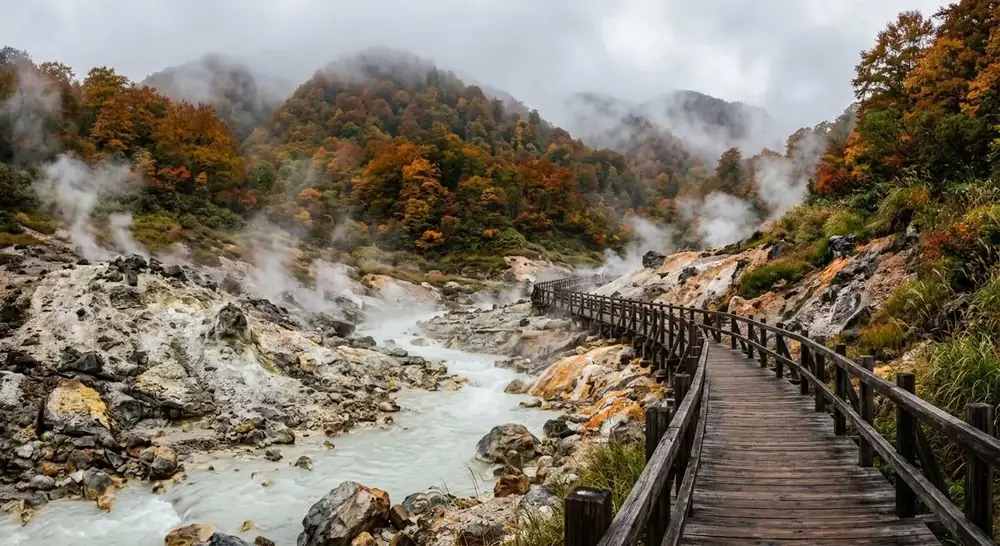
Akita · Goshōgake Onsen, Hachimantai
Goshōgake Onsen (day use)
後生掛温泉(日帰り入浴)
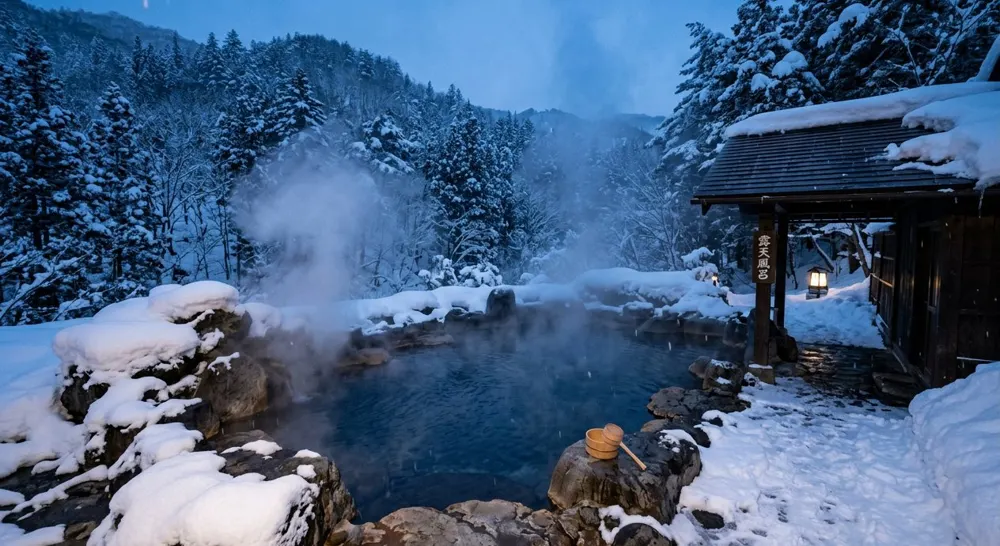
A lone inn in a steaming fumarole field at about 1,000 m on the Akita side of Hachimantai. One of Tōhoku's great cure spas — 'arrive on horseback, leave on your own two feet', as the saying went — it is also famous for its ondol-heated cure wing. The main bathhouse lines up seven kinds of tubs: the signature box steam bath, a mud bath, a cascade bath, a 'volcano bath' and an open-air bath, all fed by milky acidic sulphur water. Day use 10:30–15:00 (last entry 14:00), ¥800 for adults, closed Tuesdays (plus maintenance days). Behind the inn a nature trail loops past mud volcanoes and vents in about 40 minutes. About 1 h 55 min by bus from Tazawako Station on the Hachimantai summit line (usually late Apr–mid-Oct); in winter come by local bus from Kazuno-Hanawa Station or by car.
- Price (adult)
- ¥800
- Hours
- 10:30–15:00 (last entry 14:00)
- Closed
- Tuesdays (possibly Tue–Thu in winter; maintenance closures; open over New Year)
- Access
- About 1 h 55 min by bus from JR Tazawako Station (Hachimantai summit line, late Apr–mid-Oct) to 'Goshōgake Onsen', then 5 min on foot; about 50 min by bus from JR Kazuno-Hanawa Station; about 40 min by car from Kazuno-Hachimantai IC
- Water type
- Acidic spring
- Tattoos
- Ask ahead
- Admission
- Day bathing: adults ¥800 / elementary ¥400. Bath plus 'ondol' experience (10:30–15:00) ¥2,000. Towels sold ¥300, bath-towel set rental ¥500. Overnight guests bathe 24 h except cleaning (9:30–10:30)
- Baths
- 'Seven ways of bathing' inside a huge timber bathhouse — the famous hako-mushi (single-person steam boxes with only your head out, 3 units), a mud bath, a bubbling 'volcano bath', a cascade, a steam sauna, a 'neuralgia bath' and a rotenburo. No cold plunge; instead, icy spring water from Kesen Pass to pour over yourself (drinkable)
- Water
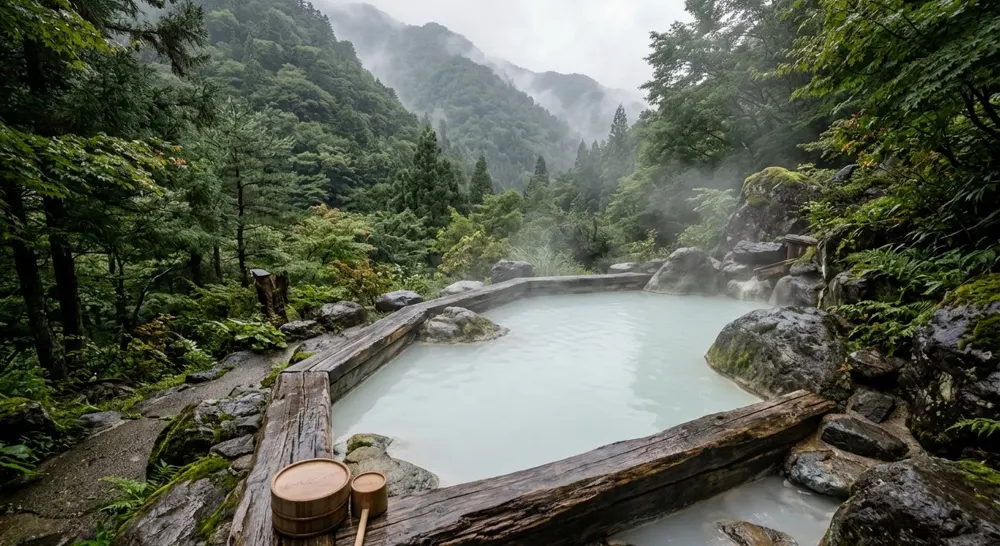
- Simple sulphur spring (sources 'Oname & Motome', about 88°C, acidic). Distinguished by grey-white, mud-laden cloudy water and geothermal steam — in the mud bath, fine volcanic mud leaves skin silky. Fumaroles and mud volcanoes sit right on the grounds
- Parking & access
- Free parking for 30 cars (coaches use the public second lot). About 40 min by car from Kazuno-Hachimantai IC on the Tohoku Expressway (year-round); in summer, 60 min from Matsuo-Hachimantai IC via the Hachimantai summit. From Tazawako Station, the Hachimantai-summit bus to 'Goshogake Onsen' then 3 min on foot (weekends/holidays only), or Ugo Kotsu bus to Tamagawa and the inn's shuttle (reserve)
- Phone
- 0186-31-2221
- Official site
- goshougake.com ↗
- Open in Google Maps
- Google Maps ↗
Essentials
Find a stay on Trip.com
Search and book accommodation across Japan on Trip.com. Day-use bathing needs no booking.
Opens partner booking site (affiliate)
Why go
- Seven baths incl. box steam and mud bath
- Milky acidic sulphur water in a fumarole field
- Pair with the mud-volcano nature trail
'Arrive on horseback, leave on clogs' — Hachimantai's 1,000-metre sanatorium of steam boxes and mud baths
Goshogake Onsen is a lone inn at 1,000 m in Hachimantai National Park, Kazuno, Akita — an archetype of Japanese toji (curative bathing), so famed for its effects that an old saying goes 'arrive on horseback, leave on clogs'. Fumaroles and mud volcanoes still steam on the grounds, and that geothermal energy powers 'seven ways of bathing' in a vast timber bathhouse: the celebrated hako-mushi, in which you sit in a wooden box with only your head out while spring steam cooks you; a grey-white mud bath where fine volcanic silt settles; a 'volcano bath' bubbling from below; a cascade; a steam sauna; a 'neuralgia bath'; and a rotenburo. The water is an acidic simple sulphur spring of about 88°C, milky and clouded, and instead of a cold plunge the local custom is to douse yourself with icy spring water from Kesen Pass. Geothermally heated 'ondol' lodgings survive, where lying on the warm floor is itself the cure, and day visitors (10:30–15:00, ¥800) can add an ondol session for ¥2,000 in total. Afterwards, walk the 40-minute Goshogake nature trail and watch the earth itself boil.
Tips & notes
① Day bathing closes Tuesdays (possibly Tue–Thu in winter) plus maintenance days — check the official notices. Last entry is an early 14:00. ② Only three single-person steam boxes, so expect to queue; adjust seat height with the boards. Elderly or heart patients: five minutes at most. ③ Always shower after the mud bath — it clings to towels. ④ The bathhouse floor slopes and is slippery; move slowly. ⑤ One hair dryer in the women's changing room. Come understanding that this is a self-reliant toji inn. ⑥ Acidic sulphur water tarnishes silver and irritates contact lenses. ⑦ No scheduled buses in winter (Nov–Apr) — you need a car or the inn's shuttle (reserve); check Aspite Line closures.
Getting there
Tazawako Station on the Akita Shinkansen is the gateway. On weekends and holidays, the Hachimantai-summit bus stops at 'Goshogake Onsen', 3 min on foot (summer only). On weekdays, take the Ugo Kotsu bus towards Tamagawa (no winter service) about 1 h 20 min to 'Tamagawa', then the inn's 30-min shuttle (reserve), or the reservation-based 'Dragon' shuttle from the 'Aspite Line entrance' stop. By car: about 35 km / 40 min from Kazuno-Hachimantai IC via Routes 282, 341 and Prefectural Road 23 (open year-round), or about 60 min from Matsuo-Hachimantai IC over the Aspite Line summit in summer. The classic plan is a two-day toji trip combined with Tamagawa Onsen and Fuke-no-yu.
Before you go
- No official tattoo policy is published — ask at reception.
- Strongly acidic water — rinse off afterwards, avoid long soaks, and remove silver jewellery.
- Ryokan day-use hours are limited and may be suspended in peak season — phone the same morning.
- Payment is usually by ticket machine in cash — bring coins.
- Last entry is 30–60 minutes before closing.
Features
Mood & scenery
Price
Who with
Convenience
Amenities
✔ Verified operating: 2026-09 Operating status and rates cross-checked against the official site and onsen guides (full source notes in Japanese on the JA page)
Prices and hours change. Check official sources before visiting.
More in this area

Tsurunoyu Onsen
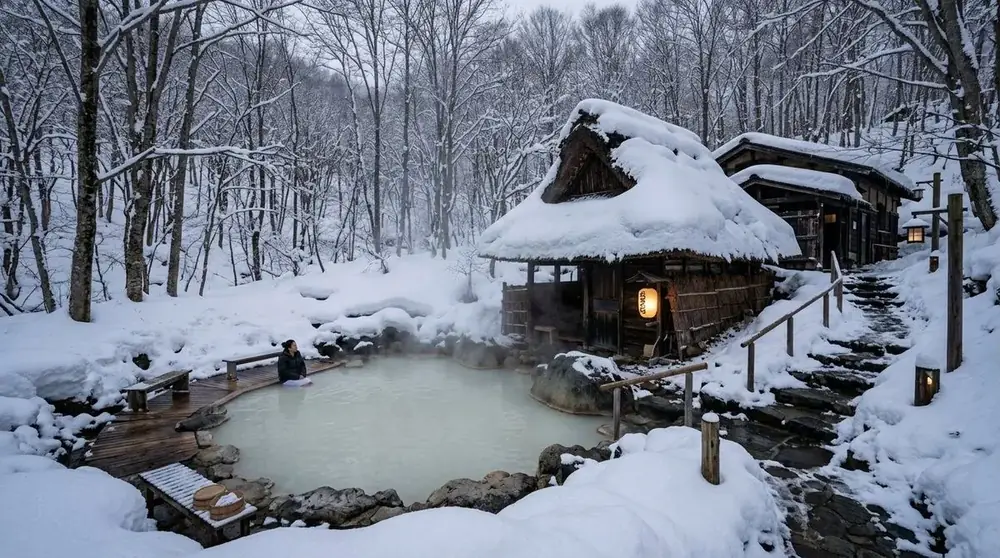
The oldest inn in the Nyuto Onsen area, a hidden hot spring dating to the Edo period. The thatched 'Honjin' building and the large milky-white mixed rotenburo are its iconic scene. Day bathing 10:00–15:00; on Mondays the rotenburo is closed for cleaning and only indoor baths are open. Rooms sell out months ahead. From Tazawako Station take the bus, then the inn shuttle from Alpa Komakusa.

Kuroyu Onsen (Nyūtō)
The innermost of Nyūtō's seven baths — a cluster of thatched bath huts. Two separate sources feed a mixed open-air pool and gender-separated indoor/outdoor baths of milky sulfur water. Day use 9 am–4 pm, the longest window of the seven; closed mid-November to mid-April.

Nyūtō Onsen Tae-no-yu
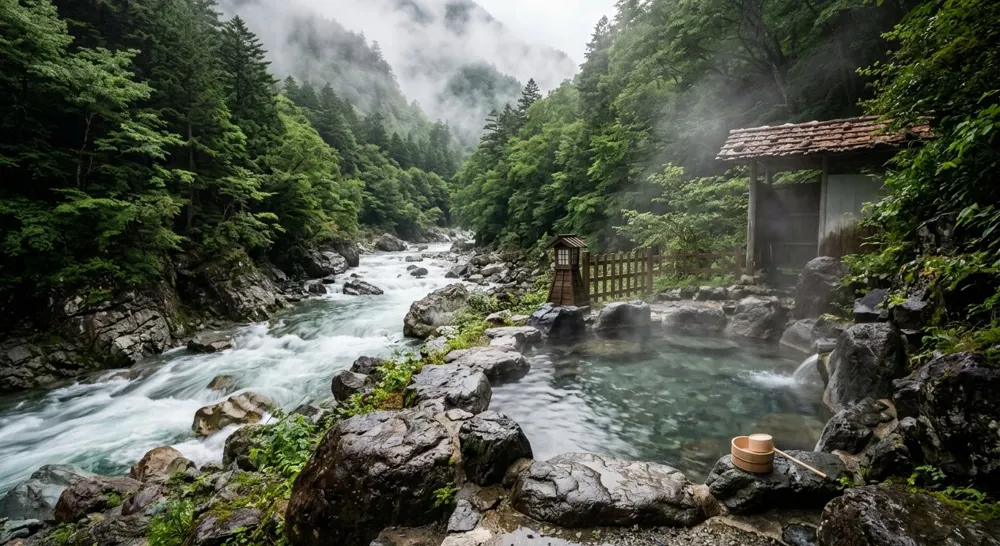
The most polished of the seven Nyūtō inns, beside the Sendatsu stream and popular with women. Two sources — rusty 'gold' and clear 'silver' — in open-air baths above the rushing river. Day-use reception is short (10:30 am–2 pm), so come early.