Akita · Goshōgake Onsen, Hachimantai
Hachimantai Fukenoyu (Mushinoyu)
八幡平 源泉・秘湯の宿 蒸ノ湯(ふけの湯)
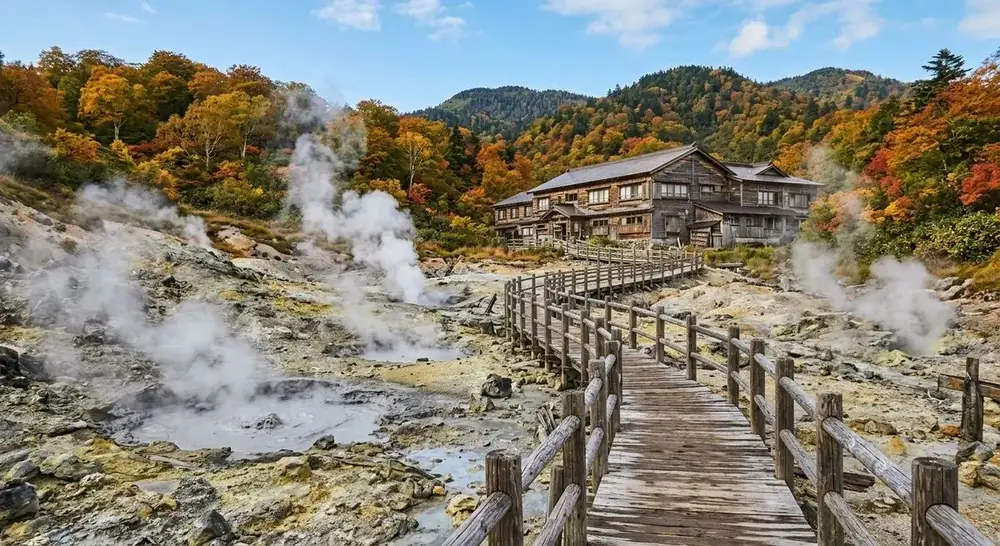
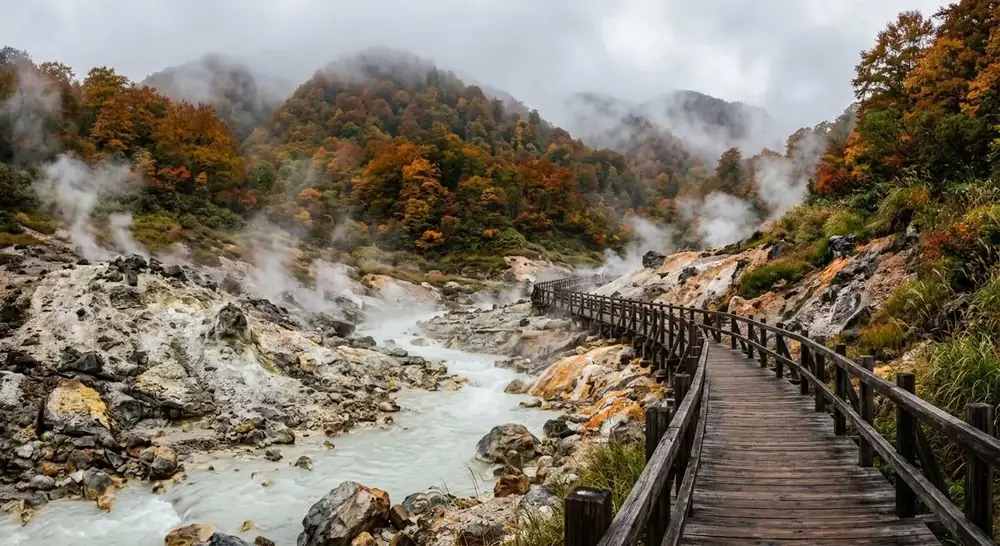
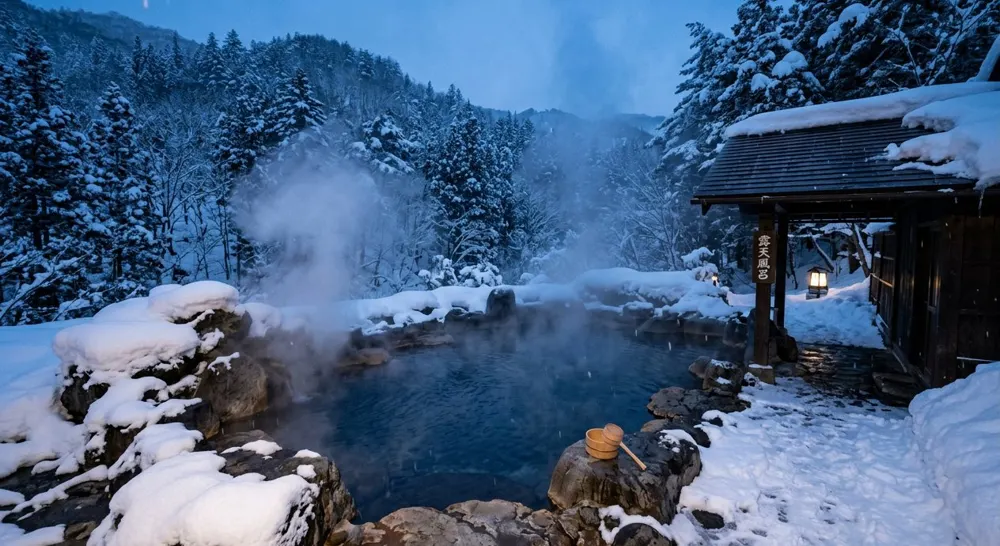
A hidden-spring inn standing in the bleak Jigoku valley on the slopes of Hachimantai. It is known for wild open-air baths where you bathe watching steam rise from the ground. Day bathing is received from 10:00 to 15:00, at 800 yen for adults and 400 yen for children. It closes under snow from early November to late April. Besides single-sex baths there is a mixed open-air bath.
- Price (adult)
- ¥800
- Hours
- 10:00–15:00
- Closed
- Irregular (closed early Nov–late Apr)
- Access
- About 55 to 65 minutes by bus from Hachimantai Station on the JR Hanawa Line. By car it is reached from Kazuno-Hachimantai IC on the Tohoku Expressway via the Hachimantai Aspite Line (seasonal).
- Tattoos
- Ask ahead
- Day bathing
- Day bathing is received from 10:00 to 15:00, at 800 yen for adults and 400 yen for children, with no reservation needed.
- Baths
- It is known for wild open-air baths where you bathe watching steam rise from the ground. There is a mixed open-air bath besides the single-sex baths.
- Day bathing
- It closes under snow from early November to late April; in winter the road is shut.
- Tattoos
- There is a mixed open-air bath, so a tattoo may limit its use; checking is needed.
- Access & parking
- About 55 to 65 minutes by bus from Hachimantai Station on the JR Hanawa Line; the road closes in winter.
- Phone
- 0186-31-2131
- Open in Google Maps
- Google Maps ↗
Essentials
Find a stay on Trip.com
Search and book accommodation across Japan on Trip.com. Day-use bathing needs no booking.
Opens partner booking site (affiliate)
Why go
- Open-air baths over a steaming valley
- Closed by snow from November to April
- Both mixed and single-sex baths
Steam of the Jigoku valley and the open-air baths
Fukenoyu is a lone inn standing in the bleak Jigoku valley on the slopes of Hachimantai. White steam rises here and there from the ground, and open-air baths sit amid it, so you bathe in scenery like another planet. The water differs by spot, mixing acidic and simple springs. Both mixed and single-sex baths are offered, to suit taste.
A hidden spring unreachable in winter
It closes under snow from early November to late April, and the road is shut, so it can be visited only from early summer to late autumn. Coming when the Hachimantai Aspite Line is open pairs it with a mountain-top drive. Combining Fukenoyu with nearby Goshogake Onsen lets you compare the two hidden springs of Hachimantai in a day.
Before you go
- No official tattoo policy is published — ask at reception.
- There is a mixed-gender area. Check the description for bathing garments and women-only hours.
- Ryokan day-use hours are limited and may be suspended in peak season — phone the same morning.
- Payment is usually by ticket machine in cash — bring coins.
- Last entry is 30–60 minutes before closing.
Features
Mood & scenery
Price
Who with
Amenities
✔ Verified operating: 2026-10 Operating status and rates cross-checked against the official site and onsen guides (full source notes in Japanese on the JA page)
Prices and hours change. Check official sources before visiting.
More in this area

Tsurunoyu Onsen
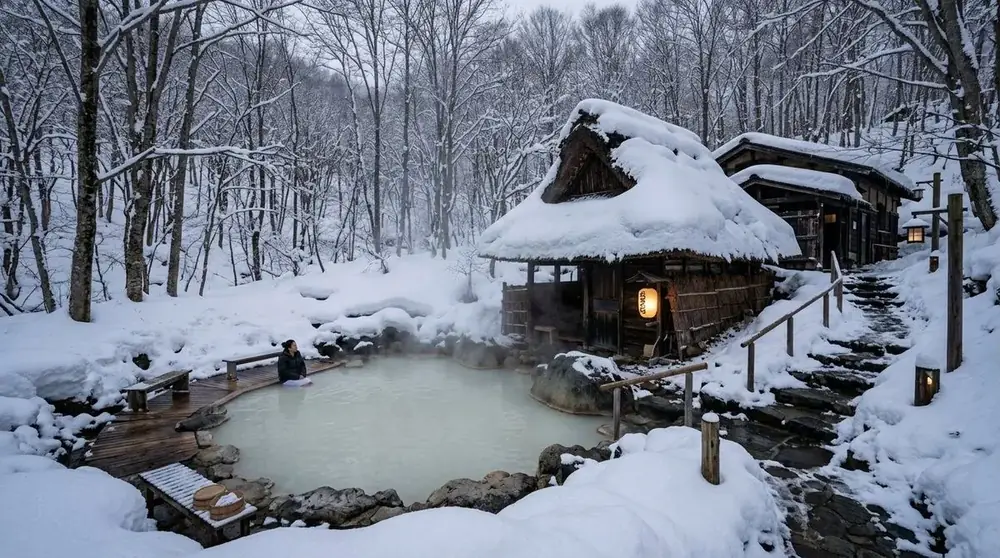
The oldest inn in the Nyuto Onsen area, a hidden hot spring dating to the Edo period. The thatched 'Honjin' building and the large milky-white mixed rotenburo are its iconic scene. Day bathing 10:00–15:00; on Mondays the rotenburo is closed for cleaning and only indoor baths are open. Rooms sell out months ahead. From Tazawako Station take the bus, then the inn shuttle from Alpa Komakusa.

Kuroyu Onsen (Nyūtō)
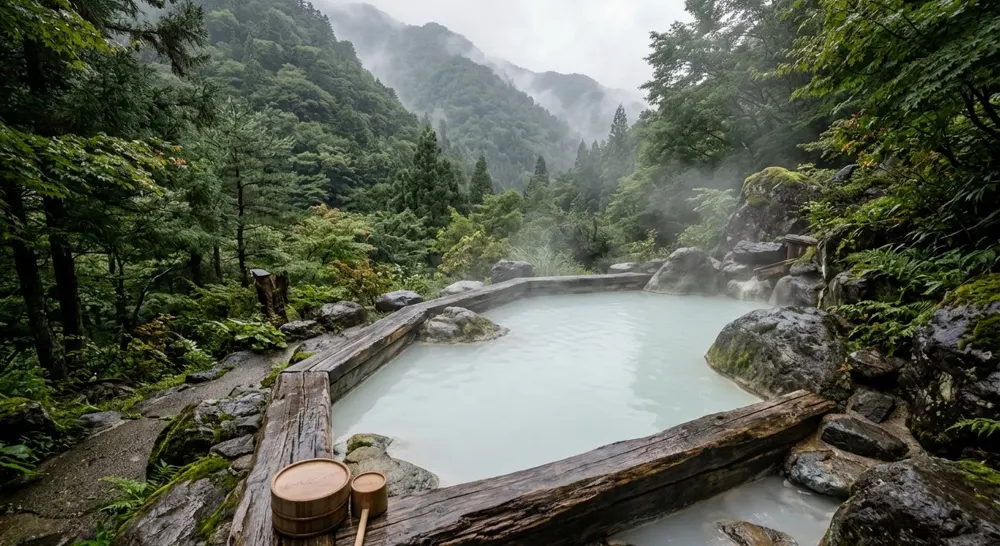
The innermost of Nyūtō's seven baths — a cluster of thatched bath huts. Two separate sources feed a mixed open-air pool and gender-separated indoor/outdoor baths of milky sulfur water. Day use 9 am–4 pm, the longest window of the seven; closed mid-November to mid-April.

Nyūtō Onsen Tae-no-yu
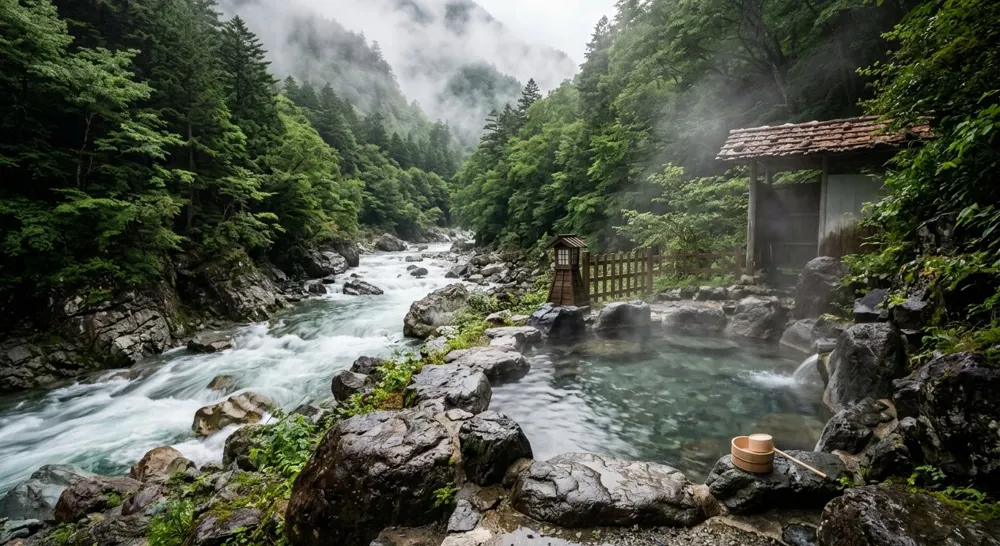
The most polished of the seven Nyūtō inns, beside the Sendatsu stream and popular with women. Two sources — rusty 'gold' and clear 'silver' — in open-air baths above the rushing river. Day-use reception is short (10:30 am–2 pm), so come early.