Shimane · Chihara Onsen, Misato
Chihara Onsen Yudani Tōjiba
千原温泉 千原湯谷湯治場
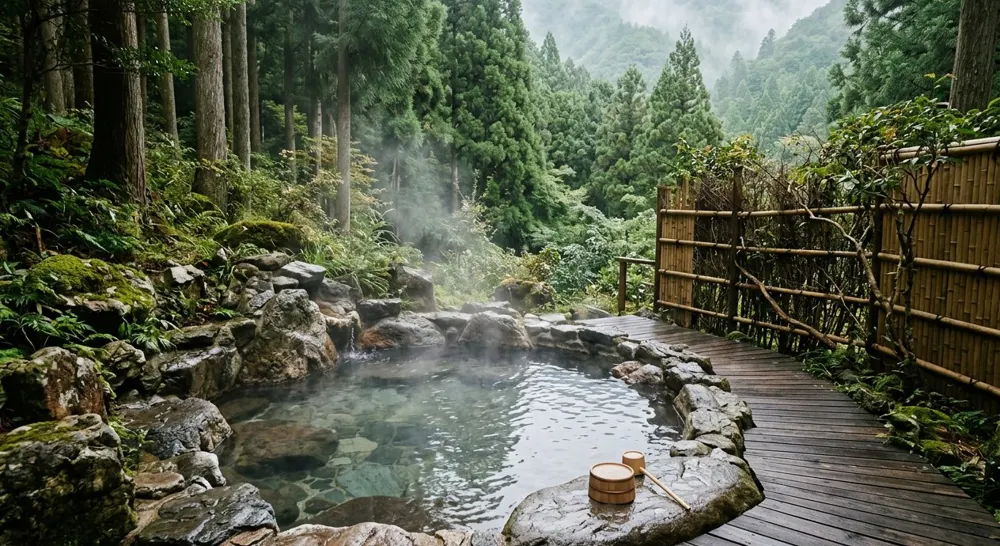
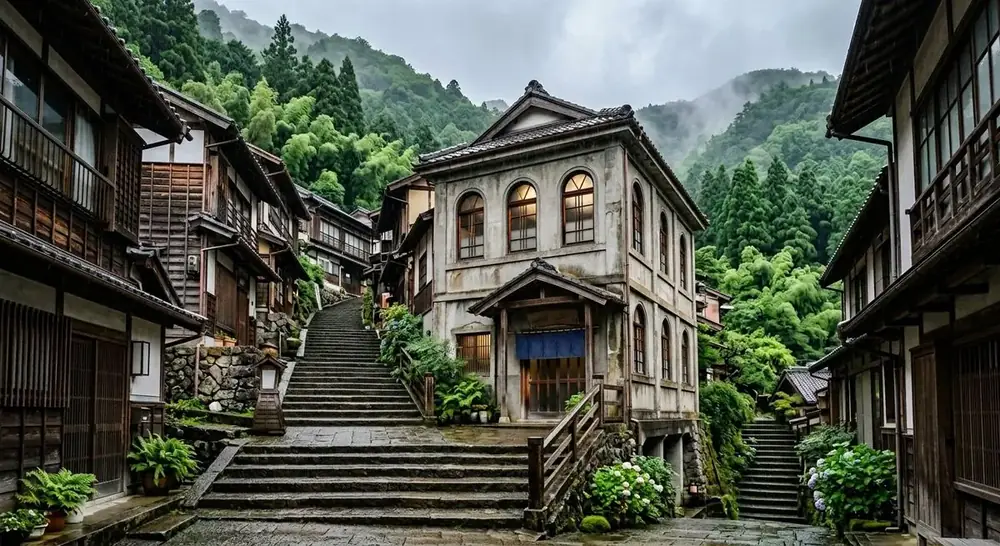
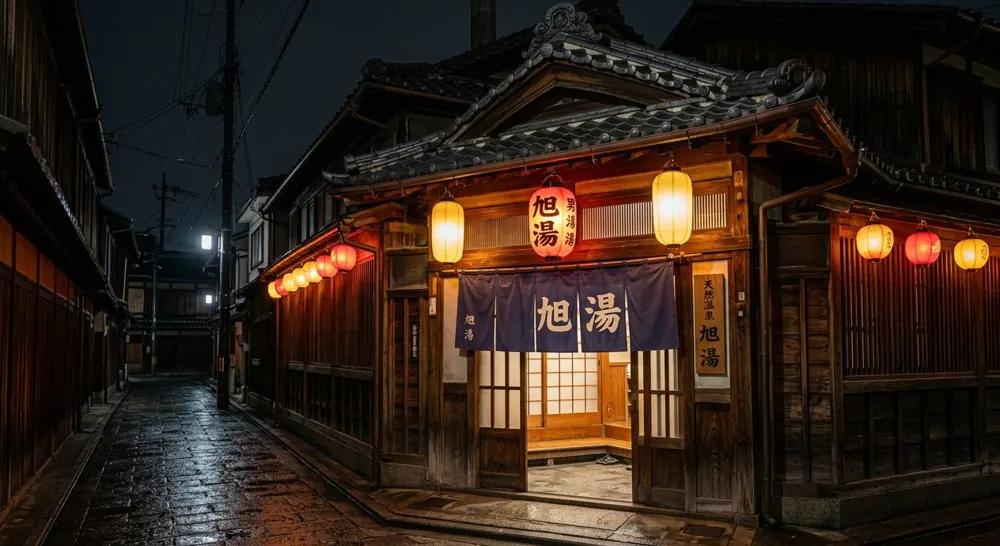
A cure-bath founded in the Meiji era, tucked in the hills of Misato, Shimane, up a tributary of the Gō River. The spring bubbles up directly through gaps in the wooden floor of the tub — 'footspring' water that onsen devotees rank among the finest sources in western Japan. The carbonated iron-bicarbonate water is tepid at around 34 °C, faintly yellow-brown, and coats the body in tiny bubbles. There is one small wooden tub each for men and women, no washing area, soap and shampoo are forbidden, and bathing is limited to an hour: this is a place purely for soaking. Afterwards you can warm up in a heated goemon iron-kettle bath. Adults ¥500; open 08:00–18:00 April–October (last entry 17:00) and 08:00–17:00 November–March (last entry 16:00), closed Thursdays. Room rest is available. With the Sankō rail line gone, driving is realistic: about 1 hour from JR Gōtsu Station or 50 minutes from Ōasa IC on the Hamada Expressway, with a narrow mountain road at the end. Not for those wanting facilities, but unforgettable for those who care about the water itself.
- Price (adult)
- ¥500
- Hours
- 8:00–18:00 (last entry 17:00); Nov–Mar 8:00–17:00 (last entry 16:00)
- Closed
- Thu
- Access
- About 1 h by car from JR Gōtsu Station; about 50 min from Ōasa IC (Hamada Expressway); about 2 h from Matsue or Hiroshima (narrow mountain road at the end)
- Water type
- Bicarbonate spring
- Tattoos
- Ask ahead
- Admission
- Admission ¥500 per entry (up to one hour) for adults; a ¥1,200 five-hour course (includes the second-floor private rest room and re-entry). No towels, soap or shampoo — their use is prohibited — and lockers are simple wooden ones. Free rest room on the first floor, private rest room upstairs (five-hour course). Bottled spring water sold to take home. Cash only. A pick-up can be arranged by phone (0855-76-0334)
- Baths
- In Misato, Shimane, some 5 km up a mountain track off the prefectural road, a 'source rising at your feet' spring — one that wells up straight through the floor boards of the tub, a structure rare nationwide, at a cure-bath house. A cure inn specialising in long stays since the Meiji era, now remaining as a day-use secret onsen. There is a single tub for five or six people half a floor below ground, no wash stations, and soap and shampoo are prohibited. Yellow-brown cloudy water at 34.5°C bubbles up from the bottom, and being said to heal burns, cuts and skin disease it draws cure-seekers from across the country
- Spring water
- Chihara Onsen, a sodium-chloride and bicarbonate spring (34.5°C, cure bath), rising at your feet through the tub floor with no heating, dilution, recirculation or disinfection at all. Yellow-brown cloudy water tasting of iron, with carbonic bubbles and the sensation of the water welling up beneath you. At 34.5°C it is tepid, so long soaks of one to two hours are the proper use. Indicated for burns, cuts, chronic skin disease, atopic dermatitis, rheumatism and neuralgia. From October to May a warmed 'agari-yu' tub is provided to heat up afterwards
- Access & parking
- About 5 km of narrow mountain track off Prefectural Road 166 from Misato IC on the San'in Expressway or from Gotsu city (narrow tarmac; care needed for large vehicles and new drivers), 20 min by car from Kasubuchi (Misato town centre). 1 h 20 min by car from Matsue, 2 h 30 min from Hiroshima. There is effectively no public transport (a pick-up can be arranged on 0855-76-0334 with a reservation), so a private car is essential. A few free spaces in the clearing in front of the bathhouse
- Phone
- 0855-76-0334
- Open in Google Maps
- Google Maps ↗
Essentials
Find a stay on Trip.com
Search and book accommodation across Japan on Trip.com. Day-use bathing needs no booking.
Opens partner booking site (affiliate)
Why go
- Meiji-era cure bath fed from beneath the floor
- 34 °C carbonated iron water, bubbles on skin
- No soap; 1-hour limit; ¥500
Rising through the tub floor at 34.5°C — a cure bath among Japan's rarest 'source at your feet'
Chihara Onsen Chihara Yunotani Yuji-ba is a cure-bath house deep in the mountains of Misato, Shimane, reached by 5 km of mountain track off the prefectural road. Run as a cure inn specialising in long therapeutic stays since the Meiji era, it now continues its spring through day bathing alone, having given up accommodation. Its nationwide reputation rests on 'source rising at your feet' — the spring wells up beneath the floor boards of the tub, so you soak in the water exactly as it rises from the ground without it ever being piped elsewhere, a form rare even by Japanese standards. There is a single tub for five or six people half a floor below ground, no wash stations at all, and soap and shampoo are prohibited; the water is yellow-brown and cloudy, tasting of iron with carbonic bubbles, and you feel it bubbling up beneath you. At 34.5°C it is tepid — not a bath for warmth but for time — which is why, besides ¥500 per entry (one hour), there is a ¥1,200 five-hour course (with a private rest room upstairs and re-entry), and from October to May a separate warmed 'agari-yu' is provided to heat up. It was once a convalescent onsen open only to patients with burns, cuts and skin disease, and cure-seekers still come from across the country believing in its efficacy; first-time visitors write their name and address in the register, a tradition that remains. Hours are 8:00 to 18:00 (last entry 17:00) from April to October and until 17:00 (last entry 16:00) from November to March; closed Thursdays; cash only; and with effectively no public transport a private car (or a pick-up reserved by phone) is required. The access track is narrow and winding, a burden for inexperienced drivers, but that is precisely why the 'secret onsen' atmosphere has been perfectly preserved — worth a pilgrimage at least once for any onsen devotee in the Chugoku and San'in regions.
The manners of a cure bath, and choosing one hour or five
When you see the wooden building by the small stream at the end of the mountain track, park in the clearing in front and pay at reception (separate from the entrance) — ¥500 per entry or ¥1,200 for the five-hour course, in cash. First-timers write their name and address in the register and receive instructions on the bathing rules (time limits, re-entry). The changing room has simple wooden lockers and old-fashioned baskets; there are no towels, soap or shampoo, so bring your own, but you cannot use soap or shampoo in the bathroom (prohibited; there are no wash stations). Down the stairs, the half-underground bathroom holds a single tub for five or six, with water rising ceaselessly through its floor. The method: (1) instead of rinsing with fresh water, scoop the tub water over your body so as not to foul the source; (2) enter to the chest in the 34.5°C tepid water and keep still for 30 minutes to an hour; (3) get out and rest in the first-floor rest room (or the private room upstairs on the five-hour course); (4) go back in — the five-hour course is cheaper than paying ¥500 again for another hour and suits the cure purpose. The water is yellow-brown and cloudy with an iron taste and carbonic bubbles, and the bubbles rising at your feet wrap the body, giving the feel of 'a natural carbonated spring plus an iron spring'. The low temperature means you do not tire from a long soak, but you can get cold, so finish with the 'agari-yu' (October to May) or the heating in the rest room. Avoid photography while others are bathing and soak quietly, which is the etiquette of a cure bath. There are no restaurants or shops anywhere nearby, so bring water and snacks; the toilet is beside the bathhouse. The mountain track is slippery after rain or snow and unlit at night, so come down before dark, and note that mobile signal is weak in places.
Practical details and a San'in secret-onsen route
Hours are 8:00–18:00 (last entry 17:00) from April to October and 8:00–17:00 (last entry 16:00) from November to March; closed Thursdays; ¥500 per entry (one hour) or ¥1,200 for the five-hour course (private room upstairs and re-entry included); cash only; a pick-up can be reserved on 0855-76-0334; a few parking spaces in the clearing in front of the bathhouse. Access is about 20 minutes of mountain track from Misato IC on the San'in Expressway, 1 h 20 min from Matsue, 2 h 30 min from Hiroshima. Suggested routes: (1) a San'in secret-onsen day — leave Kasubuchi in the morning, the five-hour course at Chihara (cure bathing), then move toward Yunotsu Onsen (an hour by car) for a night in the World Heritage port spa, with its Motoyu and Yakushi-yu; (2) with Iwami Ginzan — the Omori district (World Heritage) in the morning, an hour's bath at Chihara in the afternoon, a night in Oda; (3) for cure purposes — two sessions morning and afternoon on the five-hour course with rests, bringing a packed lunch (no restaurants nearby); (4) autumn colour in November — the foliage of the track against the yellow-brown water; (5) after rain or snow — mind the slippery access track and confirm by phone rather than pushing on. Notes: closed Thursdays; cash only; soap and shampoo prohibited (no wash stations); towels essential; no public transport (reserve the pick-up); narrow mountain track, unlit at night; weak mobile signal; access may be impossible when it freezes in winter. Chihara has abandoned convenience entirely in exchange for keeping its spring exactly as it rises and its cure traditions intact, and for anyone wanting to see the original form of the Japanese onsen it is the most powerful experience there is.
Before you go
- No official tattoo policy is published — ask at reception.
- Payment is usually by ticket machine in cash — bring coins.
- Last entry is 30–60 minutes before closing.
Features
Mood & scenery
Price
Who with
Convenience
Amenities
✔ Verified operating: 2026-09 Operating status and rates cross-checked against the official site and onsen guides (full source notes in Japanese on the JA page)
Prices and hours change. Check official sources before visiting.
More in this area

Tamatsukuri Onsen Yū-yu
Tamatsukuri's day-use bath, famous for 'beautiful skin' water. A magatama-jewel-shaped building with a cascade bath, open-air tub and 1 m-deep standing bath. Often combined with Izumo Taisha.

Yunotsu Onsen Yakushi-yu
The communal bath of Yunotsu, once the shipping port for the World Heritage Iwami Ginzan silver mine. Rated a perfect 'all fives' by the Japan Spa Association, it is 100% free-flowing, and iron-rich mineral deposits coat the tub in thick brown crusts. Next door is 'Shin-yu', a Western-style wooden building from 1919 whose retro café and rooftop terrace are open to bathers. ¥600. The whole street is a preserved historic district.

Matsue Shinjiko Onsen Chidori-yu Public Bath
Shimane's only onsen bathhouse, offering the lakeside Matsue Shinjiko spring for ¥430. Five minutes on foot from Matsue-Shinjiko-Onsen Station on the Ichibata line, easy to drop into after Matsue Castle or the moat cruise. The sodium-calcium sulfate-chloride water holds heat well. No soap or shampoo provided, but a take-along set is sold. Ninety percent of bathers are locals—everyday Matsue at its most authentic.