Shimane · Yunotsu Onsen
Yunotsu Onsen Motoyu Sen'yakutō
温泉津温泉 元湯 泉薬湯
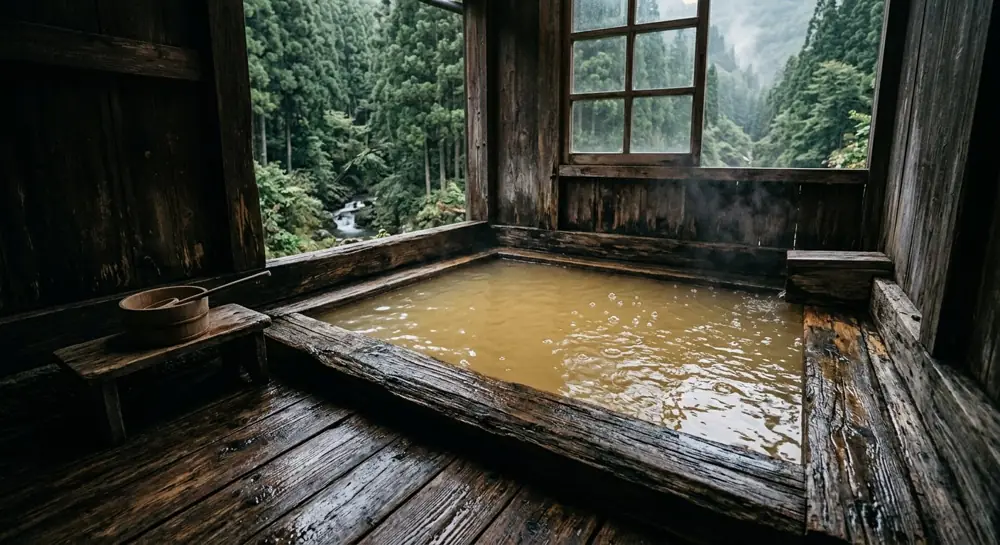
The founding bath of Yunotsu, the port town that once shipped silver from the World Heritage Iwami Ginzan mine, with a history said to go back 1,300 years. It stands in the preserved townscape district and has a legend of a tanuki healing its wounds here. Two pools: the 'hot' one fed directly by the source and a 'cooler' one that is still around 43°C. The strong sodium-calcium-chloride water, thick with rust-brown mineral flakes, is renowned as a therapeutic spring and can be drunk. Adults ¥450, children ¥200; open 06:00–20:00, irregular closures (closed from 15:00 on the 3rd Monday). No soap and no showers — bathe the old way. Comparing it with the other outside bath, Yakushi-yu (¥500), is the classic routine. About 20 minutes on foot or 5 by bus from JR Yunotsu Station.
- Price (adult)
- ¥500
- Hours
- 06:00–20:00 (until 19:00 Dec–Feb)
- Closed
- 3rd Monday of November (plus irregular closures)
- Access
- About 20 min on foot from JR Yunotsu Station, or 5 min by Iwami Kōtsū bus to 'Motoyu Onsen'; about 5 min by car from Yunotsu IC
- Water type
- Simple spring
- Tattoos
- Ask ahead
- Admission
- Adults ¥500 (as of 2026; formerly ¥370 then ¥450), child rate available. Towels sold (about ¥200), no soap or shampoo (not banned, but few wash stations), simple lockers (mind valuables), small rest space. Three tubs (hot about 46°C, milder about 42°C, seated bath). Notices recommend the cure tradition of 'three minutes in the hot tub, then rest', repeated. Drinking permitted at the designated spot. Cash only. No photography
- Baths
- The founding source of Yunotsu in Oda, Shimane, a port spa town that prospered shipping silver from the World Heritage Iwami Ginzan mine (a nationally designated Preservation District for Groups of Traditional Buildings — the only onsen town so listed). Legend says it was found 1,300 years ago when a tanuki was seen healing its wounds. A dense chloride spring of over 8 g/kg overflows freely, coating tubs and floor in thick brown deposits — a 'holy place for onsen devotees'. With the Taisho-era Yakushi-yu across the lane (separate source, ¥600, no rotenburo) it makes two public baths. Night kagura (Iwami kagura, Saturday nights) is performed at Tatsunogozen Shrine in the spa street
- Spring water
- The Motoyu source of Yunotsu Onsen, a sodium-chloride spring (isotonic, neutral, high-temperature, 48.1°C, pH 6.4, over 8 g/kg dissolved solids), free-flowing with no dilution. Yellow-brown cloudy water tasting of salt and iron, with thick calcium-carbonate and iron deposits on the tubs. The hot tub at 45–46°C is very hot, so 'three-minute dips' are the rule. Indicated for neuralgia, rheumatism, joint pain, cuts, poor circulation, skin and gynaecological conditions; drinking for digestive complaints and constipation. A spa famed as one of a dozen or so nationwide to receive the Japan Onsen Association's top rating in every category (for Yakushi-yu)
- Access & parking
- 15 min on foot from Yunotsu Station on the JR San'in Line (at the far end of the spa street), 5 min by taxi. 50 min by train from Izumoshi, 1 h 20 min from Matsue, 2 h 20 min by car from Hiroshima. By car 5 min from Yunotsu IC on the San'in Expressway; free public parking at the entrance to the spa street (lanes inside are narrow). Iwami Ginzan's Omori district 20 min by car (bus available); the Yunotsu pottery village (climbing kilns) 15 min on foot
- Phone
- 0855-65-2052
- Open in Google Maps
- Google Maps ↗
Essentials
Find a stay on Trip.com
Search and book accommodation across Japan on Trip.com. Day-use bathing needs no booking.
Opens partner booking site (affiliate)
Why go
- 1,300-year-old founding bath of a silver port
- Hot pool and a 'cool' one at 43°C; drinkable
- From 6 am for ¥450; pair with Yakushi-yu
Thirteen centuries at the silver port: a 46°C sanctuary encrusted in mineral deposits
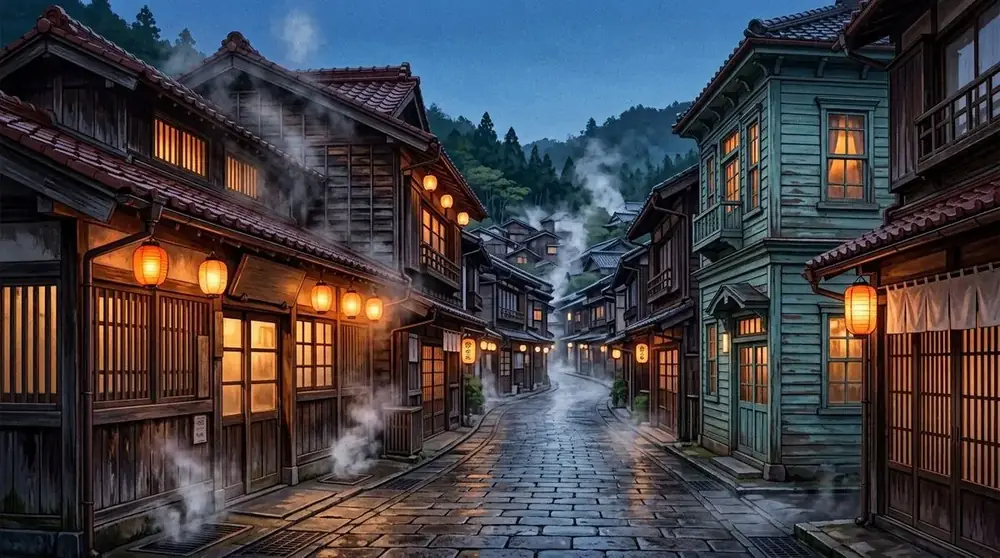
Yunotsu Onsen Motoyu Senyakuto is the founding source of Yunotsu in Oda, Shimane, a spa town that prospered as the port shipping silver from the World Heritage Iwami Ginzan mine. Legend has it discovered 1,300 years ago when a tanuki was seen healing its wounds, and in the Edo period it bustled as a cure-bath for miners and sailors. Yunotsu is the only onsen town in Japan designated a national Preservation District for Groups of Traditional Buildings, and amid its narrow lanes of Meiji and Taisho inns and houses two public baths face each other — this Motoyu and the Taisho-era Yakushi-yu across the way. Motoyu's water, a dense sodium-chloride spring of over 8 g/kg dissolved solids, flows in at its 48°C source temperature with no dilution, cloudy yellow-brown, and the minerals in the overflow have coated the tubs and floor in thick brown deposits — an overwhelming sight of 'the onsen itself turned to strata' that devotees across Japan count as a sanctuary. Three tubs — hot (about 46°C), milder (about 42°C) and a seated bath — and so hot that the cure method of 'three minutes in the hot tub, then rest, repeat' is written on the wall. Admission is ¥500 (as of 2026), open 6 a.m. to 8 p.m. (7 p.m. in winter) for morning baths, and closed almost only on the third Monday of November. Fifteen minutes on foot from JR Yunotsu Station and twenty by car from Iwami Ginzan's Omori district, it pairs naturally with the mine, and an overnight stay timed for the Saturday-night Iwami kagura performance at the spa-street shrine is strongly recommended.
The 'three-minute dip' method and how to compare with Yakushi-yu
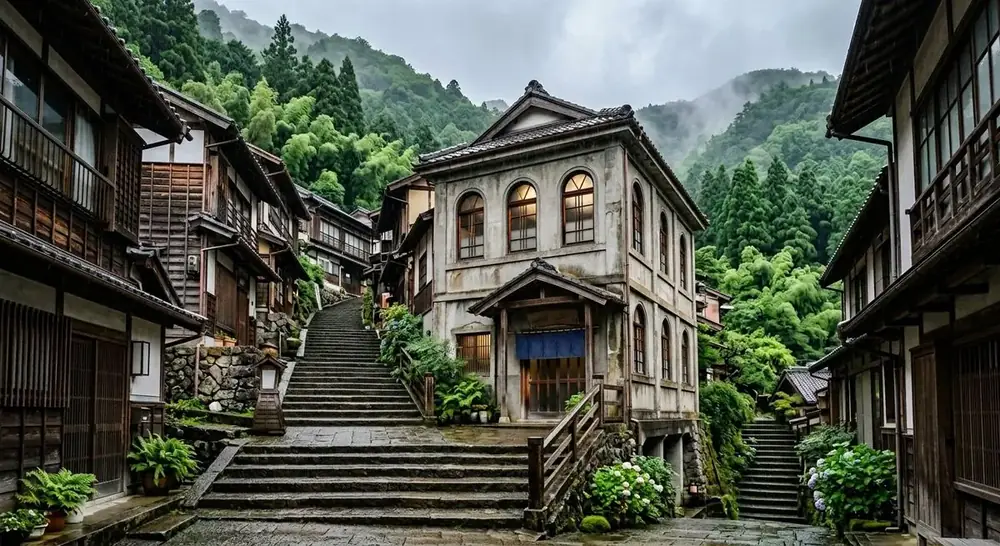
From the car park at the entrance, ten minutes down the narrow lane brings you to the plain 'Motoyu' building on the left facing the Taisho-era Western building of Yakushi-yu with its half-round window on the right. Pay ¥500 at Motoyu's desk (buy a towel if needed) and the changing room has simple lockers, a Showa massage chair and a 'how to bathe' notice on the wall. The bathroom is small with only a few wash stations, and the tubs and floor before you are heaped with brown deposits as thick as stalactites. The method: (1) rinse thoroughly to acclimatise to the heat; (2) warm up first in the milder tub (about 42°C); (3) enter the hot tub (45–46°C) for just three minutes; (4) get out and rest in the seated bath or on a stool; (5) three minutes again — repeat two or three times, exactly as the wall says. The water tastes of salt and iron, cloudy yellow-brown, and the lasting warmth and lack of tightness in the skin afterwards prove the chloride spring's density. If you cannot take the heat, the milder tub alone is effective; ask the local cure-bathers before adding cold water. There is no soap or shampoo, so wash at your lodging and treat Motoyu as 'a place to soak'. Yakushi-yu across the lane (¥600, 9:00–21:00, open daily) is a separate source, also free-flowing with heavy deposits, slightly less hot, with an upstairs lounge and a cafe in the old annex; the recommended order is 'acclimatise at Yakushi-yu, then the real test at Motoyu', or 'Motoyu at 6 a.m., Yakushi-yu in the evening'. Take a sip at the designated drinking spout (salty and metallic). Photography is banned in both. Afterwards stroll to the Yunotsu pottery village (one of Japan's largest climbing kilns) and Tatsunogozen Shrine, and on Saturdays watch Iwami kagura at the shrine from 8 p.m. (around ¥1,000).
Practical details and an Iwami Ginzan route
Hours are 6:00–20:00 (until 19:00 from December to February; some sources say 5:30–21:00, so the on-site notice prevails); closed the third Monday of November plus irregular days (open over Golden Week, Obon and New Year); adults ¥500 (as of 2026; formerly ¥370 and ¥450), towels sold, cash only, free public parking at the spa-street entrance. Access is 15 minutes on foot from JR Yunotsu Station, 50 minutes by train from Izumoshi, 2 h 20 min by car from Hiroshima. Suggested routes: (1) two days at Iwami Ginzan — Oda, the Omori district of the mine (Ryugenji mabu tunnel, samurai houses, the old street, bicycle hire), a night in Yunotsu at a Meiji inn, Yakushi-yu in the evening, Iwami kagura at 8 p.m. if Saturday, Motoyu at 6 a.m., the pottery village, then the Nima Sand Museum or Izumo Taisha; (2) across San'in — Matsue and Izumo, Yunotsu, Hamada and Masuda (the scenic coastal stretch of the San'in Line); (3) for connoisseurs — Yunotsu's Motoyu and Yakushi-yu, Misasa (radium), Tamatsukuri (beauty water), a 'San'in three-water comparison'; (4) winter — nodoguro rockfish and crab dishes paired with the hot Motoyu. Notes: the 46°C hot tub is dangerous for heart conditions, high blood pressure and children — use only the milder tub; few wash stations and no soap; cars cannot enter the spa lanes; Saturday kagura seats are limited; few eateries in the spa street, so dinner at your inn is advised. Yunotsu is the epitome of 'density instead of glamour', and if you want to experience the depth of Japan's onsen culture it is the spa to prioritise above all on a San'in journey.
Before you go
- No official tattoo policy is published — ask at reception.
- As a communal bath there is no soap or shampoo — bring your own or buy at the shop.
- Payment is usually by ticket machine in cash — bring coins.
- Last entry is 30–60 minutes before closing.
Features
Mood & scenery
Price
Who with
Only here
✔ Verified operating: 2026-09 Operating status and rates cross-checked against the official site and onsen guides (full source notes in Japanese on the JA page)
Prices and hours change. Check official sources before visiting.
More in this area

Tamatsukuri Onsen Yū-yu
Tamatsukuri's day-use bath, famous for 'beautiful skin' water. A magatama-jewel-shaped building with a cascade bath, open-air tub and 1 m-deep standing bath. Often combined with Izumo Taisha.

Yunotsu Onsen Yakushi-yu
The communal bath of Yunotsu, once the shipping port for the World Heritage Iwami Ginzan silver mine. Rated a perfect 'all fives' by the Japan Spa Association, it is 100% free-flowing, and iron-rich mineral deposits coat the tub in thick brown crusts. Next door is 'Shin-yu', a Western-style wooden building from 1919 whose retro café and rooftop terrace are open to bathers. ¥600. The whole street is a preserved historic district.

Matsue Shinjiko Onsen Chidori-yu Public Bath
Shimane's only onsen bathhouse, offering the lakeside Matsue Shinjiko spring for ¥430. Five minutes on foot from Matsue-Shinjiko-Onsen Station on the Ichibata line, easy to drop into after Matsue Castle or the moat cruise. The sodium-calcium sulfate-chloride water holds heat well. No soap or shampoo provided, but a take-along set is sold. Ninety percent of bathers are locals—everyday Matsue at its most authentic.