Saga · Takeo Onsen
Takeo Onsen Motoyu
武雄温泉 元湯
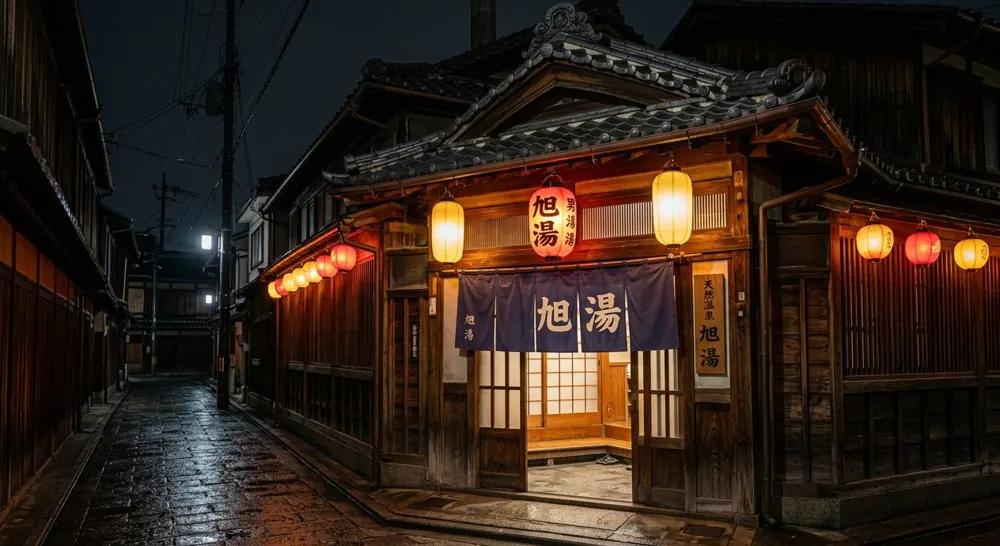
Beyond the vermilion gate (a National Important Cultural Property) stands one of Japan's oldest surviving wooden bathhouses, built in 1876. Open from 6:30 am until late, ¥500.
- Price (adult)
- ¥500
- Hours
- 06:30–23:45 (last entry 23:00)
- Closed
- Open daily (maintenance closure in mid-December)
- Access
- 10 min walk from JR Takeo-Onsen Station
- Water type
- Alkaline simple
- Tattoos
- Ask ahead
- Admission
- Adults ¥500 / children (3 to elementary) ¥250 (up from ¥400 in 2023). Body soap and rinse-in shampoo provided; towels sold. Tickets at the booth by the Romon gate. Private baths “Tonosama-yu” (all marble, ¥4,300 per room-hour, ¥3,800 weekdays) and “Karo-yu” (from ¥3,500) are booked on site only
- Baths
- Built in 1876 — the oldest bathhouse building still in use in Japan. High-ceilinged timber hall with two indoor tubs per gender: “atsu-yu” at 44–45.5 °C beside “nuru-yu” at 42–43 °C. No rotenburo or sauna. Right next to the vermilion Romon gate (Important Cultural Property, 1915) and the Shinkan by architect Tatsuno Kingo
- Water
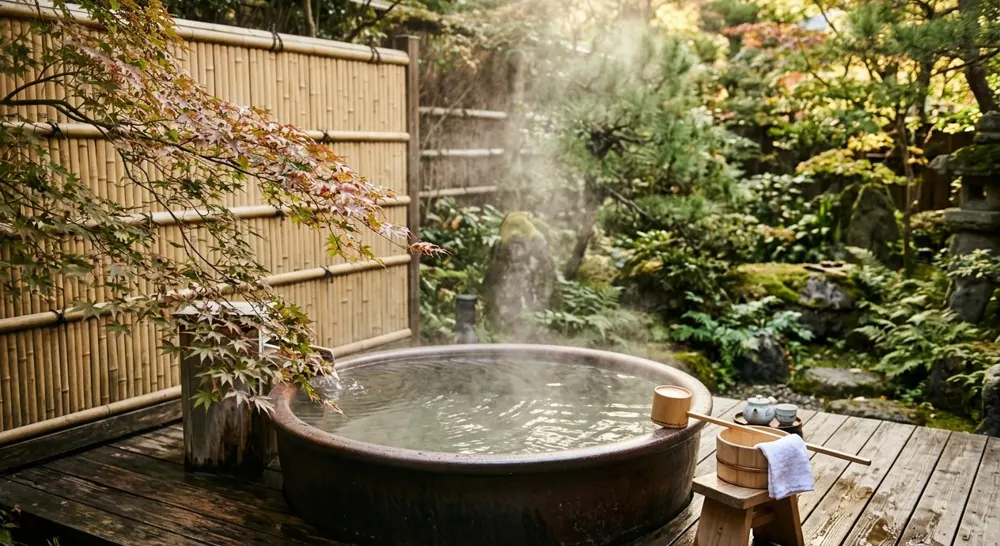
- Alkaline simple spring, clear with a viscous, silky feel — “beauty water”. 1,300 years of history (recorded in the Hizen Fudoki), said to have been used by Miyamoto Musashi, Siebold and Date Masamune. Free-flowing (with dilution). Even the “mild” tub is 42 °C+ — the hot-bath culture typical of Kyushu communal baths
- Parking
- 100 free spaces around the Romon gate. 10–15 min on foot from the north exit of JR Takeo-Onsen Station
- Phone
- 0954-23-2001
- Official site
- takeo-kk.net ↗
- Open in Google Maps
- Google Maps ↗
Essentials
Find a stay on Trip.com
Search and book accommodation across Japan on Trip.com. Day-use bathing needs no booking.
Opens partner booking site (affiliate)
Why go
- Wooden bathhouse from 1876
- Gate designed by Kingo Tatsuno (Tokyo Station architect)
- Open until 11:45 pm
Inside the vermilion Romon gate: an 1876 timber bathhouse, Japan’s oldest still in service
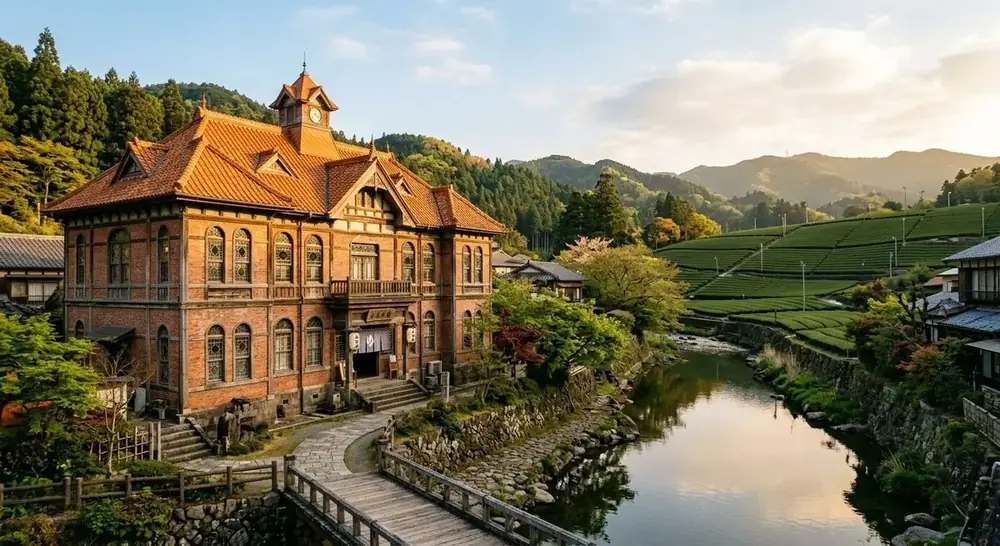
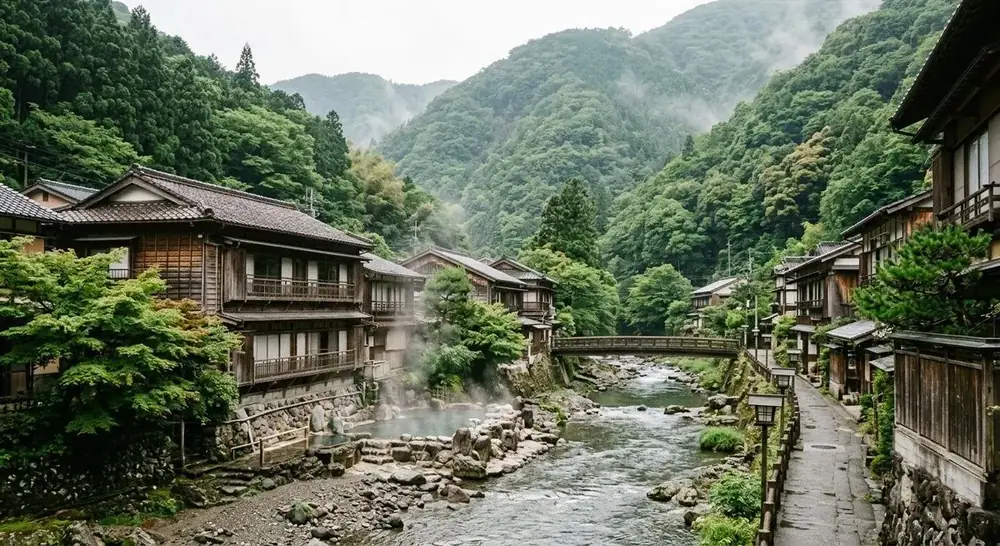
Takeo Onsen in western Saga, a post town on the old Nagasaki highway, is one of Kyushu’s great ancient springs, recorded 1,300 years ago in the Hizen Fudoki — and since the Nishi-Kyushu Shinkansen opened in 2022 it is barely an hour from Hakata. The town’s symbol is the vermilion Romon gate (Important Cultural Property) built in 1915 by Tatsuno Kingo, architect of Tokyo Station; pass through it and on the left stands the communal “Motoyu”, built in 1876 — the oldest bathhouse building in Japan still in use. Under the high timber ceiling each side has two tubs side by side, “atsu-yu” at 44–45.5 °C and “nuru-yu” at 42–43 °C — even the “mild” tub tops 42 °C, true Kyushu hot-bath culture — filled with clear, viscously silky alkaline water that Miyamoto Musashi, Siebold and Date Masamune are said to have soaked in. At ¥500 and open from 06:30 until almost midnight, it is the locals’ everyday bath and the first stop for Shinkansen day-trippers. The same compound holds six baths in all — “Sagi-no-yu” with rotenburo and sauna (¥740), the all-marble private “Tonosama-yu” and more — for a mini bath-hopping circuit.
Tips & cautions
- Hot: start in the “mild” tub and douse yourself well. Ask locals before adding cold water.
- For a rotenburo and sauna use neighbouring “Sagi-no-yu” (¥740); families and couples can take the private “Tonosama-yu” (on-site sign-up, no reservations).
- One maintenance closure in mid-December — check the official site.
- Body soap and shampoo provided; towels sold; hairdryers available.
- The Romon gate’s zodiac tour (09:00–10:00, not Tuesdays, small fee) shows the carvings that pair with Tokyo Station — do it before your bath.
- Evenings are busy with locals; go in the morning or early afternoon.
- Tattoo policy unconfirmed — cover up in this communal bath, or opt for a private bath.
Getting there
10–15 min on foot from the north exit of Takeo-Onsen Station (JR Sasebo line / Nishi-Kyushu Shinkansen), inside the Romon gate (Takeo 7425, Takeo-cho, Takeo). ~1 h 10 min from Hakata by Relay Kamome and Shinkansen. By car ~10 min from Takeo-Kitagata IC via Route 34; 100 free spaces. Tel. 0954-23-2001.
Before you go
- No official tattoo policy is published — ask at reception.
- As a communal bath there is no soap or shampoo — bring your own or buy at the shop.
- Payment is usually by ticket machine in cash — bring coins.
- Last entry is 30–60 minutes before closing.
Features
Mood & scenery
Price
Convenience
Amenities
✔ Verified operating: 2026-09 Operating status and rates cross-checked against the official site and onsen guides (full source notes in Japanese on the JA page)
Prices and hours change. Check official sources before visiting.
More in this area

Ureshino Siebold-no-yu public bath
A Gothic-style public bath recreating the Taishō-era 'Koyu Onsen'. Ureshino's silky bicarbonate water — one of Japan's 'three great skin-beautifying springs' — for ¥450, 6 am to 10 pm. Tatami rest room upstairs and private baths (¥2,500/50 min).

Ureshino Gensen Hyakunen-no-yu
One minute from the Ureshino bus centre, the only day-spa in town with its own source (formerly Motoyu Onsen). Silky bicarbonate water — one of Japan's 'three great beauty baths' — in a large indoor bath, open-air pool and sauna. Many family baths (from ¥1,800/50 min + entry). Open 9 am–10 pm.

Furuyu Onsen ONCRI
A cure-style resort in the Furuyu hot-spring hamlet up the Kase River, 30 minutes by car from Saga city. The signature is 'lukewarm' water at around 38 °C — the longer you soak, the more you unwind — long prized as a beautifying bath. The SHIORI bath complex has 15 kinds of baths including an open-air tub facing Mt Tenzan, lying and standing baths, a box steam bath, cypress tub and natural hot-sand bath, all from a private source yielding 43 tonnes a day. Day use 10:00–20:00, ¥1,300 with free face towel; Wednesdays from 15:00 only for maintenance. About 60 minutes by bus from Saga Station to Furuyu Onsen.