Gunma · Shima Onsen
Shima Onsen Sekizenkan – Genroku-no-yu (day use)
四万温泉 積善館「元禄の湯」(日帰り入浴)
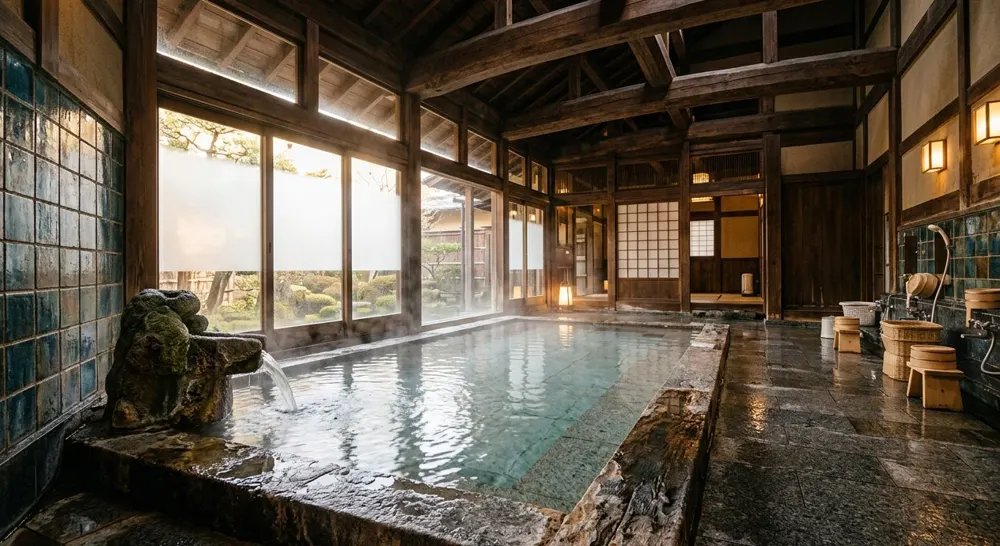
Founded in 1691 and regarded as Japan's oldest surviving hot-spring inn building, this Shima Onsen institution in Gunma stands across a red bridge; the main house, said to be one of the models for the bathhouse in Spirited Away, is an Important Cultural Property. The celebrated Genroku-no-yu, built in 1930 in Taishō-romantic style, has five tubs set into a stone floor lit by arched windows, with water welling up from below. Shima's sulphate water is counted among Japan's three great baths for digestive ailments and can be drunk. Day use 10:00–17:30 (last entry 17:00), ¥1,500 with face towel, covering Genroku-no-yu, the mixed rock bath and private baths. Tattoos accepted if covered with stickers. About 40 minutes by bus from Nakanojō Station to the Shima Onsen terminus.
- Price (adult)
- ¥1,500
- Hours
- 10:00–17:30 (last entry 17:00)
- Closed
- Irregular (maintenance closures)
- Access
- About 40 min by Kan'etsu Kōtsū bus from JR Nakanojō Station to the Shima Onsen terminus, then 3 min on foot; 60 min by car from Shibukawa-Ikaho IC; direct 'Shima Onsen-gō' bus from Tokyo Station about 3 h 30 min
- Water type
- Sulfate spring
- Tattoos
- OK if covered
- Admission
- Day bathing: adults ¥1,500 (face towel and toothbrush included) / children 3–12 ¥1,100 (face towel included) / 2 and under free. Bath towel rental ¥550. Lunch-set plans (onsen kama-age udon etc.) and a bento plan in the old guest rooms on the 3rd floor of the main building (3 rooms a day). Check in at the main-building front desk. Building tour free for bathers
- Baths
- Unlimited access to four baths: the registered cultural property 'Genroku-no-Yu' (built 1930, Taisho-Romanesque arched windows over five stone tubs set into a tiled floor, plus a steam room), the mixed-bathing 'Iwaburo' rock bath, free-flowing private baths and more. No wash stations or showers in Genroku-no-Yu
- Water
- Calcium-sodium sulphate-chloride spring, 100% source water, free-flowing. Colourless, soft and deeply warming; famed as a 'stomach cure' and drinkable at the fountain. Shima was Japan's first designated National Health Resort spa. Indicated for digestive complaints, neuralgia, rheumatism, skin conditions
- Parking & access
- Free parking for about 50 cars. From Nakanojo Station on the JR Agatsuma Line, Kan-etsu Kotsu bus for Shima Onsen about 40 min to the 'Shima Onsen' terminus, then 1–2 min on foot (cross the red Keiun Bridge to the main building). Direct 'Shima Onsen-go' highway bus from Tokyo Station about 3 h 30 min. About 60 min from Shibukawa-Ikaho IC on the Kan-etsu Expressway
- Phone
- 0279-64-2101
- Official site
- sekizenkan.co.jp ↗
- Open in Google Maps
- Google Maps ↗
Essentials
Find a stay on Trip.com
Search and book accommodation across Japan on Trip.com. Day-use bathing needs no booking.
Opens partner booking site (affiliate)
Why go
- Japan's oldest inn building, Cultural Property
- 1930 arched-window Genroku-no-yu
- ¥1,500; tattoos OK with stickers
A 330-year-old inn and its heritage bathhouse
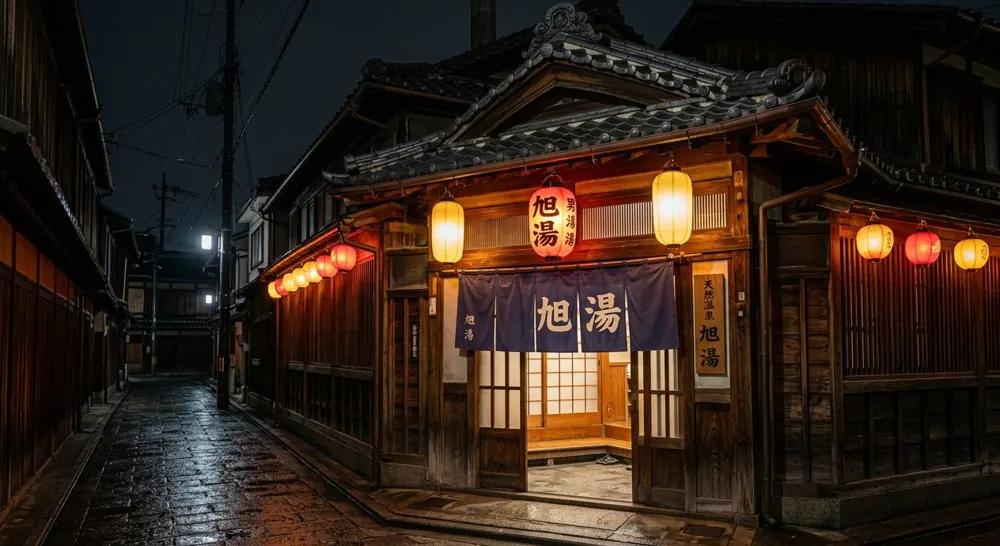
Shima Onsen Sekizenkan stands in the innermost 'Yuzuriha' quarter of Shima Onsen in Nakanojo, Gunma, and still uses a main building erected in 1691 — one of the oldest hot-spring inns in Japan. The main building is a Gunma Prefecture Important Cultural Property; the three-storey wooden bathhouse 'Genroku-no-Yu' seen beyond the red Keiun Bridge is a nationally registered cultural property; and features such as the 'Romance Tunnel' linking the main building to the hillside annex are said to evoke the bathhouse of a famous anime film, drawing visitors from around the world. Shima was the first spa in Japan designated a National Health Resort (1954), and Sekizenkan is its emblem — day visitors can enter this historic bath simply by checking in at the main-building front desk.
Genroku-no-Yu — five stone tubs rising from a tiled floor
Genroku-no-Yu, built in 1930, is a Taisho-Romanesque bathing hall: light pours through tall arched windows onto a tiled floor set with five stone tubs, and in each the spring wells up through the bottom and spills over the rim. There are no wash stations or showers — just the tubs and a steam room, the forerunner of the sauna — so you face the hot spring itself, as bathers did a century ago. The water is a calcium-sodium sulphate-chloride spring, 100% free-flowing: colourless and soft, yet it warms you to the core and is drinkable, famed as a 'stomach cure'. Day visitors may also move freely between the mixed-bathing Iwaburo rock bath, free-flowing private baths and more — four baths in all, availability varying by day and hour — and tour the archive room, the old third-floor guest rooms and the Romance Tunnel free of charge.
Tips
Day bathing runs 10:00–17:30 (last entry 17:00), with irregular and maintenance closures, so check the official site before you go. Adults ¥1,500 and children ¥1,100 include a face towel and toothbrush; bath towel rental ¥550. Genroku-no-Yu has no wash stations, so use another bath if you want to scrub. The onsen kama-age udon set and the bento plan in the old guest rooms (three rooms a day) are popular — book ahead. The photogenic red bridge is loveliest when lit at dusk, but that falls outside day-bathing hours. 40 minutes by bus from Nakanojo Station to the terminus at the door, or about 3 h 30 min by direct highway bus from Tokyo Station. Combine with the footbaths and drinking fountain of the Yuzuriha quarter and the 'Shima Blue' of Lake Okushima for a full day.
Before you go
- Tattoos are fine if covered with a sticker sold at reception (size limits apply).
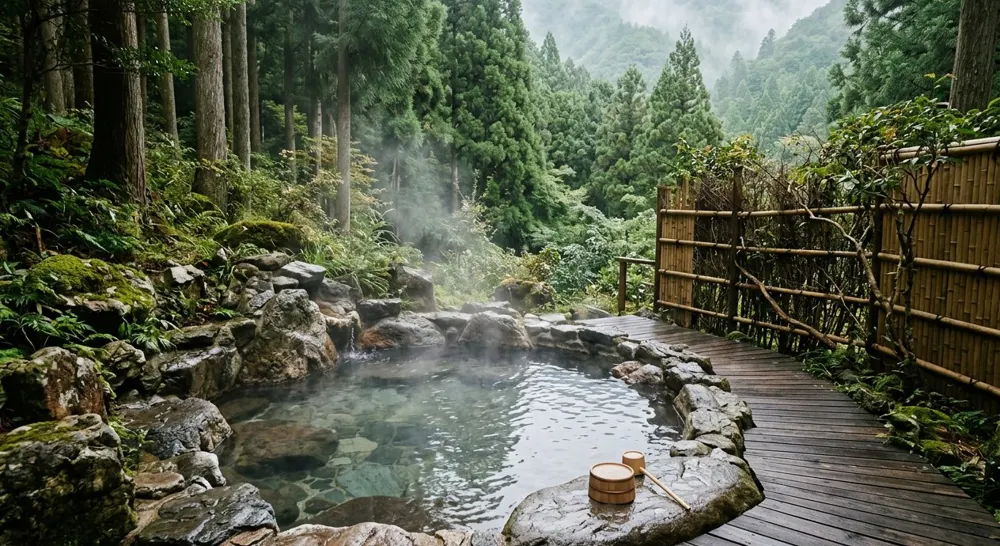
- There is a mixed-gender area. Check the description for bathing garments and women-only hours.
- Ryokan day-use hours are limited and may be suspended in peak season — phone the same morning.
- Last entry is 30–60 minutes before closing.
Features
Mood & scenery
Rules & private
Price
Amenities
✔ Verified operating: 2026-09 Operating status and rates cross-checked against the official site and onsen guides (full source notes in Japanese on the JA page)
Prices and hours change. Check official sources before visiting.
More in this area

Sainokawara Open-Air Bath
A 10-minute walk west of Kusatsu's Yubatake, at the far end of Sainokawara Park, lies one of Japan's largest open-air baths. Around 500 m² of pool brims with strongly acidic water, open to the surrounding forest. Snow in winter, fresh green in summer, illuminations at night. There are no washing stations — this is purely for soaking.

Otakinoyu
A large day facility where you can try Kusatsu's traditional 'awase-yu' — a row of wooden tubs at rising temperatures, entered in order. Indoor baths, rotenburo, sauna, plus rest and dining areas make it good for half a day. About 10 minutes' walk from the Yubatake, or a short bus ride. Admission ¥1,200 (2026); three-bath pass with Gozanoyu and Sainokawara ¥2,100.

Gozanoyu
Right in front of the Yubatake, a wooden recreation of the Edo–Meiji communal baths. Wood and stone bath halls alternate between men and women daily, with two sources (Yubatake and Bandaiko). The upstairs hall looks down on the Yubatake.