Tottori · Iwai Onsen
Iwai Yukamuri Onsen Public Bath
岩井ゆかむり温泉(共同浴場)
Twenty minutes by car from the Tottori Sand Dunes, the communal bath of Iwai Onsen, one of San'in's oldest springs at 1,300 years. It preserves 'yukamuri', a quirky custom of singing while ladling water over a towel on your head. The 47.6°C source in a corner of the car park flows in 100% untreated. ¥380, open 6:00–22:00. A humble soak to pair with the Uradome coast or the dunes.
- Price (adult)
- ¥380
- Hours
- 06:00–22:00
- Closed
- Open daily (cleaning closures in June & November)
- Access
- 8 min by bus from JR Iwami Station to Iwai-Onsen; 20 min by car from the Tottori Sand Dunes
- Water type
- Sulfate spring
- Tattoos
- Ask ahead
- Admission
- Adults ¥380, children ¥190 (confirmed 2024; formerly ¥300/¥150 — check on site). Ticket machine. No soap or shampoo (bring your own; towels ¥100). Free key lockers (¥100 refundable), free tatami rest room. Guests of Iwai inns may receive discount vouchers
- Baths
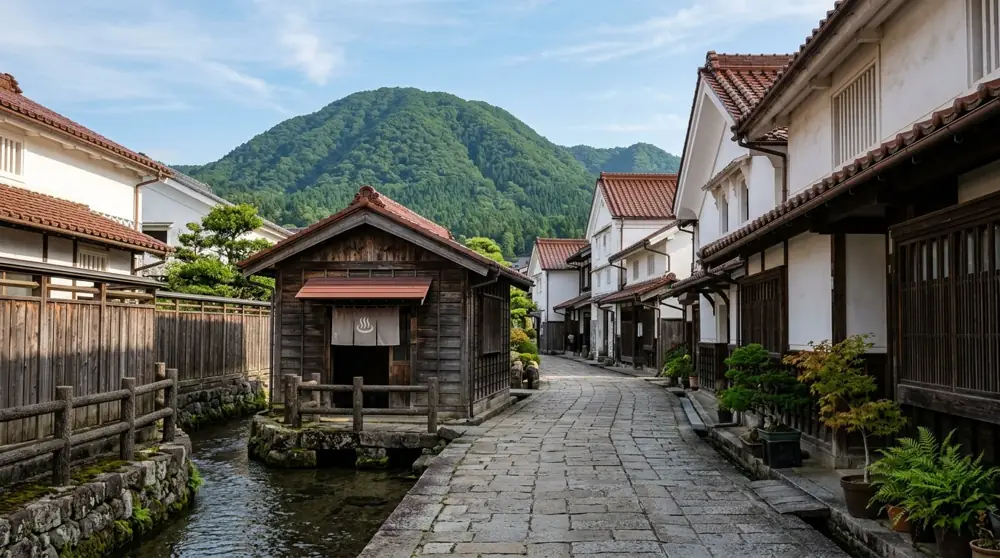
- The communal bath of Iwai Onsen, said at 1,300 years to be the oldest in San'in. Rebuilt in 2002 in Japanese style with white walls, tiled roof and latticed windows. Gender-separated indoor halls with two tubs (a tepid 41°C and a deep 44°C hot one) and six or seven wash stations. No rotenburo or sauna. Tatami rest room upstairs. The lyrics of the 'yukamuri song' are posted in the changing room. The spa is a quiet hamlet of three inns with the air of an old post town
- Spring water
- Calcium-sodium sulphate spring (hypotonic, neutral, high-temperature), 49.8°C at source, pH 7.1, 630 L/min, 1.698 g/kg total minerals. Colourless with a faint sulphur-gypsum note, soft and long-warming — a 'warming bath'. Diluted free-flow with no heating or recirculation. Indicated for rheumatism, neuralgia, skin disease, burns and arteriosclerosis. Tradition says Fujiwara no Fuyuhisa found it in 859 after a dream oracle. In the 'yukamuri' custom bathers laid a towel on the head, ladled hot water over it and sang, praying against headaches and strokes
- Access & parking
- Free car park opposite (about 20 cars). By car about 5 min from Iwami IC on the Tottori/San'in-Kinki Expressway, 30 min from Tottori city. By rail and bus about 10 min on the Iwami town bus towards Iwai from JR Iwami Station on the San'in Main Line, 1 min on foot from 'Iwai Onsen' (taxi 5 min). About 40 min by bus from Tottori Station. Uradome coast 10 min by car, Tottori sand dunes 25 min
- Phone
- 0857-73-1670
- Official site
- iwamikanko.org ↗
- Open in Google Maps
- Google Maps ↗
Essentials
Find a stay on Trip.com
Search and book accommodation across Japan on Trip.com. Day-use bathing needs no booking.
Opens partner booking site (affiliate)
Why go
- 1,300-year-old San'in spring
- Home of the 'yukamuri' custom
- ¥380, from 6 am
San'in's oldest spring, home of the head-dousing 'yukamuri' custom
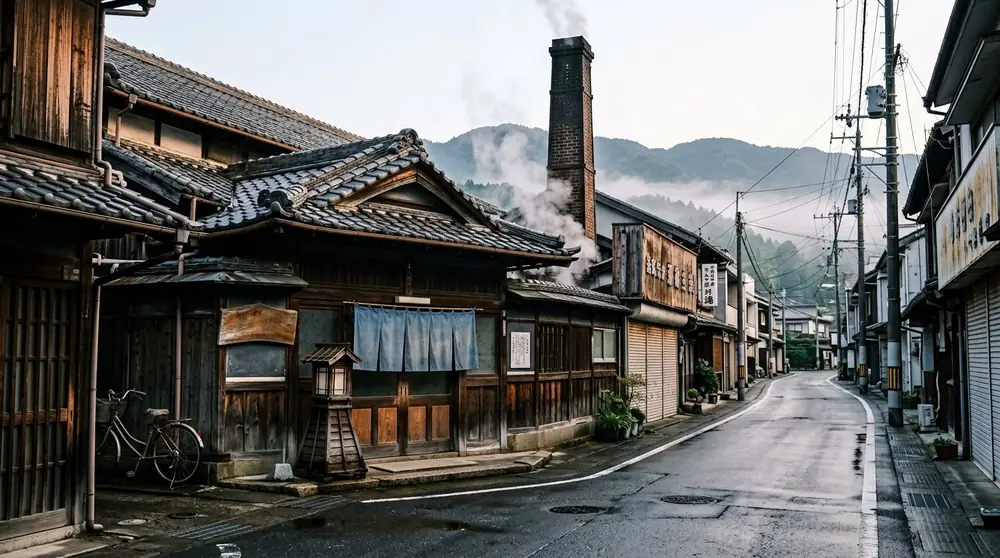
Iwai Yukamuri Onsen is the communal bath of Iwai Onsen, tucked into the hills behind the Uradome coast in Iwami, Tottori, 25 minutes east of the Tottori sand dunes. Said to have been found in 859 by Fujiwara no Fuyuhisa after a dream oracle, Iwai is the oldest hot spring in the San'in region and takes its name from a unique custom: bathers lay a towel on the head, ladle hot water over it and sing the 'yukamuri song', believed to ward off headaches and strokes — a tradition still kept alive in festival and song. The bathhouse was rebuilt in 2002 in Japanese style with white walls and a tiled roof, yet inside it keeps to a simple pair of pools, one tepid and one hot, fed by an abundant 49.8°C source at 630 litres a minute without heating or recirculation. Open 6 a.m. to 10 p.m. all year for ¥380, it is the everyday bath of a quiet spa of just three inns — a cheap taste of genuine hot-spring water on a San'in journey.
A tepid pool and a hot one — a no-soap neighbourhood bath
Buy a ticket and hand it to the attendant; the gender-separated changing rooms have ¥100-refund key lockers and the words of the 'yukamuri song' pinned to the wall. The bright tiled bathroom has six or seven wash stations and two pools: the nearer one tepid at about 41°C, the deeper one at the back hot at about 44°C, the near-50°C source tempered with tap water but neither heated nor recirculated. The water is colourless with a faint whiff of sulphur and gypsum up close; true to a sulphate spring it wraps the body softly and keeps you warm long after — a 'warming bath'. There is no soap or shampoo at the wash stations, so bring your own; towels are sold for ¥100. No rotenburo or sauna, but the tatami room upstairs looks over the hamlet, and with a 6 a.m. opening inn guests come for a soak before breakfast. Locals are the main clientele, so keep voices down and cameras away; to try yukamuri, lay a towel on your head and quietly ladle water over it a few times (the inn Iwaiya offers a singing experience).
Practical details and a dunes–Uradome route
Hours are 6:00–22:00 with no fixed closing day, though it shuts for a few days in June and November for cleaning — check then with the Iwami tourism association (0857-72-3481) or the bath (0857-73-1670). Adults ¥380, children ¥190 (confirmed 2024; formerly ¥300). There is a free car park opposite; it is 5 minutes from Iwami IC on the Tottori Expressway, 10 minutes by town bus from JR Iwami Station or 40 minutes by bus from Tottori Station. Iwai is a tiny hamlet of three inns — Iwaiya, Akashiya and Hanaya — with a post-town feel and the Yukamuri Onsen Festival in mid-August (yukamuri dance and song); combine it with the Uradome coast 10 minutes away (San'in Kaigan Geopark, sightseeing boats and clear kayaks) and the Tottori dunes and Sand Museum 25 minutes away for a full day in eastern Tottori. In winter (November–March) the snow-crab ports of Ajiro and Iwami are close, and the classic plan is a crab-dinner inn followed by a morning soak at Yukamuri. For a genuine free-flowing bath near the Tottori dunes, this is the cheapest option.
Before you go
- No official tattoo policy is published — ask at reception.
- As a communal bath there is no soap or shampoo — bring your own or buy at the shop.
- Payment is usually by ticket machine in cash — bring coins.
- Last entry is 30–60 minutes before closing.
Features
Mood & scenery
Price
Who with
Convenience
Amenities
✔ Verified operating: 2026-09 Operating status and rates cross-checked against the official site and onsen guides (full source notes in Japanese on the JA page)
Prices and hours change. Check official sources before visiting.
More in this area

Kabu-yu, Misasa
The original bath of Misasa, one of the world's most radon-rich springs. Locals take short dips in the hot water. Free foot bath and drinking fountain next door; the free riverside mixed bath is nearby.

Kaike Onsen O-yu Land
A hotel-attached day bath at the entrance to Kaike Onsen on the Sea of Japan coast in Yonago. While ryokan in Kaike charge around ¥1,500 for day use, here ¥450 covers the indoor bath, rotating specialty bath, rotenburo and jacuzzi (¥580 with sauna). Open straight through 10:00–23:00 daily. Close to the beach, so busy with swimmers in summer. 20 minutes by bus from Yonago Station.

Hawai Onsen Sennentei
A ryokan built out over Lake Tōgō, known as the 'inn on the lake': lobby and baths are surrounded by water on three sides, and the open-air Kōsuke-yu sits almost level with the surface. Free-flowing simple spring water. Day bathing runs on an irregular basis, roughly 11:00–14:00, ¥1,000 cash only — phone the same day to confirm. Private open-air baths are ¥1,650 per 45 minutes, booked by phone from 9:00 that morning. 18 minutes by bus from Kurayoshi Station to the Hawai Onsen stop. No restaurant inside, so eat in the onsen town or at the Enchōen roadside station.