Tottori · Misasa Onsen
Kabu-yu, Misasa
株湯(三朝温泉)
The original bath of Misasa, one of the world's most radon-rich springs. Locals take short dips in the hot water. Free foot bath and drinking fountain next door; the free riverside mixed bath is nearby.
- Price (adult)
- ¥400
- Hours
- 08:00–21:45 (Mon from 10:00; last entry 21:15)
- Closed
- Open daily
- Access
- 20 min by bus from JR Kurayoshi to Misasa Onsen
- Water type
- Radon spring
- Tattoos
- Ask ahead
- Admission
- Adults ¥400 / children ¥250 (ticket machine). No soap or shampoo; towels sold. Free footbath (08:00–21:00), drinking fountain and spring-water stand in the forecourt. Free lockers
- Baths
- Compact communal bath with one indoor tub per gender (six to eight people). Rebuilt in 2014 as a clean, bright timber building, but the heat is as it always was — 43–45 °C. No rotenburo or sauna; few taps
- Water
- Simple weakly radioactive (radon) spring, ~51 °C at source, clear. Free-flowing without dilution — hence hot. Misasa is among the world’s richest radon springs; inhaling the vaporised radon is held to be beneficial as well as bathing, and a branch of Okayama University Hospital researches spa therapy here. A faintly sharp, distinctive smell
- Parking
- 15 free spaces. At the east end of the spa street, right by the “Misasa Shako-mae” bus stop
- Phone
- 0858-43-0017
- Official site
- misasaonsen.jp ↗
- Open in Google Maps
- Google Maps ↗
Essentials
Find a stay on Trip.com
Search and book accommodation across Japan on Trip.com. Day-use bathing needs no booking.
Opens partner booking site (affiliate)
Why go
- The spring where Misasa began
- High-radon water
- Free foot bath and drinking fountain
The hot “original bath” where Misasa Onsen began — a ¥400 radon communal bath
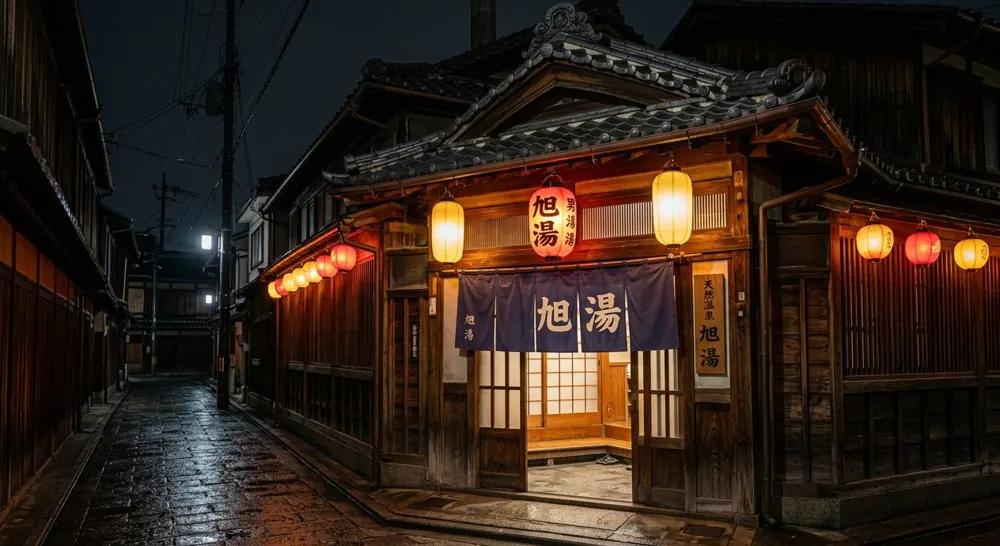
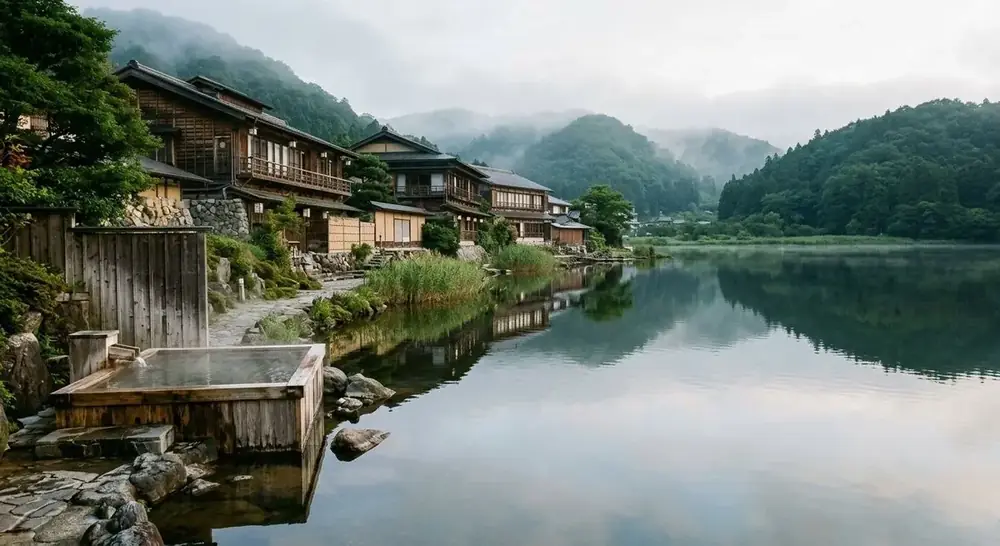
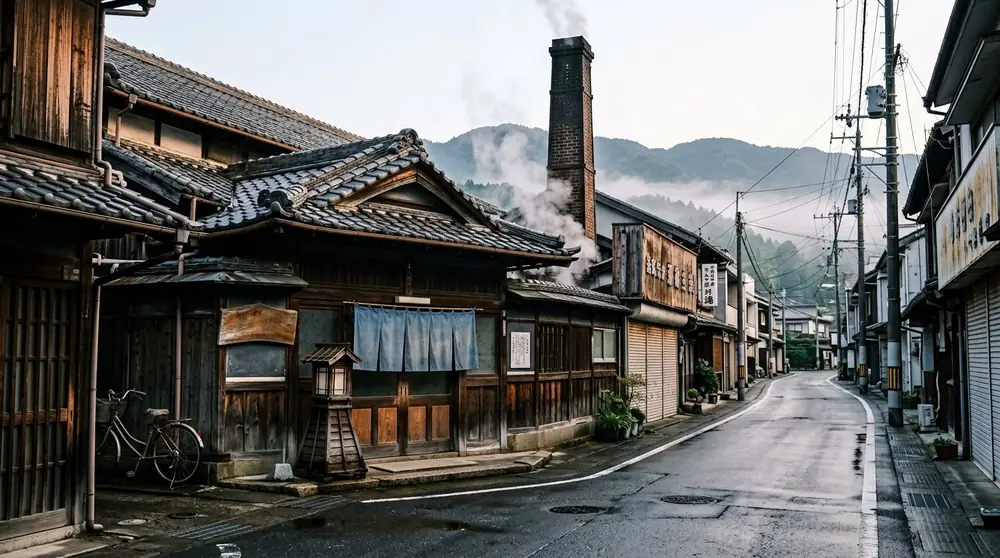
Misasa Onsen spreads along both banks of the Misasa River in the Tottori hills — an 850-year-old spa, one of the world’s richest radon springs, its name said to mean “on the third morning, illness is cured”. Kabuyu is where it all began: the legendary source, also called Motoyu, discovered in 1164 by a Genji warrior led by a white wolf to a spring beneath a tree stump (kabu). The timber building, rebuilt in 2014, is bright and clean, but inside there is just one tub per gender, and with 51 °C water flowing in undiluted it sits at 43–45 °C — Misasa’s hottest bath, hot enough that the receptionist warns first-timers. In exchange you get clear, silky radon water for ¥400, and even onsen buffs staying at the inns say “if you’re in Misasa, do Kabuyu once”. Radon is said to work when inhaled too, so locals breathe the bathroom steam slowly. A free footbath and drinking fountain in the forecourt let those who cannot face the heat still taste Misasa’s water. Open daily (from 10:00 on Mondays).
Tips & cautions
- Very hot (43–45 °C). Feet first, douse yourself well, 1–2 minutes at a time. Ask locals before using the cold hose.
- No soap or shampoo — bring your own. Few taps, so take turns when busy.
- Opens at 10:00 on Mondays (cleaning). Reception until 21:15.
- With radon water it is recommended not to rinse off afterwards. Drink only from the fountain outside.
- Evenings fill with locals; visitors do better in the morning or early afternoon.
- Tattoo policy unconfirmed; as a small communal bath, cover up.
- If the heat worries you, note that nearby “Tamawari-no-yu” has closed — try inn day-baths such as Misasakan or Seiryuso (¥800–1,000).
Getting there
Hinomaru bus bound for Misasa Onsen ~21 min from Kurayoshi Station (JR San’in line) to “Misasa Shako-mae”, right there (Misasa 634-1, Misasa-cho). 10 min on foot from the spa-street centre. By car via Yubara IC (Yonago Expressway) or Route 179; 15 free spaces. Tel. 0858-43-3022.
Before you go
- No official tattoo policy is published — ask at reception.
- As a communal bath there is no soap or shampoo — bring your own or buy at the shop.
- Payment is usually by ticket machine in cash — bring coins.
- Last entry is 30–60 minutes before closing.
Features
Mood & scenery
Price
Amenities
✔ Verified operating: 2026-09 Operating status and rates cross-checked against the official site and onsen guides (full source notes in Japanese on the JA page)
Prices and hours change. Check official sources before visiting.
More in this area

Kaike Onsen O-yu Land
A hotel-attached day bath at the entrance to Kaike Onsen on the Sea of Japan coast in Yonago. While ryokan in Kaike charge around ¥1,500 for day use, here ¥450 covers the indoor bath, rotating specialty bath, rotenburo and jacuzzi (¥580 with sauna). Open straight through 10:00–23:00 daily. Close to the beach, so busy with swimmers in summer. 20 minutes by bus from Yonago Station.

Iwai Yukamuri Onsen Public Bath
Twenty minutes by car from the Tottori Sand Dunes, the communal bath of Iwai Onsen, one of San'in's oldest springs at 1,300 years. It preserves 'yukamuri', a quirky custom of singing while ladling water over a towel on your head. The 47.6°C source in a corner of the car park flows in 100% untreated. ¥380, open 6:00–22:00. A humble soak to pair with the Uradome coast or the dunes.

Hawai Onsen Sennentei
A ryokan built out over Lake Tōgō, known as the 'inn on the lake': lobby and baths are surrounded by water on three sides, and the open-air Kōsuke-yu sits almost level with the surface. Free-flowing simple spring water. Day bathing runs on an irregular basis, roughly 11:00–14:00, ¥1,000 cash only — phone the same day to confirm. Private open-air baths are ¥1,650 per 45 minutes, booked by phone from 9:00 that morning. 18 minutes by bus from Kurayoshi Station to the Hawai Onsen stop. No restaurant inside, so eat in the onsen town or at the Enchōen roadside station.