Aomori · Sukayu Onsen
Sukayu Onsen Hiba Sennin-buro
酸ヶ湯温泉 ヒバ千人風呂
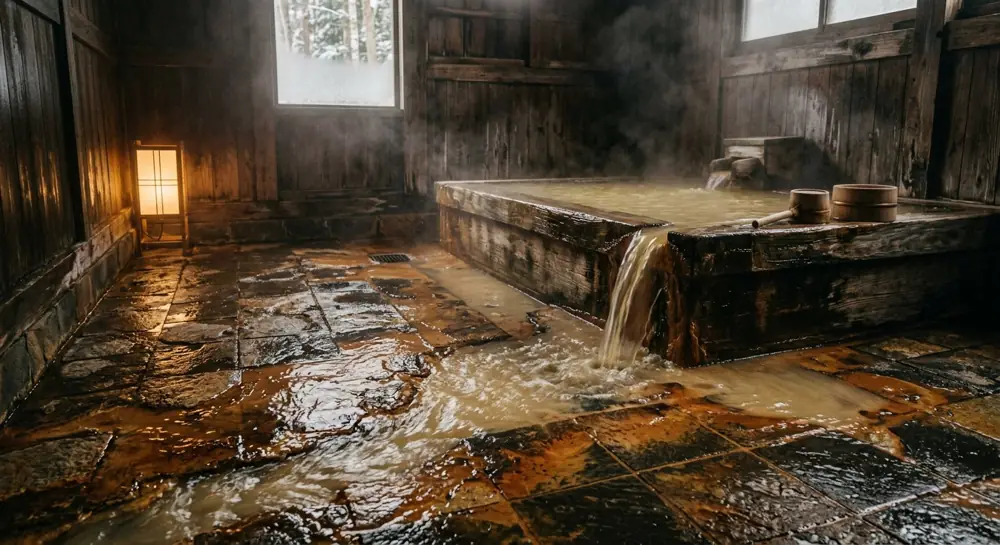
In the Hakkoda mountains, bathing since 1684 and Japan's first National Recuperation Onsen. A vast all-cypress mixed bath hall (about 260 m²) fed by four sources. Women-only hour 8–9 am daily; bathing garments sold on site.
- Price (adult)
- ¥1,000
- Hours
- Hiba Sennin-buro 07:00–18:00 (last entry 17:30; women-only 08:00–09:00) / Tama-no-yu 09:00–17:00 (last entry 16:30)
- Closed
- Open daily
- Access
- About 70 min by JR 'Mizuumi' bus from JR Aomori Station
- Water type
- Acidic spring
- Tattoos
- Ask ahead
- Admission
- Adults ¥1,000 (towel hire included) / elementary ¥500. One ticket covers both Sennin-buro and Tama-no-yu. Six-visit book ¥5,000 (shareable). Bathing wraps for the mixed bath sold at the shop, about ¥1,200 — permitted
- Baths
- “Hiba Sennin-buro”: a 160-tatami all-hiba (cypress) bath hall with a high, pillarless ceiling. Five tubs on different sources — “Netsu-no-yu” (hot), “Shibu-rokubu-no-yu”, the “Yutaki” cascade and the rinse-only “Hie-no-yu”. Mixed, but with men’s and women’s zones and a screen up to Shibu-rokubu. Women-only 08:00–09:00 daily (also 20:00–21:00 for guests). No washing area or soap. “Tama-no-yu”: gender-separated hiba indoor baths with showers and soap, on the Shibu-rokubu source
- Water
- Acidic iron- and sulphur-bearing aluminium sulphate-chloride spring (hydrogen-sulphide type; hypotonic, acidic, high-temperature), pH 1.7–1.8 — strongly acidic milky water, all five sources free-flowing. Reputed for chronic skin conditions, back pain and neuralgia, drawing therapy bathers since 1684. Designated Japan’s first National Health Resort Hot Spring in 1954
- Parking
- Large free car park (~150). At ~900 m in one of the world’s snowiest places — snow tyres essential in winter; the JR bus from Aomori city is recommended
- Phone
- 017-738-6400
- Official site
- sukayu.jp ↗
- Open in Google Maps
- Google Maps ↗
Essentials
Find a stay on Trip.com
Search and book accommodation across Japan on Trip.com. Day-use bathing needs no booking.
Opens partner booking site (affiliate)
Why go
- Pillar-free cypress hall the size of a tennis court
- Strongly acidic sulfur water (pH ≈ 1.9)
- A snowbound therapeutic retreat in winter
The 160-tatami all-hiba “Sennin-buro” — the original landscape of 340 years of therapy bathing
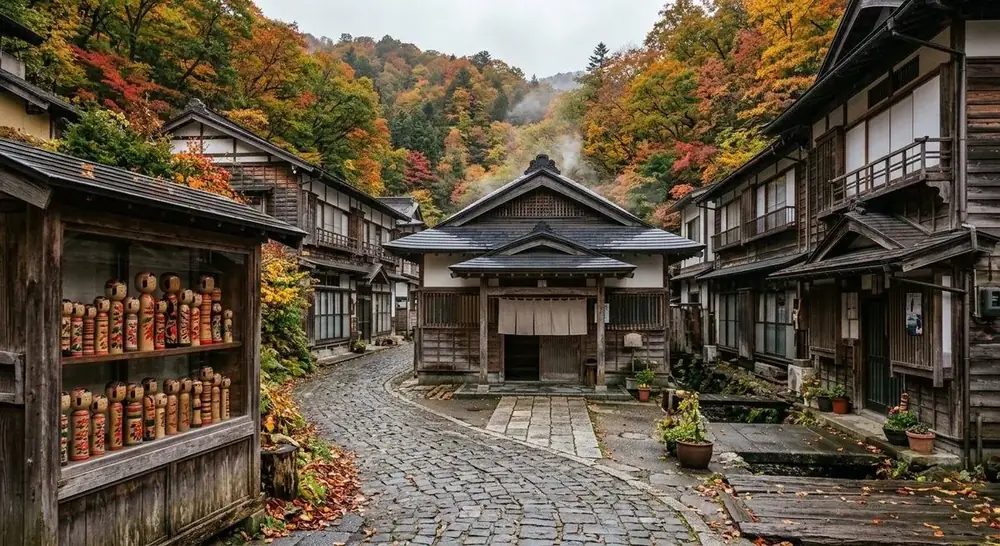
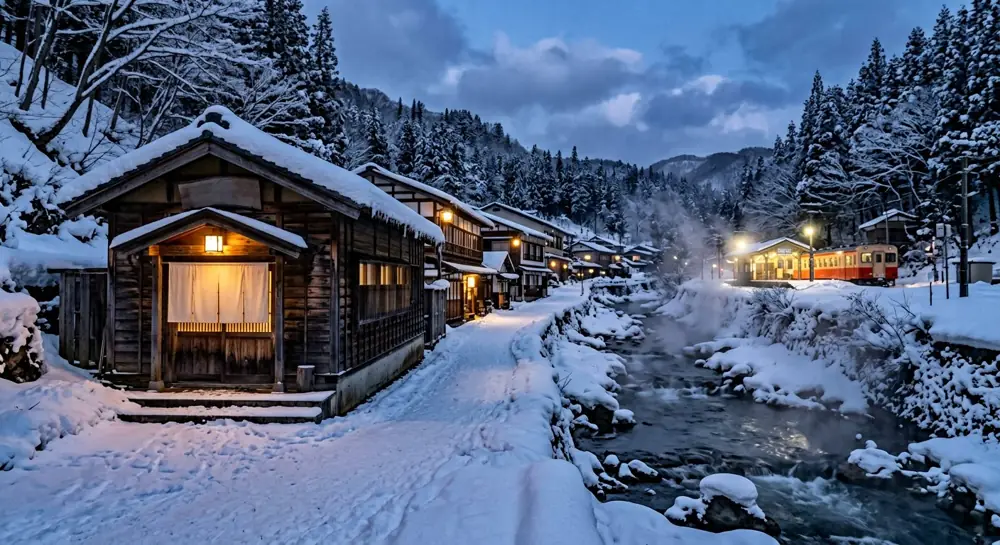
Sukayu Onsen is a lone inn at about 900 m on the slopes of Mt Hakkoda south of Aomori city, a symbol of Tohoku’s therapy-bathing culture since 1684 and, in 1954, Japan’s first designated National Health Resort Hot Spring. Its face is the “Hiba Sennin-buro” — a 160-tatami (~260 m²) hall built entirely of Aomori hiba cypress, where beneath a high, pillarless ceiling sit tubs on different sources: “Netsu-no-yu”, “Shibu-rokubu-no-yu”, the cascading “Yutaki” and the rinsing “Hie-no-yu”, all wreathed in sulphurous steam. The milky, strongly acidic sulphur water (pH 1.7–1.8) flows free from all five sources — it tingles slightly but is credited with easing skin conditions and neuralgia. Sennin-buro is a traditional mixed bath, complete with a society to preserve it, but men’s and women’s zones are divided by a screen, the water is opaque, wraps are allowed, and 08:00–09:00 every morning is women-only; if that is still too much, the gender-separated “Tama-no-yu” (with showers and soap) uses the same family of springs. A ¥1,000 day ticket (towel included) covers both, and in winter the inn buried in some of the world’s deepest snow is a sight in itself. JR bus ~1 h 10 min from Aomori Station.
Tips & cautions
- Sennin-buro has no washing area or soap — wash at Tama-no-yu (from 09:00). Etiquette: rinse in “Hie-no-yu” before entering.
- The women-only hour 08:00–09:00 is open to day visitors too; right after the 07:00 opening it is often all men.
- Wraps sold at the shop (~¥1,200). Towels may cover you only if kept out of the water.
- pH 1.7: stings the eyes badly, mind cuts and fresh shaves, tarnishes silver and copper. Rinsing off is optional, but shower if your skin is sensitive.
- Sulphur clings strongly to clothes and hair and even fills the lobby — bring a change.
- Winter (Nov–Apr) brings 5 m+ of snow; take the bus, or use snow tyres and allow extra time.
- Busiest noon–14:00 when tour buses arrive. Baths close briefly for cleaning at varying times.
- No photography. Tattoo policy unconfirmed — phone ahead (017-738-6400).
Getting there
JR Bus Tohoku “Mizuumi-go” (for Lake Towada) ~1 h 10 min from the east exit of JR Aomori Station to “Sukayu Onsen”, right outside (Sukayuzawa 50, Arakawa, Aomori). Also boards at Shin-Aomori (~1 h 20 min). By car ~50 min from central Aomori via Route 103; snow tyres essential in winter and check Hakkoda mountain-road conditions. Tel. 017-738-6400.
Before you go
- No official tattoo policy is published — ask at reception.
- Strongly acidic water — rinse off afterwards, avoid long soaks, and remove silver jewellery.
- There is a mixed-gender area. Check the description for bathing garments and women-only hours.
- Ryokan day-use hours are limited and may be suspended in peak season — phone the same morning.
- Last entry is 30–60 minutes before closing.
Features
Mood & scenery
Rules & private
Convenience
Amenities
✔ Verified operating: 2026-09 Operating status and rates cross-checked against the official site and onsen guides (full source notes in Japanese on the JA page)
Prices and hours change. Check official sources before visiting.
More in this area

Yu-sa Asamushi Roadside Station — Hadaka-yu Panoramic Bath
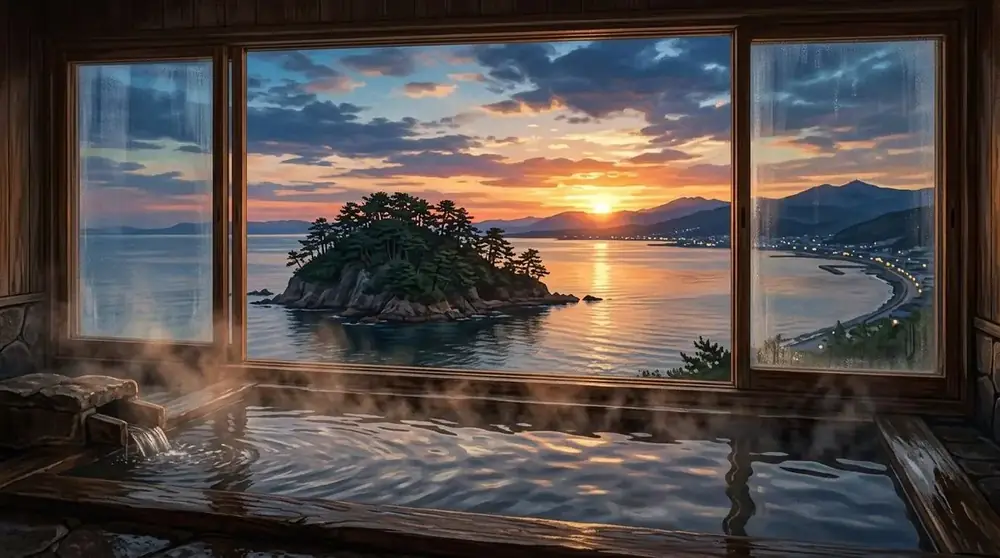
Twenty minutes by train from Aomori, a panoramic bath on the 5th floor of the roadside station at Asamushi Onsen on Mutsu Bay. Big windows frame Yunoshima island and the bay — sunset is the prime slot. Salt- and sulfate-rich water keeps you warm afterwards. Just ¥360, open 7:00–21:00 every day. The ground-floor market sells Aomori souvenirs. Two minutes' walk from Asamushi-Onsen Station.

Tsuta Onsen Ryokan
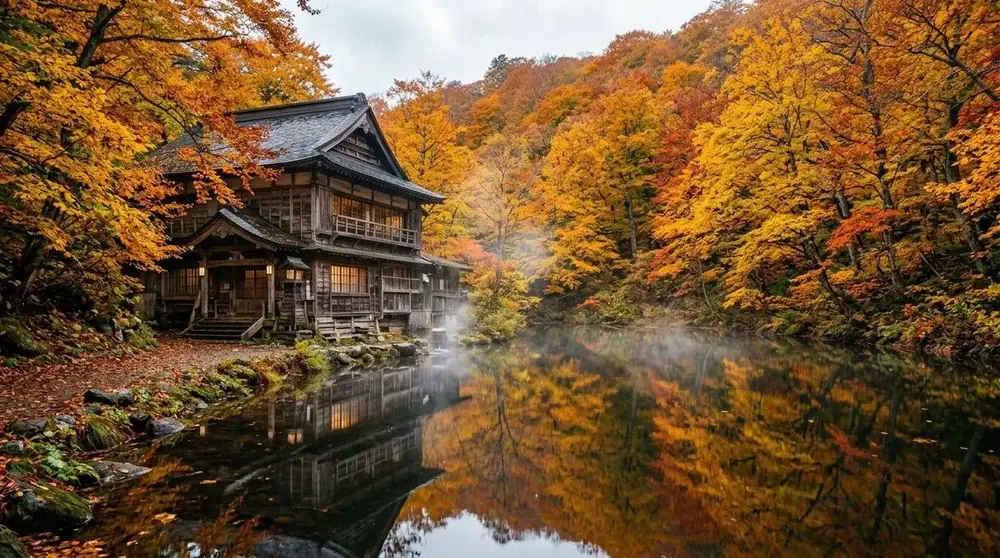
A lone inn in a primeval beech forest on the southern flank of Mt. Hakkoda. Spring water wells up directly through the gaps in the hiba-cypress boards on the tub floor — 'free-welling', so you bathe in water that has never touched air, a rarity even in Japan. The all-hiba 'Kyuan-no-yu' bathhouse from 1918 is magnificent. Day use 10:00–15:00, ¥1,000; may close early when busy. Combine with the hour-long trail around Tsuta-numa pond, famous for autumn colour. Closed in winter.

Koganezaki Furōfushi Onsen
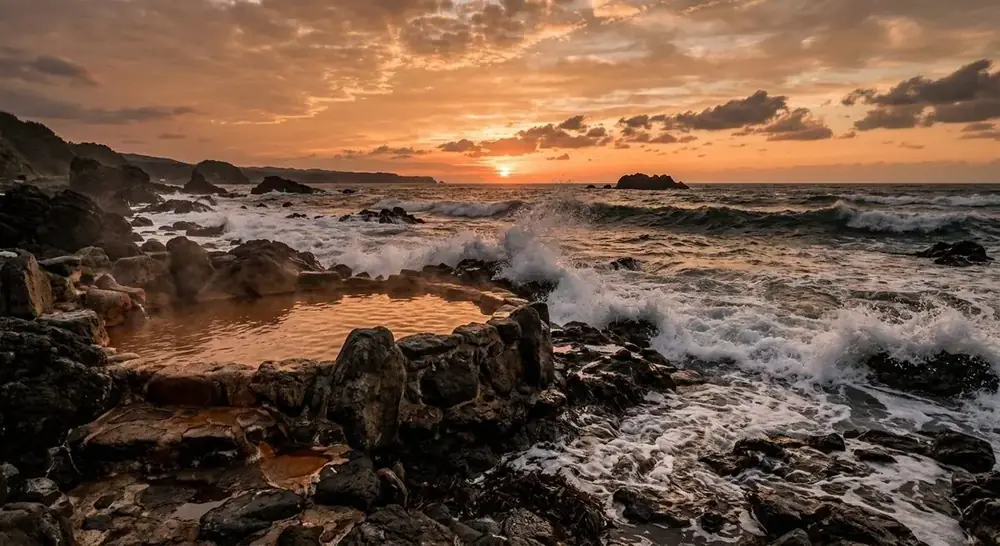
The highlight of any Gonō Line journey: a lone inn famous nationwide for its 'seaside open-air bath' set right at the water's edge of the Sea of Japan. Iron-rich chloride water, rust-red and cloudy, seems to merge with sea and sky. Day use is ¥600 — the seaside bath 8:00–16:00 (last entry 15:30), the main-building indoor 'Kogane-no-yu' 8:00–20:00. The mixed outdoor bath allows bathing wear (rental fee); a women-only outdoor bath sits alongside. Sunset soaks are for overnight guests only, so stay if you want one of Japan's 100 best sunsets from the tub.