Gunma · Kusatsu Onsen
Shirahata-no-yu (Kusatsu communal bath)
白旗の湯(草津 共同浴場)
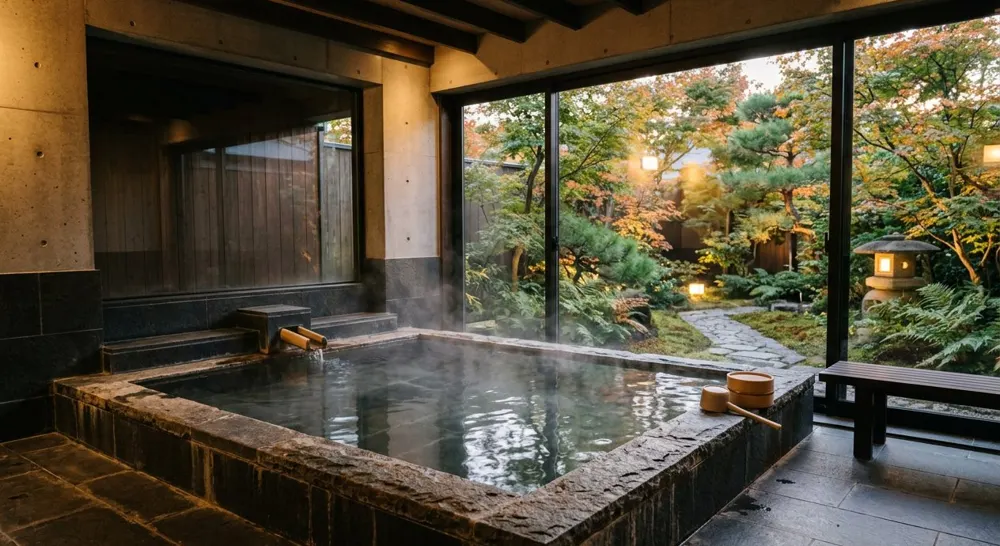
A free communal bath right beside the Yubatake that welcomes visitors. Shirahata source water flows into two wooden tubs (hot and hotter). No soap, no showers — this is the locals' bath, so keep it quiet and quick.
- Price (adult)
- Donation / free
- Hours
- 05:00–23:00 (cleaning approx. 05:30–06:30)
- Closed
- Open daily (occasional maintenance closures)
- Access
- 5 min walk from Kusatsu Onsen bus terminal, beside the Yubatake
- Water type
- Acidic spring
- Tattoos
- Ask ahead
- Fee
- Free (community-run; managed by locals)
- Source
- Shirahata source — acidic sulfur-aluminium-sulfate-chloride spring, pH 2.07, rising ~20 m away
- Tubs
- Two tubs per side (warm ~41–43 °C / hot 46–48 °C). No showers, soap or lockers
- History
- Legend says Minamoto no Yoritomo bathed here in 1193. Originally “Goza-no-yu”, renamed in 1897 after the Genji white banner; present building 1994
- Phone
- 0279-88-0800
- Official site
- agakanren.com/tourism/2224 ↗
- Open in Google Maps
- Google Maps ↗
Essentials
Stay in this onsen town
Compare and book stays in Kusatsu Onsen. Day bathing itself needs no booking.
Opens partner booking site (affiliate)
Why go
- Free, right in front of the Yubatake
- Hot Shirahata source water in wooden tubs
- Fastest taste of Kusatsu bath culture
Kusatsu’s most famous free communal bath
Shirahata-no-yu sits beside Yubatake square and is the largest and best known of the three Kusatsu communal baths open to visitors (Shirahata, Jizo, Chiyo) out of 18 in town. Fed almost directly by the Shirahata source, it is very hot, sour-tasting (pH 2.07) and slightly milky. Even the cooler of the two tubs exceeds 41 °C; the hot one reaches 46–48 °C.
Communal-bath etiquette — please follow
- This is a locals’ bath. Greet those already inside when you enter and leave.
- Bring a towel (no towel, no entry). No showers or soap.
- Before entering, sit and pour water over yourself thoroughly: feet, thighs, belly, chest, shoulders — about 10 scoops each. If it is still too hot, settle for the kakeyu only.
- Never turn off the inflow or add cold water. No splashing; keep towels out of the tub.
- Dry off before stepping into the changing room. No large groups or noise. There are no lockable lockers — leave valuables behind.
- Cleaning around 5:30–6:30; mealtimes are quieter.
Getting there
About 5 min on foot from the bus terminal, beside Yubatake square (in front of Yoritomo shrine). No dedicated parking — use the Yubatake tourist car park.
Before you go
- No official tattoo policy is published — ask at reception.
- As a communal bath there is no soap or shampoo — bring your own or buy at the shop.
- Strongly acidic water — rinse off afterwards, avoid long soaks, and remove silver jewellery.
- The water runs hot (43–45°C). Don't add cold water; take short repeated dips instead.
- Last entry is 30–60 minutes before closing.
Features
Price
Mood & scenery
✔ Verified operating: 2026-09 草津温泉観光協会・現地レポ2026-04
Prices and hours change. Check official sources before visiting.
More in this area
Sainokawara Open-Air Bath
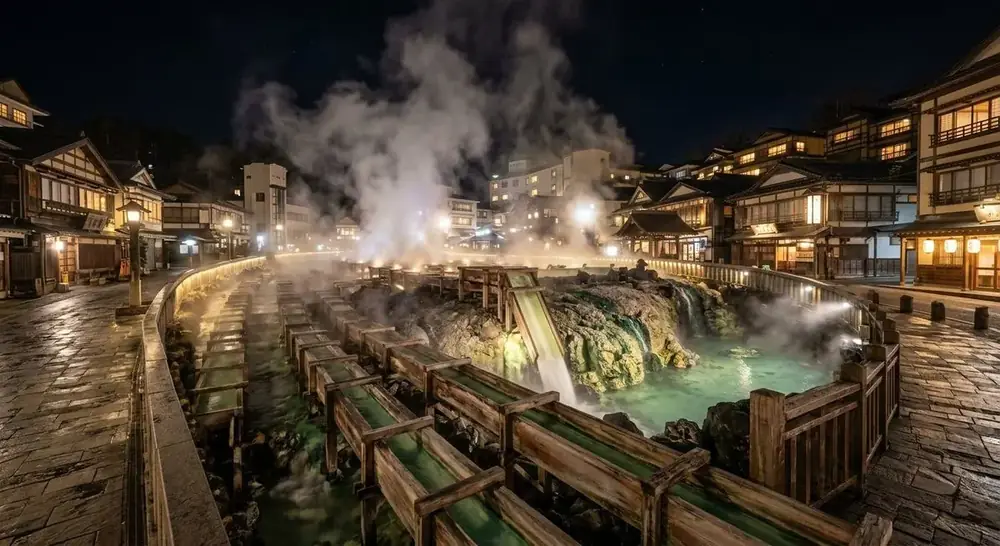
A 10-minute walk west of Kusatsu's Yubatake, at the far end of Sainokawara Park, lies one of Japan's largest open-air baths. Around 500 m² of pool brims with strongly acidic water, open to the surrounding forest. Snow in winter, fresh green in summer, illuminations at night. There are no washing stations — this is purely for soaking.
Otakinoyu
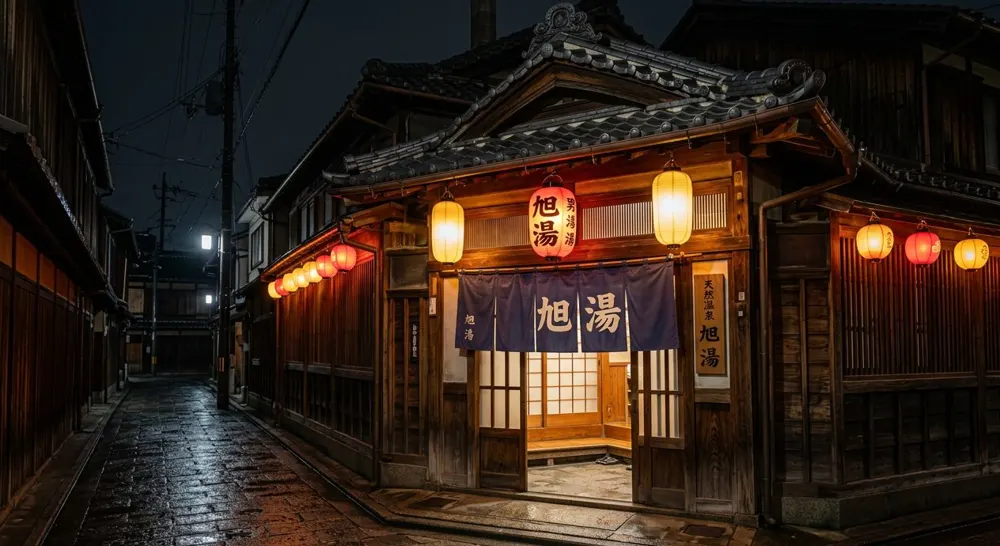
A large day facility where you can try Kusatsu's traditional 'awase-yu' — a row of wooden tubs at rising temperatures, entered in order. Indoor baths, rotenburo, sauna, plus rest and dining areas make it good for half a day. About 10 minutes' walk from the Yubatake, or a short bus ride. Admission ¥1,200 (2026); three-bath pass with Gozanoyu and Sainokawara ¥2,100.
Gozanoyu
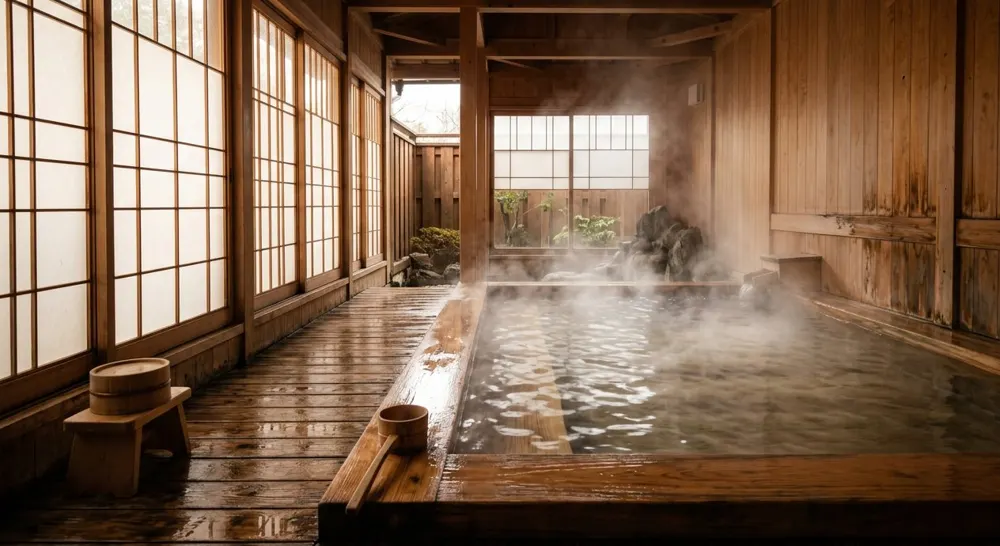
Right in front of the Yubatake, a wooden recreation of the Edo–Meiji communal baths. Wood and stone bath halls alternate between men and women daily, with two sources (Yubatake and Bandaiko). The upstairs hall looks down on the Yubatake.