Shizuoka · Itō Onsen
Itō Onsen Wada Jurōjin-no-yu (Wada-yu Kaikan)
伊東温泉 和田寿老人の湯(和田湯会館)
The oldest of Itō Onsen's 'Seven Lucky Gods' communal baths, a true locals' bathhouse. The spring is said to have been presented to the third shōgun Tokugawa Iemitsu in the Edo period, and today it runs as the ward-operated Wada-yu Kaikan. The layout is simple — a single indoor bath each for men and women — but the clear, simple-type spring flows in freely and the atmosphere is that of an old-fashioned neighbourhood bath full of regulars. Adults ¥400, children ¥200; open 14:00–22:00, closed Wednesdays (with extra days off in even months — check ahead). Soap and towels are sold, so bring your own. About 15 minutes on foot from JR Itō Station; pair it with the Tōkaikan building and Kinema-dōri street as one stop on the Seven Lucky Gods bath circuit. Parking for 11 cars.
- Price (adult)
- ¥400
- Hours
- 14:30–22:30
- Closed
- Wednesdays (extra closures in even months; check)
- Access
- About 15 min on foot from Itō Station (JR Itō Line / Izukyū); about 1 h 30 min by car from Atsugi IC via Route 135
- Water type
- Alkaline simple
- Tattoos
- Ask ahead
- Admission
- Adults ¥400, children (0 to elementary) ¥200 (residents ¥100; raised from ¥300/¥100 in 2022). No shampoo or soap (bring your own; no shop — use a convenience store), bring a towel, simple lockers, no rest room or restaurant. A plain communal bath with one large main tub and a few shower stations. Part of the Ito 'Seven Lucky Gods' stamp circuit of seven communal baths. Cash only
- Baths
- The oldest communal bathhouse in Ito Onsen, Shizuoka. Said to have been opened in 1598 by the headman of Wada village, in the Edo period its water was presented to the third shogun Tokugawa Iemitsu — the 'shogun's tribute bath'. A favourite of the wandering haiku poet Taneda Santoka. Represents Jurojin among Ito's 'Seven Lucky Gods baths', a circuit of seven communal baths. A locals' meeting place with few tourists. 15 min on foot from Ito Station, near Tokaikan (an early-Showa wooden inn) and Ito Marine Town
- Spring water
- Ito Onsen's Wada source, a simple spring (weakly alkaline, hypotonic, high-temperature, 50–60°C at source), free-flowing with water added to adjust. Colourless, tasteless and odourless, soft and gentle, though the tub runs hot at around 43°C to local taste. Indicated for neuralgia, muscle and joint pain, poor circulation and fatigue. Ito has one of Japan's largest outflows (over 30,000 tonnes a day)
- Access & parking
- 15 min on foot from Ito Station (JR Ito Line / Izukyu), upstream along the Matsukawa past Tokaikan, or 5 min by taxi. 1 h 40 min from Tokyo by Odoriko limited express, 25 min from Atami. By car 40 min from Atami on Route 135; free parking for 11–12 cars (tight). Tokaikan 5 min on foot, Ito Marine Town 5 min and Mt Omuro 20 min by car
- Phone
- 0557-37-0633
- Open in Google Maps
- Google Maps ↗
Essentials
Find a stay on Trip.com
Search and book accommodation across Japan on Trip.com. Day-use bathing needs no booking.
Opens partner booking site (affiliate)
Why go
- Oldest of Itō's Seven Lucky Gods baths
- Free-flowing spring once sent to the shōgun
- ¥400; 15 min walk from Itō Station
Ito's oldest communal bath, once presented to the shogun and loved by Santoka — for ¥400
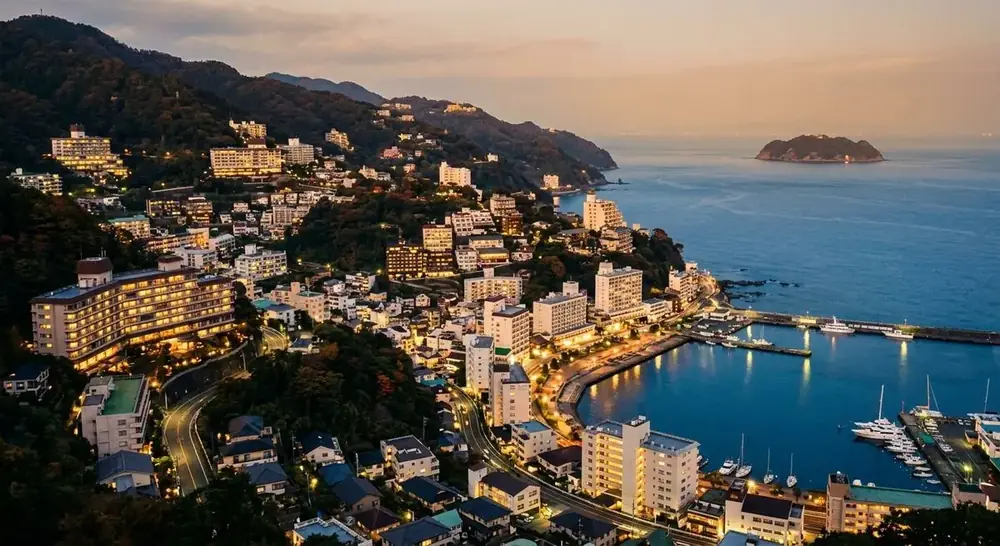
Wada Jurojin-no-yu (Wada-yu Kaikan) is the oldest communal bathhouse in Ito Onsen, the large spa town on the east coast of the Izu Peninsula in Shizuoka. Said to have been opened in 1598 by the headman of Wada village, it has records of its water being barrelled and carried to Edo as tribute to the third shogun Tokugawa Iemitsu, and it proudly hangs a sign reading 'the shogun's tribute bath'. The early-Showa wandering haiku poet Taneda Santoka is said to have frequented it during his stay in Ito. Ito has several communal baths used by residents, seven of which are likened to the Seven Lucky Gods as the 'Shichifukujin baths'; Wada-yu represents Jurojin, god of longevity, and is regarded as the most prestigious. The rebuilt building is clean, the interior extremely plain — one large main tub and a row of showers — with colourless simple spring water overflowing at a hot 43°C or so. Admission is ¥400 (residents ¥100), hours 2:30 p.m. to 10:30 p.m., closed Wednesdays, and there is no soap or shampoo, so bring your own. It is a residents' social hub rather than a tourist facility, so quiet good manners are the premise; from Ito Station walk fifteen minutes along the Matsukawa past Tokaikan (a Showa wooden inn open to visitors) to reach it. Recommended for onsen lovers who want to experience the history of Ito's spa streets and its 'local bathing culture'.
How to bathe in a locals' bath: a hot 43°C and communal-bath manners
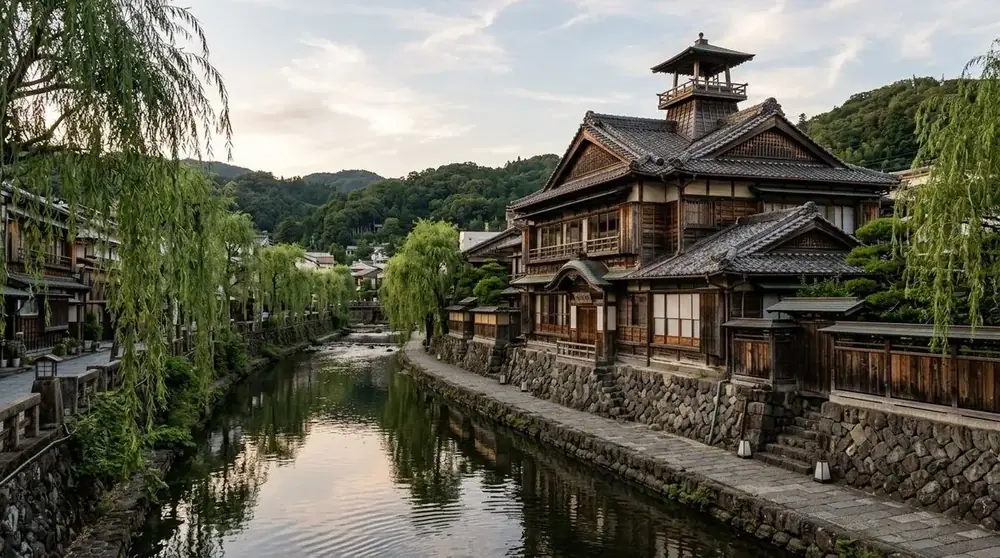
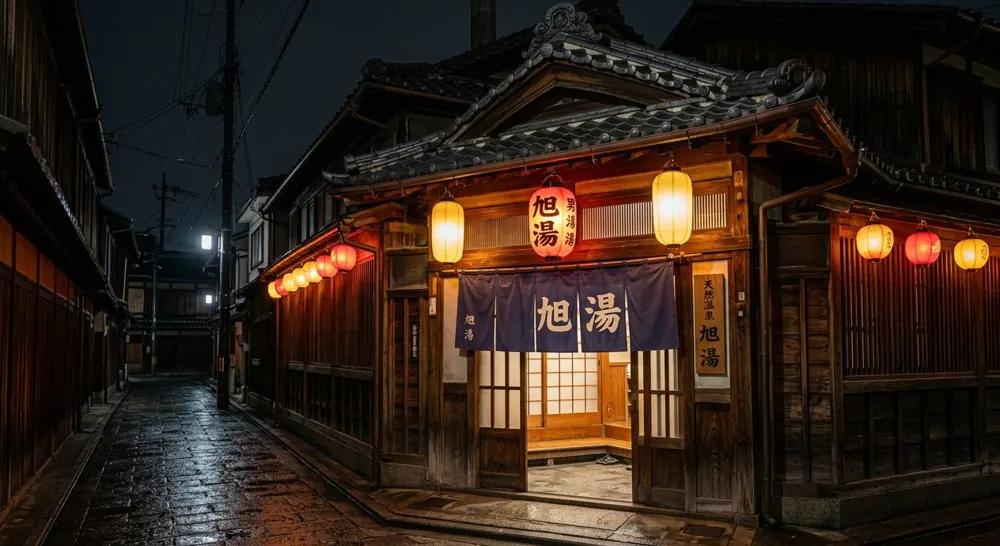
Wada-yu Kaikan is an ordinary two-storey building in a residential lane, marked by the 'shogun's tribute bath' sign. Take off your shoes at the entrance, hand the attendant ¥400 in cash, and that is it; towel, soap and shampoo must all be brought, so stock up at a convenience store by the station. The changing room has baskets and simple lockers; the bathroom is a tiled floor with one large rectangular tub and a few showers along the wall. Follow the iron rules of communal baths: wash before entering (a rinse is not enough), keep towels out of the water, and do not 'reserve' a wash station with your soap bucket. The water is colourless, odourless, soft simple spring water, but at around 43°C it is hot — a shared trait of Ito's communal baths — so do not plunge to the shoulders; go in feet, hips, chest in turn and take several short soaks of a minute or two, locals' style. Ask other bathers before adding cold water from the tap. When flushed, sit on a stool at the wash station, then go back in; two or three rounds let you fully appreciate the softness of the simple spring and the freshness of free-flowing water. From 5 to 7 p.m. it is the residents' 'after-work bath' hour, busy and chatty, so for a quiet soak come right at the 2:30 opening or after 9 p.m.; photography is forbidden. There is no lounge afterwards, so walk the riverside path along the Matsukawa to Tokaikan (viewing until 4:30 p.m., day bathing at weekends) or to the 'Ito horse-mackerel' restaurants by the station. Stamp sheets for Ito's Seven Lucky Gods baths are available at the tourist office, with a souvenir for completing all seven.
Practical details and an Ito communal-bath circuit
Hours are 14:30–22:30 (some sources 14:00–22:00; the on-site notice prevails), closed Wednesdays (with extra consecutive closures in even-numbered months — check), adults ¥400, children ¥200, cash only, bring soap and towel, parking for 11–12 cars. Access is 15 minutes on foot or 5 by taxi from Ito Station, 1 h 40 min from Tokyo by Odoriko express. Suggested routes: (1) the Ito Seven Lucky Gods bath circuit (half a day to a day) — start with Wada-yu (Jurojin) and visit all seven, such as Yukawa Daikokuten-no-yu, Matsubara Daikokuten-no-yu and Oka Hotei-no-yu (around ¥300–400 each, many opening in the afternoon), collecting stamps; (2) an Ito history walk — Ito Station, a look inside Tokaikan, the Matsukawa promenade, a bath at Wada-yu, then dinner of Ito's famous horse mackerel or kinmedai sea bream; (3) a night on Izu's east coast — Atami, Ito (Wada-yu and Tokaikan), Jogasaki coast and Mt Omuro, overnight in Ito, then Shimoda; (4) summer — the beach at Ito Marine Town and the Anjin Festival (August, fireworks), then Wada-yu in the evening. Notes: it is a residents' everyday bath, so no loud voices, no lingering, no photos; the water is hot, so those with heart conditions and children should keep it short; confirm shifting closures (even-month breaks) with the Ito tourist association (0557-37-6105) or the notice; parking is tight, so a coin car park near the station and a walk is advisable. Ito boasts an outflow of over 30,000 tonnes a day, and for ¥400 this is a precious place to experience a 'town bath' culture utterly different from the big inns' grand baths.
Before you go
- No official tattoo policy is published — ask at reception.
- As a communal bath there is no soap or shampoo — bring your own or buy at the shop.
- Payment is usually by ticket machine in cash — bring coins.
- Last entry is 30–60 minutes before closing.
Features
Mood & scenery
Price
Who with
Only here
Amenities
✔ Verified operating: 2026-09 Operating status and rates cross-checked against the official site and onsen guides (full source notes in Japanese on the JA page)
Prices and hours change. Check official sources before visiting.
More in this area

Atami Ekimae Onsen Bathhouse
A tiny communal bath from 1947, three minutes from Atami Station. Same salty source as the station foot bath, free-flowing and hot. The Atami ritual: one last soak before your Shinkansen home.
Yamada-yu
A family-run bathhouse from 1955 tucked into a residential block: a three-person tub, a Mt. Fuji tile mural and free-flowing water for ¥300. Bring soap and towel — this is a neighbourhood bath, not a tourist spot.

Ooedo Onsen Monogatari Premium Atami (day use)
A resort hotel eight minutes downhill from Atami Station. Day bathing (1–9 pm) from ¥900 on weekdays and ¥1,300 on weekends — good value for Atami — with sea and Hatsushima views from the open-air bath. No loungewear; towels cost extra. Weekdays ¥1,600, weekends/holidays ¥2,000, peak days ¥2,200.