Atami Ekimae Onsen Bathhouse
A tiny communal bath from 1947, three minutes from Atami Station. Same salty source as the station foot bath, free-flowing and hot. The Atami ritual: one last soak before your Shinkansen home.
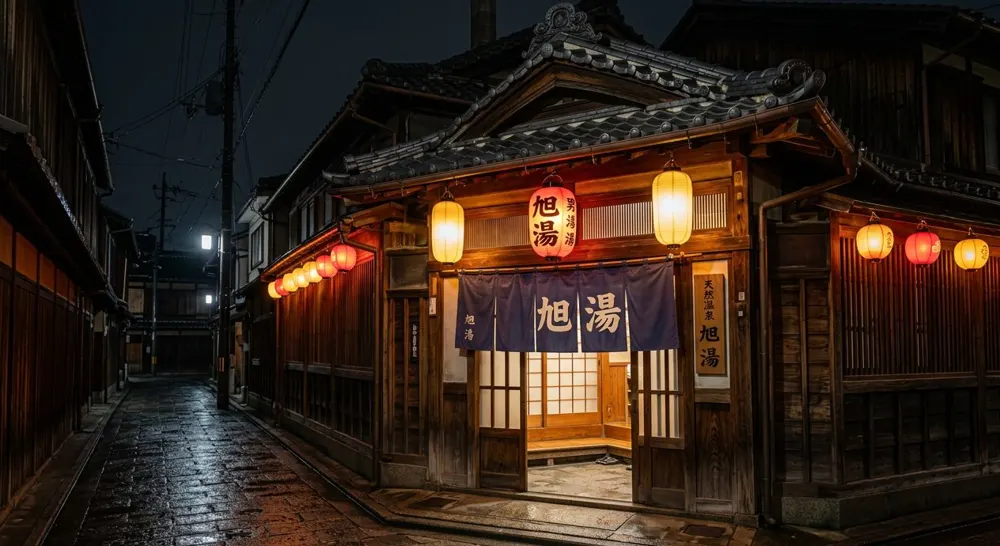
A family-run bathhouse from 1955 tucked into a residential block: a three-person tub, a Mt. Fuji tile mural and free-flowing water for ¥300. Bring soap and towel — this is a neighbourhood bath, not a tourist spot.
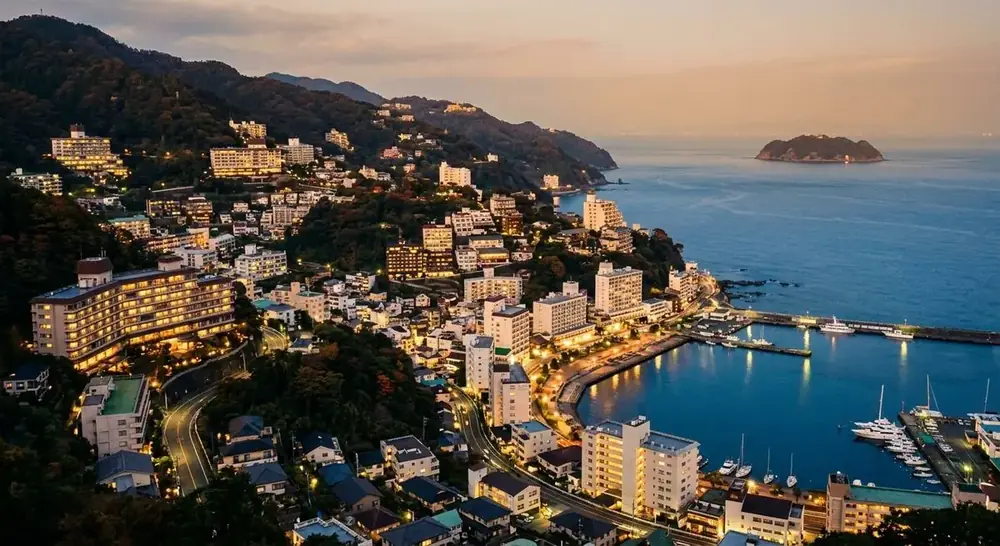
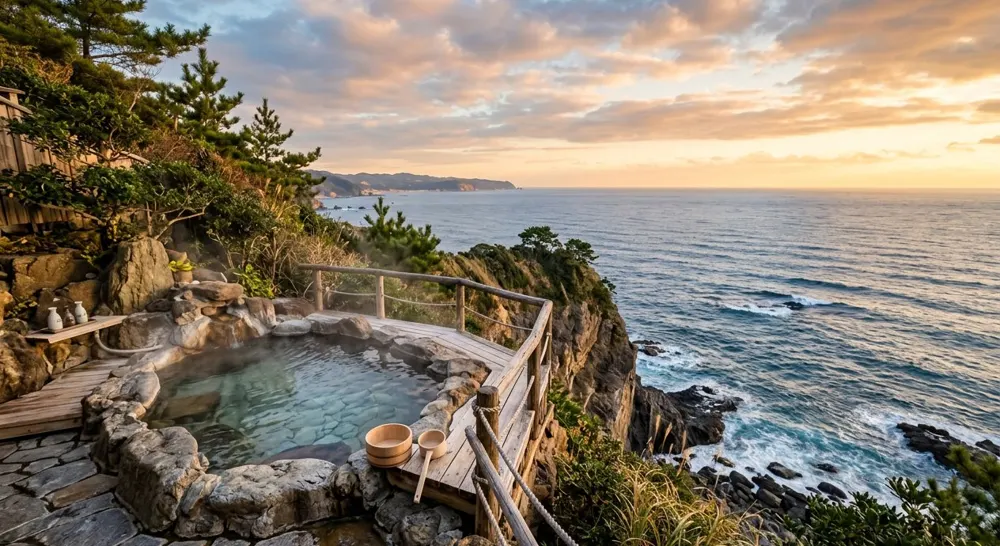
A resort hotel eight minutes downhill from Atami Station. Day bathing (1–9 pm) from ¥900 on weekdays and ¥1,300 on weekends — good value for Atami — with sea and Hatsushima views from the open-air bath. No loungewear; towels cost extra. Weekdays ¥1,600, weekends/holidays ¥2,000, peak days ¥2,200.
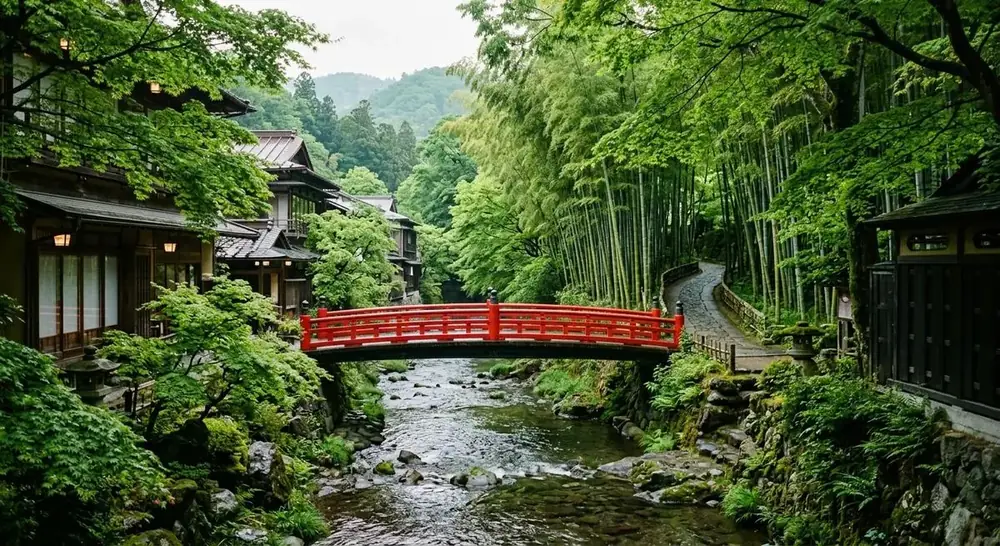
Shuzenji's only day-use public bath, recreating the historic outer bath tied to shogun Minamoto no Yoriie. A cypress tub of soft, clear water; a watchtower next door overlooks the town. Perfect after the bamboo path.
The onsen bathhouse of the Laforet resort on the hills above Shuzenji. A big indoor bath overlooking the Amagi range, an open-air bath among birdsong, and a sauna. Day use 12–9 pm, ¥940; free shuttle from Shuzenji Station.
A nine-room designer ryokan in the heart of Shuzenji. Indoor bath of Fuji lava stone and cypress, plus an Izu-stone garden rotenburo fed by three private springs. Day bathing is a 2.5-hour midday window, reservation only, with green tea and a sweet afterwards.
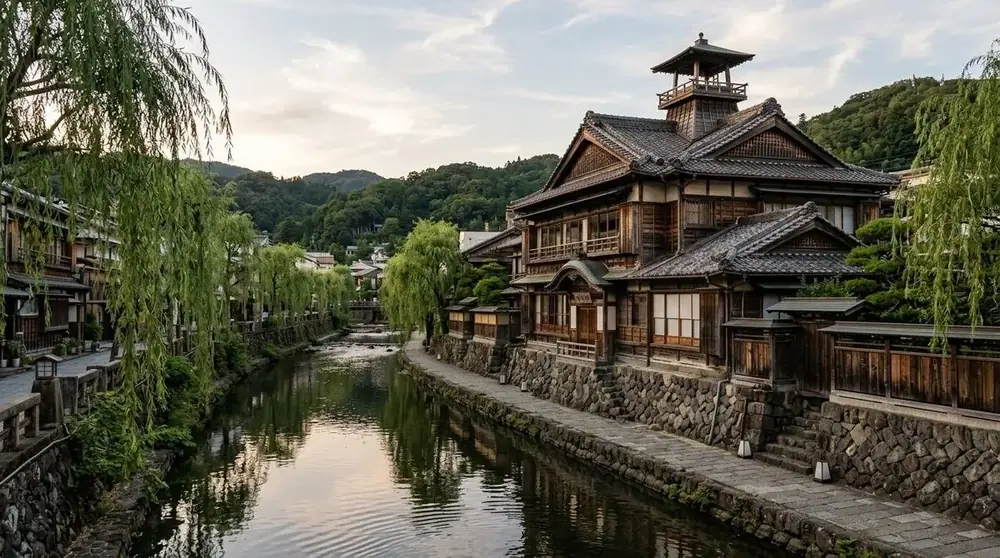
A three-storey wooden former inn built in 1928 on the Matsukawa River, now run by Itō city as a cultural facility and a masterpiece of early-Shōwa architecture. The carved transoms, rooftop lookout and guest rooms where rival carpenters showed off are worth the ¥200 admission alone — but on Saturdays, Sundays and holidays, 11:00–19:00, you can also bathe in the tiled 'large' and 'small' bath halls (¥500 adults including admission; halls swap by gender). The water is Itō's simple spring. Note the baths are closed on weekdays. Seven minutes on foot from Itō Station; combine with the riverside promenade and the old spa quarter opposite — a treat for lovers of retro buildings.
A neighbourhood-run communal bath at the foot of the stone stairway to Izusan Shrine, north of Atami Station and linked to Minamoto no Yoritomo and Hōjō Masako. The water comes from Hashiriyu, one of Japan's three ancient springs — a cave source where hot water once 'ran' down to the sea — a 71 °C calcium-sodium chloride spring, free-flowing with only water added to cool it. Inside it is pure Shōwa: an attendant's counter and two tubs, one hot, one lukewarm. ¥350; open afternoons only, roughly 14:00–20:00, closed Thursdays. Bring towel and soap. Pair with the free Hashiriyu cave just below and the 837-step climb to Izusan Shrine for a slice of Atami history. About 7 minutes by bus from Atami Station to Aizomebashi.
The oldest of Itō Onsen's 'Seven Lucky Gods' communal baths, a true locals' bathhouse. The spring is said to have been presented to the third shōgun Tokugawa Iemitsu in the Edo period, and today it runs as the ward-operated Wada-yu Kaikan. The layout is simple — a single indoor bath each for men and women — but the clear, simple-type spring flows in freely and the atmosphere is that of an old-fashioned neighbourhood bath full of regulars. Adults ¥400, children ¥200; open 14:00–22:00, closed Wednesdays (with extra days off in even months — check ahead). Soap and towels are sold, so bring your own. About 15 minutes on foot from JR Itō Station; pair it with the Tōkaikan building and Kinema-dōri street as one stop on the Seven Lucky Gods bath circuit. Parking for 11 cars.