Shizuoka · Atami OnsenTattoos: Ask ahead
Izusan Onsen Hama Bathhouse (Hashiriyu)
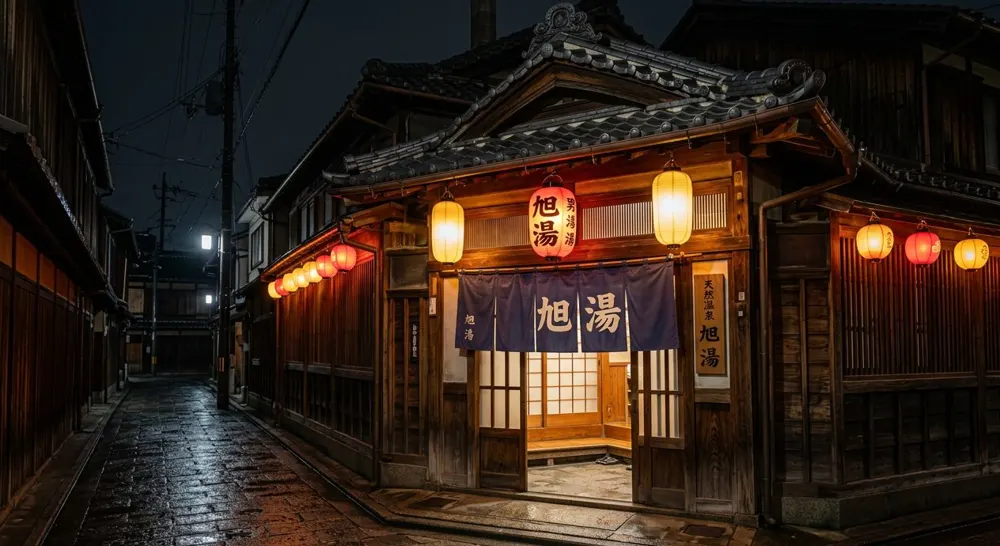
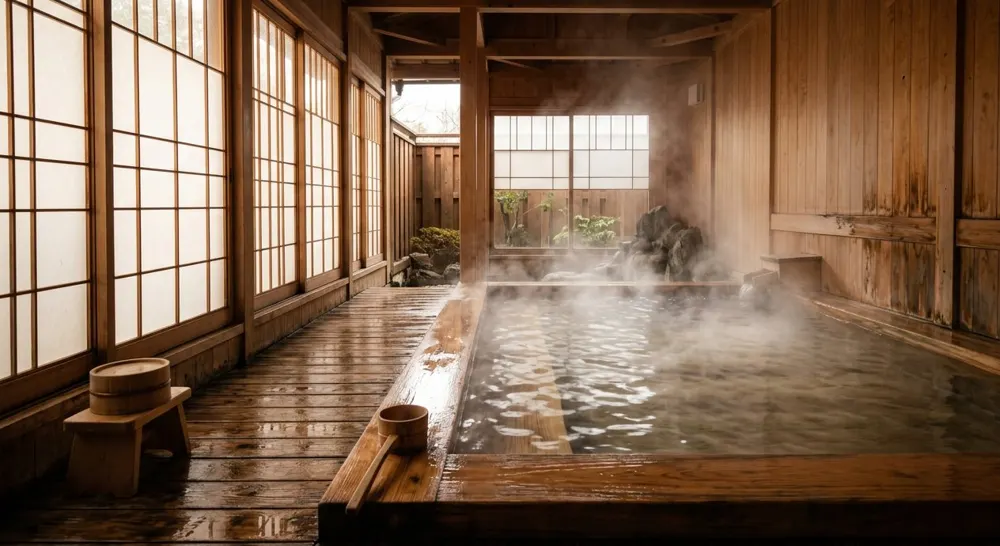
A neighbourhood-run communal bath at the foot of the stone stairway to Izusan Shrine, north of Atami Station and linked to Minamoto no Yoritomo and Hōjō Masako. The water comes from Hashiriyu, one of Japan's three ancient springs — a cave source where hot water once 'ran' down to the sea — a 71 °C calcium-sodium chloride spring, free-flowing with only water added to cool it. Inside it is pure Shōwa: an attendant's counter and two tubs, one hot, one lukewarm. ¥350; open afternoons only, roughly 14:00–20:00, closed Thursdays. Bring towel and soap. Pair with the free Hashiriyu cave just below and the 837-step climb to Izusan Shrine for a slice of Atami history. About 7 minutes by bus from Atami Station to Aizomebashi.
Day-trip onsenPublic bathhouse (sento)Day use ¥350