Wakura Onsen Sōyu
Salty water rising from the Noto sea, for ¥500. The community anchor of the onsen town, still operating after the 2024 Noto earthquake. Open-air and indoor baths plus a rest area.
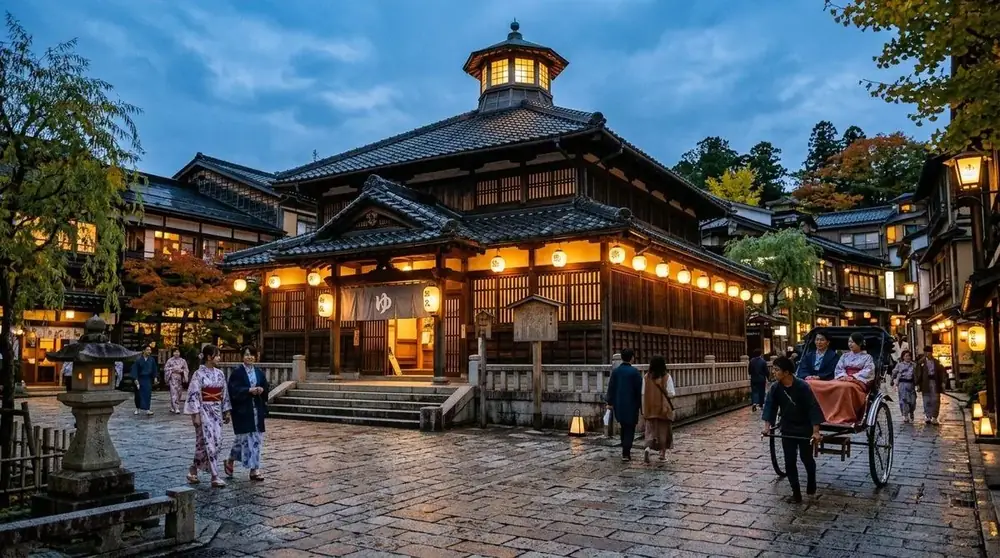
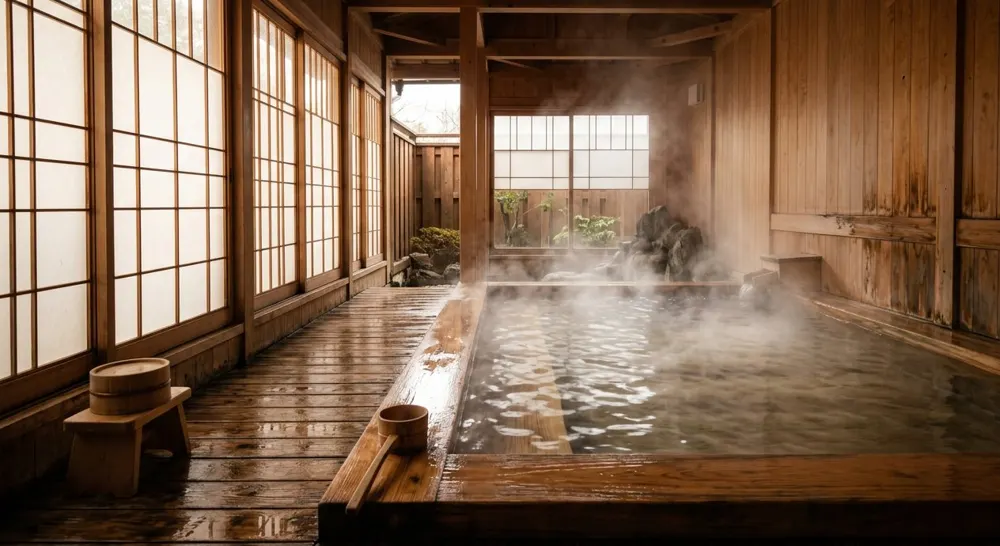
A faithful reconstruction of the Meiji-era public bath, with stained glass and Kutani-ware tiles. No washing stations — you simply soak, the old way. The combined ticket with the adjacent Sōyu is the better deal.
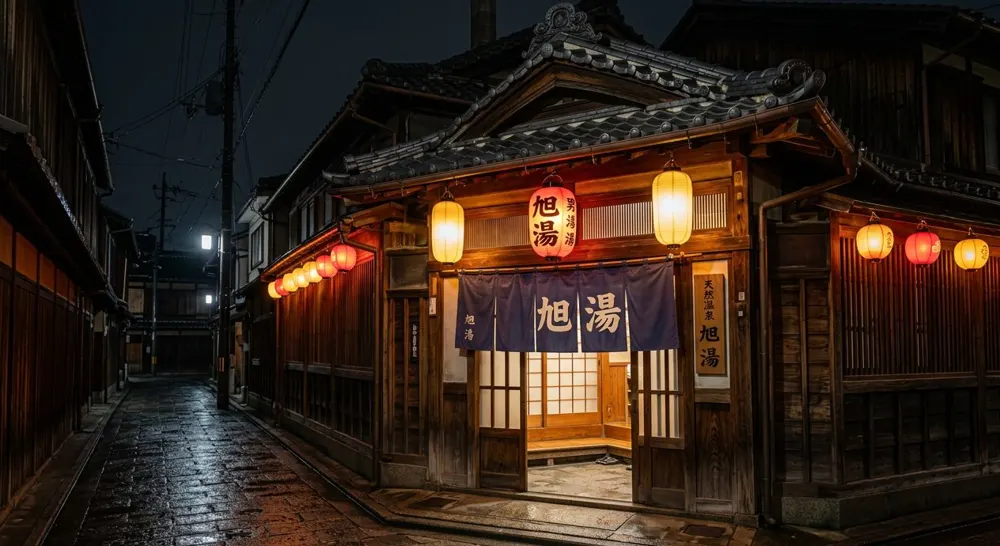
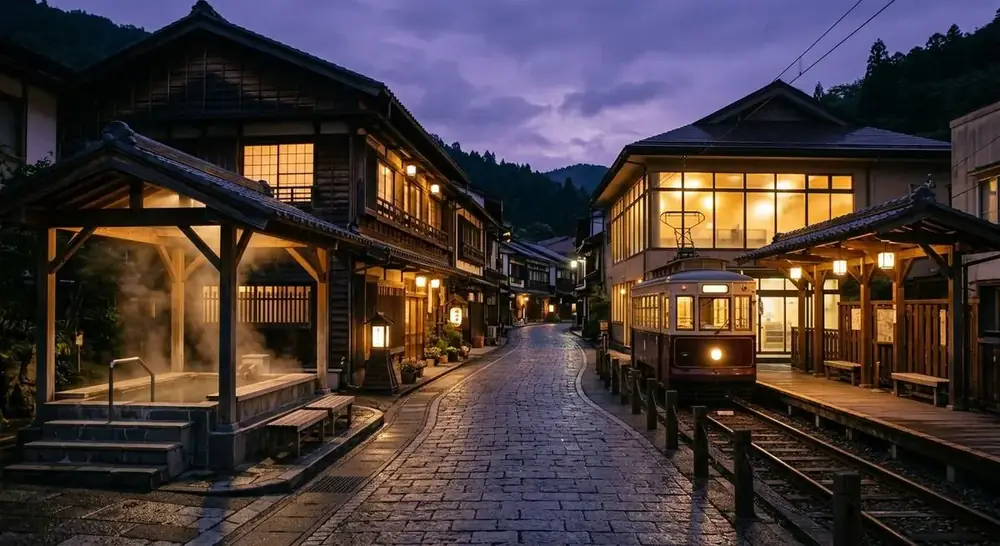
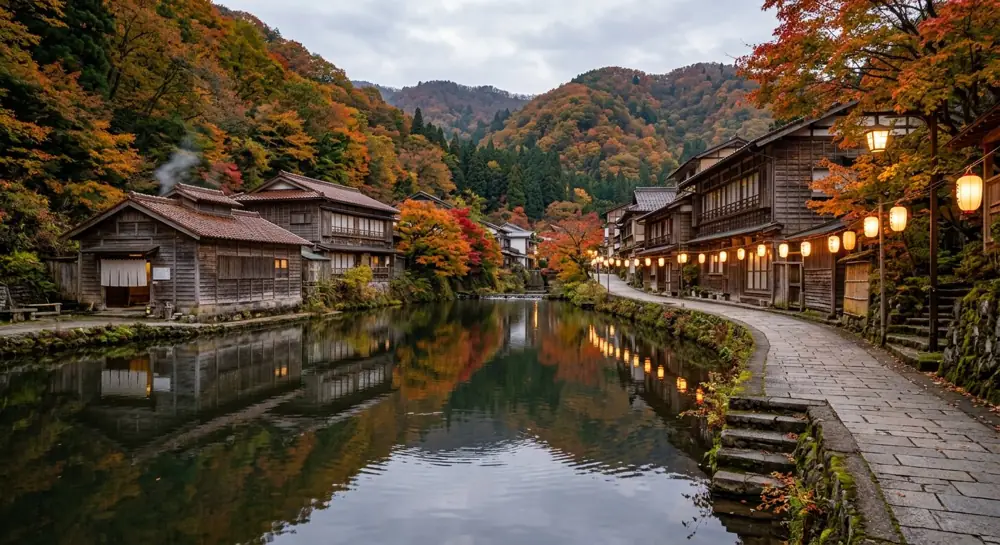
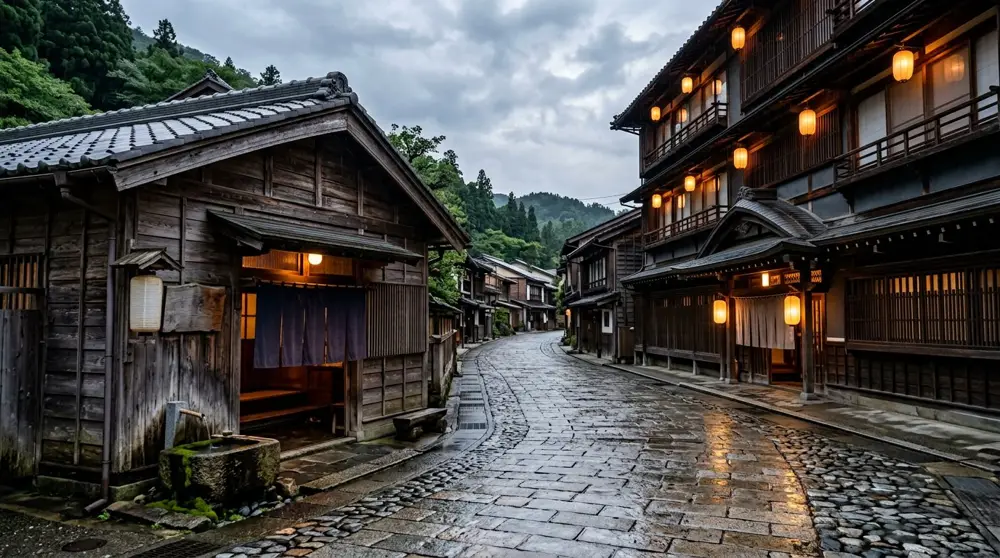
The communal 'sōyu' of Yamanaka, praised by the poet Bashō as one of Japan's three finest baths. Men's and women's halls stand in separate buildings across the street; the deep, hot (~43°C) pool is the signature. 6:45 am to 10 pm, ¥500. Bring your own soap.
The town bathhouse in front of Unazuki Onsen Station, gateway to the Kurobe Gorge Railway. A bright white bathroom with tubs of Kurobe granite holds crystal-clear, mildly alkaline water said to be Japan's most transparent. Just ¥510, with a free foot bath, drinking fountain and rooftop terrace. Easy to fit in before or after the gorge train.
A city-run day bath in front of Awara-Yunomachi Station, two stops from the Hokuriku shinkansen at Awaraonsen. 'Heaven' and 'Earth' bathrooms alternate weekly between men and women, each with rotenburo and sauna. Chloride water keeps you warm long after. ¥600 and open until 23:00 — a rare walk-in option in a town dominated by ryokan. Try the hot-spring eggs. No tattoos.
Ten minutes by car from Tsuruga, the Hokuriku Shinkansen terminus, a municipal spa on a hill above Tsuruga Bay. Alongside the open-air and indoor baths and sauna there's a swimsuit 'Bade pool' of thermal water, so it's popular with families. Mild simple spring water; a Japanese restaurant and tatami hall for resting afterwards. ¥750 on weekdays, 10:00–22:00, closed Tuesdays — a handy first stop on a Hokuriku trip from Kansai or Nagoya.
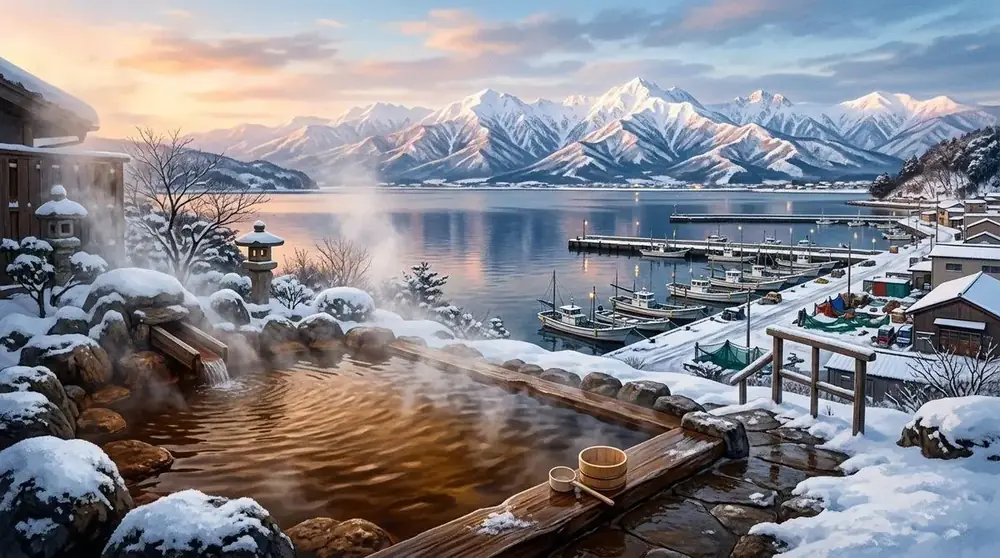
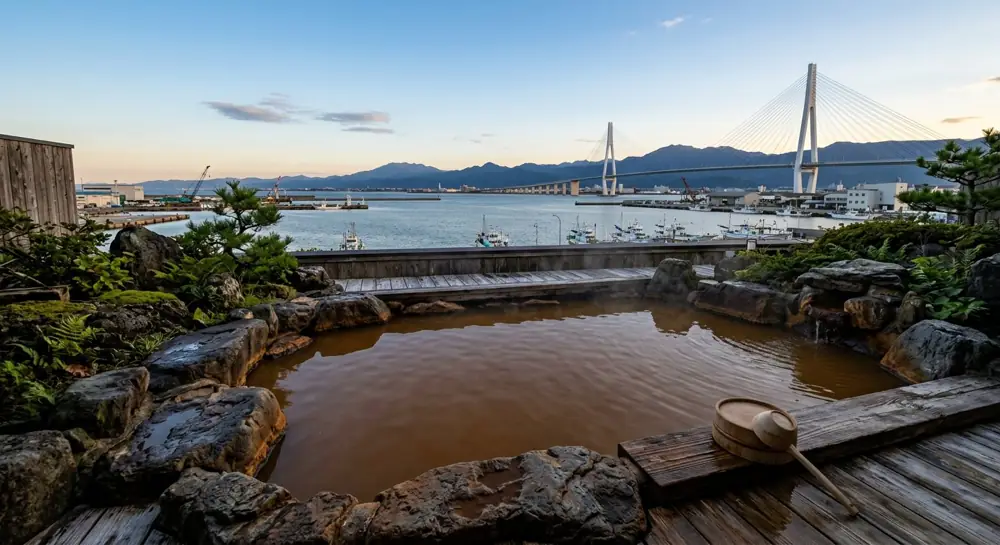
Next to the Himi Banya-gai seafood market near the port famous for winter yellowtail, a day spa fed by its own well 1,250 m down. The brown, strongly saline water flows freely, and on clear days the rotenburo frames the Tateyama range across Toyama Bay. Open 10:00–23:00, from 7:00 on weekends and holidays. ¥950. The classic routine: kaisen-don or conveyor sushi at the market, then a soak.
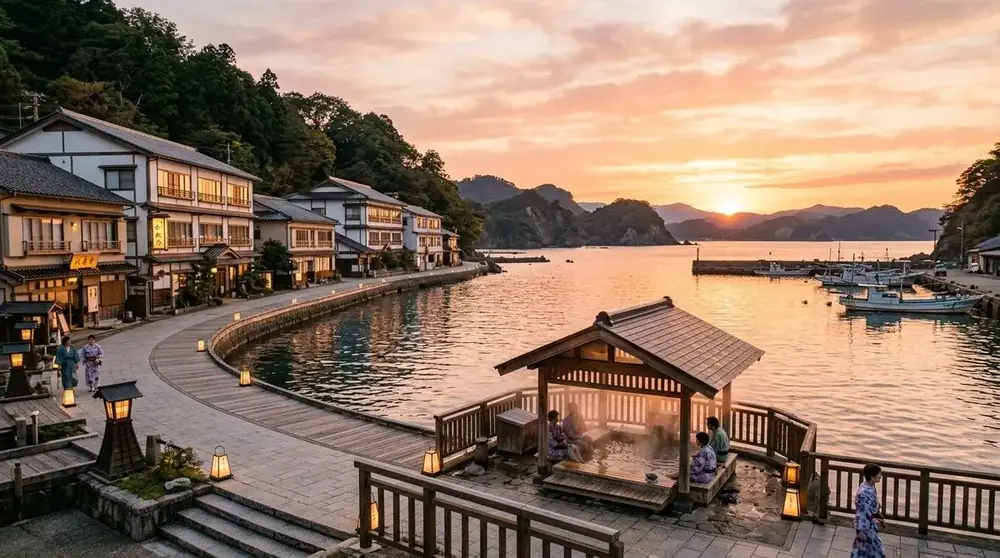
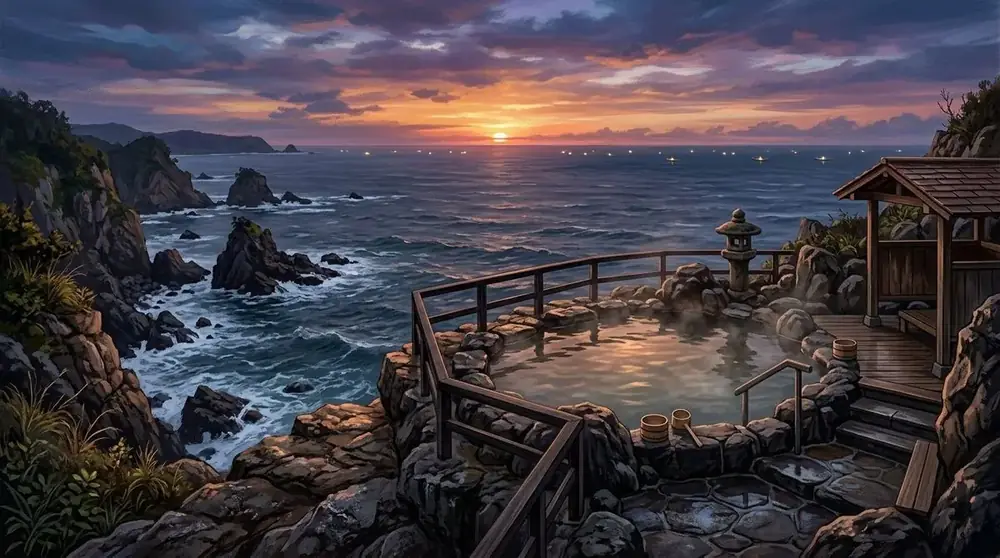
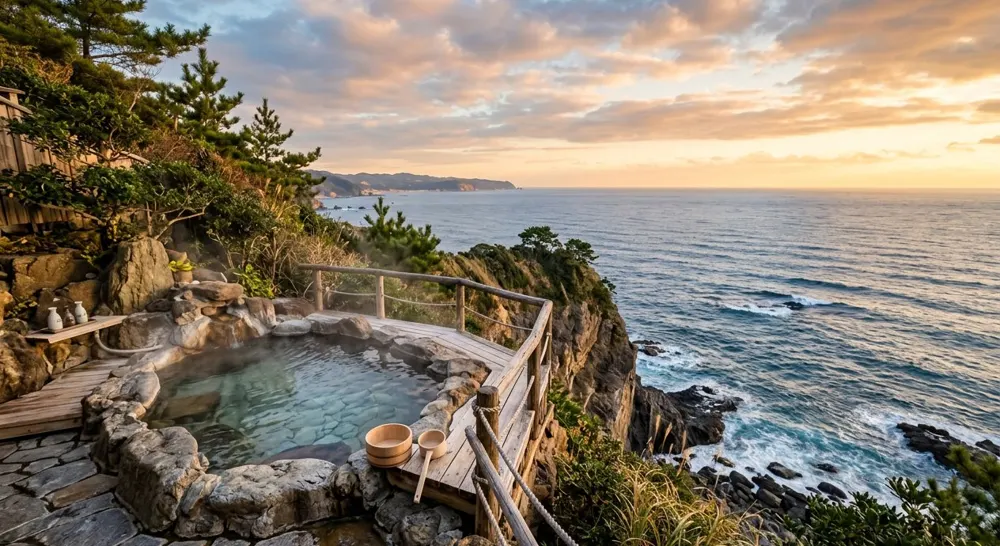
A town-run day spa attached to the Echizen roadside station on the coast famous for Echizen crab. The open-air bath juts toward the Sea of Japan, facing sunsets over the horizon and, after dark, the squid-boat lanterns ('isaribi') that give it its name. Silky 'beauty water', an indoor bath and sauna for a wallet-friendly ¥520. Busy in winter with visitors pairing a soak with a crab lunch.
Ten minutes by car from Kurobe-Unazuki-Onsen Station on the Hokuriku Shinkansen, a large day-spa wing of the lone inn Kintarō Onsen in Uozu. Its sulfur-rich sodium-calcium chloride water is among the most concentrated in Hokuriku, gushing at 1,800 litres a minute. A giant rock bath built from Tateyama boulders, open-air baths, a carbonated bath, rock-bath rooms and four private baths; open daily 8:30–23:30. Admission ¥1,100.
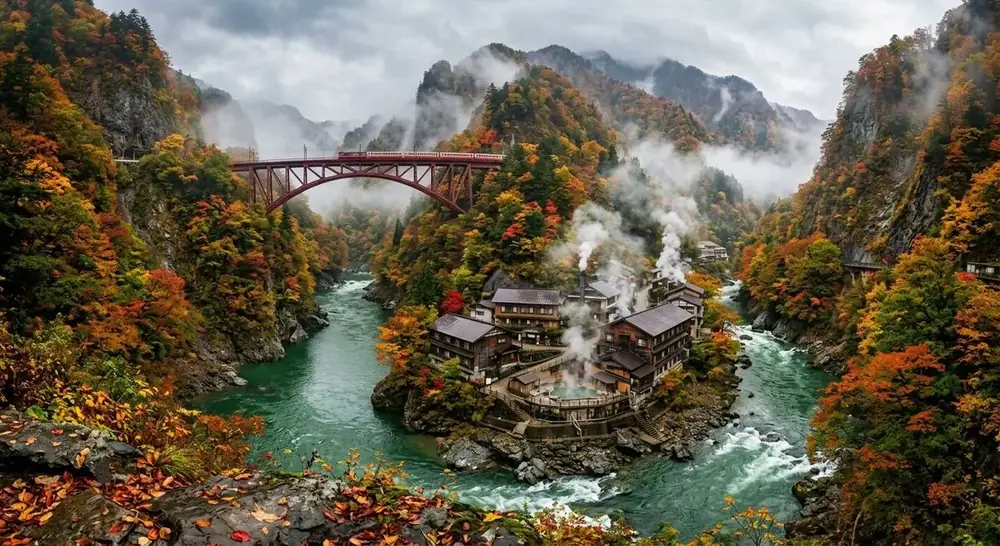
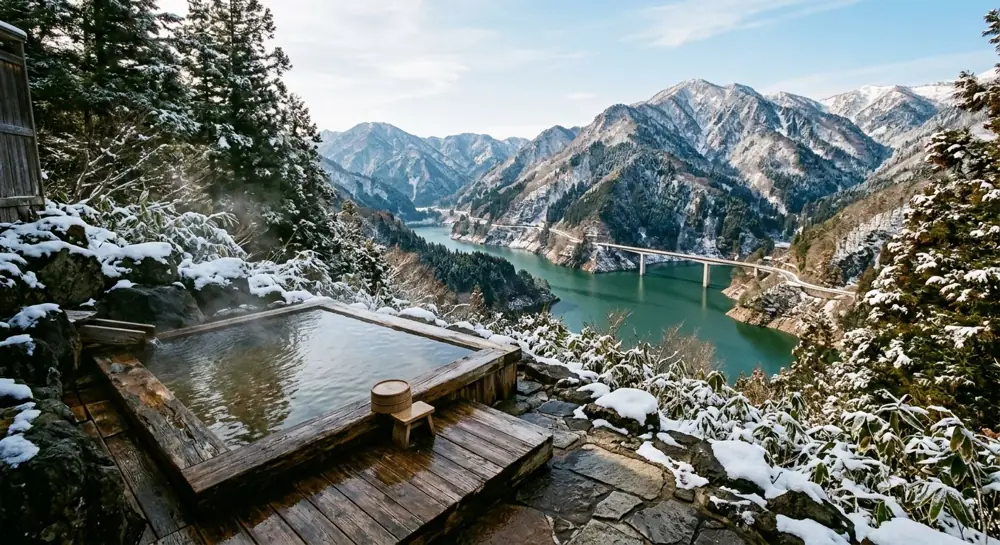
A city-run day bath on the shore of the Unazuki dam lake. From the lakeside open-air bath you can watch the Kurobe Gorge trolley train crawl along the far cliff — a favourite with railway fans. Just ¥510 including shampoo and hairdryers, with silky mildly alkaline water. Open only from late April to early December; closed in winter. Five minutes from Unazuki-Onsen Station by the free 'EMU' shuttle or car.
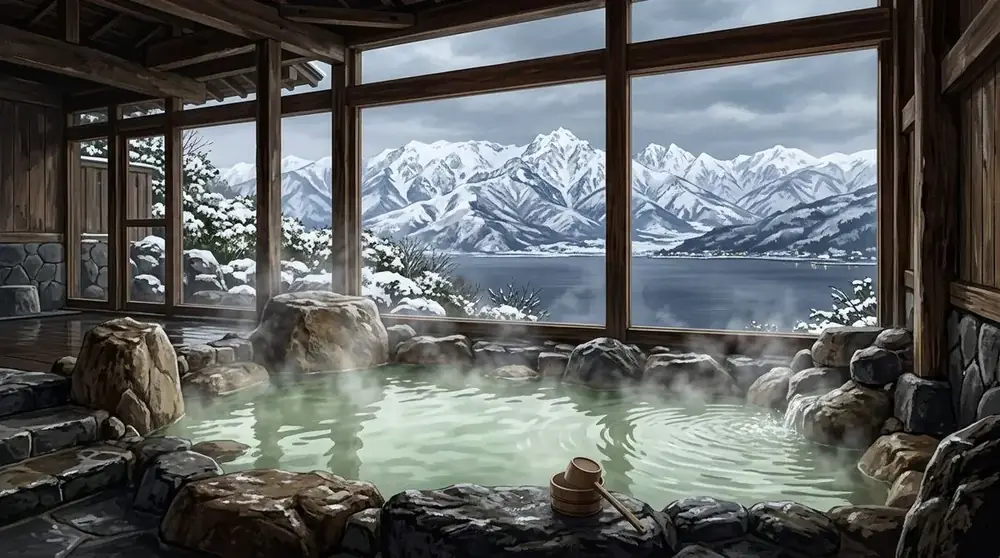
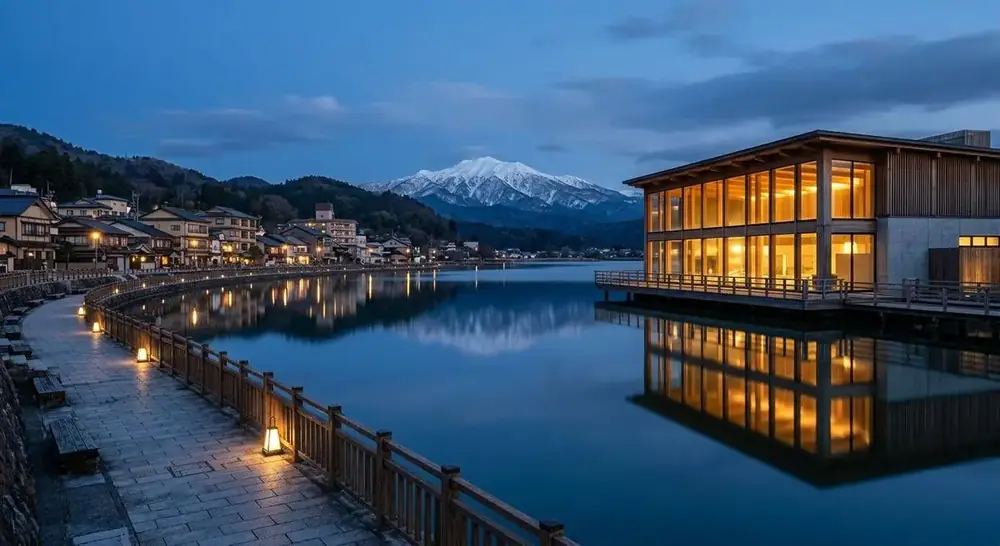
An all-glass communal bath on the shore of Lake Shibayama in Katayamazu, part of the Kaga onsen cluster, designed by architect Yoshio Taniguchi. The lake-facing 'Kata-no-yu' and garden-facing 'Mori-no-yu' swap between men and women on odd and even days; for ¥500 you get the Hakusan peaks and the lake to yourself. The salty chloride water keeps you warm long after. Open from 6:00 to 22:00, with a café upstairs (closed Thursdays) selling onsen eggs. About 10 min by bus from Kaga-Onsen Station.
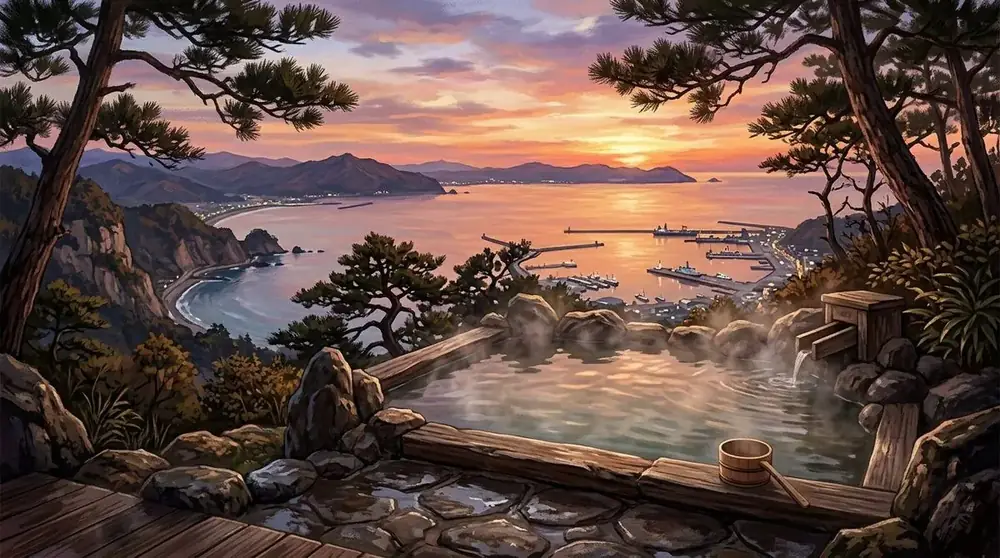
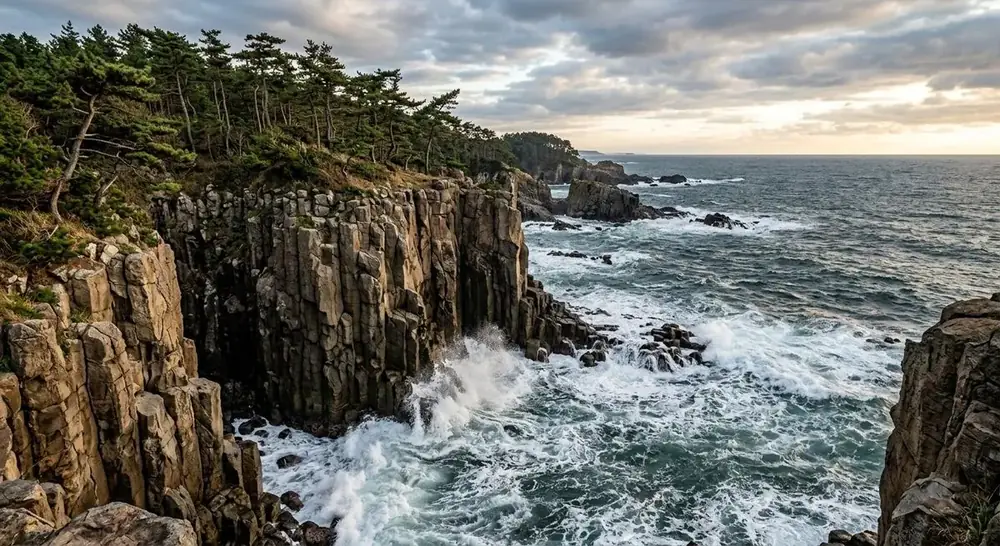
A public resort inn in the pine woods of the Echizen-Kaga Coast park, five minutes by car from the Tōjinbō cliffs. The glass-walled indoor bath and open-air Araiso-no-yu face the Sea of Japan and its sunsets, with cherry blossom in spring. Day use 11:30–15:00 (last entry), ¥900; closed to day visitors on Tuesdays for maintenance. Well stocked with shampoo and conditioner; towels are rented (¥310) or bring your own. Eight minutes by car from Mikuni-Minato Station — an easy stop between Tōjinbō and an Echizen crab lunch (Nov–Mar).
A day-use hot spring in Fukui city's Koshino district on the Echizen coast, famous for its wild daffodil fields. The mildly alkaline water is soft on the skin, and there is an indoor bath facing the Sea of Japan, a sauna and a small open-air tub. Adults pay just ¥640 and shampoo/body soap are provided. Open 10:30–20:30 on weekdays and 09:30–21:30 on weekends; closed 1st/3rd/5th Tuesdays (next day if a holiday). Winter (Dec–Feb) brings the daffodils and Echizen crab season, and many visitors stop here to finish a coastal drive. About 40 minutes by car from central Fukui; buses are infrequent, so a car is realistic.
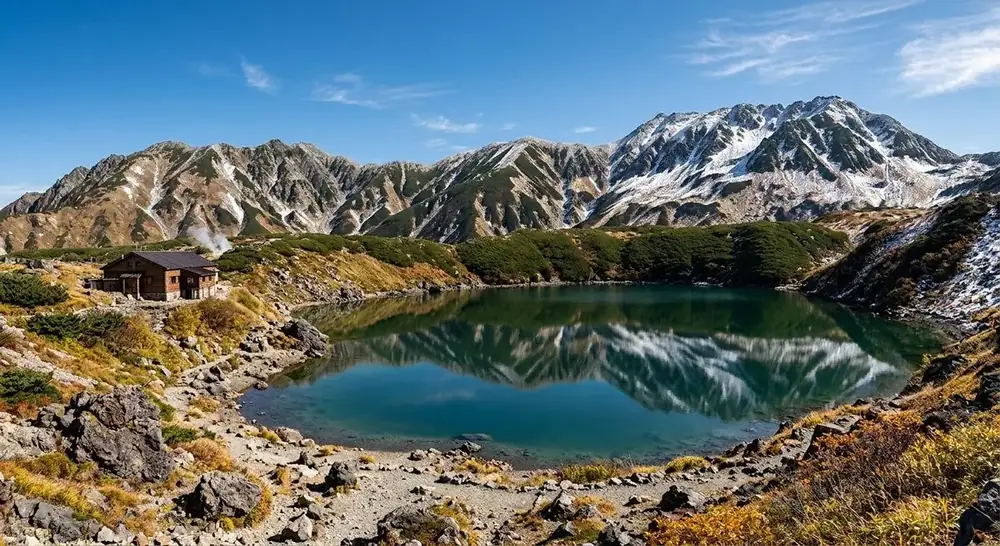
About 12 minutes on foot from Murodō terminal, the hub of the Tateyama-Kurobe Alpine Route, this inn at 2,410 m is Japan's highest hot-spring lodging. Milky acidic sulphur water piped from Jigokudani flows 100% free, and outside the window is another world: the 3,000-metre Tateyama range and the volcanic lake Mikurigaike. The bath is indoor only; day use 09:00–16:00, ¥1,100 for adults. The café's blueberry soft-serve and curry are favourites. Open only during the mountain season, mid-April to late November; closed in winter. Especially busy during the Snow Corridor (Apr–Jun) and autumn colours (late Sep–early Oct). With the altitude and strong water, keep your soak short.
The public bathhouse at the heart of Yamashiro Onsen's 'Yu-no-gawa' square in the Kaga hot-spring region, a spa 1,300 years old. In Kaga communal baths are called 'sōyu', and even ryokan guests walk over in yukata. The entrance reuses the gate of the old Yoshinoya inn; inside is spacious and clean, with one big tub of fresh undiluted water (sodium-calcium sulphate-chloride) flowing freely. Adults ¥500, open 06:00–22:00, closed only on the morning of the 4th Wednesday. A ¥900 combined ticket includes the 'Ko-sōyu' opposite (¥700), a recreation of the Meiji-era bathhouse with Kutani-ware tiles and stained glass — comparing the two is the classic plan. Soap and shampoo are sold, not provided. About 10 minutes by bus from Kaga-Onsen Station.
A town-run day spa inside the hilly 'Toyama Forest of Health – Green Park Yoshimine', about 15 minutes by car from Tateyama Station, the Toyama gateway to the Tateyama-Kurobe Alpine Route. The clear, mildly alkaline simple spring is piped straight from the source and called 'beauty water'; besides the main bath there is a rustic rock open-air bath, an herbal bath and a sauna. From April 2026 adults pay ¥750 and children ¥380; open 10:00–21:00 (last entry 20:30), closed Tuesdays (plus maintenance days). The park has a campsite, barbecue area, park golf and the Yoshimine Heights lodge, making it a handy stop before or after the Alpine Route or a Tateyama climb. About 5 minutes by car from Iwakuraji Station (Toyama Chihō Railway), 20 minutes from Tateyama IC; 300 parking spaces.
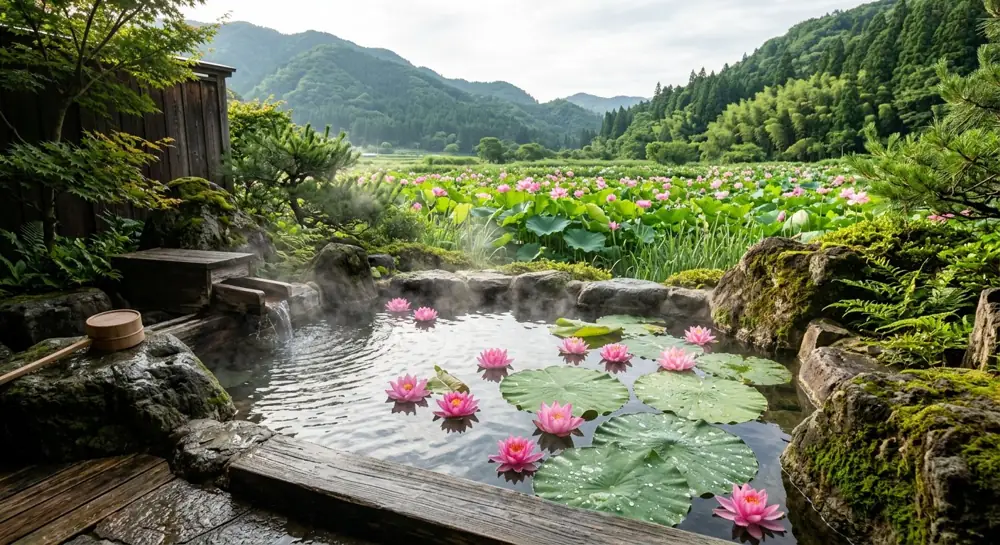
A town-run hot-spring inn next to Hanahasu Park in Minami-Echizen, Fukui, where more than 130 varieties of lotus bloom. The alkaline simple water from about 1,000 m down clings softly to the skin; there is a roomy indoor bath, a garden-style open-air bath, the signature 'lotus bath' floated with lotus leaves and flowers, plus bubble bath, lie-down bath and sauna. Day bathing is a modest ¥650 for adults and ¥350 for children, and the long 08:00–22:00 hours (last entry 21:00) are a bonus. Closed Tuesdays (open on holidays, during the July lotus festival and at New Year). The restaurant serves set meals with sashimi boats and 'lotus udon', and overnight stays are possible. About 5 minutes by car from Imajō IC on the Hokuriku Expressway or 10 minutes by taxi from JR Imajō Station — an easy stop between the Echizen coast and Tsuruga. Lotus season runs from late June to early August.
The communal bath at the centre of Yuwaku Onsen, Kanazawa's 'back parlour', about 50 minutes by bus from Kanazawa Station. The spa dates back 1,300 years, prospered as the cure resort of the Kaga lords, and is remembered as where the Taishō-era artist Takehisa Yumeji stayed with his lover; the name comes from a legend of an egret healing its wounds here. Inside, the wood-rich building is calm, with clear, smooth sodium-calcium-chloride water served fairly hot in a simple bathroom (no open-air bath or sauna). Cheap at ¥490 for adults and ¥130 for children, and open 07:00–22:00, it suits a bath-hopping circuit from the ryokan or a finish to a Kanazawa day. Closed the third Thursday (plus occasional days). Combine with the Gyokusen Lake path, the Yumeji museum and the inns' restaurants. Known as the setting of the anime 'Hanasaku Iroha', the village holds the Bonbori lantern festival in October. About 30 minutes by car from Kanazawa-Morimoto IC; parking is limited.
A day spa beside the 'Kamon Park Shinminato' roadside station in Imizu, on Toyama Bay. Its spring is a dense chloride water said to rank among the richest in Japan in dissolved minerals, with several times the free carbon dioxide of shop-bought bath fizzers, so onsen enthusiasts know it as a genuine carbonated chloride spring. The tea-brown, salty, iron-rich water warms you deeply; there are indoor and open-air baths, a sauna and a cold plunge. What stands out is the long day: an early-morning bath from 05:00 through to midnight (23:00 on Sundays), with cheaper early and late rates. Regular admission is ¥970 for adults (¥1,020 weekends and holidays), ¥750/¥780 early or late, ¥520 for children. Closed Mondays (open if a holiday, then closed the next weekday) and January 1. Easy to pair with the Shinminato Bridge, Kaiwo Maru Park and seafood at the Shinminato Kittokito market; about 10 minutes by car from Kosugi IC or 20 minutes by community bus from JR Kosugi Station.
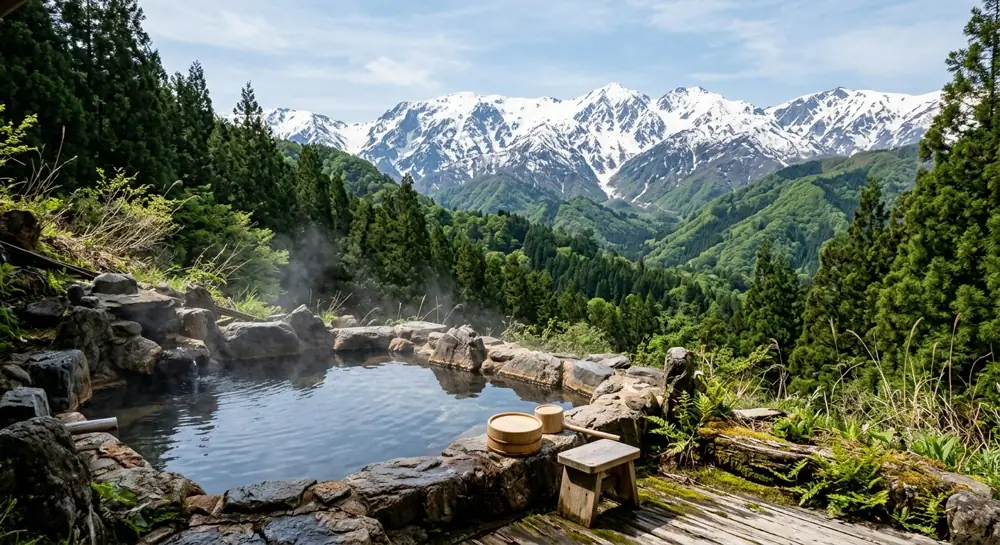
A municipal spa retreat in the mountains at the eastern edge of Ōno, Fukui, close to Lake Kuzuryū. Ringed by the clear Kuzuryū River and forested hills, it offers colourless, soft alkaline simple spring water in an indoor bath and an open-air bath overlooking the valley through fresh greenery, autumn colours and deep snow (the outdoor bath may close on winter weekdays). There are a sauna, a tatami rest hall and a restaurant, and the site forms part of the Kuzuryū Hoyō-no-Sato complex with cottages and the Hotel Flairal Izumi next door. Adults from outside the city pay ¥800 (residents ¥700), children from age 3 ¥400 (¥350). Open 10:00–21:00, from 12:00 on Wednesdays; closed Tuesdays (next day if a holiday) and 1 January. About 17 minutes on foot from Echizen-Shimoyama Station on the JR Etsumi-Hoku Line, or right off the Kuzuryū IC on the Chūbu-Jūkan Expressway. An easy stop after the Kuzuryū roadside station, an autumn drive around the lake or a climb of Mt. Arashima.
The communal bathhouse at the heart of Awazu Onsen in Komatsu, Hokuriku's oldest spa, said to have been founded in 718 by the priest Taichō. It stands opposite Hōshi, known as the world's oldest inn, and makes a fitting finale to a tour of the four sōyu public baths of the Kaga spa region (Yamanaka, Yamashiro, Katayamazu and Awazu). The clear, silky sodium sulfate-chloride water (mildly alkaline, high-temperature) runs hot, and soaking shoulder to shoulder with locals warms you to the core. There is no open-air bath or sauna – just an indoor pool – but that simplicity lets the water speak for itself. Adults pay ¥500, elementary pupils ¥150 and infants ¥70; open 8:00–22:00 (last entry 21:30), closed Tuesdays, parking for 10 cars. From JR Awazu Station take the Komatsu Bus for Awazu Onsen to Awazu-Onsen Kitaguchi and walk 2 minutes, or drive about 15 minutes from Kaga IC on the Hokuriku Expressway. Combine with Natadera temple, Yunokuni-no-Mori craft village and Komatsu's aviation museum.
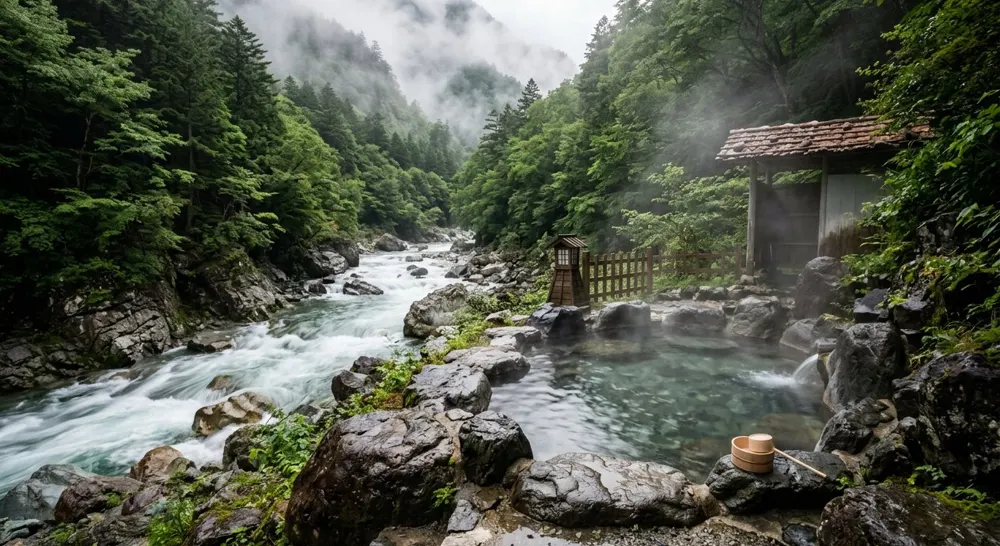
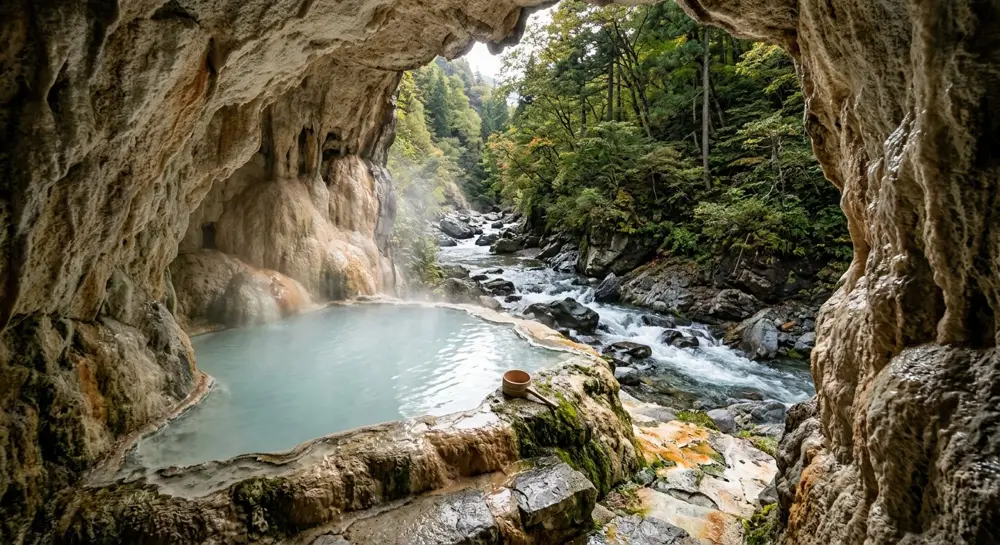
A 400-year-old hot spring inn standing alone deep in the Ogawa river gorge that runs down from the Northern Alps in Asahi, the easternmost town of Toyama. Known as a fertility and therapeutic spa, it offers a circuit of five different baths. The great curiosity is the 'natural cave open-air bath', a dome of travertine built up over centuries from the spring's own mineral deposits and designated a prefectural natural monument – bathing inside it is an experience found nowhere else in Japan. There are also the streamside Renge-no-Yu outdoor bath, a rock bath and a cypress tub, all with free-flowing bicarbonate spring water that keeps you glowing long after. Day bathing runs 9:00–15:00 (reception until 14:30) for ¥1,000 per adult and ¥500 per child, or half price for the outdoor baths only. Irregular closures, and the two outdoor baths shut for winter from 1 December until the mid-April thaw. About 15 minutes by car from Tomari Station on the Ainokaze Toyama Railway, 30 minutes from Kurobe-Unazuki-Onsen Station on the Hokuriku Shinkansen (shuttle for overnight guests) or 15 minutes from Asahi IC. A hidden spring to pair with the Jade Coast and Unazuki on a drive along the Niigata border.