Tōhoku

Prefectures

Aomori 7Iwate 8Miyagi 7Akita 8Yamagata 7Fukushima 8
45 results
Illustrative onsen mood image
Iwate · Hanamaki OnsenTattoos: Ask ahead

Osawa Onsen Jisuibu Tojiya

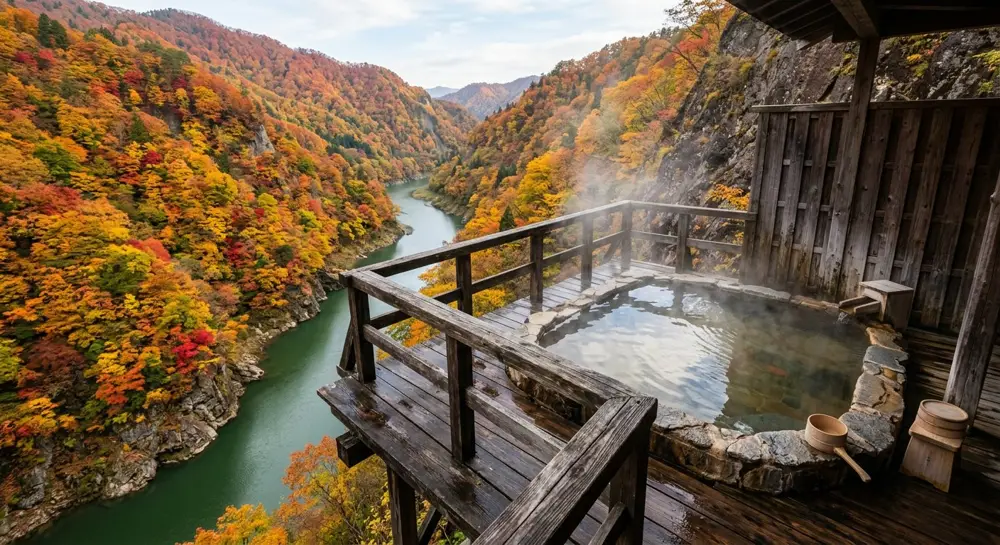
A wooden toji (therapeutic stay) inn over 200 years old on the Toyosawa River in the Hanamaki-Minami onsen area, once frequented by poet Kenji Miyazawa. Its signature is 'Osawa-no-yu', a mixed open-air bath jutting over the river, with women-only hours. Day bathing from 7 am; ¥700 covers three baths. Many linger for lunch and sake at the 'Yahagi' dining room. Free shuttle from Hanamaki Station.

Day-trip onsenOnsen ryokanDay use ¥700
Illustrative onsen mood image
Aomori · Asamushi OnsenTattoos: Ask ahead

Yu-sa Asamushi Roadside Station — Hadaka-yu Panoramic Bath

Twenty minutes by train from Aomori, a panoramic bath on the 5th floor of the roadside station at Asamushi Onsen on Mutsu Bay. Big windows frame Yunoshima island and the bay — sunset is the prime slot. Salt- and sulfate-rich water keeps you warm afterwards. Just ¥360, open 7:00–21:00 every day. The ground-floor market sells Aomori souvenirs. Two minutes' walk from Asamushi-Onsen Station.

Day-trip onsenPublic bathhouse (sento)Day use ¥360
Illustrative onsen mood image
Fukushima · Iizaka OnsenTattoos: Ask ahead

Iizaka Onsen Sabako-yu

Twenty-five minutes by local train from Fukushima, the emblematic communal bath of Iizaka Onsen, where the poet Basho is said to have bathed. Rebuilt in 1993 as a faithful copy of one of Japan's oldest wooden bathhouses, its granite tub runs with free-flowing spring water above 45°C. Locals don't cool it with tap water; visitors get guidance. ¥400, from 6 am. No soap or shampoo. Start here for a crawl of the town's nine public baths.

Day-trip onsenPublic bathhouse (sento)Day use ¥400
Illustrative onsen mood image
Iwate · Hanamaki OnsenTattoos: Ask ahead

Namari Onsen Fujisan Ryokan

A wooden ryokan founded in 1841 on the Toyosawa River at the far end of the Hanamaki onsen villages. Its signature is 'Hakuen-no-yu', a self-welling rock pool about 1.25 m deep that you stand in — billed as Japan's deepest rock bath. Five springs feed four bathhouses, all 100% free-flowing. Day use ¥800, 10:00–21:00. Hakuen-no-yu is mixed bathing with women-only hours. Free shuttle from Hanamaki Station by reservation.

Day-trip onsenOnsen ryokanDay use ¥800
Illustrative onsen mood image
Miyagi · Akiu OnsenTattoos: Ask ahead

Akiu Onsen Public Bath

The only communal bath in Akiu Onsen, Sendai's classic hot-spring retreat. Among upscale ryokan charging ¥1,000-plus for day use, this humble bathhouse offers free-flowing chloride spring water for ¥300. Near the Yakushi-do temple at the source, it has a single tub and a mostly local crowd; soap is sold, not provided, and a sign asks for 40-minute stays. About 55 minutes by bus from Sendai Station, right by the Yumoto stop.

Day-trip onsenPublic bathhouse (sento)Day use ¥300
Illustrative onsen mood image
Aomori · Tsuta Onsen & OiraseTattoos: Ask ahead

Tsuta Onsen Ryokan

A lone inn in a primeval beech forest on the southern flank of Mt. Hakkoda. Spring water wells up directly through the gaps in the hiba-cypress boards on the tub floor — 'free-welling', so you bathe in water that has never touched air, a rarity even in Japan. The all-hiba 'Kyuan-no-yu' bathhouse from 1918 is magnificent. Day use 10:00–15:00, ¥1,000; may close early when busy. Combine with the hour-long trail around Tsuta-numa pond, famous for autumn colour. Closed in winter.

Day-trip onsenOnsen ryokanDay use ¥1,000
Illustrative onsen mood image
Fukushima · Takayu OnsenTattoos: Ask ahead

Takayu Onsen Attaka-yu

Thirty minutes by car from Fukushima city, the communal bath of Takayu Onsen at 750 m on Mt. Azuma. Every bath is open-air, filled with milky-white sulfur water that is neither diluted nor heated. There's a timber men's bath, a rock women's bath and a reservable private rotenburo. A ¥500 gateway to a spa town that has kept its water free-flowing for 400 years. Closed Thursdays; one-hour limit. At the foot of the Bandai-Azuma Skyline — ideal with an autumn drive.

Day-trip onsenPublic bathhouse (sento)Day use ¥500
Illustrative onsen mood image
Iwate · Oshuku & Tsunagi OnsenTattoos: Ask ahead

Oshuku Onsen Hotel Uguisu

Fifty minutes by bus from Morioka, a family-run hotel in Oshuku Onsen, a 450-year-old spa where legend says a bush warbler healed its wounds. The area is rich in hot water, and the clear alkaline spring flows freely into the indoor and open-air baths — day use just ¥600, 11:00–19:00, half price on the 26th of each month. Easy to add after Koiwai Farm, Shizukuishi ski slopes or Morioka sightseeing.

Day-trip onsenOnsen ryokanDay use ¥600
Illustrative onsen mood image
Akita · Tamagawa OnsenTattoos: Ask ahead

Shin-Tamagawa Onsen

A modern cure-bath inn fed by Tamagawa Onsen, Japan's most acidic spring at pH 1.2. The hiba-cypress bathhouse lines up 15 tubs — 100% source, 50% diluted, mildly acidic and more — so you can choose by condition. Day use 10:00–15:00, ¥1,000 (revised April 2026). An indoor stone-slab bath (¥800) is also available, and unlike the original Tamagawa it stays open all winter for snowbound soaking. About 70 min by bus from Tazawako Station.

Day-trip onsenOnsen ryokanDay use ¥1,000
Illustrative onsen mood image
Miyagi · Tōgatta OnsenTattoos: Ask ahead

Tōgatta Onsen Kami-no-yu Communal Bath

The signature communal bath of Tōgatta, gateway to the Zao range on the Miyagi side. A wooden bathhouse with nothing but two indoor tubs — a 'hot' one around 44°C and a 'mild' one at 42°C — fed free-flowing by a 400-year-old source. The sodium-calcium sulfate-chloride water is reputed for cuts and skin complaints and keeps you warm long afterwards. ¥400, 9:00–20:30. The source and Tōgatta Shrine sit behind it and a free footbath in front; combine with a stroll through the kokeshi-doll village.

Day-trip onsenPublic bathhouse (sento)Day use ¥400
Illustrative onsen mood image
Aomori · Furōfushi Onsen, FukauraTattoos: Ask ahead

Koganezaki Furōfushi Onsen

The highlight of any Gonō Line journey: a lone inn famous nationwide for its 'seaside open-air bath' set right at the water's edge of the Sea of Japan. Iron-rich chloride water, rust-red and cloudy, seems to merge with sea and sky. Day use is ¥600 — the seaside bath 8:00–16:00 (last entry 15:30), the main-building indoor 'Kogane-no-yu' 8:00–20:00. The mixed outdoor bath allows bathing wear (rental fee); a women-only outdoor bath sits alongside. Sunset soaks are for overnight guests only, so stay if you want one of Japan's 100 best sunsets from the tub.

Day-trip onsenOnsen ryokanDay use ¥600
Illustrative onsen mood image
Fukushima · Aizu Higashiyama OnsenTattoos: Ask ahead

Aizu Higashiyama Onsen Harataki

An inn with its own spring midway along the Yukawa gorge, where the ryokan of Higashiyama Onsen line the river 10 minutes by car from central Aizu-Wakamatsu. Day visitors get the riverside open-air bath facing a waterfall and the main bath for ¥1,100 including a small towel, 13:00–20:00. Private panoramic baths (¥1,650) and lunch packages are also offered. With 1,300 years of history, Higashiyama was the retreat of artists such as Takehisa Yumeji and poet Yosano Akiko — a natural finish to a day at Tsuruga Castle and the Byakkotai sites on Iimoriyama. Reception hours may shorten when busy.

Day-trip onsenOnsen ryokanDay use ¥1,100
Illustrative onsen mood image
Iwate · Sukawa Onsen, Mt KurikomaTattoos: Ask ahead

Sukawa Kōgen Onsen – Dainichi-yu open-air bath

One of Tōhoku's highest hot springs, at 1,126 m on the northern slopes of Mt Kurikoma. Some 6,000 litres a minute flow like a stream; the strongly acidic alum-vitriol water (pH around 2) carries white mineral flakes and tingles on the skin. The famous big open-air Dainichi-yu is an open, rock-backed pool; day use 6:00–21:00 (until 20:00 on Wednesdays), ¥900. The indoor baths and the 'oiran' steam bath run 9:00–16:00. Because of the altitude, the road and the onsen close in winter (early November to early May). About 95 minutes by bus from Ichinoseki Station to the Sukawa Onsen terminus; it is also the Kurikoma trailhead, busiest in autumn colour season (late Sept–early Oct).

Day-trip onsenOnsen ryokanDay use ¥900
Illustrative onsen mood image
Akita · Nyūtō OnsenTattoos: Ask ahead

Nyūtō Onsen Ganiba Onsen

A single inn at the end of the Nyūtō bus line, wrapped in old-growth beech forest and named for the river crabs once abundant in the nearby stream. Unusually for Nyūtō, the water is clear and colourless — a bicarbonate spring with drifting white flakes and a gentle feel. The signature is Karako-no-yu, a mixed open-air pool some 50 m from the building in the woods, magical in snow season; there are also separate indoor wooden and rock baths. Day use 9:00–16:30, ¥800. Covered by the Yumeguri-chō pass (¥2,500, valid one year) for all seven Nyūtō inns — the classic combo is with Tsuru-no-yu and Taenoyu. About 50 minutes by bus from Tazawako Station to the Nyūtō Onsen stop.

Day-trip onsenOnsen ryokanDay use ¥800
Illustrative onsen mood image
Miyagi · Sakunami Onsen, SendaiTattoos: Ask ahead

Ōedo Onsen Monogatari Premium Sendai Sakunami (day use)

A large hot-spring hotel in Sakunami Onsen on the upper Hirose River, 40 minutes by car from Sendai Station, taking walk-in day bathers in two sessions: 7:00–10:00 and 15:00–24:00 (last entry 22:00). ¥900 weekdays, ¥1,200 weekends and holidays (¥1,400 on peak dates, taxes included); towels rent for ¥330. There is an open-air bath over the mountain stream and a spacious indoor hall. Add the dinner buffet with bathing (17:00–21:30, from ¥4,200 weekdays, reservation required) for a half-day dinner-and-onsen plan. Shuttle from Sakunami Station on the Senzan Line (confirm ahead). Many combine it with a tour of the Nikka Whisky Miyagikyō distillery.
Day-trip onsenOnsen ryokanDay use ¥900
Illustrative onsen mood image
Miyagi · Kamasaki Onsen, ShiroishiTattoos: Ask ahead

Kamasaki Onsen Mogamiya Ryokan

A wooden inn founded in 1789 at Kamasaki Onsen, a mountain cure spa in Shiroishi, Miyagi, where villagers are said to have struck hot water with the tip of a sickle more than 600 years ago. Its iron-bearing sulphate water, known as the 'medicinal bath of Ōu', turns tea-brown and has long been trusted for cuts and bruises. Gleaming dark corridors, glass shōji and traces of the old self-catering cure wing make it irresistible to lovers of retro Japan. Day use 11:00–14:00, ¥800; bring a towel. Fifteen minutes by car from Shiroishi-Zaō Station — a convenient stop with Shiroishi Castle, the Yajirō kokeshi village or the start of the Zaō Echo Line. Day bathing is sometimes suspended when busy or for cleaning, so phone ahead.

Day-trip onsenOnsen ryokanDay use ¥800
Illustrative onsen mood image
Fukushima · Dake Onsen, NihonmatsuTattoos: Ask ahead

Dake Onsen Dake-no-yu

A public bathhouse (doubling as a self-catering lodge) in the centre of Dake Onsen, about 600 m up the slopes of Mt Adatara. The acidic spring is rare nationally; piped roughly 8 km from the source, the water cools on the way and arrives milky white with a slight tingle. The basement bath is indoor only but 100% free-flowing. Day use 10:00–19:00 (last entry), ¥400 for adults, closed Tuesdays. The sloping resort street keeps traces of the town's playful 'Nikoniko Republic' era and has a free foot bath. About 25 minutes by bus from Nihonmatsu Station; popular with hikers coming down Mt Adatara and skiers.

Day-trip onsenPublic bathhouse (sento)Day use ¥400
Illustrative onsen mood image
Iwate · Matsukawa Onsen, HachimantaiTattoos: Ask ahead

Matsukawa Onsen Kyōunsō

A lone inn of the Japan Association of Secluded Hot Springs, deep in Hachimantai National Park amid beech and oak forest. The open-air bath is an unusual greenish milky white — free-flowing simple hydrogen-sulphide water — with a mixed outdoor bath, a women-only outdoor bath and separate indoor baths; from the rotenburo you can see the steam of Japan's first geothermal power station. Day use 08:30–19:00 (last entry 18:00), ¥700 for adults, or ¥900 with hall rest 10:00–15:00. Open year-round, and the snow-buried outdoor bath in winter is the highlight. About 1 h 50 min by Iwate Kenpoku bus from Morioka Station to the Matsukawa Onsen terminus.

Day-trip onsenOnsen ryokanDay use ¥700
Illustrative onsen mood image
Yamagata · Hijiori OnsenTattoos: Ask ahead

Hijiori Onsen Kami-no-yu communal bath

Hijiori Onsen, 1,200 years old, is a cure-spa where inns huddle at the bottom of a caldera in Ōkura village, Yamagata. Right in the middle of the street stands Kami-no-yu, the only communal bath open to visitors. A small bathhouse with an attendant's counter, it has slightly hot free-flowing sodium-chloride/bicarbonate water and a tiny Yakushi shrine in the corner of the tub. Adults pay ¥400 (free for guests of the village inns); open 08:00–18:00 (until 17:00 in winter), no bathing on Thursday mornings for cleaning. The Hijiori way is to pair it with the morning market that sets up from about 5–6 am (Apr–Nov). In winter this is one of Japan's snowiest places, and just walking the street between snow walls is an experience. About 55 minutes by bus from Shinjō Station.

Day-trip onsenPublic bathhouse (sento)Day use ¥400
Illustrative onsen mood image
Aomori · Nuruyu Onsen (Kuroishi)Tattoos: Ask ahead

Nuruyu Onsen Tsuru-no-meitō communal bath

The communal bath at the heart of Nuruyu Onsen in Kuroishi, Aomori, a spa with more than 400 years of history. It is ringed by 'kyakusha' — simple self-catering cure lodgings with no baths of their own, whose guests all walk over here — a form of spa life now rare even in Tōhoku. The bathroom is as roomy as a sentō, with 100% source water (sodium chloride-sulphate) cooled by a special method without dilution and split into hot and lukewarm tubs. Adults pay ¥350; open long hours from 05:00 to 22:00 (last entry 21:30), daily (occasional closures in April and November). No soap provided. Kokeshi-doll workshops and the Tsugaru Kokeshi Museum are nearby. About 25 minutes by bus from Kuroishi Station.

Day-trip onsenPublic bathhouse (sento)Day use ¥350
Illustrative onsen mood image
Akita · Goshōgake Onsen, HachimantaiTattoos: Ask ahead

Goshōgake Onsen (day use)

A lone inn in a steaming fumarole field at about 1,000 m on the Akita side of Hachimantai. One of Tōhoku's great cure spas — 'arrive on horseback, leave on your own two feet', as the saying went — it is also famous for its ondol-heated cure wing. The main bathhouse lines up seven kinds of tubs: the signature box steam bath, a mud bath, a cascade bath, a 'volcano bath' and an open-air bath, all fed by milky acidic sulphur water. Day use 10:30–15:00 (last entry 14:00), ¥800 for adults, closed Tuesdays (plus maintenance days). Behind the inn a nature trail loops past mud volcanoes and vents in about 40 minutes. About 1 h 55 min by bus from Tazawako Station on the Hachimantai summit line (usually late Apr–mid-Oct); in winter come by local bus from Kazuno-Hanawa Station or by car.

Day-trip onsenOnsen ryokanDay use ¥800
Illustrative onsen mood image
Yamagata · Yunohama Onsen, TsuruokaTattoos: Ask ahead

Yunohama Onsen Shimoku public bath (Cospa)

Yunohama Onsen is a seaside spa on the Sea of Japan in Yamagata's Shōnai region. This municipal communal bath sits on the ground floor of the 'Cospa' community centre on the roundabout at the centre of the resort and is the locals' everyday bath. It uses a blend of Yunohama's springs — sodium-calcium chloride water — free-flowing with only a little dilution, in a single no-frills indoor tub. Adults pay ¥400; open in two sessions, 06:00–07:00 and 10:00–21:30, closed 2nd and 4th Thursdays. Soap and shampoo sold for ¥200, towels ¥100. The beach is two or three minutes' walk away, and the best plan is to watch the famous Yunohama sunset before soaking. About 35 minutes by bus from Tsuruoka Station.

Day-trip onsenPublic bathhouse (sento)Day use ¥400
Illustrative onsen mood image
Fukushima · Dake Onsen, NihonmatsuTattoos: Ask ahead

Dake Onsen Yui-no-Sato Azumakan

The signature 92-room ryokan of Dake Onsen, at about 600 m on the flank of Mt Adatara. The source is piped 8 km from near the Kurogane hut in the mountains and cools naturally in a yubatake on the way, arriving at bathing temperature — a nationally rare acidic spring with a bracing, skin-tightening feel. The 'Haiku' main bath and the 'Moon-viewing' and 'Blossom-viewing' open-air baths look out on the Adatara range. Day bathing: adults ¥1,000, children ¥500, 12:00–20:00 (last entry 19:30; from 15:00 on Wednesdays, 12:00–16:00 on Saturdays and days before holidays), with entry limits when crowded. Day plans with a buffet are popular too. About 15 minutes by car from Nihonmatsu IC or 25 minutes by bus from JR Nihonmatsu Station. Combine with the cherry-tree avenue of Himalaya-dōri and Chieko's hometown sights.

Day-trip onsenOnsen ryokanDay use ¥1,000
Illustrative onsen mood image
Iwate · Matsukawa Onsen, HachimantaiTattoos: Ask ahead

Tōshichi Onsen Saiunsō, Hachimantai (1,400 m)

The highest hot-spring inn in Tōhoku, at 1,400 m near the top of the Hachimantai Aspite Line. It opens only from Golden Week to late October; in winter it is buried in snow. Five mixed open-air baths scattered down the slope (plus a women-only open-air bath and separate indoor baths) are fed by sulphur water bubbling up directly through the ground, milky white, and the trademark is smearing the mud from the bottom on your skin as a 'mud pack'. Below spread Mt Iwate and a sea of forest; at dawn, cloud seas and sunrise — truly a bath above the clouds. Simple sulphur water at temperatures from tepid to hot. Day bathing: adults ¥650, children ¥350, with a long 08:00–18:00 window, busy with hikers back from the Hachimantai summit trail. The open-air baths are mixed, so bathing garments and wrap towels are allowed. About 2 hours by bus from Morioka Station or 40 minutes by car from Matsuo-Hachimantai IC. Mobile reception is poor.

Day-trip onsenOnsen ryokanDay use ¥650
Illustrative onsen mood image
Aomori · Ikarigaseki & Furutōbe, HirakawaTattoos: Ask ahead

Furutōbe Onsen, Ikarigaseki

A lone hidden spring at the end of a forest road in the hills of Ikarigaseki, Hirakawa, near the Aomori–Akita border. Famed nationwide for its gushing flow — said to be 500 litres a minute — the overflow from the tub streams across the entire washing floor like a river, and the place once topped a fan vote for the best free-flowing bath in Japan. The sodium-calcium-chloride-sulphate water is pale yellow-brown with an iron tang, and the local way to enjoy it is 'todo-ne': lying flat on the floor and letting the running water wash over you like a sea lion. After a long closure it reopened, renovated, in December 2025: day bathing adults ¥600, children ¥200, 09:00–20:30. Lodging is bed-and-breakfast or room only. Pick-ups from Ikarigaseki Station and Yunosawa can be arranged (contact in advance). Facilities are basic and days and hours can change, so check by phone or on the official social media. About 15 minutes by car from JR Ikarigaseki Station or Ikarigaseki IC; beware of deep snow in winter.

Day-trip onsenOnsen ryokanDay use ¥600
Illustrative onsen mood image
Akita · Mizusawa Onsen, Tazawako plateauTattoos: Ask ahead

Rotenburo Mizusawa Onsen, Tazawako Kōgen

The representative drop-in bath of the Mizusawa spa cluster on the Tazawako plateau, on the road up to Nyūtō Onsen. Less famous than Nyūtō's hidden inns, it nonetheless runs an abundant sulphur-calcium-magnesium-sulphate-chloride spring free-flowing, and its bluish milky water is praised as 'silky and moisturising'. The standout is an open-air bath about a metre deep in which you soak standing up — one of only two such deep outdoor baths in the area. Men and women each have two indoor and two outdoor baths, and the waterfall massage runs all the time. Adults ¥900, primary-school children and under free; open 10:00–20:00 (building closes 21:00), irregular closures (open through Golden Week, Obon and New Year). Lodging is available, and it makes a good alternative when Nyūtō is crowded or a stop after Tazawako ski slopes or a climb of Mt Akita-Komagatake. About 25 minutes by Ugo Kōtsū bus for Nyūtō Onsen from JR Tazawako Station to 'Mizusawa Onsenkyō', right by the stop; 60 parking spaces.

Day-trip onsenOnsen ryokanDay use ¥900
Illustrative onsen mood image
Fukushima · Tsuchiyu OnsenTattoos: Ask ahead

Tsuchiyu Onsen Naka-no-Yu Public Bath

The public bath at the centre of Tsuchiyu Onsen, a spa village in the fold of the Azuma range about 40 minutes by bus from Fukushima Station. Rebuilt in 2018 in fragrant timber, it faces the Arakawa mountain stream. The alkaline bicarbonate water is used free-flowing without heating or recirculation — clear and soft but decidedly hot, so adding cold water to taste is the local custom. Besides separate indoor baths there is a private bath (¥1,500), handy for families and couples. Adults ¥500, children ¥250; open 09:00–21:00 (last entry 20:30), closed Tuesdays (open over New Year). The village has foot baths, workshops making Tsuchiyu kokeshi dolls, the steaming Arakawa source and another communal bath, Kajika-no-yu, so a stroll with a kokeshi-painting session fills a pleasant half day. 82 free parking spaces. About 20 minutes by car from Fukushima-nishi IC, and a convenient gateway to the Bandai-Azuma Skyline.

Day-trip onsenPublic bathhouse (sento)Day use ¥500
Illustrative onsen mood image
Iwate · Hanamaki OnsenTattoos: Ask ahead

Dai Onsen Seika-no-Yu

A small wooden day bath in Dai Onsen, an old spa hamlet where inns huddle along a narrow valley beyond Hanamaki Onsen. Dai Onsen, over 600 years old, is known for its many hot sources, and here too the free-flowing water is served hot in a little bathroom — a tub that holds ten at a squeeze and five washing stations. There is no lounge or shop, but it opens every day from 06:00 to 22:00 (last entry 21:30) and charges only ¥480 for adults and ¥250 for children — a place that made news by cutting its price when everyone else was raising theirs. Shampoo and body soap are provided, and a handmade soba house next door serves lunch (booking needed). Under 10 minutes by car from Hanamaki Onsen, about 20 minutes by taxi from JR Hanamaki Station; 30 parking spaces. An easy way to feel the cure-resort air of Dai Onsen, a world apart from the big hotels of Hanamaki.

Day-trip onsenPublic bathhouse (sento)Day use ¥480
Illustrative onsen mood image
Miyagi · Sakunami Onsen, SendaiTattoos: Ask ahead

Sakunami Onsen Miyako-no-Yu

A day bath at the entrance to Sakunami Onsen, 'Sendai's back parlour' up the Hirose River about 40 minutes by car from Sendai Station. Among Sakunami's large ryokan it is a rare place to drop in without staying, though it has lodging too. The bathroom is compact, but the clear, soft water is 100 % natural spring, free-flowing and quietly overflowing. A set with the natural-stone bedrock bath costs ¥2,000, and the women's powder room stocks cosmetics and even face masks, which guests appreciate. Day bathing: adults ¥800, children ¥600 (a ¥500 rate for under an hour); open 10:00–19:00 (last entry 17:00), closed Wednesdays and Thursdays. Bath towels can be hired. About 5 minutes by car from Sakunami Station on the Senzan Line, or by Sendai city bus to 'Sakunami Onsen Iriguchi', right by the stop. Combine with a tour of the Nikka Miyagikyo whisky distillery or the autumn colours of the Hōmei Forty-eight Falls.

Day-trip onsenNatural hot springDay use ¥800
Illustrative onsen mood image
Yamagata · Kaminoyama OnsenTattoos: Ask ahead

Kaminoyama Onsen Shimo-Ōyu Public Bath

The oldest of the communal baths surviving in the spa town of Kaminoyama, a former castle and post town about 10 minutes on foot from Kaminoyama-Onsen Station on the Yamagata Shinkansen. Moved to its present site in 1624, it is said to have been used by the Zen master Takuan. The big tub is split into hot and tepid halves, filled free-flowing with clear sodium-calcium-chloride-sulphate water. With its flagstone washing area and old-style attendant's counter, it charges an astonishing ¥150 for adults and ¥100 for children (hair washing ¥100 extra), and the tatami hall upstairs can be used for a day's rest for ¥300. Open 06:00–22:00 (from 06:30 December–February; last entry 21:30), every day. Take a morning or evening dip with locals while touring Kaminoyama Castle, the samurai-house street and the town's five foot baths. About 25 minutes by car from Yamagata city, 40 minutes from Zaō Onsen. No soap is provided, so bring your own; park in the shopping-street car park opposite.

Day-trip onsenPublic bathhouse (sento)Day use ¥150
Illustrative onsen mood image
Aomori · Ōwani OnsenTattoos: Ask ahead

Ōwani Onsen Wanicome – Wani no Yu

A town-run community centre at the gateway to Ōwani Onsen, a spa with 800 years of history south of Hirosaki. Just 2 minutes on foot from Ōwani-Onsen Station on the JR and Kōnan lines, its day bath Wani no Yu has an indoor pool, open-air bath, bubble bath and sauna. The clear sodium-calcium chloride and sulfate spring warms you to the core, and in winter the outdoor bath becomes a snow-viewing tub. Admission is a modest ¥550 for adults and ¥270 for children (town residents ¥400/¥200), and long hours of 9:00–22:00 are a strong point; two reservable family baths, Hagikatsura and Kawasemi, rent by the hour. Closed the third Thursday. Inside are a farm-produce corner, free rest areas with tables and tatami, and a lunch-only restaurant serving dishes and souvenirs made with the famous Ōwani onsen bean sprouts. Free parking for 80 cars. Open late enough to drop by after dinner in Hirosaki – a handy base for Hirosaki Castle or the Ōwani ski slopes.

Day-trip onsenPublic bathhouse (sento)Day use ¥550
Illustrative onsen mood image
Akita · Mizusawa Onsen, Tazawako plateauTattoos: Ask ahead

Tazawako Kōgen Onsen Alpa Komakusa

A day bath inside Alpa Komakusa, the Semboku city complex where buses depart for the 8th station of Mt. Akita-Komagatake. Sharing the building with the mountain information centre and volcano disaster station, it bustles with hikers and Lake Tazawa sightseers. The 'Nature Onsen Hall' has two lookout open-air baths, one of rock and one of hiba cypress, gazing down on the lapis-blue surface of Lake Tazawa – Japan's deepest – and the sweep of the mountains. The milky simple sulfur spring rises from the same range as Nyūtō and Mizusawa onsen and warms a chilled body thoroughly with a soft sulfur scent. Admission is a modest ¥550 for adults and ¥300 for children. Hours are 9:00–19:00 (last entry 18:00) from April to November, 9:30–17:30 (last entry 17:00) from December to March, and 9:00–18:00 on Thursdays and Fridays; open daily except Thursdays from November to April. Rest corner and light meals available, with a large car park. From JR Tazawako Station take the Ugo Kōtsū bus bound for Nyūtō Onsen about 35 minutes to the Alpa Komakusa stop. Perfect for a soak on the way to or from Nyūtō or after climbing Komagatake.

Day-trip onsenNatural hot springDay use ¥550
Illustrative onsen mood image
Fukushima · Ashinomaki Onsen, AizuTattoos: Ask ahead

Ashinomaki Onsen Ōkawasō

The largest and most storied inn of Ashinomaki Onsen, a spa strung along the Aga (Ōkawa) river gorge south of Aizu-Wakamatsu. Its soaring lobby 'floating stage', where live shamisen echoes each evening, became famous for resembling the bathhouse of a beloved animated film. The star is the 'superb-view open-air bath' cantilevered over the gorge, looking down on the river and the mountainsides through the seasons – spectacular in autumn colour and winter snow. The clear sodium-calcium sulfate-chloride water warms deeply and holds its heat. Day bathing runs 11:00–15:00 (reception until 14:00) for ¥1,800 per adult and ¥900 for ages 3–12, tax and bathing tax included with a face towel, open every day. The 'sky open-air bath' can be booked privately for ¥3,300 per 45 minutes (two slots each at 13:00 and 14:00), and day plans with lunch in a private room from ¥5,500 are popular. Free parking for 150 cars, pick-up from Ashinomaki-Onsen Station on the Aizu Railway, or about 40 minutes by car from Aizu-Wakamatsu IC via Route 118. A natural stop between Ōuchi-juku and the Tō-no-Hetsuri cliffs.

Onsen ryokanDay-trip onsenDay use ¥1,800
Illustrative onsen mood image
Iwate · Tsunagi Onsen, MoriokaTattoos: Ask ahead

Tsunagi Onsen Hotel Shion

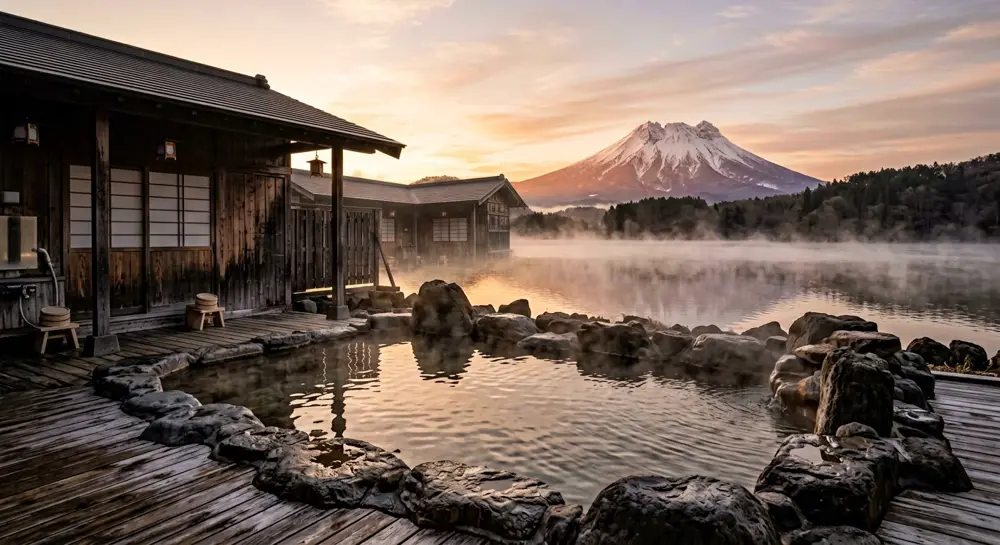
About 25 minutes by car from Morioka Station, this large hotel is the flagship of Tsunagi Onsen, the lakeside 'back parlour of Morioka' lined with inns along Lake Gosho. Its lake-facing bathhouse, the Nambu Magariya no Yu, is modelled on the region's traditional L-shaped farmhouses, and the open-air bath on the shore frames Lake Gosho and Mt. Iwate, beautiful as the light shifts at dawn and dusk. A second bathhouse, Hitorishizuka no Yu, looks onto a stone garden, and the two swap between men and women by time of day. The clear alkaline simple spring is soft on the skin, and there is a sauna. Day bathing hours are short – 11:00–16:00 on weekdays (reception until 15:00) and 11:00–14:00 on weekends and holidays (until 13:00) – at ¥1,200 on weekdays and ¥1,400 on weekends for adults, ¥600 for children. There is no fixed closing day, but cleaning days and crowds can suspend or shorten day bathing, so check ahead. A restaurant, shop and lounge are on site with ample free parking. Iwate Kenkō bus for Tsunagi Onsen from Morioka Station's west exit takes about 30 minutes, or 15 minutes by car from Morioka IC via Route 46. Combine with Koiwai Farm or Morioka Handi-Works Square.
Onsen ryokanDay-trip onsenDay use ¥1,200