Iwate · Matsukawa Onsen, Hachimantai
Matsukawa Onsen Kyōunsō
松川温泉 峡雲荘
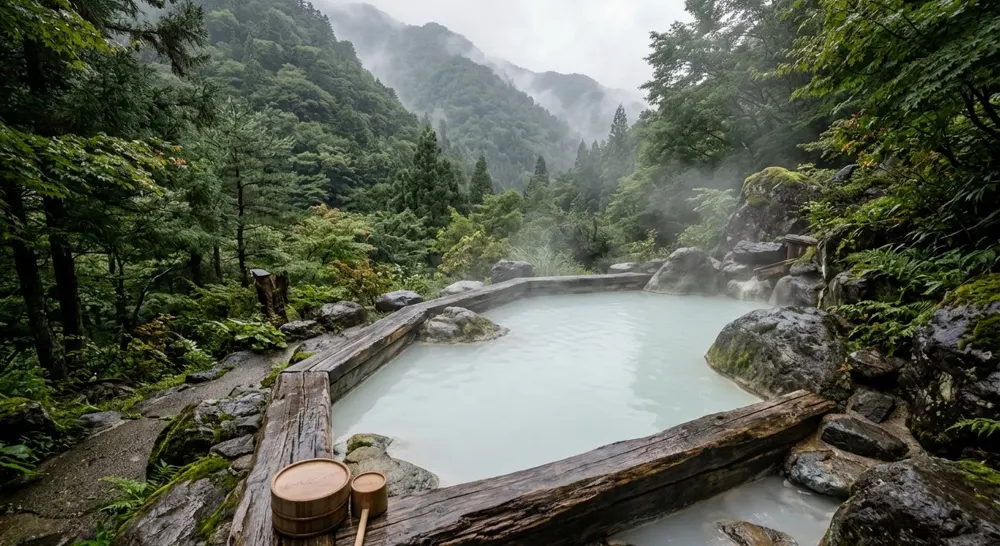
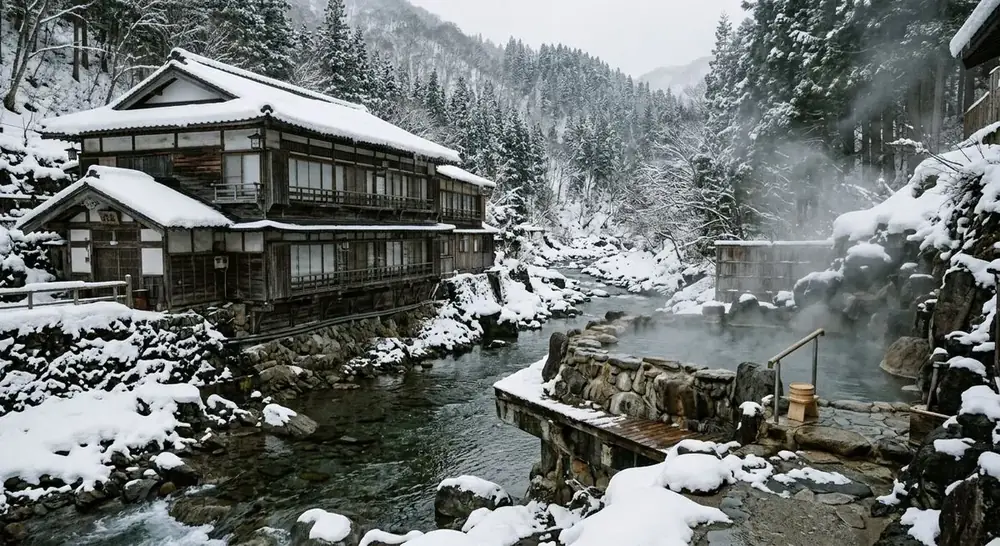
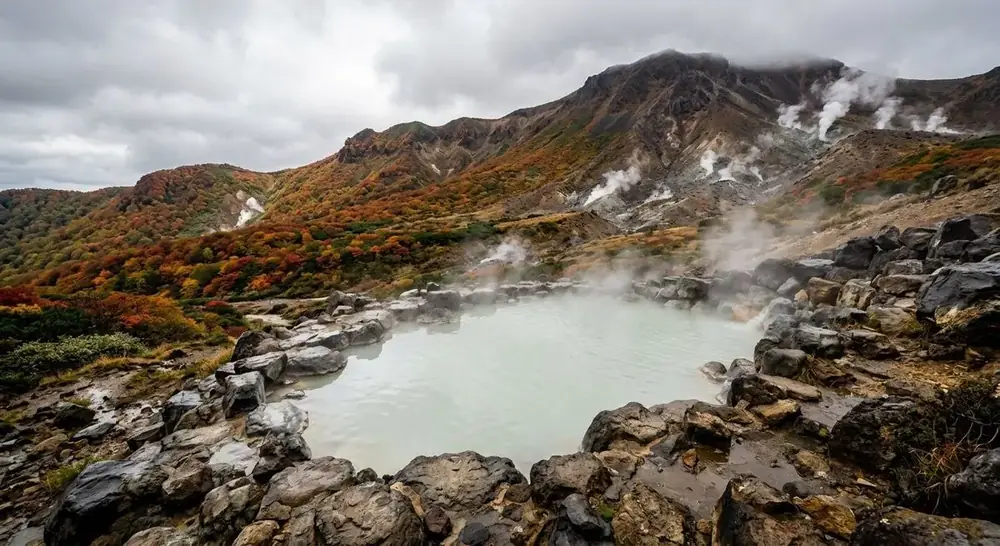
A lone inn of the Japan Association of Secluded Hot Springs, deep in Hachimantai National Park amid beech and oak forest. The open-air bath is an unusual greenish milky white — free-flowing simple hydrogen-sulphide water — with a mixed outdoor bath, a women-only outdoor bath and separate indoor baths; from the rotenburo you can see the steam of Japan's first geothermal power station. Day use 08:30–19:00 (last entry 18:00), ¥700 for adults, or ¥900 with hall rest 10:00–15:00. Open year-round, and the snow-buried outdoor bath in winter is the highlight. About 1 h 50 min by Iwate Kenpoku bus from Morioka Station to the Matsukawa Onsen terminus.
- Price (adult)
- ¥700
- Hours
- 8:30–19:00 (last entry 18:00)
- Closed
- Irregular (a few maintenance days each month)
- Access
- About 1 h 50 min by Iwate Kenpoku bus from the east exit of JR Morioka Station to the Matsukawa Onsen terminus; about 30 min by car from Matsuo-Hachimantai IC
- Water type
- Sulfur spring
- Tattoos
- Ask ahead
- Admission
- Day bathing adults ¥700, children (5 to elementary) ¥350. Hall rest with bathing 10:00–15:00, ¥900 / ¥500; rest-area users may order soba, udon or set lunches until 11:30. Bring a towel (sold too). Leave valuables at the front desk. Busy at Golden Week, Obon and New Year, when ticket books are not accepted
- Baths
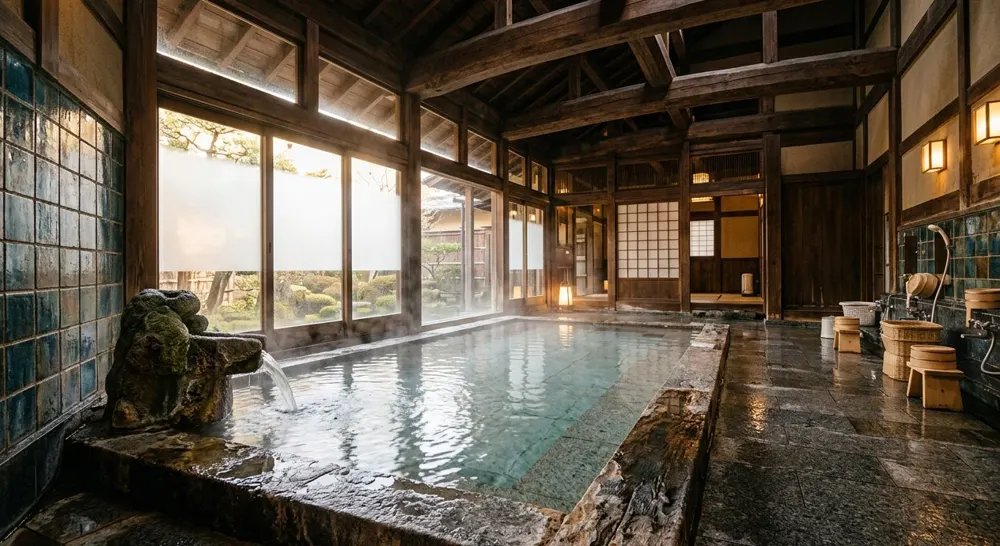
- An old-farmhouse-style inn inside Towada-Hachimantai National Park, ringed by virgin beech and oak forest. Gender-separated indoor baths (hot), a boulder-edged mixed rotenburo (bath towels and bathing wear allowed, no women-only hours) and a women-only rotenburo — so men get indoor plus mixed outdoor, women indoor plus their own and the mixed outdoor. The building is heated with steam from the Matsukawa geothermal plant. No sauna. The outdoor bath looks over the plant's cooling tower and the forest
- Water
- Simple sulphur spring (hydrogen-sulphide type; hypotonic, mildly acidic, high-temperature), private source 'Shin-Komadori-no-yu 1' at 62.2°C and pH 5.4, diluted because of the heat and run free-flowing. Clear as it emerges, it begins to turn milky the moment it meets air; in the rotenburo it becomes a faintly green-tinged white that looks like dissolved emerald at night. Moderately sulphurous, gentle on the skin yet potent. Indicated for neuralgia, rheumatism, skin disease, diabetes and gynaecological complaints
- Parking & access
- Free parking. About 1 h 50 min by Iwate Kenpoku bus bound for Matsukawa Onsen from JR Morioka Station to the terminus (a few services a day). About 20 min (12 km) from Matsuo-Hachimantai IC on the Tohoku Expressway. Near the start of the Hachimantai Aspite Line. Snowy roads in winter — visit early in the day. The 'Mori-no-Ohashi' bridge en route is famous for autumn colour
- Phone
- 0195-78-2256
- Official site
- kyounso.jp ↗
- Open in Google Maps
- Google Maps ↗
Essentials
Find a stay on Trip.com
Search and book accommodation across Japan on Trip.com. Day-use bathing needs no booking.
Opens partner booking site (affiliate)
Why go
- Greenish milky open-air bath
- Secluded-hot-spring inn; ¥700
- Snow-buried rotenburo in winter
A milky hidden spring in virgin forest beside a geothermal plant
Matsukawa Onsen Kyounso is a hot-spring inn deep in virgin beech and oak forest in the upper Matsukawa gorge, inside Towada-Hachimantai National Park in Hachimantai, Iwate. Matsukawa, a mountain cure-spa said to have been found in 1743, has three inns, each with its own source and a mixed rotenburo, and is also famous as the site of Japan's first commercial geothermal power station (1966). Kyounso is the one locals say to 'stay at': its sulphur water, clear as it emerges and milky the instant it touches air, runs free-flowing, and in the rotenburo the faintly green-tinged white water, the forest and the plume from the plant's distant cooling tower make a strangely harmonious scene. Day bathing is 8:30 a.m. to 7 p.m. for ¥700, a beloved finish to hikes and drives over Hachimantai.
Mixed and women-only rotenburo; bathing wear allowed
The baths are gender-separated indoor pools, a mixed rotenburo edged with huge boulders and a women-only rotenburo. On the men's side the only outdoor bath is the mixed one, so it is effectively men's; women have their own outdoor bath and can enjoy the milky water without entering the mixed pool. Bath towels or bathing wear are allowed in the mixed bath, which makes it approachable for women, though there are no women-only hours. Indoors runs hot, outdoors just right — the owner adjusts the flow, cooler in summer and a touch hotter in winter, and checks the temperature in person morning and evening. The water is a mildly acidic pH 5.4 hydrogen-sulphide spring, moderately sulphurous, gentle on the skin yet punchy, and whether in fresh green, autumn colour or snow you will linger outside. No sauna; shampoo is provided.
Practical details and a Hachimantai route
Day bathing is 8:30–19:00 (last entry 18:00), with irregular maintenance closures of a few days a month, so check before visiting. Adults ¥700, children (5 to elementary) ¥350; add the hall rest area for ¥900 between 10:00 and 15:00, and order by 11:30 for a soba, udon or set lunch. Bring a towel and leave valuables at the desk. Golden Week, Obon and New Year are very busy. The bus from Morioka Station takes about 1 h 50 min with only a few services, so a car is realistic — 20 minutes from Matsuo-Hachimantai IC, near the start of the Hachimantai Aspite Line (mid-April to early November) — and the classic day pairs a summit stroll on Hachimantai and Toshichi Onsen with a soak here. The 'Mori-no-Ohashi' bridge on the way peaks with autumn colour in mid-October; in winter the road is snowy, so come in daylight. Neighbouring Shofuso is said to have 'the better water', making a comparison fun.
Before you go
- No official tattoo policy is published — ask at reception.
- There is a mixed-gender area. Check the description for bathing garments and women-only hours.
- Ryokan day-use hours are limited and may be suspended in peak season — phone the same morning.
- Payment is usually by ticket machine in cash — bring coins.
- Last entry is 30–60 minutes before closing.
Features
Mood & scenery
Price
Who with
Convenience
Amenities
✔ Verified operating: 2026-09 Operating status and rates cross-checked against the official site and onsen guides (full source notes in Japanese on the JA page)
Prices and hours change. Check official sources before visiting.
More in this area

Osawa Onsen Jisuibu Tojiya
A wooden toji (therapeutic stay) inn over 200 years old on the Toyosawa River in the Hanamaki-Minami onsen area, once frequented by poet Kenji Miyazawa. Its signature is 'Osawa-no-yu', a mixed open-air bath jutting over the river, with women-only hours. Day bathing from 7 am; ¥700 covers three baths. Many linger for lunch and sake at the 'Yahagi' dining room. Free shuttle from Hanamaki Station.

Namari Onsen Fujisan Ryokan
A wooden ryokan founded in 1841 on the Toyosawa River at the far end of the Hanamaki onsen villages. Its signature is 'Hakuen-no-yu', a self-welling rock pool about 1.25 m deep that you stand in — billed as Japan's deepest rock bath. Five springs feed four bathhouses, all 100% free-flowing. Day use ¥800, 10:00–21:00. Hakuen-no-yu is mixed bathing with women-only hours. Free shuttle from Hanamaki Station by reservation.

Oshuku Onsen Hotel Uguisu
Fifty minutes by bus from Morioka, a family-run hotel in Oshuku Onsen, a 450-year-old spa where legend says a bush warbler healed its wounds. The area is rich in hot water, and the clear alkaline spring flows freely into the indoor and open-air baths — day use just ¥600, 11:00–19:00, half price on the 26th of each month. Easy to add after Koiwai Farm, Shizukuishi ski slopes or Morioka sightseeing.