Yamagata · Hijiori Onsen
Hijiori Onsen Kami-no-yu communal bath
肘折温泉 共同浴場 上の湯
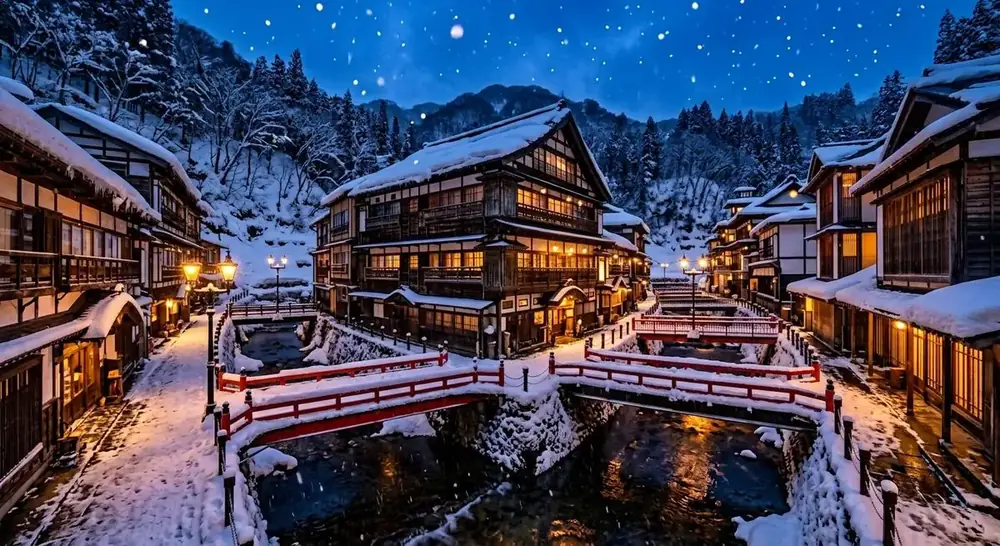
Hijiori Onsen, 1,200 years old, is a cure-spa where inns huddle at the bottom of a caldera in Ōkura village, Yamagata. Right in the middle of the street stands Kami-no-yu, the only communal bath open to visitors. A small bathhouse with an attendant's counter, it has slightly hot free-flowing sodium-chloride/bicarbonate water and a tiny Yakushi shrine in the corner of the tub. Adults pay ¥400 (free for guests of the village inns); open 08:00–18:00 (until 17:00 in winter), no bathing on Thursday mornings for cleaning. The Hijiori way is to pair it with the morning market that sets up from about 5–6 am (Apr–Nov). In winter this is one of Japan's snowiest places, and just walking the street between snow walls is an experience. About 55 minutes by bus from Shinjō Station.
- Price (adult)
- ¥400
- Hours
- 08:00–17:00
- Closed
- Open daily (closed Thu mornings for cleaning)
- Access
- About 55 min by village bus from JR Shinjō Station to the Hijiori Onsen terminus; about 40 min by car from Funagata IC
- Water type
- Bicarbonate spring
- Tattoos
- Ask ahead
- Admission
- Adults ¥400, children ¥300 (pay the attendant). Guests staying in Hijiori bathe free or for ¥100 with a voucher from their inn (varies by inn; voucher essential). No soap or shampoo; no showers or wash stations — you wash at the tub's edge. No lockers (mind valuables)
- Baths
- The emblematic communal bath in the middle of the spa street. One indoor pool per sex; the spring pours from the pedestal of a Jizo statue enthroned beside the tub. No rotenburo, sauna or rest room. A refreshing 'cooling bath' as opposed to the inns' 'warming baths', drawing yukata-clad guests. Morning market in the street (late April until first snow, early morning to 7:30)
- Water
- Sodium chloride-bicarbonate spring (source around 60°C, a dedicated source different from the inns'), free-flowing. Paler and lighter than the inns' brown water, soft to the touch with a faint saltiness. By tradition discovered in 807 by a Jizo deity — 1,200 years of history — and renowned for healing cuts. Indicated for cuts, burns, chronic skin disease and gynaecological complaints; drunk, for stomach ailments, constipation and gout
- Parking & access
- No dedicated parking (use the free lot at the entrance to the spa street or your inn's). About 55 min by village bus bound for Hijiori Onsen from Shinjo Station on the Yamagata Shinkansen to 'Dai-ni Teiryujo' (a few services a day). About 50 min by car from Shinjo IC on the Yamagata Expressway or Funagata IC on the Tohoku-Chuo Expressway. One of Japan's snowiest places in winter
- Phone
- 0233-76-2211
- Official site
- hijiori.jp ↗
- Open in Google Maps
- Google Maps ↗
Essentials
Find a stay on Trip.com
Search and book accommodation across Japan on Trip.com. Day-use bathing needs no booking.
Opens partner booking site (affiliate)
Why go
- Only visitor-open bath in a caldera spa town
- Free-flowing bath with a Yakushi shrine
- Morning market (Apr–Nov), snow-wall streets
Symbol of a 1,200-year-old cure-spa, where the water pours from a Jizo's pedestal
Hijiori Onsen Kyodo Yokujo Kami-no-yu is the communal bath in the middle of Hijiori, a cure-spa hidden in a caldera at the foot of Mt Gassan in Okura village, Yamagata. Hijiori counts 1,200 years since an old monk reputedly found the spring in 807 at the bidding of the Jizo deity; it remains a 'modern cure-spa' lined with inns where self-catering long stays are still possible, famous for its morning market from spring until the first snow and for some of Japan's heaviest snowfall. Kami-no-yu is the street's emblem, memorable for the spring gushing from the pedestal of a Jizo statue enthroned beside the tub. Drawing on a dedicated source different from the inns', its water is lighter and paler, and at ¥400 (free or ¥100 for overnight guests) from 8 a.m. to 5 p.m. it is the village parlour where yukata-clad guests and residents gather.
A refreshing 'cooling bath', unlike the inns' 'warming baths'
There is just one tiled indoor pool per sex, with no showers or wash stations — you scoop water at the tub's edge in the old way. Bring soap and shampoo, and since there are no lockers, leave valuables at your inn. The sodium chloride-bicarbonate water is paler and crisper than the inns' brown cloudy baths, and it comes fresh from the spout in the Jizo's pedestal, unaltered. Hijiori folk call the inns' water the 'warming bath' and this the refreshing 'cooling bath', and alternating between the two is the cure-spa's wisdom; it has long been known for healing cuts. It runs hot, so douse yourself before entering, and the most invigorating time is the 8 a.m. opening after browsing the morning market. Closed on Thursday mornings for cleaning.
Practical details and enjoying Hijiori
Hours are 8:00–17:00, open daily, but Thursday mornings are closed for cleaning. Adults ¥400, children ¥300, paid to the attendant; if you stay at a Hijiori inn it is free or ¥100 with the inn's voucher, so be sure to bring it. There is no dedicated parking — leave the car at the free lot by the spa entrance or at your inn and walk. By public transport, the village bus from Shinjo Station on the Yamagata Shinkansen takes about 55 minutes (a few a day); by car it is 50 minutes from Shinjo IC. The classic combination is the morning market (late April to first snow, early morning to 7:30) with an early soak here, soba and the Hijiori kokeshi workshops, the village bath house Hijiori Ideyukan and Hijiori as a base for climbing Gassan; in winter the spa street between 3–4 m snow walls and the 'Hijiori no Akari' lantern event are the sights. The truest Hijiori experience is a few nights at a self-catering cure inn, walking to Kami-no-yu morning and evening.
Before you go
- No official tattoo policy is published — ask at reception.
- As a communal bath there is no soap or shampoo — bring your own or buy at the shop.
- Payment is usually by ticket machine in cash — bring coins.
- Last entry is 30–60 minutes before closing.
Features
Mood & scenery
Price
Who with
Only here
✔ Verified operating: 2026-09 Operating status and rates cross-checked against the official site and onsen guides (full source notes in Japanese on the JA page)
Prices and hours change. Check official sources before visiting.
More in this area

Zao Onsen Dai-Rotenburo
A terraced open-air bath along a mountain stream that holds 200 people, with bluish-white strongly acidic sulfur water. Open late April to late November only; closed in winter. Summer starlight sessions at night.

Shirogane-yu (Ginzan communal bath)
A Kengo Kuma-designed communal bath at the entrance to Ginzan's Taishō-era street. Hot water with drifting mineral flakes for ¥500. The one place day visitors can bathe in Ginzan's water — reception closes at 3:30 pm.

Zao Onsen Kamiyu Public Bath
A log-cabin-style communal bath at the top of Takayu-dōri. Zao's three public baths (Kamiyu, Shimoyu, Kawarayu) all cost ¥200, paid into an honesty box. No washing stations — just rinse and sink into the strongly acidic milky sulfur water.