Aomori · Jogakura Onsen (Hakkoda)
Yachi Onsen
谷地温泉
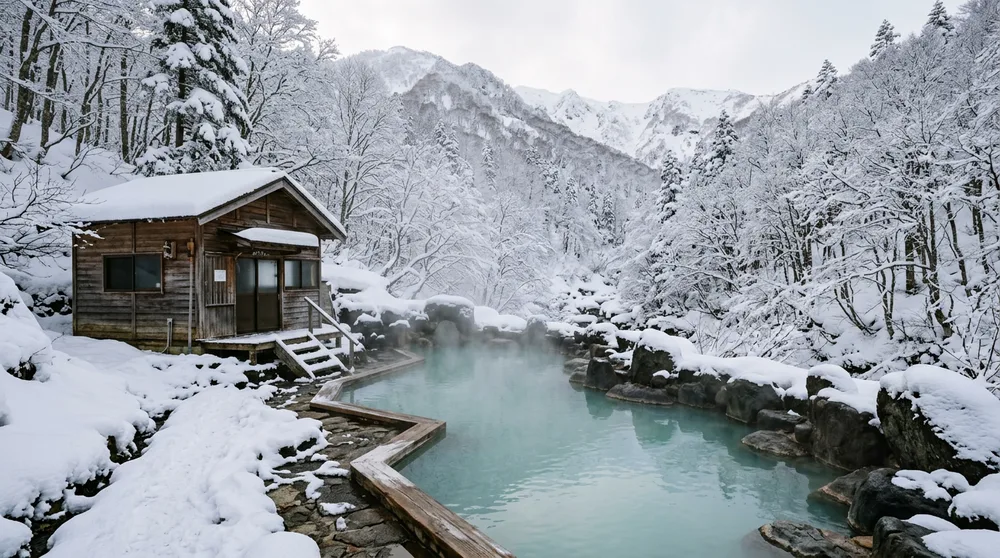
A healing-spring inn some 400 years old, set deep in the Hakkoda mountains and counted among Japan's three great hidden onsen. It has two baths fed by springs that well up from the bath floor: a clear 38°C 'lower bath' and a milky, sulphur-clouded 42°C 'upper bath'. Alternating between them suits both cool-soak and hot-soak bathers. Day use is 800 yen for adults.
- Price (adult)
- ¥800
- Hours
- 10:00-15:00 (last entry 14:30)
- Closed
- Irregular (closed Tue-Thu from 1 Nov to end of April)
- Access
- In the Hakkoda mountains of Towada, Aomori, along Route 103; around 45-50 minutes by taxi from central Aomori. Shuttle buses from Aomori Station and flat-rate taxis need to be confirmed in advance.
- Water type
- Sulfur spring
- Tattoos
- Ask ahead
- Admission
- Day bathing is 800 yen for junior-high age and up and 450 yen for children, with preschoolers free. Entry is not possible after the 14:30 cut-off, so avoid arriving late in the afternoon.
- Hours and closure
- Day bathing runs 10:00-15:00. From 1 November to the end of April the inn closes on Tuesdays, Wednesdays and Thursdays, and it also takes irregular closures at other times of year. Check the business-day calendar on the official site or call 0176-74-1181 (9:00-17:00 on operating days) before travelling.
- The two baths
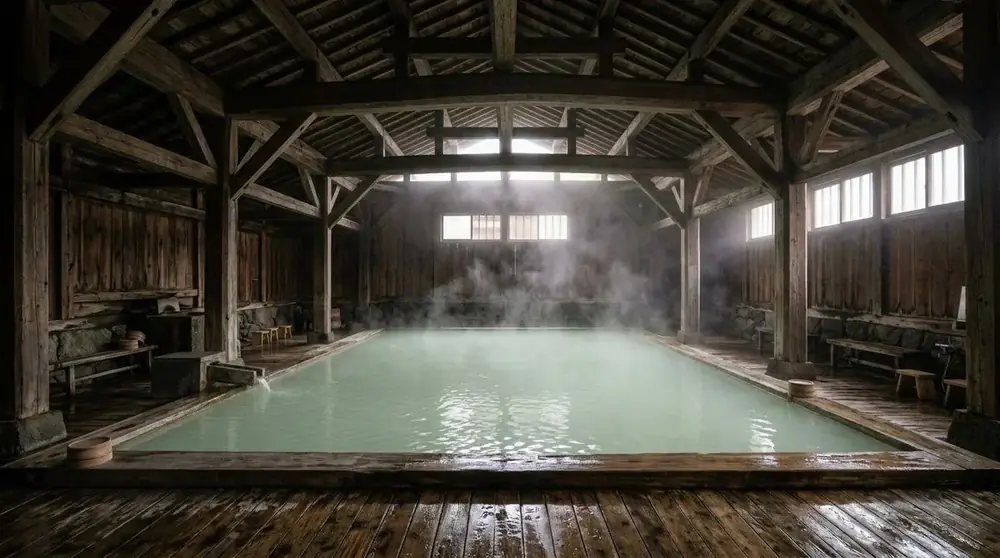
- There are two baths with different water. The upper bath is a 42°C spring clouded white by sulphur flecks, known as the 'hot bath', classified as a simple spring (hypotonic, weakly acidic, low-temperature). The lower bath is a clear 38°C spring rising from the bath floor, a simple sulphur spring of the hydrogen-sulphide type (hypotonic, weakly acidic).
- Self-flowing spring
- The water rises directly from the bottom of the bath, a self-flowing spring. Because it is neither heated nor recirculated it reaches the tub exactly as it leaves the source, and it has long been held to ease back pain and skin troubles. Alternating the mild lower bath with the hotter, clouded upper bath makes for an unhurried soak.
- Getting there
- The inn sits along Route 103 deep in the Hakkoda mountains, looking out over the range. A shuttle from Aomori Station and flat-rate taxis are available, though both need to be confirmed or booked in advance. Snow and icy roads are common in winter, so public transport or the shuttle is the safer choice.
- Phone
- 0176-74-1181
- Official site
- yachionsen.com ↗
- Open in Google Maps
- Google Maps ↗
Essentials
Find a stay on Trip.com
Search and book accommodation across Japan on Trip.com. Day-use bathing needs no booking.
Opens partner booking site (affiliate)
Why go
- Self-flowing spring water rising through the floor of the bath
- Two baths: a clear 38°C 'lower bath' and a milky 42°C 'upper bath'
- A healing-spring inn of some 400 years, one of Japan's three hidden onsen
Four centuries old, one of Japan's three hidden onsen
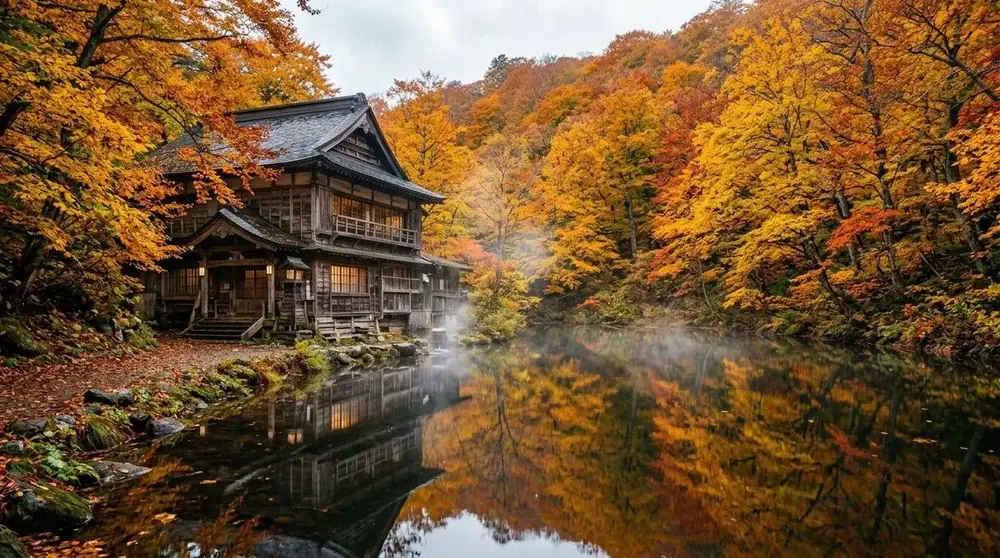
Yachi Onsen is a healing-spring inn set in a mountain hollow just off Route 103, deep in the Hakkoda range of Aomori. Its spring is said to have been found some 400 years ago and it has served as a place of long-stay bathing ever since. Alongside Sukayu and a handful of others it is counted among Japan's three great hidden onsen, and its setting in quiet forest still lives up to the name.
Two baths fed straight from the source
The bathing hall holds two springs of different character. The 42°C upper bath, clouded white by sulphur flecks and called the hot bath, is a simple spring (hypotonic, weakly acidic, low-temperature) said to help with neuralgia, insomnia, atopic skin and chronic complaints. The lower bath is a clear 38°C spring that rises from the bottom of the tub, a simple sulphur spring of the hydrogen-sulphide type, recommended for neuralgia, joint pain and fatigue. Soaking slowly in the mild lower bath before moving to the hot, clouded one is the pleasure of this place.
Visiting for the day
Day bathing is 10:00-15:00, last entry 14:30, at 800 yen for junior-high age and over, 450 yen for children and free for preschoolers. From 1 November to the end of April it closes Tuesday to Thursday, and irregular closures happen year-round, so check the business-day calendar or call 0176-74-1181 (9:00-17:00 on operating days) before setting out. The inn lies on the road to the Hakkoda Ropeway and the Oirase gorge, which makes it easy to fold into a day in the mountains.
Before you go
- No official tattoo policy is published — ask at reception.
- Ryokan day-use hours are limited and may be suspended in peak season — phone the same morning.
- Payment is usually by ticket machine in cash — bring coins.
- Last entry is 30–60 minutes before closing.
Features
Who with
Price
Convenience
Amenities
✔ Verified operating: 2026-10 Operating status and rates cross-checked against the official site and onsen guides (full source notes in Japanese on the JA page)
Prices and hours change. Check official sources before visiting.
More in this area

Sukayu Onsen Hiba Sennin-buro
In the Hakkoda mountains, bathing since 1684 and Japan's first National Recuperation Onsen. A vast all-cypress mixed bath hall (about 260 m²) fed by four sources. Women-only hour 8–9 am daily; bathing garments sold on site.

Yu-sa Asamushi Roadside Station — Hadaka-yu Panoramic Bath
Twenty minutes by train from Aomori, a panoramic bath on the 5th floor of the roadside station at Asamushi Onsen on Mutsu Bay. Big windows frame Yunoshima island and the bay — sunset is the prime slot. Salt- and sulfate-rich water keeps you warm afterwards. Just ¥360, open 7:00–21:00 every day. The ground-floor market sells Aomori souvenirs. Two minutes' walk from Asamushi-Onsen Station.

Tsuta Onsen Ryokan
A lone inn in a primeval beech forest on the southern flank of Mt. Hakkoda. Spring water wells up directly through the gaps in the hiba-cypress boards on the tub floor — 'free-welling', so you bathe in water that has never touched air, a rarity even in Japan. The all-hiba 'Kyuan-no-yu' bathhouse from 1918 is magnificent. Day use 10:00–15:00, ¥1,000; may close early when busy. Combine with the hour-long trail around Tsuta-numa pond, famous for autumn colour. Closed in winter.