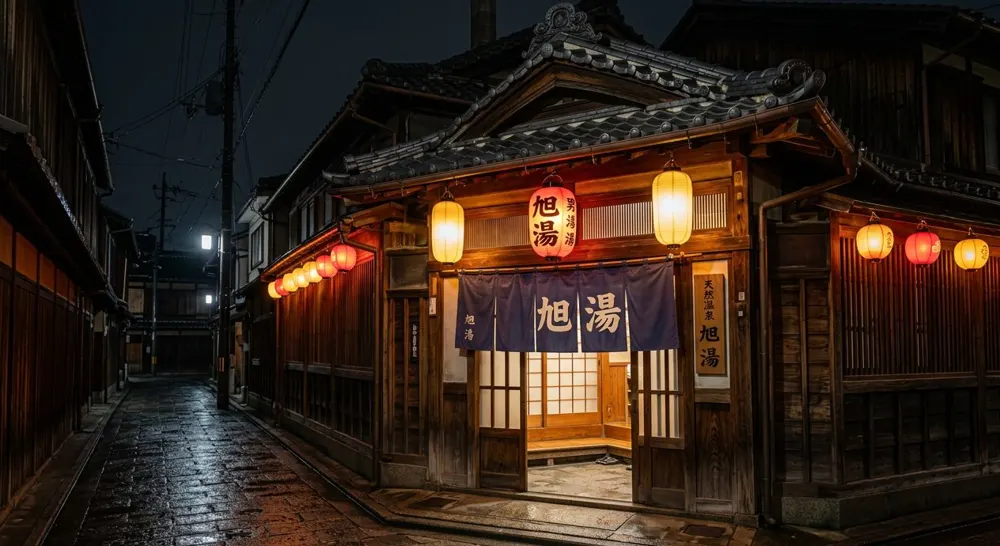
Hyōgo · Kinosaki Onsen
Ichi-no-Yu (Kinosaki outer bath)
一の湯(城崎温泉 外湯)
Kinosaki's flagship outer bath, praised as 'the best under heaven' by an Edo-period physician. Its cave bath carved into rock is the draw; the kabuki-theatre-style building is the town's landmark.
- Price (adult)
- ¥800
- Hours
- 07:00–23:00 (last entry 22:30)
- Closed
- Wed
- Access
- 8 min walk from JR Kinosaki-Onsen Station
- Water type
- Sulfate spring
- Tattoos
- Allowed
- Admission
- Adults ¥800 / children (3 to elementary) ¥400. “Yumepa” day pass ¥1,500 / ¥750 for unlimited entry to all seven baths (sold at any bath). Guests of member ryokan bathe free from check-in to check-out with a barcode pass
- Water
- Sodium-calcium-chloride hot spring, ~42 °C, centrally distributed to all seven baths. Neuralgia, muscle pain, bruises, chronic digestive complaints, piles, fatigue
- Highlights
- Famous for its cave bath hollowed out of rock; kabuki-theatre-style façade in the centre of town by the Otani river. Family bath currently suspended
- Amenities
- Shampoo and body soap provided; towels sold (bring from your ryokan). ¥100 refundable lockers. Tattoos are officially welcome in Kinosaki’s public baths
- Phone
- 0796-32-2229
- Official site
- kinosaki-spa.gr.jp ↗
- Open in Google Maps
- Google Maps ↗
Essentials
Stay in this onsen town
Compare and book stays in Kinosaki Onsen. Day bathing itself needs no booking.
Opens partner booking site (affiliate)
Why go
- Cave bath cut into the rock
- Open until 11 pm
- Free for ryokan guests with Yumepa
The cave bath that earned the name “best under heaven”
Ichi-no-yu opened in the mid-Edo period as “Arayu” (new bath); after the celebrated physician Kagawa Shutoku praised it in his medical treatise as “the finest in the realm”, it took the name Ichi (“number one”). Its imposing kabuki-theatre-like building stands in the very centre of town beside the willow-lined Otani river, and inside is a cave bath hollowed from natural rock — a rare chance to soak inside dim stone. Known as the bath of exam success and road safety.
Tips & cautions
- Last entry 30 min before closing.
- The seven baths stagger their weekly closures (Kono-yu Tue, Mandara-yu Wed, Gosho-no-yu Thu, Ichi-no-yu Wed, Yanagi-yu Thu, Jizo-yu Mon, Sato-no-yu Mon), so 5–6 are always open.
- The tourist association site shows live crowding for each bath.
- Strolling bath to bath in yukata and geta is the Kinosaki way; ryokan guests get a free pass with their yukata.
- Since Nov 2023 facilities using natural spring water display an official “Kinosaki natural onsen” certificate.
Getting there
About 10 min on foot from JR Kinosaki-Onsen Station (Yushima 415-1), where Yunosato-dori meets the Otani river in the town centre.
Before you go
- As a communal bath there is no soap or shampoo — bring your own or buy at the shop.
- Payment is usually by ticket machine in cash — bring coins.
- Last entry is 30–60 minutes before closing.
Features
Only here
Mood & scenery
Price
Convenience
Language support
Amenities
✔ Verified operating: 2026-09 城崎温泉観光協会公式
Prices and hours change. Check official sources before visiting.
More in this area
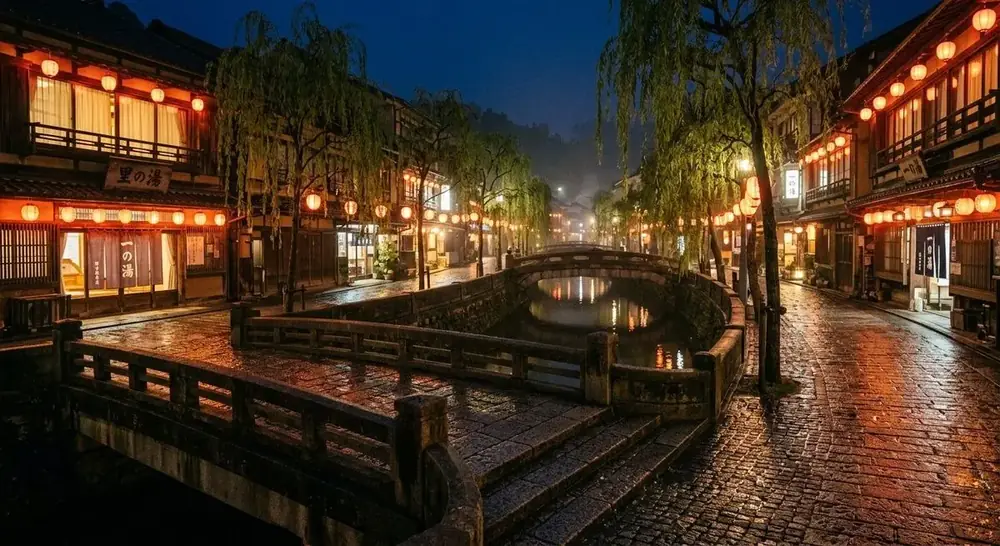
Gosho-no-Yu (Kinosaki outer bath)
The most popular of Kinosaki's seven public baths. In a building modeled on the Kyoto Imperial Palace, a waterfall rotenburo faces the hillside and a glass-roofed 'sky bath' sits indoors, all renovated in 2020. Overnight guests get free entry with the 'Yumepa' pass, so evenings are busy with yukata-clad bathers — go at 7 am when it opens.
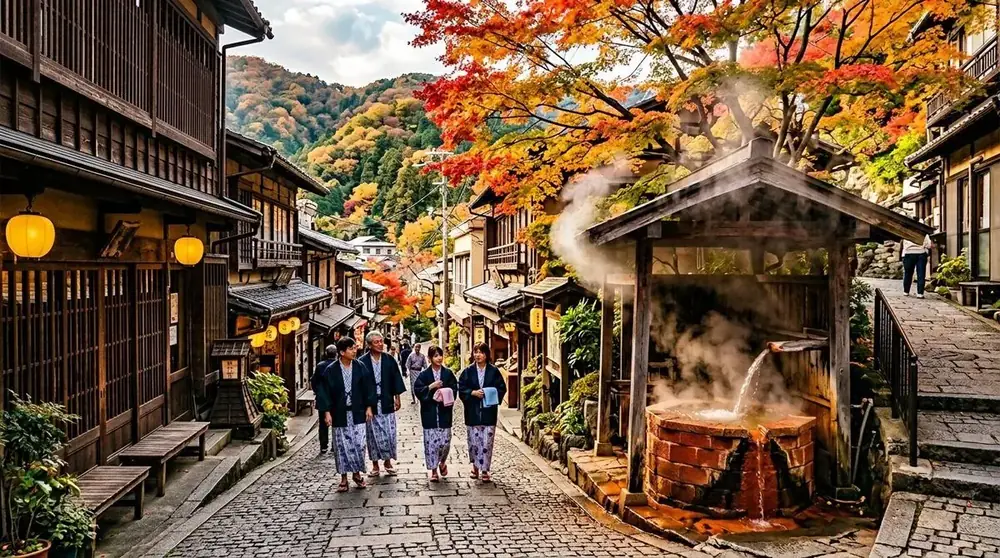
Kin-no-Yu
The public bathhouse of Arima, one of Japan's three oldest hot springs. For ¥800 you can soak in the 'kinsen' — iron- and salt-rich water that turns rusty brown on contact with air, in pools at 42°C and 44°C. Under an hour by train from Kobe or Osaka, so an easy day trip. Free foot bath and drinking fountain outside. No tattoos.
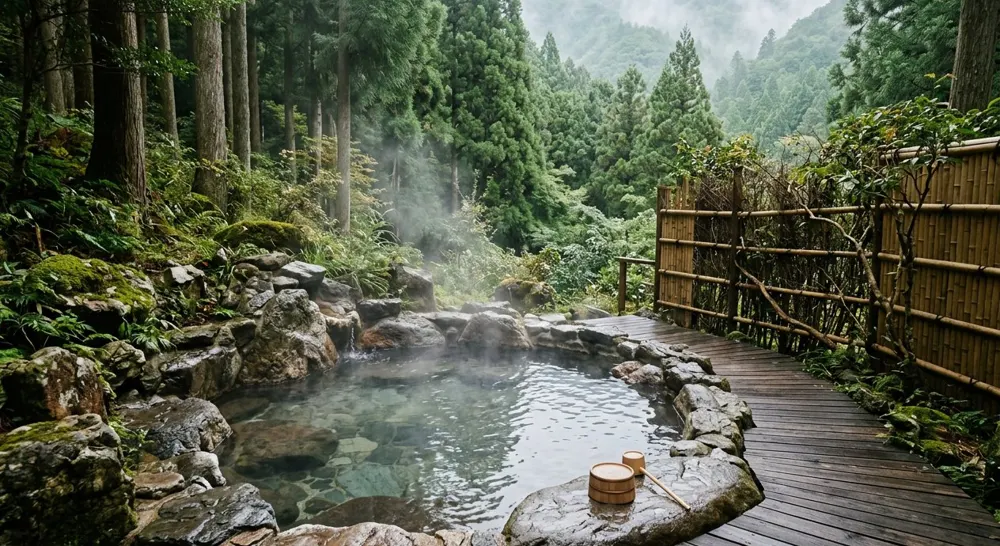
Gin-no-Yu
Sister facility to Kin-no-Yu. Clear carbonated and radon water that leaves skin silky, plus a steam sauna. Usually less crowded than Kin-no-Yu. ¥700 on weekends/holidays, ¥550 on regular weekdays.