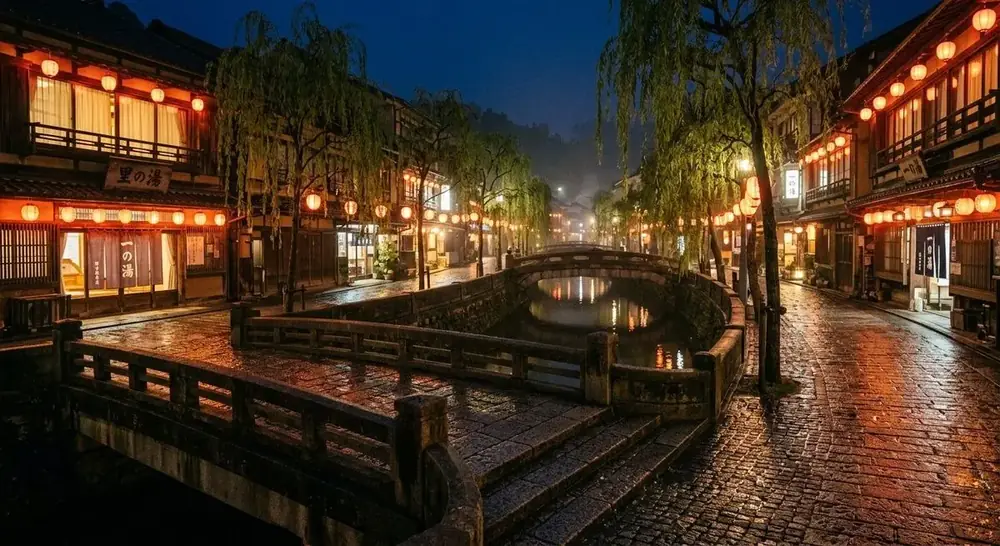
Hyōgo · Kinosaki Onsen
Gosho-no-Yu (Kinosaki outer bath)
御所の湯(城崎温泉 外湯)
The most popular of Kinosaki's seven public baths. In a building modeled on the Kyoto Imperial Palace, a waterfall rotenburo faces the hillside and a glass-roofed 'sky bath' sits indoors, all renovated in 2020. Overnight guests get free entry with the 'Yumepa' pass, so evenings are busy with yukata-clad bathers — go at 7 am when it opens.
- Price (adult)
- ¥800
- Hours
- 07:00–23:00 (last entry 22:30)
- Closed
- Thu
- Access
- 10 min walk from JR Kinosaki-Onsen Station
- Water type
- Sulfate spring
- Tattoos
- Allowed
- Spring type
- Sodium-calcium chloride high-temperature spring (mildly alkaline). Kinosaki distributes one blended supply to all seven public baths. Clear, faintly salty, and it keeps you warm long afterwards
- Baths & facilities
- A timber building with a karahafu gable modelled on the Kyoto Imperial Palace (rebuilt 2005, renovated 2020). Besides the indoor bath, the highlight is the garden open-air 'Tenkū-buro' facing a waterfall. Shampoo and body wash provided; towels sold; hair dryers. Its blessing is 'good matches and protection from fire'; nicknamed 'the beauty bath'
- Bath-hopping pass
- 'Yumepa' one-day unlimited pass ¥1,500 adults / ¥750 children, sold at any bath, valid that day only. Single entry is ¥800 each, so the pass pays off from the second bath. Guests staying at Kinosaki inns receive a free barcode pass to all seven
- Phone
- 0796-32-2230
- Official site
- kinosaki-spa.gr.jp ↗
- Open in Google Maps
- Google Maps ↗
Essentials
Stay in this onsen town
Compare and book stays in Kinosaki Onsen. Day bathing itself needs no booking.
Opens partner booking site (affiliate)
Why go
- Most popular of the seven baths
- Waterfall rotenburo and sky bath
- Opens 7 am — go early
History & building
Kinosaki began 1,300 years ago with Mandara-yu, said to have gushed forth after the priest Dōchi prayed for a thousand days, and by the Edo period it was hailed as 'the finest spring in the land'; it is also the setting of Shiga Naoya's story 'At Kinosaki'. Gosho-no-yu ('Imperial Palace bath') takes its name from a 1267 entry in the chronicle Masukagami recording a visit by Ankamon-in, sister of Emperor Go-Horikawa, and it remains the most prestigious of the seven public baths. The present building, rebuilt in 2005 with a karahafu gate evoking the Kyoto Imperial Palace, had its bathrooms fully renovated in 2020. The garden open-air 'Tenkū-buro' faces a cascading waterfall, framed by maples in autumn and snow in winter, and is generally rated the most scenic bath in town. Kinosaki is the birthplace of sotoyu-meguri — hopping between public baths in yukata and wooden geta — built on the idea that the whole town is one inn: the station its entrance, the streets its corridors, the baths its great bathhouse.
How to use it & practical notes
- Shampoo and body wash provided; bring a towel (also sold). Inn guests can borrow yukata, towel and geta and walk straight over.
- Lockers are free (inn guests scan the barcode on their bath pass). Hair dryers available.
- The Tenkū-buro is popular and busiest 7–9 pm after dinner; the 7 am hour or just before the 11 pm close is calm.
- Tattoos are accepted — Kinosaki's seven baths ask only that small tattoos be kept discreet, so in practice everyone can bathe.
- No photography inside. The gate and façade are among the most photographed spots in town, especially lit up at night.
- Closed Thursdays; go to Ichi-no-yu or Mandara-yu (both closed Wednesdays) instead. Closing days are staggered so at least some baths are always open.
- Under-3s bathe free, elementary pupils ¥400. The Yumepa is sold at any bath counter and allows unlimited re-entry the same day.
Access and a bath-hopping route
About 10 minutes on foot from Kinosaki-Onsen Station (JR San'in Line): follow the willow-lined Ōtani River into the far end of town, next to Shisho Shrine. From Kyoto the Limited Express Kinosaki takes about 2 h 30 min; from Osaka the Kōnotori about 2 h 45 min. By car, 20 minutes from Tajima Airport IC; use the town car parks. The seven baths line up from the station inward — Sato-no-yu (by the station, closed long-term), Jizō-yu, Yanagi-yu, Ichi-no-yu, Gosho-no-yu, Mandara-yu, Kō-no-yu — about 15 minutes' walk end to end. A good plan: Jizō-yu → Ichi-no-yu → Gosho-no-yu in the evening, then Kō-no-yu the next morning. In crab season (Nov–Mar) both inns and baths are crowded, so the easiest windows are 4–6 pm before dinner or after 9 pm.
Before you go
- As a communal bath there is no soap or shampoo — bring your own or buy at the shop.
- Payment is usually by ticket machine in cash — bring coins.
- Last entry is 30–60 minutes before closing.
Features
Only here
Baths
Mood & scenery
Price
Convenience
Language support
✔ Verified operating: 2026-09 城崎温泉観光協会 (大人800円/小人400円, 7:00–23:00 受付22:30, 木曜休, ゆめぱ1,500円)
Prices and hours change. Check official sources before visiting.
More in this area
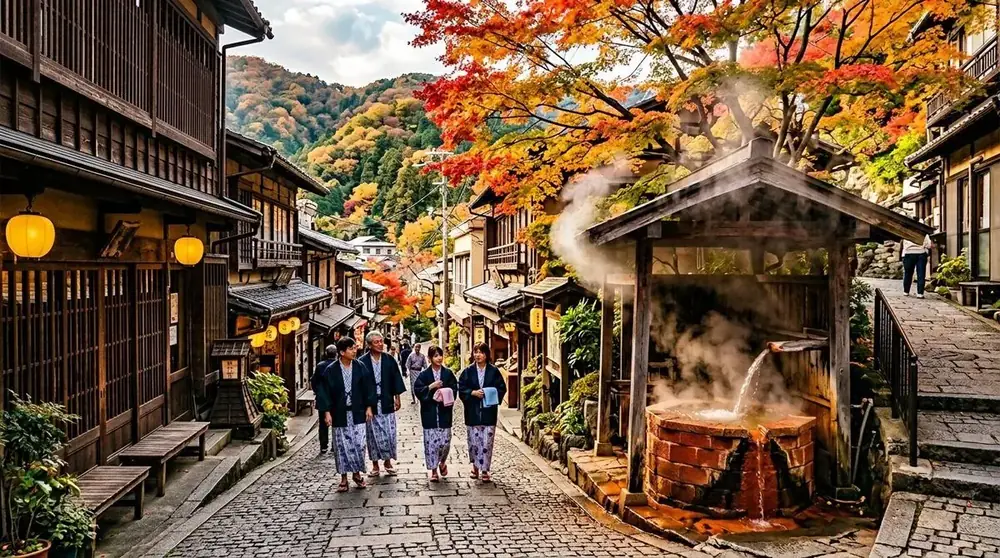
Kin-no-Yu
The public bathhouse of Arima, one of Japan's three oldest hot springs. For ¥800 you can soak in the 'kinsen' — iron- and salt-rich water that turns rusty brown on contact with air, in pools at 42°C and 44°C. Under an hour by train from Kobe or Osaka, so an easy day trip. Free foot bath and drinking fountain outside. No tattoos.
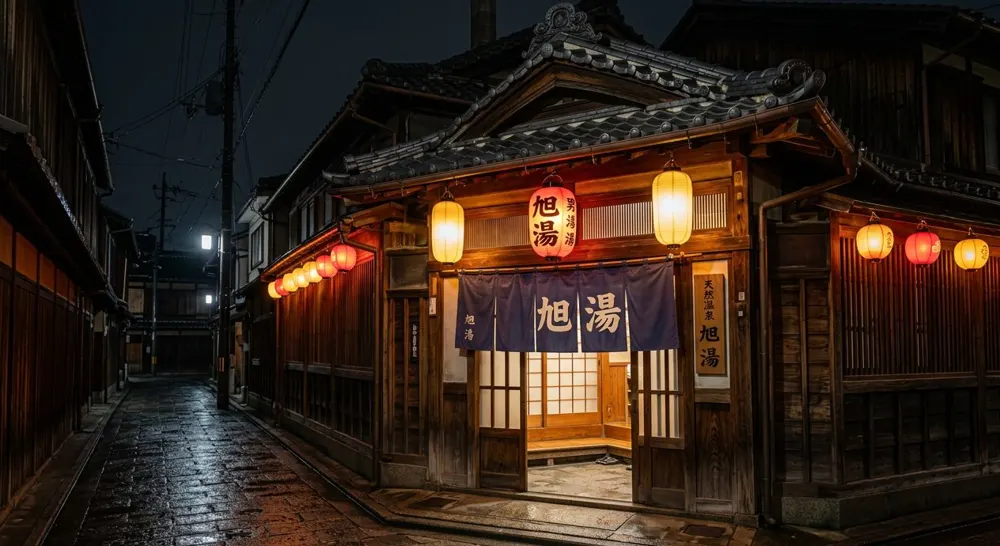
Ichi-no-Yu (Kinosaki outer bath)
Kinosaki's flagship outer bath, praised as 'the best under heaven' by an Edo-period physician. Its cave bath carved into rock is the draw; the kabuki-theatre-style building is the town's landmark.
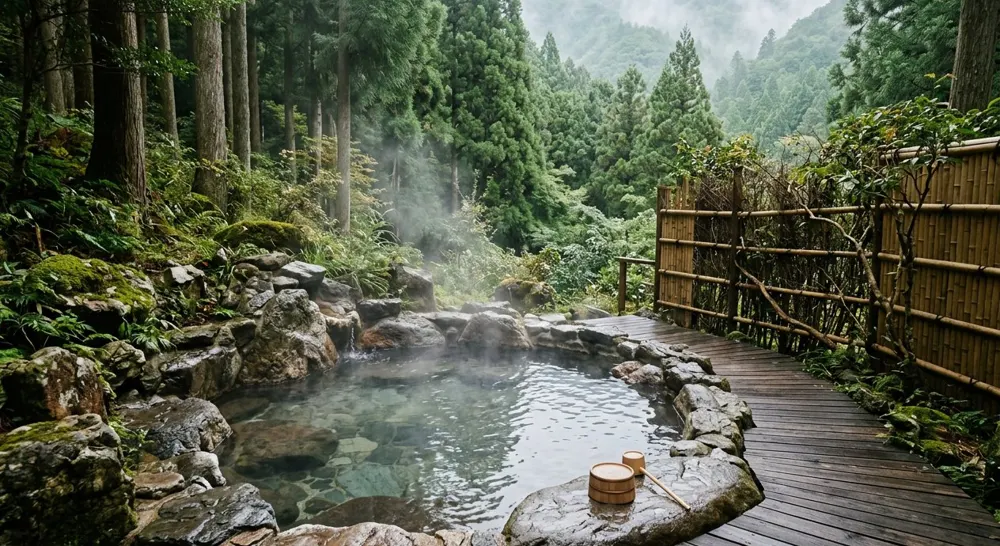
Gin-no-Yu
Sister facility to Kin-no-Yu. Clear carbonated and radon water that leaves skin silky, plus a steam sauna. Usually less crowded than Kin-no-Yu. ¥700 on weekends/holidays, ¥550 on regular weekdays.