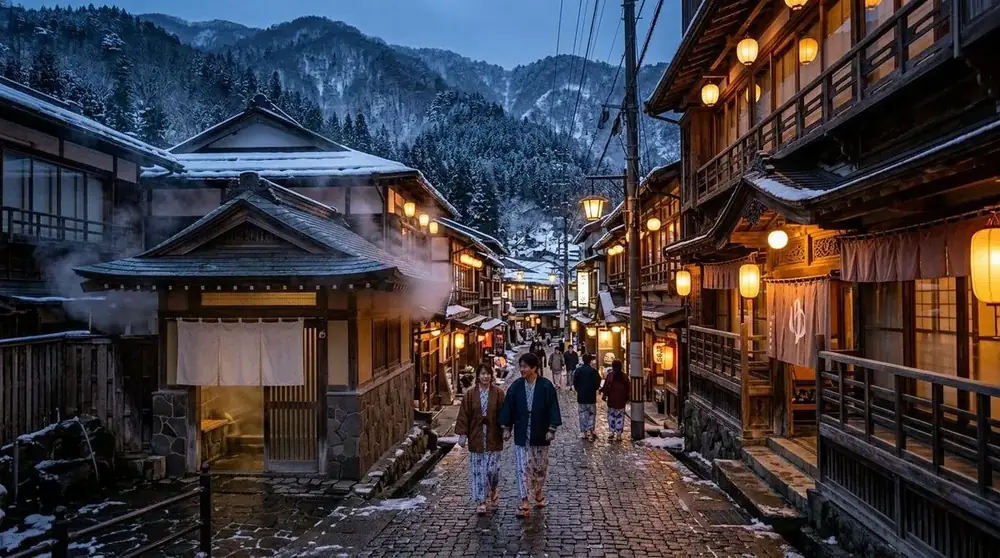
Nagano · Bessho Onsen, Ueda
Bessho Onsen Ishiyu public bath
別所温泉 外湯 石湯(真田幸村公隠しの湯)
One of the three public 'outer baths' of Bessho Onsen near Ueda, the spa village nicknamed 'Kamakura of Shinshū'. Ishiyu is famed as the hidden bath of warrior Sanada Yukimura in Ikenami Shōtarō's novel Sanada Taiheiki; its tub is built around natural bedrock, filled free-flowing with faintly sulphurous, mildly alkaline water. Open 6:30–21:30 (last entry 21:00), closed Tuesdays, a modest ¥300 with free lockable lockers. Pair it with the other two — Ōyu (closed 1st & 3rd Wed) and Daishiyu (closed 1st & 3rd Thu) — plus Kitamuki Kannon temple and the National Treasure octagonal pagoda of Anrakuji, all on foot. Ten minutes' walk from Bessho-Onsen Station on the Ueda Dentetsu line.
- Price (adult)
- ¥300
- Hours
- 06:30–21:30
- Closed
- Tue
- Access
- 10 min on foot from Bessho-Onsen Station (about 30 min by Ueda Dentetsu train from Ueda); 30 min by car from Ueda-Sugadaira IC
- Water type
- Sulfur spring
- Tattoos
- Ask ahead
- Admission
- Admission ¥300 (as of 2025, raised from ¥150 then ¥200), bought at the ticket machine. No soap or shampoo (bring your own or buy at the shop), towels sold for ¥200 (with the Bessho Onsen logo), paid hair dryer in the women's bath only, no valuables locker (carry little). The three communal baths (Ishiyu, Oyu, Daishiyu) are ¥300 each with no combined ticket. Aisome-no-yu (10:00–22:00, ¥500) is the modern day facility
- Baths
- One of the three communal baths of Bessho Onsen in Ueda, Nagano — the 'Kamakura of Shinshu' — tucked at the back of the spa street below the approach to Kitamuki Kannon temple. Legend calls it 'the hidden bath of Sanada Yukimura', where the Sengoku warlord concealed himself and healed his wounds; a stone at the entrance bears calligraphy by novelist Ikenami Shotaro. Steps lead down from the changing room to a half-sunken bathroom where, true to the name 'stone bath', one whole wall is raw natural rock around a small pool. Bessho's faintly sulphurous water for ¥300
- Spring water
- Bessho Onsen Source No. 4, an alkaline simple sulphur spring (hypotonic, alkaline, high-temperature) of around pH 8.9 and about 50°C at source, free-flowing combined with recirculated filtration. Colourless with a faint sulphur scent and a slippery feel — a 'beauty' and 'whitening' bath. Indicated for skin conditions, rheumatism, neuralgia, cuts, diabetes and fatigue. Daishiyu (Source No. 3) is fully free-flowing and favoured by connoisseurs; Oyu is the largest hall with a small outdoor tub
- Access & parking
- 10 min on foot (a gentle climb to the back of the spa street) from Bessho-Onsen Station, terminus of the Ueda Dentetsu Bessho Line. About 30 min from Ueda Station on the Bessho Line (Hokuriku Shinkansen Tokyo–Ueda 1 h 30 min). By car 30 min from Ueda-Sugadaira IC on the Joshin-etsu Expressway. No dedicated parking — use the adjoining restaurant Oshimakan's lot for ¥100 outside lunchtime (pay at the Ishiyu counter), or park in the spa town's public lots and walk
- Phone
- 0268-38-0243
- Official site
- bessho-spa.jp ↗
- Open in Google Maps
- Google Maps ↗
Essentials
Find a stay on Trip.com
Search and book accommodation across Japan on Trip.com. Day-use bathing needs no booking.
Opens partner booking site (affiliate)
Why go
- Sanada Yukimura's hidden bath in bedrock
- ¥300, open from 6:30
- Hop to Ōyu and Daishiyu too
Sanada Yukimura's hidden bath: a ¥300 communal pool walled in rock
Bessho Onsen Ishiyu is one of the three communal baths of Bessho Onsen in Ueda, Nagano — the 'Kamakura of Shinshu' — sitting at the very back of the spa street below the approach to Kitamuki Kannon temple. Bessho is Shinshu's oldest hot spring, appearing as 'Nanakuri-no-yu' in a Heian-period poetry anthology, and with Kamakura-era temples clustered here — Anraku-ji's National Treasure octagonal pagoda, Kitamuki Kannon — it is a place to combine a history walk with a round of the baths. Ishiyu is known as 'the hidden bath of Sanada Yukimura' from the legend that the Sengoku warlord concealed himself here to heal his wounds, and a stone inscribed by Ikenami Shotaro, author of the novel 'Sanada Taiheiki', stands at the entrance. A few steps down from the changing room is a small bathroom with one entire wall of natural bedrock, beneath which the faintly sulphurous alkaline water of Source No. 4 fills the pool. Admission is ¥300 (raised in 2025), open from 6:30 a.m. to 9:30 p.m. so a morning dip is possible; it is a pure neighbourhood bath with no soap or shampoo, so bring a towel and toiletries and drop in lightly. Do Oyu (closed Wednesdays) and Daishiyu (closed Thursdays) the same day to taste all three of Bessho's sources, two hours from Tokyo by Shinkansen and the retro Bessho Line train.
A small pool beneath the rock wall — communal-bath manners
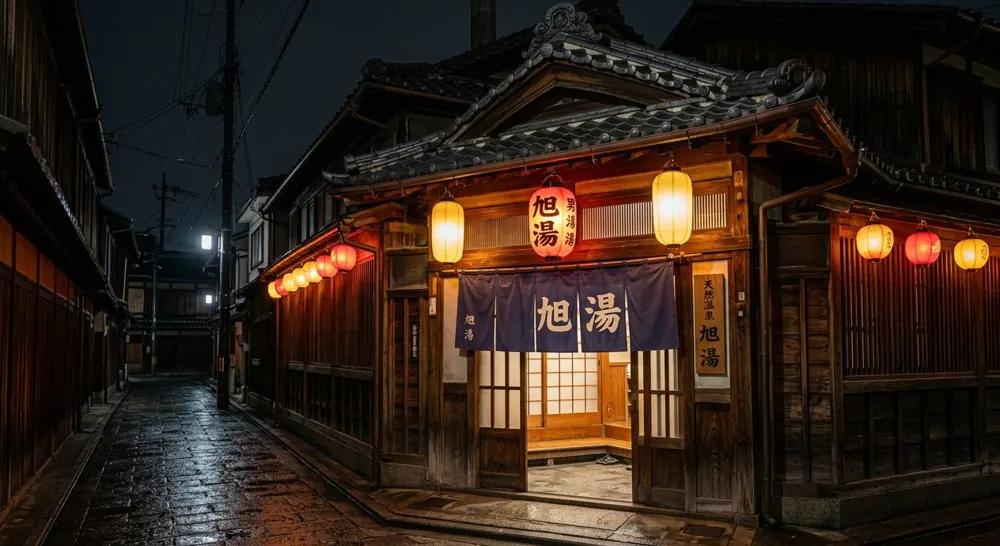
Walk the lanes to the back of the spa street, pass the Ikenami Shotaro stone beside the 'Ishiyu' sign, buy a ¥300 ticket at the machine by the entrance and hand it to the attendant. The gender-separated changing rooms use baskets with no lockers, so best not to bring valuables. Stone steps lead down from the changing room into a small bathroom where one wall is untouched natural rock, giving a cave-like feel, and the water of Source No. 4 pours into a pool for four or five. Clear as it is, a faint whiff of sulphur rises when you lean close, and stroking your skin reveals the slick alkaline feel that earns it the name 'whitening bath'. At around 42°C it is a touch hot; the wash area has only a few taps and no soap or shampoo, so bring your own or buy small ones at the entrance shop. Communal-bath manners apply: rinse before entering, keep towels out of the water, and keep your voice down in a bath locals use every day. It is busiest with residents right after the 6:30 opening and before dinner, and quieter with mostly tourists at midday. At night lanterns light the temple approach and overnight guests in yukata make the rounds of the baths. Of the three, Ishiyu's charm is the rock, Daishiyu's the fully free-flowing fresh water, and Oyu's the space and small outdoor tub — see them all if time allows.
Practical details and a Bessho–Ueda route
Ishiyu is open 6:30–21:30, closed Tuesdays, ¥300 (revised in 2025 — many sources still quote ¥150 or ¥200); Oyu is 6:30–21:30, closed Wednesdays, and Daishiyu 6:00–21:00, closed Thursdays, all ¥300. Access is a 10-minute walk from Bessho-Onsen Station, terminus of the Ueda Dentetsu Bessho Line — from Tokyo, 1 h 30 min to Ueda by Hokuriku Shinkansen then 30 min on the Bessho Line — and Ueda Dentetsu sells discount tickets such as the 'Aisome Yuttari' return-plus-bath pass. By car it is 30 min from Ueda-Sugadaira IC; Ishiyu has no parking of its own, so use the adjoining restaurant's lot (¥100 outside lunchtime) or a public lot. Suggested routes: (1) a day trip from Tokyo — Ueda Castle ruins (the Sanada castle, cherry blossoms in April), the retro Bessho Line train to Bessho Onsen, worship at Kitamuki Kannon, Anraku-ji's National Treasure octagonal pagoda, a bath at Ishiyu, fried manju at a teahouse on the approach, one more bath at Daishiyu or Oyu, and home; (2) an overnight — a long-established Bessho inn (bath rounds in yukata, an evening lantern stroll), then Joraku-ji, the Zensan-ji pagoda and Ueda's Yanagimachi street next day; (3) winter — the snow-capped pagoda and the baths. Bessho Line trains run once or twice an hour, and Shinshu soba and Sanada Yukimura souvenirs are the pleasures of the spa street. The communal baths have no lockers, so the Bessho way is to leave bags at your inn and carry only a towel and coins; by communal-bath custom, keep tattoos discreet.
Before you go
- No official tattoo policy is published — ask at reception.
- The water runs hot (43–45°C). Don't add cold water; take short repeated dips instead.
- Payment is usually by ticket machine in cash — bring coins.
- Last entry is 30–60 minutes before closing.
Features
Mood & scenery
Only here
Price
Who with
Convenience
Amenities
✔ Verified operating: 2026-09 Operating status and rates cross-checked against the official site and onsen guides (full source notes in Japanese on the JA page)
Prices and hours change. Check official sources before visiting.
More in this area

Jigokudani Onsen Korakukan
A Meiji-era inn at the entrance to the Jigokudani Monkey Park, famous worldwide for wild macaques that climb into its rotenburo in winter. Day bathing is only 12:00–15:00, so most visitors combine it with the monkey park. It's a 30-minute mountain trail from Shibu Onsen — wear grippy shoes in winter.

O-yu (Nozawa outer bath)
The centerpiece of Nozawa's 13 public baths, a traditional bathhouse in the middle of the village. Local 'yunakama' associations have cleaned it daily since the Edo period; payment is a donation in the box at the door. Two pools, hot and 'mild' — though even the mild one exceeds 42°C. Adding cold water is bad manners: rinse first, then keep soaks short. No soap or shampoo.

Shirahone Onsen Awanoyu
The signature inn of Shirahone, famous for milky-white water. Its highlight is a large mixed-gender open-air bath — the water is so opaque that women find it comfortable. Day use at midday only.