Nagano · Shiga Kōgen
Jigokudani Onsen Korakukan
地獄谷温泉 後楽館
A Meiji-era inn at the entrance to the Jigokudani Monkey Park, famous worldwide for wild macaques that climb into its rotenburo in winter. Day bathing is only 12:00–15:00, so most visitors combine it with the monkey park. It's a 30-minute mountain trail from Shibu Onsen — wear grippy shoes in winter.
- Price (adult)
- ¥1,500
- Hours
- 12:00–16:00
- Closed
- Irregular
- Access
- Bus from Yudanaka + 30 min walk
- Water type
- Simple spring
- Tattoos
- Ask ahead
- Admission
- Day bathing adults ¥1,500 / elementary ¥750 (2026 listing). Short window, 12:00–16:00. Overnight guests can bathe almost all day except cleaning hours. Member of the Japan Association of Secluded Hot Springs. Soap and shampoo provided; bring a towel
- Baths
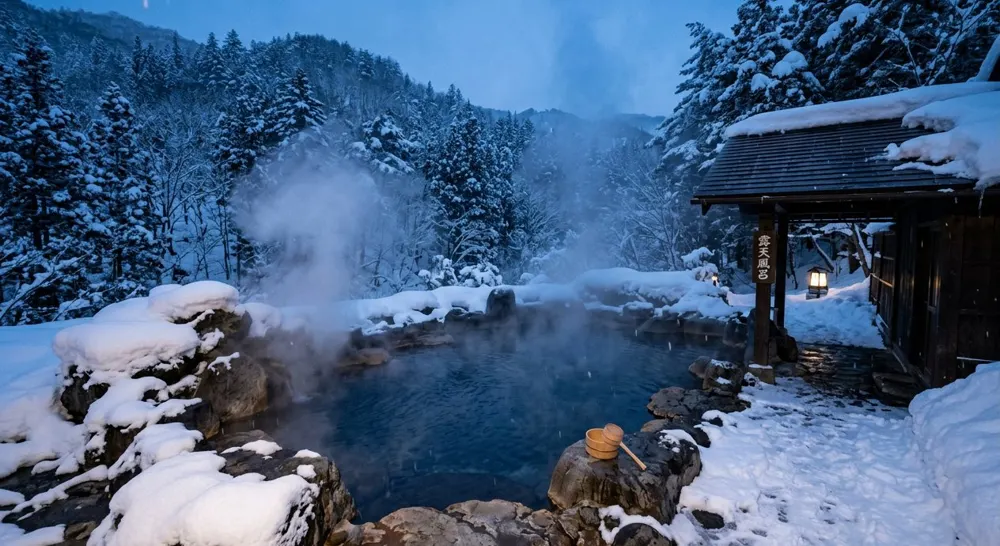
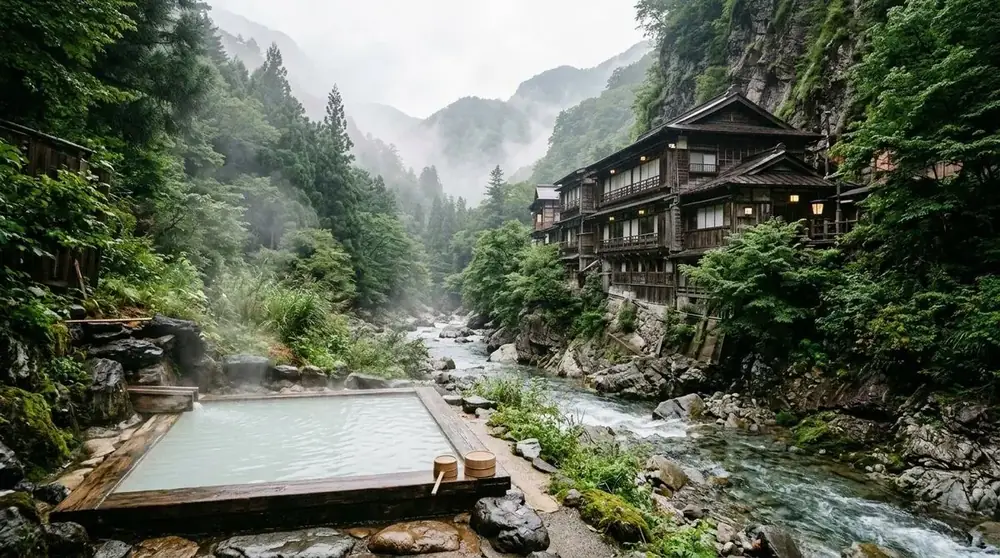
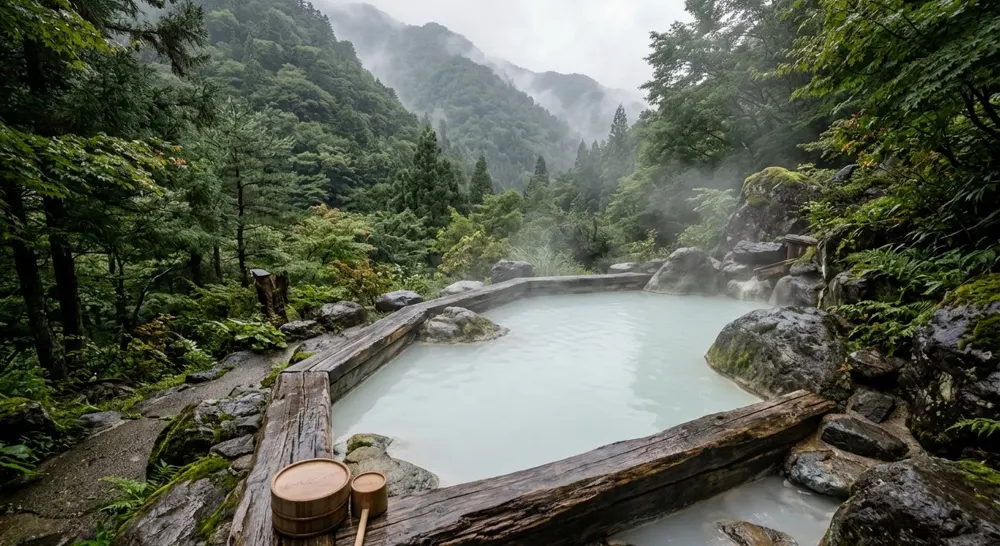
- A lone ryokan in the Yokoyu River gorge. Gender-separated wooden indoor baths, a mixed rotenburo right beside the stream (swimwear or towel allowed; visible from the path to the monkey park), a women-only rotenburo and a family bath. In winter monkeys sometimes join the outdoor bath; the Jigokudani geyser steams across the river
- Water
- Sodium-calcium chloride-sulphate spring from a very hot source (the geyser is close to 100 °C) — free-flowing, with large flakes of yunohana. Clear, colourless and deeply warming
- Parking
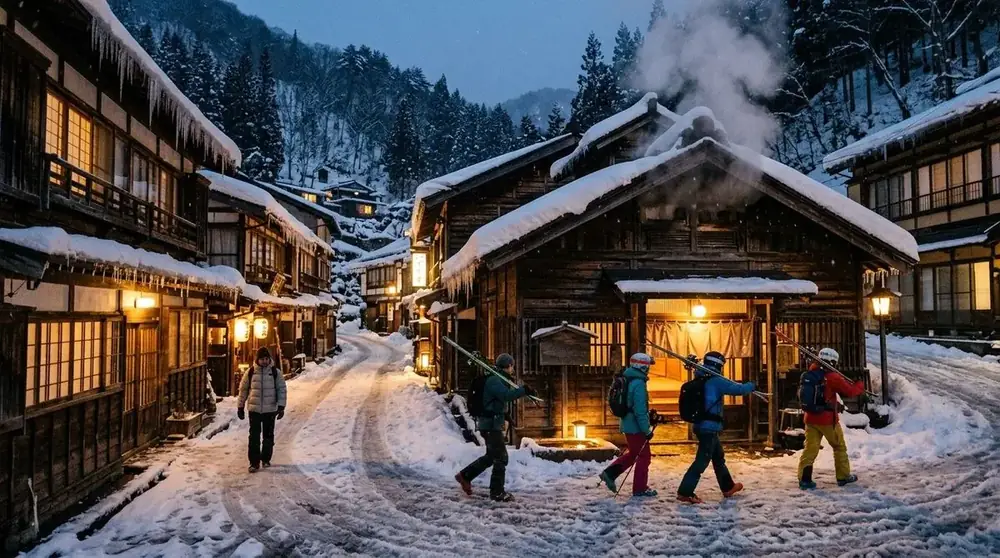
- Not reachable by car — 10–15 min on foot from the Jigokudani car park (paid; closed in winter), or 30 min from the Kanbayashi Onsen car park in winter. Snow gear essential
- Open in Google Maps
- Google Maps ↗
Essentials
Find a stay on Trip.com
Search and book accommodation across Japan on Trip.com. Day-use bathing needs no booking.
Opens partner booking site (affiliate)
Why go
- Monkeys join the rotenburo
- Day use 12:00–15:00 only
- Pair with the monkey park
The lone gorge inn where snow monkeys drop in
Jigokudani Onsen is a single inn, Korakukan, at the head of the Yokoyu River gorge below the Shiga Highlands, reached on foot from Shibu or Kanbayashi Onsen, and next door to the world-famous Jigokudani Snow Monkey Park. Founded in 1864, the inn is where monkeys first took to bathing in the outdoor bath — which led to the creation of the monkey park in 1964 — and in winter young monkeys still slip into the mixed rotenburo or come to drink the water early in the morning. The bath sits right beside the stream, and across it the Jigokudani geyser, a national natural monument, blasts white steam skyward — the very image of a “hell valley”. Sodium-calcium chloride-sulphate water flows freely with big flakes of yunohana, and there are also wooden gender-separated indoor baths, a women-only rotenburo and a family bath. Day bathing is a short 12:00–16:00 window at a not-cheap ¥1,500, and above all there is no road: it’s a 10–15-minute walk from the car park even in summer and 30 minutes on snow from Kanbayashi in winter — but paired with the monkey park it makes a perfect half-day. Because the mixed bath is visible from the park path, swimwear or a towel is permitted.
Tips & cautions
- Day bathing 12:00–16:00, irregular closures — phone ahead (0269-33-4376). Staying overnight lets you bathe in the early morning, when monkeys are most likely to appear.
- The mixed rotenburo is visible from the path — swimwear or a towel is allowed. Women can also use the women-only rotenburo (change and move over).
- Never feed the monkeys or stare into their eyes; watch your camera bag.
- In winter (Dec–Mar) the road to the Jigokudani car park is closed — 1.6 km / 30 min on snow from Kanbayashi Onsen; crampons and waterproof boots recommended.
- The source is very hot — test the outdoor bath before getting in.
- Tattoo policy unconfirmed — secluded inns tend to be lenient, but ask in advance.
- Monkey park admission is separate (adults ¥800); park hours vary by season (about 8:30/9:00–16:00/17:00).
Getting there
Nagaden bus for Kanbayashi Onsen 15 min from Yudanaka Station (Nagano Electric Railway) to “Kanbayashi Onsen”, then the 1.6 km Yumichi trail, ~30 min on foot (right beside the monkey park). By car: ~20 km on Route 292 from Shinshu-Nakano IC (Joshin-etsu Expressway) to the paid Jigokudani car park, then 10–15 min on foot (closed in winter). Hirao, Yamanouchi (Jigokudani Onsen); tel. 0269-33-4376.
Before you go
- No official tattoo policy is published — ask at reception.
- There is a mixed-gender area. Check the description for bathing garments and women-only hours.
- Ryokan day-use hours are limited and may be suspended in peak season — phone the same morning.
- Last entry is 30–60 minutes before closing.
Features
Only here
Mood & scenery
✔ Verified operating: 2026-09 Operating status and rates cross-checked against the official site and onsen guides (full source notes in Japanese on the JA page)
Prices and hours change. Check official sources before visiting.
More in this area

O-yu (Nozawa outer bath)
The centerpiece of Nozawa's 13 public baths, a traditional bathhouse in the middle of the village. Local 'yunakama' associations have cleaned it daily since the Edo period; payment is a donation in the box at the door. Two pools, hot and 'mild' — though even the mild one exceeds 42°C. Adding cold water is bad manners: rinse first, then keep soaks short. No soap or shampoo.

Shirahone Onsen Awanoyu
The signature inn of Shirahone, famous for milky-white water. Its highlight is a large mixed-gender open-air bath — the water is so opaque that women find it comfortable. Day use at midday only.

Yudanaka Ekimae Onsen Kaede-no-yu
One minute from the Yudanaka station gate: a free-flowing day bath with two bathrooms (each with an open-air tub) that swap monthly. The lounge overlooks the platform — perfect while waiting for the train back from the snow-monkey park.