Hiroshima · Jinseki Kōgen Onsen
Jinseki Kōgen Onsen
神石高原温泉
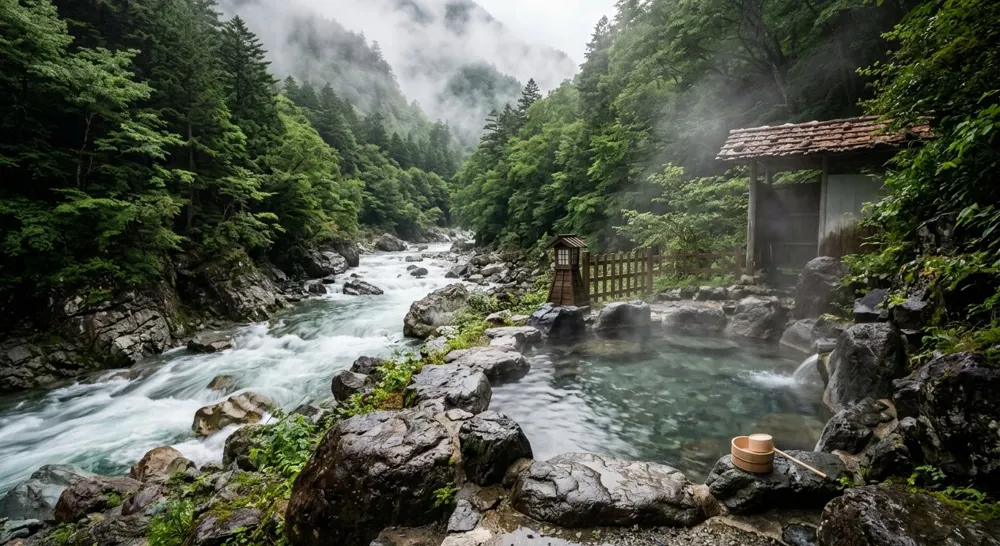
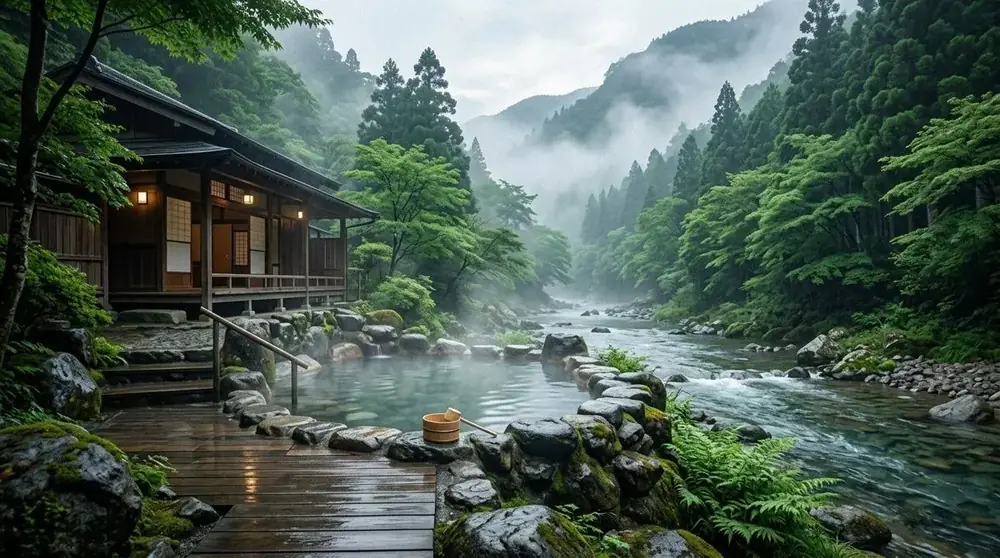
A day-use hot spring in Jinsekikōgen, a plateau town at 500–700 m in eastern Hiroshima. The source, discovered in 1994 in the Iseki district of former Sanwa, is a rare pH 10.2 strongly alkaline, weakly radioactive cold mineral spring – low in irritants and gentle on the skin. The slightly cloudy, viscous water lifts excess oil and leaves skin smooth, which locals call a 'natural beauty serum'. Inside are an indoor bath, open-air bath, sauna and cold plunge, plus a rock-bed spa, carbonated tub and a private family bath, with a rest area and restaurant. Adults pay ¥900 and children of elementary age or under ¥500; coupon books and a monthly pass keep the regulars coming. Open 10:00–21:00, closed Tuesdays, parking for 20 cars. About an hour by car from central Fukuyama via Route 182, or 2 minutes on foot from the Iseki-naka bus stop. Pair it with Taishaku Gorge, Jinseki beef and stargazing on a drive across the highlands.
- Price (adult)
- ¥900
- Hours
- 10:00–21:00
- Closed
- Tue
- Access
- About 1 hour by car from central Fukuyama via Route 182; about 35 min by car from Tōjō IC on the Chūgoku Expressway; about 2 min on foot from the 'Iseki-naka' bus stop
- Water type
- Radon spring
- Tattoos
- Ask ahead
- Admission
- Adults ¥900 / elementary and under ¥500. Books of 6 for ¥4,500, 12 for ¥8,500; monthly pass ¥9,500. Free to fill your own containers with source water
- Baths
- Gender-separated indoor bath (heated, recirculated) and outdoor bath, with an unheated source tub at about 14°C outdoors — hot-cold alternation is the house speciality. A compact facility built on a former school site; meals at the adjoining 'Gakko Shokudo' school canteen
- Water
- Simple weakly radioactive spring (hypotonic, alkaline, cold mineral spring), pH 10.2 — among the most alkaline in Japan. Source averages 14.8°C (heated). Faintly milky and viscous, slippery on the skin; it dissolves excess sebum and dead skin, a 'natural beauty serum'. Contains radon. Indicated for gout, rheumatoid arthritis, ankylosing spondylitis, high blood pressure, poor circulation
- Parking & access
- Free parking for 40–50 cars. Public transport is awkward: Chugoku Bus from Fukuyama Station towards Yuki/Sanwa about 70 min to 'Iseki-naka', then 2 min on foot (few services). By car about 30 min from Tojo IC on the Chugoku Yamanami Kaido, 60 min from Fukuyama-Higashi IC on the Sanyo Expressway
- Phone
- 0847-85-3553
- Official site
- mserrnt.jp ↗
- Open in Google Maps
- Google Maps ↗
Essentials
Find a stay on Trip.com
Search and book accommodation across Japan on Trip.com. Day-use bathing needs no booking.
Opens partner booking site (affiliate)
Why go
- pH 10.2 – one of Japan's most alkaline 'beauty serums'
- Rock-bed spa, carbonated tub and private family bath
- ¥900; closed Tue; a highland drive stop
A 'phantom spring' revived by villagers on a closed school site
Jinsekikogen Onsen is a day-bath that opened in June 2018 in the Iseki district of Jinsekikogen, a highland town at 500–700 m in eastern Hiroshima. The spring was found in 1994 when the former town of Sanwa drilled for municipal water and hit mineral-rich water instead; it then sat unused for more than twenty years, known locally as the 'phantom spring'. Residents formed the Jinsekikogen Onsen Users' Cooperative, raised the roughly ¥43 million construction cost by selling ¥100,000 shares inside and outside the town, and built the bathhouse on the grounds of a closed elementary school. Together with the 'Gakko Shokudo' canteen in the old schoolhouse next door it has become a highland attraction, and behind the modest exterior the water is a strongly alkaline beauty bath at pH 10.2 — among the highest in Japan.
A pH 10.2 'natural serum' and a 14°C cold source tub
The water is classed as a simple weakly radioactive cold mineral spring (it contains radon), but its defining trait is the strong alkalinity of pH 10.2. Dip a hand in and the faintly milky water feels viscous and your skin turns slippery — the alkali is dissolving sebum and dead skin, which the bathhouse calls its 'natural beauty serum'. As a simple mineral spring it has few irritants, so even sensitive skin copes well. Because the source averages only 14.8°C, the indoor and main outdoor pools are heated and recirculated, but one corner of the outdoor bath holds an unheated source tub at about 14°C, and alternating between hot and cold is the way to enjoy this place. The cooperative also promotes the metabolic boost of radon's ionising action, and the listed indications include gout and rheumatism.
Tips
Open 10:00–21:00, closed Tuesdays. Adults ¥900, elementary and under ¥500 — some call it pricey for a country bath, but most reckon it worth the money once fuel costs are considered; regulars buy the 6-visit book (¥4,500). The strongly alkaline water strips oil from the skin, so moisturise afterwards, and favour short dips alternating with the cold tub over long soaks. Source water can be taken away free, so bring a bottle. The adjoining school canteen is popular for set meals of local produce. Buses are so infrequent that a car is effectively required (30 min from Tojo IC, 60 min from Fukuyama-Higashi IC); it fits a highland drive with Taishaku Gorge or the Jinsekikogen Tiergarten.
Before you go
- No official tattoo policy is published — ask at reception.
- Last entry is 30–60 minutes before closing.
Features
Sauna & wellness
Rules & private
Mood & scenery
Price
Who with
Amenities
✔ Verified operating: 2026-09 Operating status and rates cross-checked against the official site and onsen guides (full source notes in Japanese on the JA page)
Prices and hours change. Check official sources before visiting.
More in this area

Miyahama Onsen Benimansaku-no-yu
The closest day onsen to World Heritage Miyajima, on the opposite shore. Every tub looks out over the Seto Inland Sea toward the island: rotenburo, cypress bath, rock bath, sauna and foot bath. Mildly radioactive (radon) simple spring. A natural stop on the way back from Miyajima, with a restaurant serving Seto fish. ¥800 weekdays, open until 22:00.

Ujina Onsen Hono-yu
Hiroshima's largest natural-onsen complex, in Ujina near the port. Brown bicarbonate water in a rock rotenburo and free-flowing tubs, plus carbonated bath, sauna and stone sauna. Two-tier pricing: ¥500 for indoor baths only, ¥1,000 (weekdays) for everything. 25 minutes by tram from the Peace Memorial Park and close to the Hiroshima Port ferries for Miyajima.

Yuki Onsen Yuki Lodge
An hour by car from central Hiroshima, a city-run lodge at Yuki Onsen, 'Hiroshima's back parlour'. The rotenburo above the clear Minochi River and the timber-lined main bath are all free-flowing, with a rare mildly radioactive (radon) spring. ¥750 per visit or ¥1,000 for an all-day pass. Open till 21:00 in summer, 20:00 in winter. Direct buses run from Hiroshima city — an easy hot-spring break between Miyajima and the Peace Park.