Ōita · Amagase Onsen, Hita
Amagase Onsen Yakushi-yu open-air communal bath
天ヶ瀬温泉 共同露天風呂 薬師湯
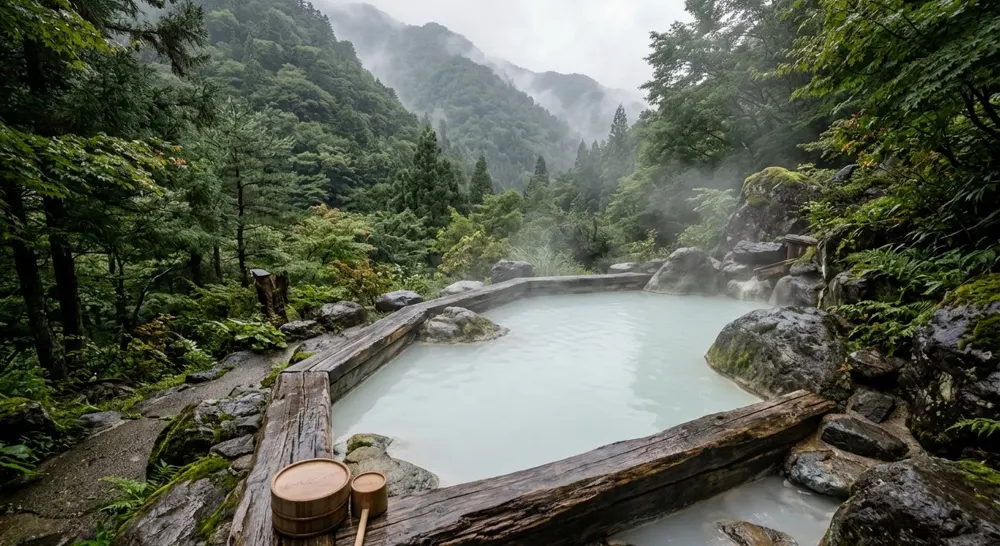
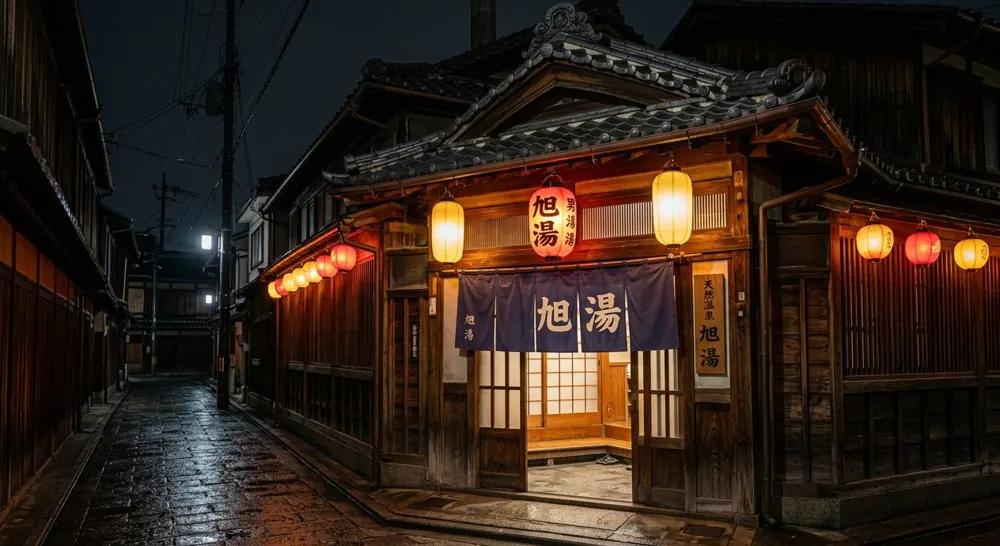
Amagase Onsen, where steam rises along the Kusu River in Hita, Ōita, is counted with Beppu and Yufuin among the 'three great springs of Bungo'. Its trademark is the communal open-air baths dotted along the riverbed, and Yakushi-yu is one of the most approachable: a single rock tub, mixed bathing, ¥100 dropped into an unattended box. The 75°C simple sulphur spring is diluted to a comfortable temperature, with a faint whiff of sulphur and a view of the spa street across the river. Open 10:00–22:00 daily; wrapping a bath towel is allowed, which makes it easy for first-timers, and it is lit and atmospheric at night. Stroll the town, rebuilt after the 2020 floods, and try the other riverside baths such as Kanda-yu and Ekimae Onsen. About 10 minutes on foot from JR Amagase Station.
- Price (adult)
- ¥100
- Hours
- 08:00–22:00 (approx.; unattended)
- Closed
- Open daily (closed when river is high or during cleaning)
- Access
- About 10 min on foot from JR Amagase Station; about 10 min by car from Amase-Takatsuka IC
- Water type
- Sulfur spring
- Tattoos
- Ask ahead
- Admission
- About ¥100 in the fee box (unattended, no change — bring coins). Changing space is just a simple shelf; no wash area, shower or soap (soap is banned); bring a towel and bathing wrap; no lockers (leave valuables behind). Mixed and open to view from the riverside path and the far bank, so women generally wear a bathing wrap or swimsuit (allowed). No photography. Amagase's other communal open-air baths (Masujiro-no-yu, Kanda-yu, Tsurumai-no-yu, Ekimae Onsen etc.) are also ¥100 each, making a bath crawl possible
- Baths
- The riverside communal open-air bath that symbolises Amagase Onsen, a spa of some twenty inns on both banks of the Kusu River in Hita, Oita. An ancient spa recorded 1,300 years ago in the Bungo Fudoki, known for its scattered rock-rimmed communal baths along the riverbank. Yakushi-yu is the representative one nearest the station, restored and reopened after damage in the July 2020 Kyushu floods. On the same Kyudai Line as Yufuin (40 min by train) and Hita's Mameda-machi (20 min)
- Spring water
- Amagase Onsen, a simple sulphur spring (weakly alkaline, 50–60°C at source, free-flowing). Colourless to faintly milky with a gentle sulphur scent and slick feel. Indicated for neuralgia, rheumatism, skin conditions, cuts and poor circulation. The riverside pool's temperature shifts with weather and flow — hot in winter, just right in summer — and bathing is impossible when the river rises after rain. Almost all of Amagase's baths are free-flowing from source
- Access & parking
- 5–10 min on foot from Amagase Station on the JR Kyudai Line (downstream along the river; pick up a communal-bath map at the station tourist office). About 1 h 40 min from Hakata by Yufu limited express, 40 min from Yufuin, 20 min from Hita. By car 10 min from Amase-Takatsuka IC on the Oita Expressway, 1.5 h from Fukuoka. Park at the station or the spa town's public car parks (no dedicated parking)
- Phone
- 0973-57-2166
- Open in Google Maps
- Google Maps ↗
Essentials
Find a stay on Trip.com
Search and book accommodation across Japan on Trip.com. Day-use bathing needs no booking.
Opens partner booking site (affiliate)
Why go
- Riverside mixed bath, ¥100 in the box
- Towel-wrap allowed — beginner-friendly
- Lit at night; open daily
Hundred-yen open-air communal baths dotted along the river of a 1,300-year-old spa
Amagase Onsen Yakushi-yu is a riverside communal open-air bath at Amagase Onsen in the Kusu River gorge in Hita, Oita — a 'communal bath as it always was', just one rock-rimmed pool and a simple changing shelf. Amagase is an ancient spa recorded in the Bungo Fudoki 1,300 years ago; unlike the glamour of Yufuin and Beppu, its defining character is Showa-era inns lining both banks and open-air communal baths tended by residents dotted along the river. Yakushi-yu is the nearest to the station and the most representative; badly damaged in the July 2020 Kyushu floods, it was restored and reopened, and the honour system of dropping about ¥100 into the box still holds. Simple sulphur water with a faint scent flows in straight from source, slick on the skin, with the river before you and sky and mountains open overhead — the sense of 'bathing with the river' is intense. It is mixed, however, and so exposed to the path and the far bank that women generally wear a bathing wrap or swimsuit; there is no wash area, soap or locker. Besides Yakushi-yu, Amagase has Masujiro-no-yu, Kanda-yu, Tsurumai-no-yu and Ekimae Onsen, each ¥100, so a 'riverside bath crawl' needs only a towel, and at 1 h 40 min from Hakata by Yufu express or 40 minutes from Yufuin it is an ideal stopover on a Kyudai Line journey.
How to use a ¥100 communal bath, and the riverside bath crawl
Alight at Amagase Station, check the 'communal bath map' at the tourist office or station noticeboard, and walk 5–10 minutes downstream along the river until you see a rock-rimmed pool and small roof below the embankment. Drop ¥100 into the box at the entrance (bring coins; no change), leave your clothes on the simple shelf — but bring no valuables (no lockers). The pool fits five or six and is visible from the embankment and path, so the local unspoken rule is a bathing wrap or swimsuit for women and a towel for men; large towels in the water are forbidden. Clear sulphur-scented water flows in straight from source and can reach 43–44°C when hot, so test with your hand and ease in (there is often no tap to cool it). The river before you, the inn lights opposite and the sky above are all there is, and that simplicity is the charm — morning mist and dusk are especially atmospheric. Soap and shampoo are banned (they run into the river); wash at your inn. After rain the swollen river may submerge or muddy the pool and a 'no bathing' sign goes up, and please wait while residents clean (mostly mornings). Refrain from photography even when empty; many tidy the duckboards after use and add a little extra to the box. For a 'riverside bath crawl', walk the river in the order Yakushi-yu, Masujiro-no-yu (rebuilt after the 2020 flood, near the station), Kanda-yu and Tsurumai-no-yu — ¥100 each; a towel, a small plastic bag and a coin purse suffice, and it takes two to three hours. If staying at an inn you also have its indoor bath, so treat the communal pools as 'scenery' and do your washing at the inn for the most comfortable combination.
Practical notes and a Kyudai Line route
As an unattended communal bath Yakushi-yu has no official hours — roughly 8 a.m. to 10 p.m. (9:00–22:30 by some sources) — and bathing may be impossible due to high water, cleaning or the state of the pool. About ¥100 in the box, no facilities whatsoever, mixed with bathing wraps allowed, no photography. Access is 5–10 minutes on foot from JR Amagase Station, 1 h 40 min from Hakata by Yufu express, 40 minutes from Yufuin, 20 from Hita; by car 10 minutes from Amase-Takatsuka IC, parking in public car parks. Suggested routes: (1) a Kyudai Line day — Hakata, Hita's Mameda-machi (Edo merchant quarter, 20-minute stroll), alight at Amagase for two or three communal baths and lunch by the river, Yufuin (Lake Kinrin, Yunotsubo street), then Beppu or back to Hakata; (2) a night in Amagase — stay at a Showa inn and have the riverside pools almost to yourself at dusk and dawn, then Sakura Falls (10 min by car) and Takatsuka Aitago Jizoson the next day; (3) for devotees — all of Amagase's communal baths plus Yufuin, Tsuetate and Kurokawa for a traverse of Oita and Kumamoto's communal baths. Tips: bring plenty of coins (¥100 × number of baths); a bathing wrap or swimsuit and a plastic bag; check in at your inn first and come empty-handed; check the water level the day after rain; no rowdiness, drinking or hogging — residents keep these baths by goodwill; in winter the water is hot and the changing space cold, so be quick. Since the 2020 flood Amagase is still 'recovering' and some inns have closed, but the communal-bath culture endures as local pride, and using it with good manners is the best support a traveller can give.
Before you go
- No official tattoo policy is published — ask at reception.
- As a communal bath there is no soap or shampoo — bring your own or buy at the shop.
- The water runs hot (43–45°C). Don't add cold water; take short repeated dips instead.
- There is a mixed-gender area. Check the description for bathing garments and women-only hours.
- Payment is usually by ticket machine in cash — bring coins.
Features
Mood & scenery
Price
Who with
Only here
✔ Verified operating: 2026-09 Operating status and rates cross-checked against the official site and onsen guides (full source notes in Japanese on the JA page)
Prices and hours change. Check official sources before visiting.
More in this area

Takegawara Onsen
Founded in 1879, with its 1938 wooden building and curved gable, Takegawara is the symbol of Beppu Onsen. A regular bath costs ¥300 — a deep, hot pool down a flight of steps. The famous sand bath has you buried in warm sand by staff while wearing a yukata. Bring your own soap and shampoo.

Hyotan Onsen
A large complex where you can try Kannawa's specialties — waterfall bath, sand bath and steam bath — in one place. It once earned three Michelin stars and is used to overseas guests. Many private family baths; tattooed visitors are directed to these. A restaurant serves hell-steamed dishes. Open until 1 am.

Shitan-yu at Lake Kinrin
A thatched communal bath on the shore of Lake Kinrin. Unstaffed — drop ¥300 in the box at the door. Changing area and bath share one room; an indoor pool and a half-open pool facing the lake, and it is mixed bathing with clear water and little screening, so it's a challenge for women. Right in busy central Yufuin, but quiet at the 10 am opening.