Ibaraki · Izura Onsen, Kita-Ibaraki
Izura Kankō Hotel Taikansō (Taikan-no-yu)
五浦観光ホテル 別館大観荘(大観の湯)
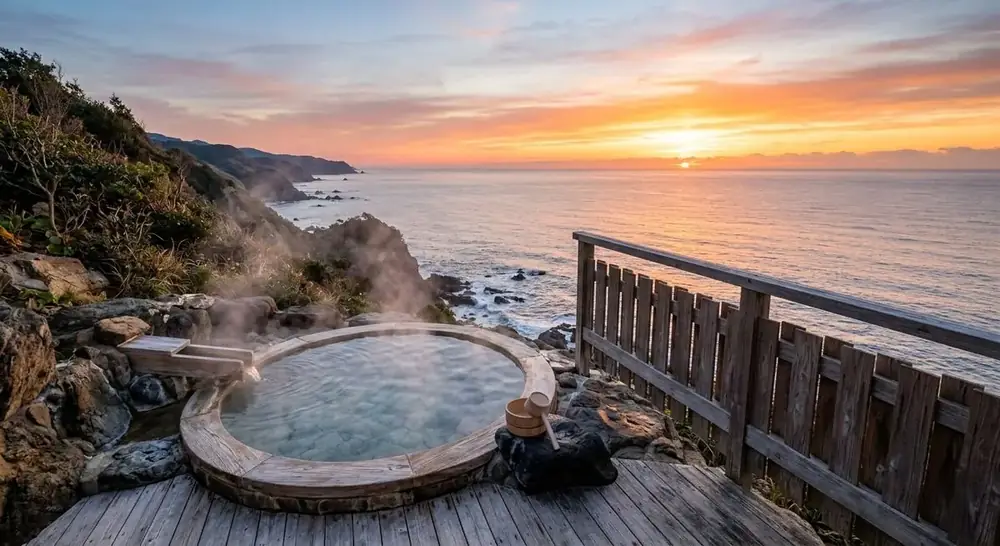
A long-established hotel on the cliffs of the Izura coast, the scenic spot beloved of art historian Okakura Tenshin. The main building and the Taikansō annex flank the Rokkakudō pavilion; day bathers use Taikan-no-yu in the annex. The open-air bath, refurbished in 2012, sits right above the Pacific — free-flowing spring water, the horizon and the sound of breaking waves. The indoor hall also looks out to sea through big windows. Day use in two sessions, 11:00–15:00 (last entry 14:30) and 18:00–21:00 (last entry 20:30), ¥1,100. Closure days are irregular, so check the official notice page. Five minutes by car from JR Ōtsukō Station; combine with the Tenshin Memorial Museum and Rokkakudō.
- Price (adult)
- ¥1,100
- Hours
- 11:00–15:00 (last entry 14:30) / 18:00–21:00 (last entry 20:30); 15:00–18:00 guests only
- Closed
- Irregular
- Access
- 5 min by car from JR Ōtsukō Station (shuttle for overnight guests only); 15 min by car from Kita-Ibaraki IC; about 2 h from Tokyo by Hitachi limited express
- Water type
- Simple spring
- Tattoos
- Ask ahead
- Admission
- Day bathing adults ¥1,100, children ¥550 (outdoor bath only; the indoor main baths are for overnight guests). Towel rental paid (bath-towel set about ¥300), shampoo provided. Private outdoor bath 45 min ¥2,200 (by reservation; families and couples). Day plans with meals (anko hotpot in winter) by reservation. Lobby shop with Hitachi sweets and anglerfish products
- Baths
- An onsen hotel (main building and 'Taikanso' annexe, founded in the 1960s) on the cliffs of the Izura coast facing the Pacific in Kitaibaraki, the northern tip of Ibaraki. Day visitors use the 'view rotenburo' at the cliff's edge, with 180° of Pacific and rocky shore in front and the sound of waves directly below. Free-flowing chloride spring. Nearby stand the Rokkakudo pavilion built by Okakura Tenshin (rebuilt after being swept away by the 2011 tsunami) and the Tenshin Memorial Izura Museum. Home of winter anko (anglerfish) hotpot. The 'sunrise bath' with the sun lifting out of the sea is the overnight guests' treat
- Spring water
- Izura Onsen, a sodium-chloride spring (some sources list it as weakly alkaline and hypertonic), free-flowing and heated; pale yellow-brown to clear with a salty taste and very high heat retention, hence the nickname 'the heat bath' — you stay warm even in the sea breeze. Indicated for neuralgia, joint pain, poor circulation, fatigue and cuts. A rare source: on the Izura coast only this hotel and one or two neighbours have hot springs
- Access & parking
- 7 min by car or taxi (about 3 km, 40 min on foot) from Otsuko Station on the JR Joban Line; pick-up for overnight guests by reservation. From Ueno, Tokyo, the Hitachi limited express toward Iwaki takes about 2 h to Izumi or Otsuko. By car 10 min from Kitaibaraki IC on the Joban Expressway, about 2.5 h from Tokyo. Free parking. Rokkakudo and the Tenshin museum 10 min on foot
- Phone
- 0293-46-1111
- Official site
- izura.net ↗
- Open in Google Maps
- Google Maps ↗
Essentials
Find a stay on Trip.com
Search and book accommodation across Japan on Trip.com. Day-use bathing needs no booking.
Opens partner booking site (affiliate)
Why go
- Free-flowing open-air bath over the Pacific
- ¥1,100, day and evening sessions
- Pair with Rokkakudō and the Tenshin museum
A rotenburo on the edge of a Pacific cliff: the sound of waves and Okakura Tenshin's sea
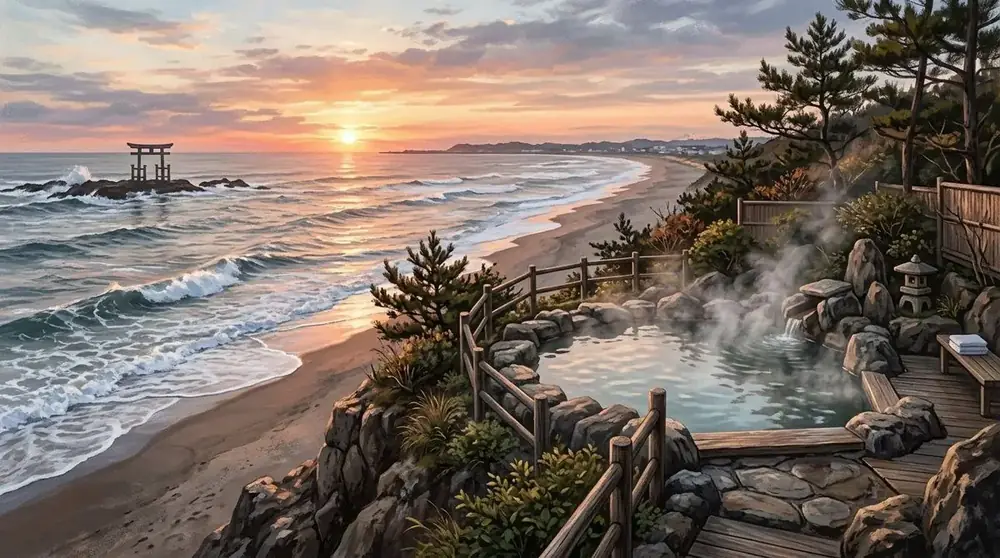
Izura Kanko Hotel is an onsen hotel on the cliffs of the Izura coast, where five small coves line up facing the Pacific in Kitaibaraki at the northern tip of Ibaraki. Izura is the land where the Meiji art philosopher Okakura Tenshin moved the Japan Art Institute and, with Yokoyama Taikan and others, painted modern nihonga; the vermilion Rokkakudo pavilion he built over the sea for contemplation stands ten minutes' walk from the hotel. Day visitors use the 'view rotenburo' at the cliff's edge, where waves break just below the rock-rimmed pool and 180° of horizon and rocky shore spread before you — the sun rising from the sea in the morning, black pines against blue water by day, exactly as in Tenshin's paintings. The water is a free-flowing chloride spring, salty and so heat-retaining that you stay warm even in the winter sea wind. Day bathing runs in two sessions, 11:00–15:00 and 18:00–21:00, at ¥1,100 for adults for the outdoor bath only, and a private rotenburo can be booked for 45 minutes at ¥2,200. In winter the day plans with Kitaibaraki's famous anko (anglerfish) hotpot are popular, and at two hours from Tokyo by limited express it pairs well with a north-Ibaraki drive or a trip to Iwaki in Fukushima.
Day bathing in the rotenburo alone, waves right below
Tell the front desk in the main building's lobby you are here for day bathing, pay ¥1,100 and you will be shown the way to the outdoor bath. Day visitors cannot use the indoor main baths — only the seaward view rotenburo — so showering and washing happen in the simple wash area attached to it (shampoo provided). The gender-separated outdoor pools are built of rock at the very edge of the cliff; stand at the rim and the sea is directly below, sending up the sound and spray of waves, and on a clear day nothing blocks the view to the horizon. The water is a pale yellow-brown chloride spring, salty on the tongue, kept slightly hot at around 42°C to suit the sea breeze, so you keep sweating long after climbing out. From 11:00 to 15:00 the light glitters off the sea; from 18:00 to 21:00 you hear only the waves in the dark — atmospheric, but no view, so come by day if the scenery is the point. Note that 15:00–18:00 is reserved for overnight guests. Families and couples favour the private rotenburo, 45 minutes for ¥2,200 (reservation required) — the luxury of having the sea to yourselves. In winter (November to March), true to its anglerfish heritage, there is an 'anko hotpot plus bath' day plan: a pot rich in monkfish liver and collagen, then the outdoor bath — the best course of all. Afterwards walk to the Rokkakudo (admission charged) and the Tenshin Memorial Izura Museum.
Practical details and a north-Ibaraki / Iwaki route
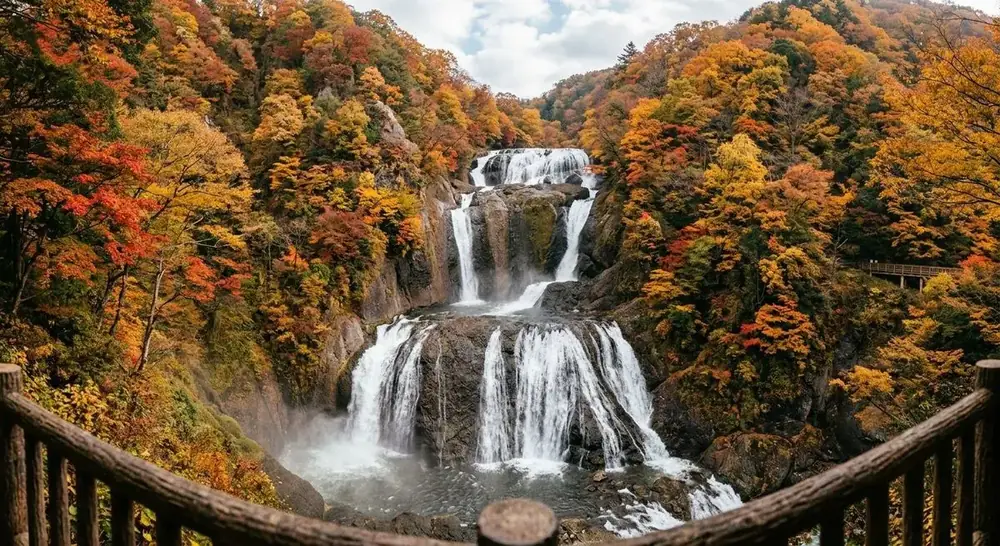
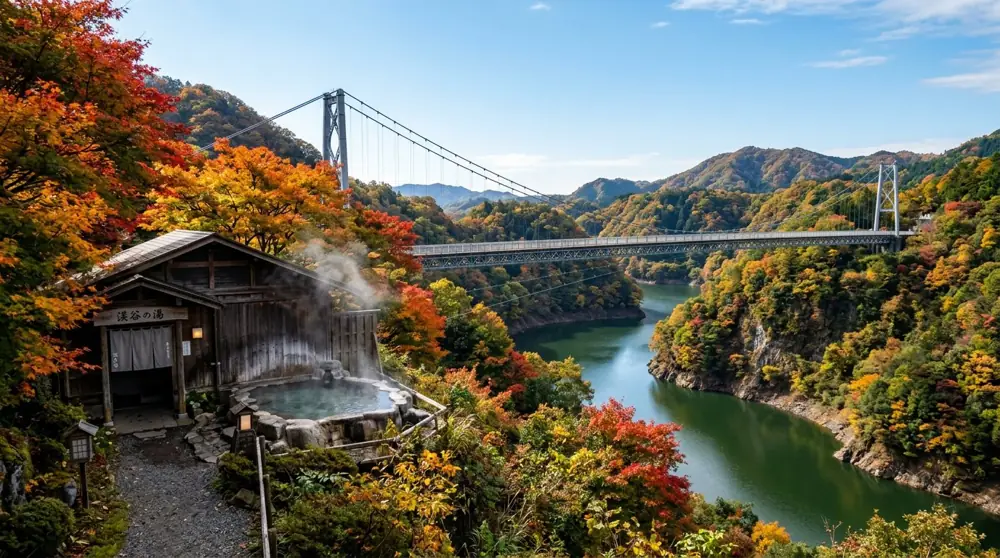
Day bathing runs in two sessions, 11:00–15:00 (last entry 14:30) and 18:00–21:00 (last entry 20:30); 15:00–18:00 is for overnight guests only; closing days are irregular (day bathing may be suspended on busy or inspection days); adults ¥1,100, children ¥550, outdoor bath only. Reserve the private rotenburo (45 min, ¥2,200) and meal plans. Access is 7 minutes by car from Otsuko Station on the JR Joban Line (taxi about ¥1,500), about 2 hours from Ueno, Tokyo, by Hitachi limited express, or 10 minutes from Kitaibaraki IC on the Joban Expressway, parking free. Suggested routes: (1) a north-Ibaraki day — Hitachi Seaside Park (nemophila in spring, kochia in autumn), the Rokkakudo and Tenshin museum at Izura, the hotel's rotenburo, an anko hotpot dinner and home; (2) an overnight combining Aquamarine Fukushima and Spa Resort Hawaiians in Iwaki, moving north or south along the Joban Line; (3) autumn — pair it with the foliage of Hananuki Gorge and the Ryujin suspension bridge (bungee jumping). Anglerfish season is November to March, and Kitaibaraki's Anko Festival is held in winter. The rotenburo is unshaded on the sea side, so wear a hat or towel at midday in summer, and it may close for safety in typhoons or strong wind. Knowing that the Rokkakudo was swept away by the 2011 tsunami and rebuilt the following year gives this sea a deeper resonance.
Before you go
- No official tattoo policy is published — ask at reception.
- Ryokan day-use hours are limited and may be suspended in peak season — phone the same morning.
- Last entry is 30–60 minutes before closing.
Features
Mood & scenery
Price
Amenities
✔ Verified operating: 2026-09 Operating status and rates cross-checked against the official site and onsen guides (full source notes in Japanese on the JA page)
Prices and hours change. Check official sources before visiting.
More in this area

Hitachi Onsen Yura-no-sato
A day spa perched on a bluff with the whole Pacific in front of it — both the rotenburo and the sauna face the sea, giving sunrises in the morning and fishing-boat lights at night. Carbonated bath, stone sauna and restaurant; open 9 am to 1 am. ¥950 on weekdays. About 10 minutes by car from Hitachi-Taga Station on the JR Joban Line, doable as a day trip from Tokyo.

Oarai Shiosai-no-yu
Two hours by train from Tokyo, a day spa right in front of Oarai Sun Beach. The open-air baths — 'Kuroshio' for men, 'Oyashio' for women — look straight out over the Pacific, and the strong salt water from 1,500 m down keeps you warm long after. There's also a carbonated bath. The panoramic restaurant serves seafood from Oarai port. ¥1,000 on weekdays, 10:00–21:30, open daily. Five minutes by taxi from Oarai Station.

Livemax Tsukubasan Onsen
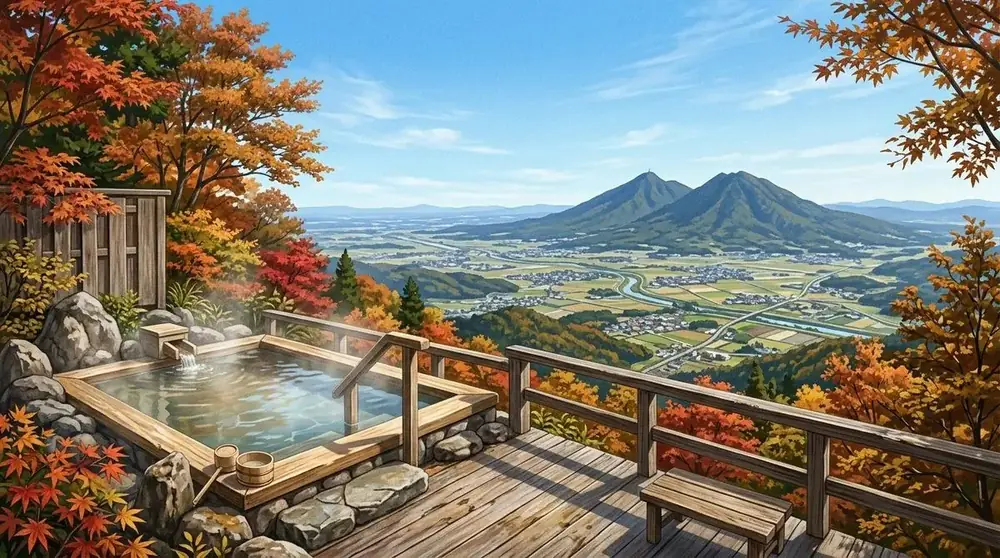
About 90 minutes from Akihabara via the Tsukuba Express, a day spa on the slopes of Mt. Tsukuba. The open-air bath opens onto a cliff with the whole Kantō plain below—the classic post-hike or post-cable-car soak. Alkaline simple spring water around pH 9 leaves skin smooth. ¥1,100 weekdays, ¥1,300 weekends; reservable private baths too. Check the calendar for closure days. Rebranded on 25 August 2026 from 'Tsukubasan Onsen Tsukuba-no-Yu' to 'Livemax Tsukubasan Onsen' (prices and hours unchanged).