Ibaraki · Ryūjin Gorge, Hitachiōta
Furusato Center Tacchan-no-Yu, Ryūjin Gorge
ふるさとセンター 竜っちゃん乃湯(竜神峡)
A municipal day spa in the Suifu district of Hitachiōta, Ibaraki, near the Ryūjin Great Suspension Bridge, famous for Honshū's highest bungee jump at 100 m. It fills with visitors combining it with the gorge's autumn colours or carp-streamer festival, plus locals. There are two bathrooms — one with an open-air bath, one with a sauna — swapped daily between men and women, so check ahead if you want the open-air side. The clear, soft simple spring is known for warming you well. Adults ¥800 on weekdays, ¥1,000 on weekends and holidays; children ¥400/¥500; cheaper after 16:00. Open 10:00–20:00 (last entry 19:00), closed Tuesdays and Wednesdays (the next business day if a holiday) and December 29–January 3. Restaurant (the mapo tofu is popular), rest room and 70 parking spaces. About 50 minutes by car from Naka IC, or by city bus from JR Hitachi-Ōta Station to 'Keganorokku' then 4 minutes on foot. A handy waypoint on a northern-Ibaraki drive with Fukuroda Falls and Oku-Kuji.
- Price (adult)
- ¥800
- Hours
- 10:00–20:00 (last entry 19:00)
- Closed
- Tue & Wed (next working day if a holiday) & 29 Dec–3 Jan
- Access
- About 50 min by car from Naka IC via Route 349; city bus (Suifu direction) from JR Hitachi-Ōta Station to 'Keganorokku', then 4 min on foot; about 5 min by car from the Ryūjin suspension bridge
- Water type
- Simple spring
- Tattoos
- Ask ahead
- Admission
- Bathing adults (from outside the city) ¥800 weekdays / ¥1,000 weekends and holidays / ¥700 after 16:00, adults resident in Hitachiōta ¥700/¥900/¥600, elementary-school children ¥400/¥500/¥300, pre-school free. The 26th of each month is 'bath day' with ¥300 off for adults (applied to the 27th when the 26th is a closure day). Those who did the Ryūjin bungee jump the same day bathe free on showing the certificate. Shampoo provided, towels sold. Cash
- Baths
- A municipal day-use onsen five minutes by car from the Ryūjin suspension bridge (famous for Japan's tallest mainland bungee jump at 100 m), in the Suifu area of Hitachiōta, Ibaraki. There are two bathhouses — 'Sakura-no-yu' with a rotenburo and 'Momiji-no-yu' with a sauna — and the men's and women's sides swap daily (odd days sauna for men and rotenburo for women, even days the reverse), so check before visiting if you are after the open-air bath. A soft, colourless simple spring known as water that warms you well. Sauna at 88°C, plunge at 19°C, a jet bath, a Japanese-style rest room (11:00–14:00), a restaurant (its mapo tofu is popular) and a soba-making experience corner. Overnight stays are possible too (from ¥10,450 with two meals, for two or more)
- Spring water
- A simple spring of the Ryūjin gorge: colourless and clear, gentle, with good heat retention, known as water that warms you well, and set against the cold air of the mountain valley a winter bath is especially refreshing. Indicated for neuralgia, muscle and joint pain, fatigue and poor circulation. Its face changes with the seasons — spring greenery, the gorge foliage in November, and snow scenery in winter
- Access & parking
- About 50 minutes by car from Naka IC on the Jōban Expressway via Route 349, an hour from Mito, 5 minutes from the Ryūjin suspension bridge and 50 minutes from Fukuroda Falls. City bus (Suifu direction) from JR Hitachi-Ōta Station on the Suigun Line to 'Keganorokku', then 4 minutes on foot. Free parking for about 80. Free pick-up for groups of four or more from within Hitachiōta (ask in advance)
- Phone
- 0294-87-0543
- Official site
- tacchannoyu.jp ↗
- Open in Google Maps
- Google Maps ↗
Essentials
Find a stay on Trip.com
Search and book accommodation across Japan on Trip.com. Day-use bathing needs no booking.
Opens partner booking site (affiliate)
Why go
- By the Ryūjin bridge; gorge foliage and carp streamers
- Open-air and sauna rooms swap daily
- ¥800 weekdays; cheaper after 4 pm; closed Tue/Wed
A municipal onsen beside Japan's tallest mainland bungee jump
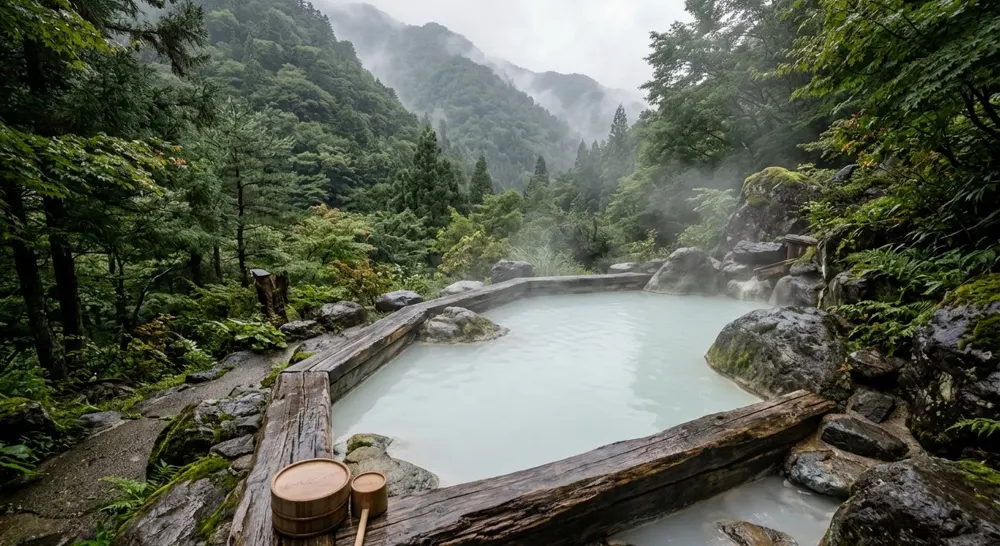
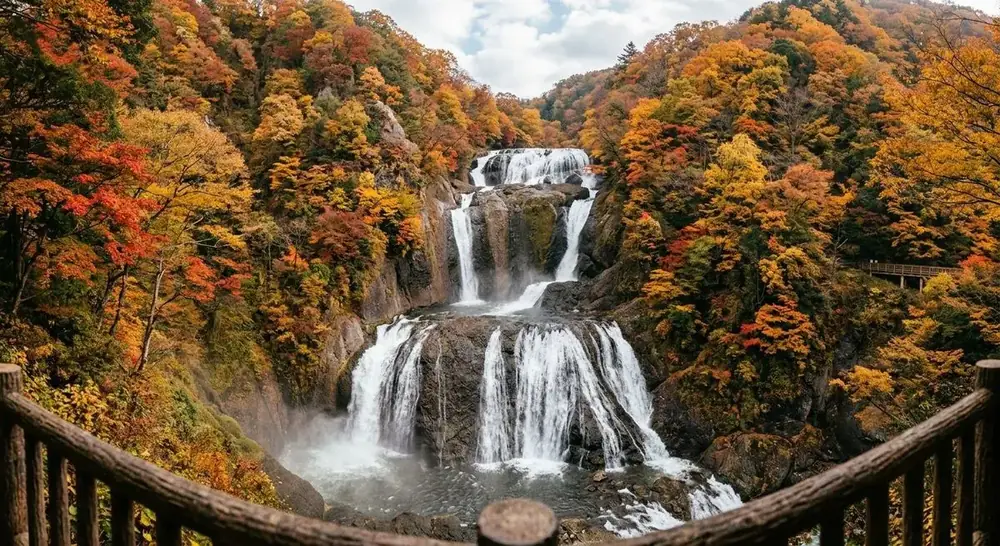
Tacchan-no-yu is a municipal day-use onsen in Hitachiōta, Ibaraki, five minutes by car from the Ryūjin suspension bridge, famous for a bungee jump from the tallest mainland bridge in Japan at 100 metres. The Ryūjin gorge drops steeply below the bridge and is one of the best driving routes in the Kantō region: hundreds of carp streamers hang over the valley from spring to autumn, and in November the foliage fills the gorge. The bathhouse is therefore used both by visitors to the bridge and by mountain villagers, and because the city runs it the fees are low (¥800 for adults on weekdays, ¥700 after 4 p.m.) and the facilities are not excessive. As the name 'Furusato Center' suggests, the building serves the community for gatherings, meals and lodging as well as bathing: there is a restaurant (its mapo tofu is popular), a Japanese-style rest room (11:00–14:00), corners for soba- and konnyaku-making experiences, and rooms from ¥10,450 with two meals. The spring is a colourless simple onsen — no striking colour or strong scent — but it is gentle with good heat retention, earning a reputation as water that warms you well. The baths are split into 'Sakura-no-yu' with the rotenburo and 'Momiji-no-yu' with the sauna (88°C), and the men's and women's sides swap daily, so you cannot use both the open-air side and the sauna side in one day; decide what matters to you first (on odd days the sauna is the men's side, on even days the rotenburo is). The colder the gorge air, the more refreshing the bath, and in foliage season you can soak looking at red mountains from the rotenburo. It is a little over an hour to Naka IC on the Jōban Expressway, making it a good mid-point on a northern Ibaraki drive around Fukuroda Falls and the Okukuji area.
Sakura-no-yu's rotenburo, Momiji-no-yu's sauna, and the daily swap
Pay at the entrance (¥800 for adults on weekdays, ¥700 after 4 p.m.) and take off your shoes. The first thing to do is check the board by the door for which side is 'Sakura-no-yu' (rotenburo) and which is 'Momiji-no-yu' (sauna) that day — on odd days the sauna is the men's side, on even days the rotenburo is. Shampoo is provided and towels are sold, so you need not bring any. On the Sakura-no-yu side the classic order is: wash and warm up in the indoor bath (main tub, jet bath); step outside to the rotenburo and spend 10–15 minutes in the air coming down from the gorge; return indoors for 10 minutes; rest in the rest room or the Japanese-style room (11:00–14:00), then go back in. The colourless simple spring has almost no scent and is soft, and set against the cold gorge air it is especially refreshing in winter. On the Momiji-no-yu side there is an 88°C sauna and a 19°C plunge, so try: wash and spend 10 minutes in the main tub; 8–10 minutes in the sauna, a minute in the plunge and 5 minutes on the chairs, three sets; and finish in the main tub. Afterwards many people eat a mapo tofu set meal or soba in the restaurant (10:00–19:00), and with a reservation you can try soba- and konnyaku-making, which families with children like. Notes: the sides swap daily, so you cannot use both the rotenburo and the sauna in one day; closed Tuesdays and Wednesdays (the next working day if a holiday); the night rate after 4 p.m. is cheaper, so a late visit pays; bring cash; buses are infrequent, so travellers without a car should take a taxi or combine with a stay near Hitachi-Ōta Station; those who did the Ryūjin bungee the same day bathe free on showing the certificate. It is the most efficient rest stop in northern Ibaraki for getting both a fine view and a hot spring at once.
Practical details and an Okukuji driving route
Hours are 10:00–20:00 (last entry 19:00), closed Tuesdays and Wednesdays (the next working day if a holiday) and 29 December to 3 January; adults from outside the city ¥800 weekdays / ¥1,000 weekends and holidays / ¥700 in the evening, elementary children ¥400/¥500/¥300, pre-school free, and ¥300 off for adults on the 26th of each month. The restaurant runs 10:00–19:00, lodging is from ¥10,450 with two meals (for two or more), and parking for 80 is free. Access is 50 minutes from Naka IC, 5 minutes from the Ryūjin suspension bridge, and a city bus plus 4 minutes on foot from Hitachi-Ōta Station. Suggested routes: (1) half a day at the gorge — the Ryūjin bridge (bungee or a walk), a stroll around the bridge, a bath at Tacchan-no-yu, lunch in the restaurant; (2) a day in northern Ibaraki — Mito (Kairaku-en), Fukuroda Falls, the Ryūjin gorge, Tacchan-no-yu, then back to Naka IC; (3) foliage in November — the gorge foliage, the bridge, a bath, soba in Okukuji; (4) families — a soba-making experience in the morning (reserve), a bath, lunch in the restaurant, a gorge walk in the afternoon; (5) carp-streamer season in April and May — hundreds of streamers over the valley, a bath, then Hitachiōta town. Notes: check the Tuesday and Wednesday closures; the bathhouses swap daily; the evening rate after 4 p.m. is cheaper; bring cash; buses are infrequent; the mountain road ices in winter. With a fine view, a hot spring and low fees, Tacchan-no-yu is a municipal onsen that you will want to build into any trip to see bungee jumping or autumn foliage in Kantō.
Before you go
- No official tattoo policy is published — ask at reception.
- Payment is usually by ticket machine in cash — bring coins.
- Last entry is 30–60 minutes before closing.
Features
Sauna & wellness
Mood & scenery
Price
Who with
Amenities
✔ Verified operating: 2026-09 Operating status and rates cross-checked against the official site and onsen guides (full source notes in Japanese on the JA page)
Prices and hours change. Check official sources before visiting.
More in this area

Hitachi Onsen Yura-no-sato
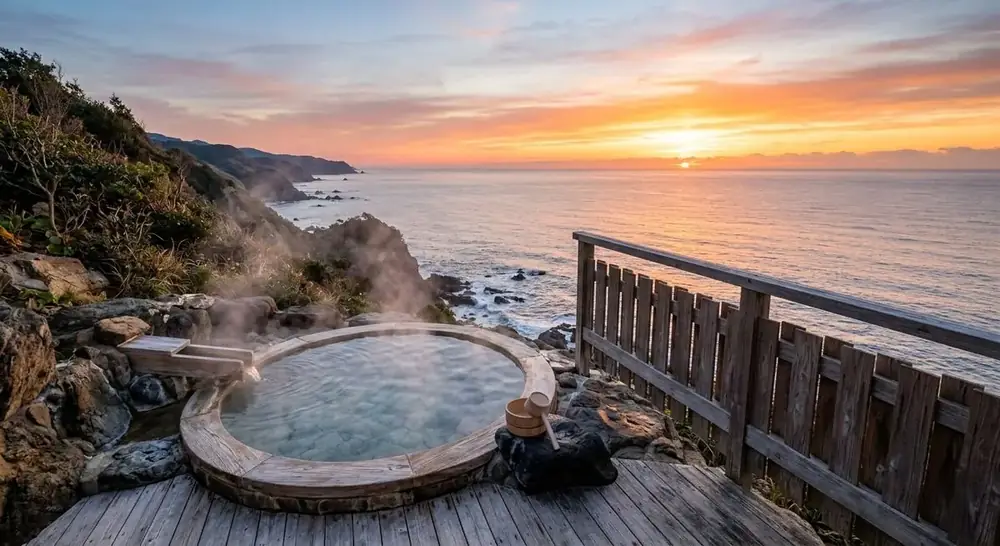
A day spa perched on a bluff with the whole Pacific in front of it — both the rotenburo and the sauna face the sea, giving sunrises in the morning and fishing-boat lights at night. Carbonated bath, stone sauna and restaurant; open 9 am to 1 am. ¥950 on weekdays. About 10 minutes by car from Hitachi-Taga Station on the JR Joban Line, doable as a day trip from Tokyo.

Oarai Shiosai-no-yu
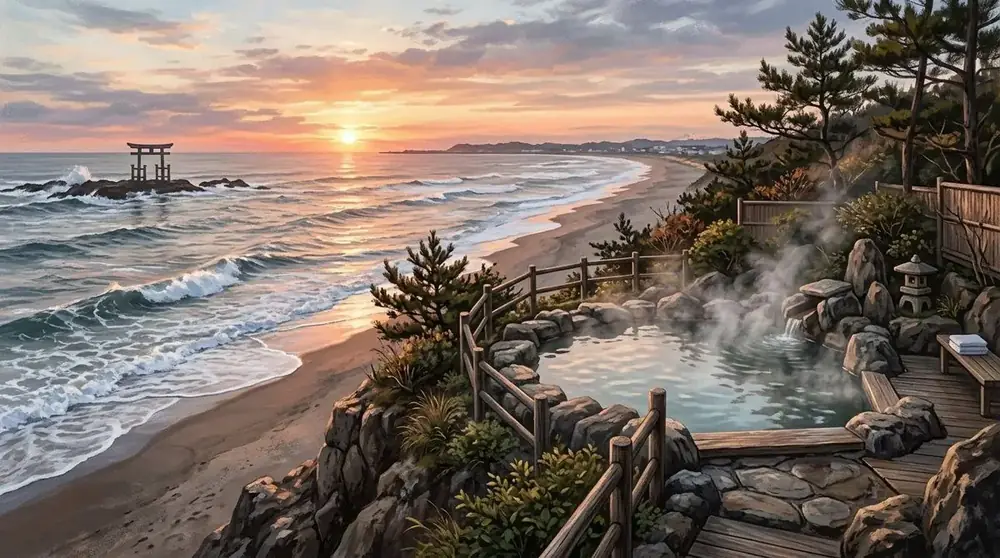
Two hours by train from Tokyo, a day spa right in front of Oarai Sun Beach. The open-air baths — 'Kuroshio' for men, 'Oyashio' for women — look straight out over the Pacific, and the strong salt water from 1,500 m down keeps you warm long after. There's also a carbonated bath. The panoramic restaurant serves seafood from Oarai port. ¥1,000 on weekdays, 10:00–21:30, open daily. Five minutes by taxi from Oarai Station.

Livemax Tsukubasan Onsen
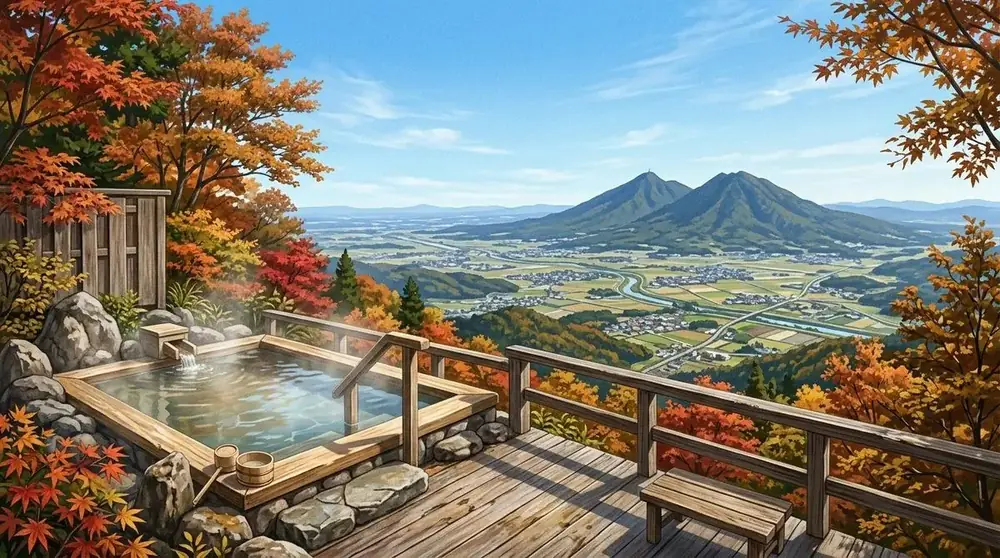
About 90 minutes from Akihabara via the Tsukuba Express, a day spa on the slopes of Mt. Tsukuba. The open-air bath opens onto a cliff with the whole Kantō plain below—the classic post-hike or post-cable-car soak. Alkaline simple spring water around pH 9 leaves skin smooth. ¥1,100 weekdays, ¥1,300 weekends; reservable private baths too. Check the calendar for closure days. Rebranded on 25 August 2026 from 'Tsukubasan Onsen Tsukuba-no-Yu' to 'Livemax Tsukubasan Onsen' (prices and hours unchanged).