Ibaraki · Daigo Onsen (Fukuroda)
Daigo Onsen Mori-no-Ideyu
大子温泉保養センター 森林の温泉(もりのいでゆ)
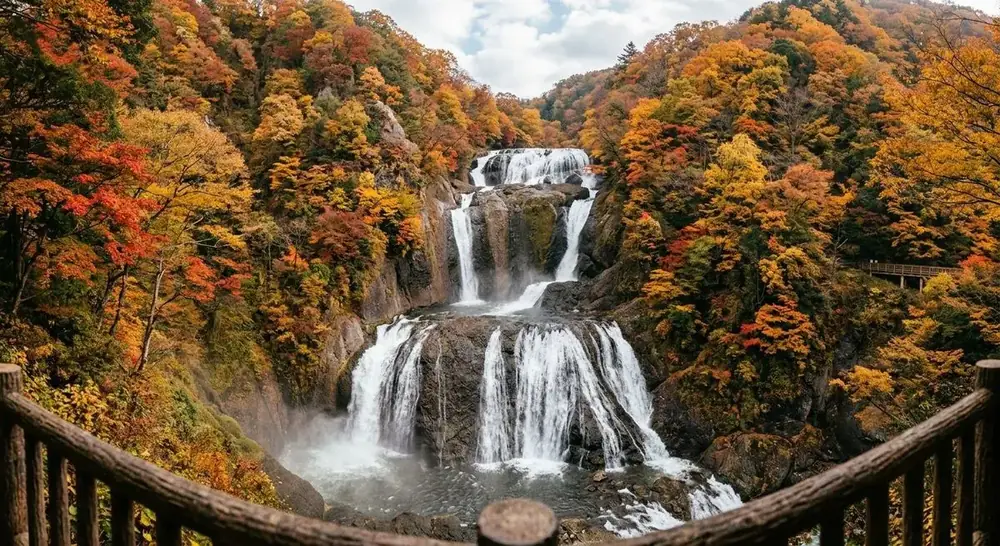
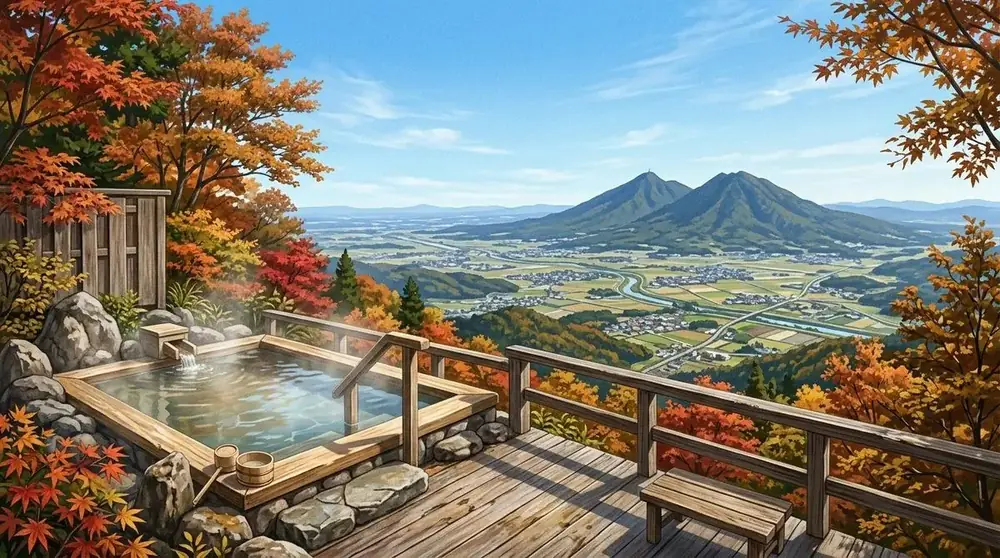
A town-run day spa on a rise above the Kuji River in Daigo, Ibaraki, the town of Fukuroda Falls, one of Japan's three great waterfalls. The alkaline simple water is soft; there is a large indoor bath with a waterfall-massage and bubble bath, and the pride of the place is an open, airy outdoor bath with a sweeping view of the Yamizo hills and the river — especially fine in autumn colour. Sauna, rest room, Japanese restaurant and shop, used equally by locals and visitors. Adults ¥710 on weekdays, ¥1,010 on weekends and holidays (¥500 after 17:00), children ¥350/¥500; open 10:00–20:00 (last entry 19:30), closed the 1st and 3rd Wednesdays and December 31. Soap and shampoo provided, towels sold. About 15 minutes by bus from JR Hitachi-Daigo Station to 'Mori-no-Ideyu'; about an hour by car from Naka IC. Combine with Fukuroda Falls and the local shamo chicken cuisine.
- Price (adult)
- ¥710
- Hours
- 10:00-20:00(last entry 19:30)
- Closed
- 1st & 3rd Wednesdays (except when a holiday) & 31 Dec
- Access
- Ibaraki Kōtsū bus (for Mori-no-Ideyu / Forespa Daigo) from JR Hitachi-Daigo Station, about 15 min to 'Mori-no-Ideyu' right by the stop; about 60 min by car from Naka IC via Route 118
- Water type
- Alkaline simple
- Tattoos
- Ask ahead
- Admission
- Weekdays adults ¥710, children (3–11) ¥350; weekends and holidays adults ¥1,010, children ¥500; after 17:00 adults ¥500, children ¥250 (evening discount). Towels sold ¥250, bath towels ¥500; shampoo, soap, hair dryer and lockers included in admission. Large tatami rest room, shop (Okukuji specialities), Japanese restaurant, massage. Cash and cards
- Baths
- A municipally run onsen resort facility in Daigo, Ibaraki, in the Okukuji forest leading to Fukuroda Falls and the Abukuma highlands (the Yamizo range). A vast rock-lined great rotenburo ringed by trees looks out over the Yamizo range; from October to January it runs an 'apple bath' floating Daigo's famous apples, and in June a 'tea bath' for the new-tea season. With a great bath, bubble bath, waterfall bath, sauna, restaurant, shop and a large tatami hall, it is 'a full day of onsen'
- Spring water
- Daigo Onsen (Daigo town's Gomenzawa sources No. 1 and 2), a sodium-sulphate and chloride spring (alkaline, hypotonic low-temperature), colourless to faintly tinted and soft. Indicated for arteriosclerosis, cuts, burns, chronic skin and gynaecological conditions, poor circulation, neuralgia and muscle pain. The 'apple bath' is a seasonal tub with whole Daigo apples floating in it — not a bath additive
- Access & parking
- From Hitachi-Daigo Station on the JR Suigun Line, Ibaraki Kotsu bus toward Morinoyu/FORESPA Daigo 10–15 min to 'Morinoyu'; about ¥1,500 by taxi. 1 h 30 min by train from Mito, around 3 h from Tokyo by train plus bus. By car 60 min from Naka IC on the Joban Expressway, Fukuroda Falls 15 min, adjoining FORESPA Daigo (pool and campsite). Free parking for 100
- Phone
- 0295-72-3200
- Open in Google Maps
- Google Maps ↗
Essentials
Find a stay on Trip.com
Search and book accommodation across Japan on Trip.com. Day-use bathing needs no booking.
Opens partner booking site (affiliate)
Why go
- Fukuroda Falls' town, bath above the Kuji River
- Views of the Yamizo hills and autumn colour
- ¥710 weekdays; ¥500 after 5 pm
A great rotenburo in the Okukuji forest and autumn's apple bath — a mountain onsen of Ibaraki
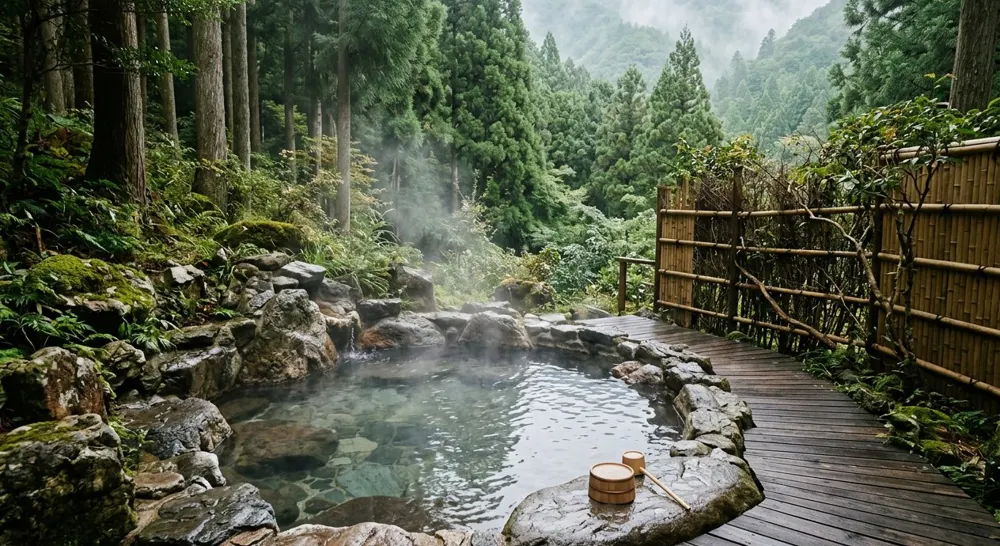
Daigo Onsen Health Centre Morinoyu is a municipally run hot-spring facility in Daigo, northern Ibaraki, deep in the Okukuji mountains that lead to Fukuroda Falls — one of Japan's three greatest waterfalls — and the Ryujin gorge. Its heart is a vast rock rotenburo ringed by trees: from the water the ridges of the Yamizo range unfold layer upon layer, and spring greenery, autumn colour and winter snow seem to enter the tub itself, giving a sense of openness. The water comes from the town's own Gomenzawa sources No. 1 and 2, a sodium-sulphate and chloride spring, colourless to faintly tinted and soft, said to help arteriosclerosis, cuts, burns, chronic skin disease and cold extremities. Because Daigo is 'the town of apples', from October to January the rotenburo runs an 'apple bath' with whole local apples floating in it, and in June, at new-tea time, a 'tea bath' — a signature found nowhere else, and the faint apple scent makes it especially popular with families. Besides the great rotenburo there are a great indoor bath, bubble bath, waterfall bath and sauna, and afterwards a large tatami rest room, a shop selling Okukuji specialities (apples, yuzu, konnyaku, buckwheat), a Japanese restaurant and massage — enough to fill half a day or a full day. Admission is ¥710 for adults on weekdays and ¥1,010 on weekends and holidays, dropping to ¥500 (children ¥250) after 17:00, which makes the evening bath especially good value. Ten to fifteen minutes by bus from JR Hitachi-Daigo Station and around three hours from Tokyo, it combines easily with Fukuroda Falls (15 minutes by car), the Ryujin gorge suspension bridge (25 minutes) and adjoining FORESPA Daigo (pool and campsite) for a day in northern Ibaraki. It is closed the first and third Wednesdays (open if a holiday) and on 31 December, so check before visiting.
The great rotenburo, the season of the apple bath, and making the most of the ¥500 evening rate
Get off at the 'Morinoyu' bus stop and the entrance is right there; pay at reception (¥710 on a weekday) and use a locker (included). Soap, shampoo and a hair dryer are provided and towels are sold at ¥250, so bringing your own is cheaper. The layout runs from the central great bath (main tub, bubble bath, waterfall bath) through the door to the vast rotenburo, then sauna and plunge. The great rotenburo is a broad tub of natural stone where trees and ridgelines fill the view, so the most comfortable spot is a rocky seat at the rim with the mountain behind your back and the forest ahead. From October to January this tub becomes an 'apple bath' with whole Daigo apples floating in it, faintly scented and photogenic (the apples cannot be taken home); in June it changes to a 'tea bath' with new tea. The water is colourless to faintly tinted and mild, so two or three sessions of 20–30 minutes are no strain, and bathing amid winter snow is this onsen's finest hour. The sauna is dry and not large, so keep the onsen as the main event. Afterwards, rest in the tatami hall, buy Okukuji specialities — Daigo apples and apple juice, yuzu, konnyaku, buckwheat — at the shop, and eat Japanese food (soba, set meals, salt-grilled amago) in the restaurant. After 17:00 admission drops to ¥500 (children ¥250), so the fullest way to use it is as an evening bath after seeing Fukuroda Falls or the Ryujin gorge; with closing at 20:00 (last entry 19:30), arriving around 18:00 is advised. Closed the first and third Wednesdays (open if a holiday) and on 31 December; in winter the Okukuji mountain roads can ice, so check your tyres.
Practical details and an Okukuji route
Hours are 10:00–20:00 (last entry 19:30); closed the first and third Wednesdays (open if a holiday) and 31 December; ¥710 on weekdays and ¥1,010 on weekends and holidays (children ¥350/¥500), ¥500 after 17:00 (children ¥250), towels ¥250, free parking for 100. Access is 10–15 minutes by bus from Hitachi-Daigo Station, 1 h 30 min by train from Mito, 60 minutes by car from Naka IC. Suggested routes: (1) an Okukuji day — Fukuroda Falls in the morning (four tiers; the ice fall from November to February is superb), a drive to the Ryujin gorge suspension bridge (375 m long) and a look at the bungee jumping, Daigo soba for lunch, Morinoyu in the afternoon, then the ¥500 evening bath after 17:00, a night in Mito or Hitachi-Daigo; (2) a family summer — a day at FORESPA Daigo (indoor and outdoor pools, campsite), the adjoining bath at Morinoyu, a barbecue; (3) autumn colour in November — the foliage of the Ryujin gorge and Fukuroda Falls, then the last colours before snow in the rotenburo; (4) the winter ice fall (January–February) — the illuminated falls at the weekend, the 'apple bath', Okukuji hot pot; (5) hiking and fishing — a trek on Mt Yamizo or ayu fishing on the Kuji river (June–September, licence required), then a post-hike bath. Notes: closed the first and third Wednesdays; mountain roads ice in winter (chains); the rate drops after 17:00 but closing is 20:00; cash and cards accepted though some shop counters take cash only; rates rise to ¥1,010 on weekends and holidays. Morinoyu's strength is scale, seasonal tubs, low prices and the nature of Okukuji rather than the character of the water, and it is an onsen worth assigning a full day to on any trip through northern Ibaraki.
Before you go
- No official tattoo policy is published — ask at reception.
- Payment is usually by ticket machine in cash — bring coins.
- Last entry is 30–60 minutes before closing.
Features
Mood & scenery
Sauna & wellness
Price
Who with
Amenities
✔ Verified operating: 2026-09 Operating status and rates cross-checked against the official site and onsen guides (full source notes in Japanese on the JA page)
Prices and hours change. Check official sources before visiting.
More in this area

Hitachi Onsen Yura-no-sato
A day spa perched on a bluff with the whole Pacific in front of it — both the rotenburo and the sauna face the sea, giving sunrises in the morning and fishing-boat lights at night. Carbonated bath, stone sauna and restaurant; open 9 am to 1 am. ¥950 on weekdays. About 10 minutes by car from Hitachi-Taga Station on the JR Joban Line, doable as a day trip from Tokyo.

Oarai Shiosai-no-yu
Two hours by train from Tokyo, a day spa right in front of Oarai Sun Beach. The open-air baths — 'Kuroshio' for men, 'Oyashio' for women — look straight out over the Pacific, and the strong salt water from 1,500 m down keeps you warm long after. There's also a carbonated bath. The panoramic restaurant serves seafood from Oarai port. ¥1,000 on weekdays, 10:00–21:30, open daily. Five minutes by taxi from Oarai Station.

Livemax Tsukubasan Onsen
About 90 minutes from Akihabara via the Tsukuba Express, a day spa on the slopes of Mt. Tsukuba. The open-air bath opens onto a cliff with the whole Kantō plain below—the classic post-hike or post-cable-car soak. Alkaline simple spring water around pH 9 leaves skin smooth. ¥1,100 weekdays, ¥1,300 weekends; reservable private baths too. Check the calendar for closure days. Rebranded on 25 August 2026 from 'Tsukubasan Onsen Tsukuba-no-Yu' to 'Livemax Tsukubasan Onsen' (prices and hours unchanged).