Wakayama · Nanki-Shirahama Onsen
Shirahama Onsen Chosei-no-yu
白浜温泉 長生の湯
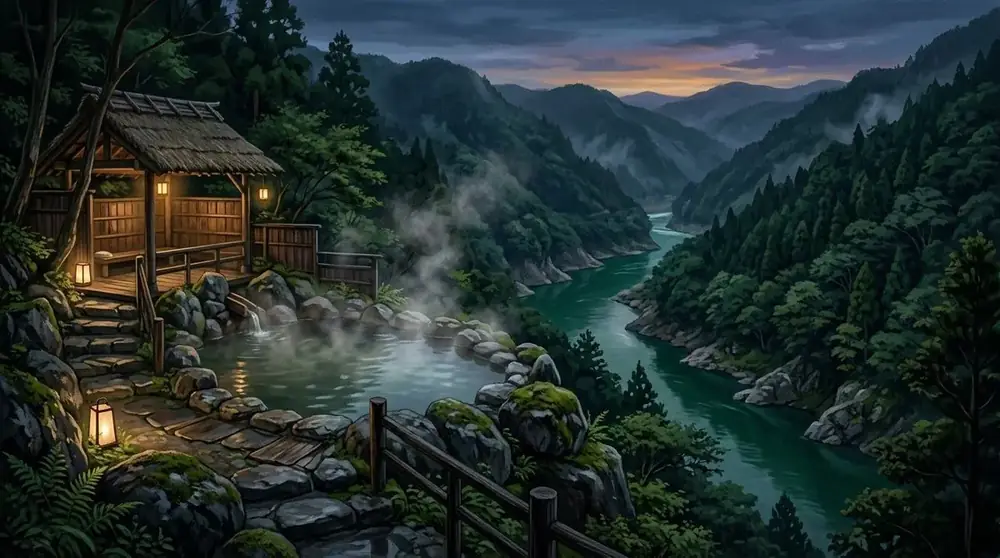
A day-bath house standing in a grove a little way from the Shirahama spa street. It was built around the frame of a wooden storehouse from the early Showa period, on the ground of the old Koga bath that dried up and closed, reopening the spring as Chosei-no-yu. There are three tubs: an indoor bath recalling a Showa-era healing resort, a bath lined with Kishu bincho-tan charcoal, and an open-air bath ringed by cherry and maple. Shirahama's spring runs through it unrecycled, and the mildly alkaline sodium bicarbonate chloride water is known for leaving skin smooth. 900 yen for adults and 500 yen for children, 10:00 to 22:00, closed Wednesdays (or the next day if Wednesday is a holiday), parking for 22. A ramen shop sits on the same grounds.
- Price (adult)
- ¥900
- Hours
- 10:00–22:00 (last entry at closing)
- Closed
- Wednesdays (next day if a holiday)
- Access
- About 10 minutes by Meiko bus for Sandanbeki from Shirahama Station on the JR line, alighting at Koga-ura; about 15 minutes by car from Nanki-Tanabe IC on the Hanwa Expressway via Route 42, with parking for 22.
- Water type
- Bicarbonate spring
- Tattoos
- Ask ahead
- Admission
- 900 yen for adults and 500 yen for children (prices were revised from 2026). A booklet of 12 tickets costs 8,000 yen, and towels must be brought or bought.
- Spring water
- A mildly alkaline sodium bicarbonate chloride spring, running flow-through from Shirahama, one of the three ancient spas of Japan. It has a cleansing feel on the skin and is called a beauty spring.
- Baths
- There are three tubs: an indoor bath of Kishu cedar recalling a Showa-era healing resort, a bath with the floor lined with Kishu bincho-tan charcoal, and an open-air bath ringed by cherry and maple, known as the maple bath. In season the green or the colour of autumn comes close.
- How it works
- Open 10:00 to 22:00, with reception until closing. Wednesday is the regular closing day, or the next day if Wednesday is a holiday. No reservation is needed, and a ramen shop on the grounds serves Wakayama ramen for after the bath.
- Access & parking
- About 10 minutes by Meiko bus for Sandanbeki from Shirahama Station on the JR line, alighting at Koga-ura; about 7 minutes by taxi. By car, about 15 minutes from Nanki-Tanabe IC on the Hanwa Expressway along Route 42, with parking for 22.
- Phone
- 0739-42-3010
- Official site
- choseinoyu.info ↗
- Open in Google Maps
- Google Maps ↗
Essentials
Find a stay on Trip.com
Search and book accommodation across Japan on Trip.com. Day-use bathing needs no booking.
Opens partner booking site (affiliate)
Why go
- A tub lined with bincho-tan charcoal
- Shirahama's spring, flowing straight through
- A building revived from an early-Showa storehouse
Water drawn again on the ground of the dried-up Koga bath
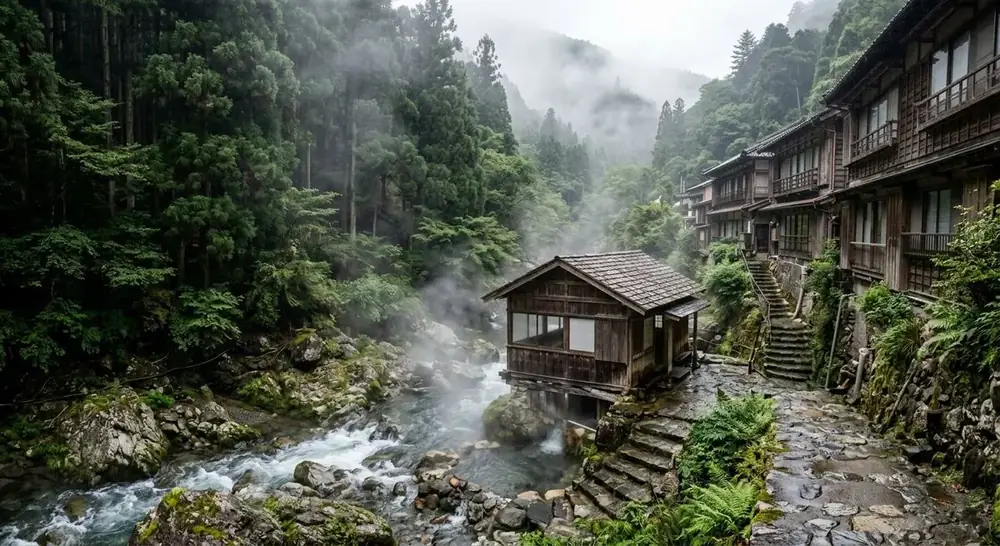
This ground once held a bath called Koga-yu. After the water dried up and it closed, decades passed before the spring was drawn again on the same site under the name Chosei-no-yu. The building keeps the frame of a wooden storehouse in use since the early Showa period, finished in natural materials such as wood and earth so that it runs into the surrounding grove. Past the entrance it feels less like a spa street and more like a rest house in the hills. Shirahama water is brought here and run flow-through, so an old spa town water meets you in a new building.
The charcoal bath and its three tubs
The three tubs are the indoor bath, the charcoal bath and the open-air bath. The indoor bath uses Kishu cedar to give the air of a Showa-era healing resort. The charcoal bath has the whole floor lined with bincho-tan from Kishu, a charcoal said to soften the water, which suits a long soak. The open-air bath is enclosed by trees enough to be called the maple bath, and can be taken among spring greenery or autumn colour. Moving between the three fills half an hour or more quickly.
Pairing it with the other baths of Shirahama
Shirahama has communal baths of its own: Saki-no-yu, where you bathe close to the breaking sea, and Shirara-yu and Muro-no-yu in the middle of the spa street. Saki-no-yu runs from morning to evening in an exposed spot near the waves, while the street baths carry the feel of everyday local washing places. Chosei-no-yu sits further back in the grove and is quieter, and because it stays open until 22:00 it works even after a late arrival. Pairing Saki-no-yu in the morning with Chosei-no-yu in the evening gives a wider view of Shirahama.
Before you go
- No official tattoo policy is published — ask at reception.
- Last entry is 30–60 minutes before closing.
Features
Mood & scenery
Price
Convenience
Amenities
✔ Verified operating: 2026-10 Operating status and rates cross-checked against the official site and onsen guides (full source notes in Japanese on the JA page)
Prices and hours change. Check official sources before visiting.
More in this area

Saki-no-Yu
An open-air-only bath at the edge of the Pacific. One of Japan's oldest springs, mentioned in the 8th-century Nihon Shoki; on rough days sea spray reaches the tubs. No roof, no wash stations.

Shirahama Onsen Muro-no-yu
Shirahama's other classic public bath, on the Yuzaki seafront near Saki-no-yu. Its draw: two distinct springs — Mabuyu and Miyukiyu — under one roof. 7 am to 10 pm, ¥420.

Ryujin Onsen Motoyu
The source bath of Ryujin Onsen, counted with Yunokawa and Kawanaka among Japan's 'three beauty baths'. It stands on the Hidaka River deep in the Kii mountains, with a cypress indoor bath and a rock rotenburo overlooking the stream. The silky bicarbonate water is famous for leaving skin smooth. ¥800, 7:00–21:00, open daily. An hour by car from Koyasan via the Koya-Ryujin Skyline, or about 80 minutes by bus from Kii-Tanabe.