Saki-no-Yu
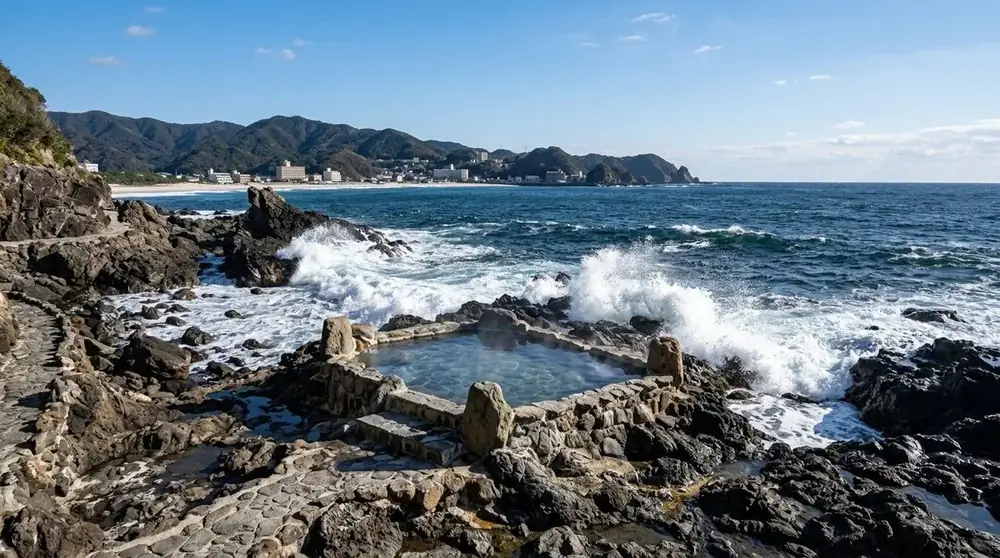
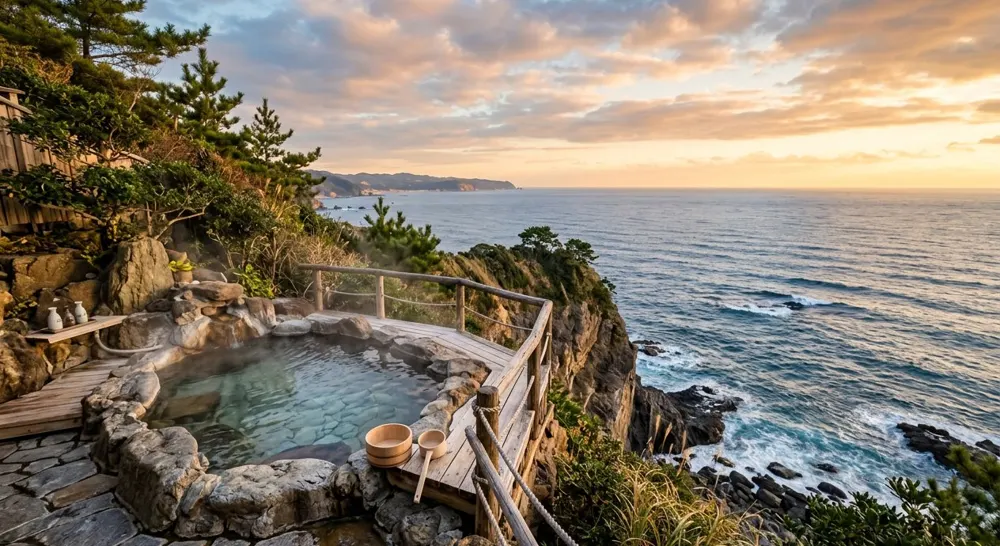
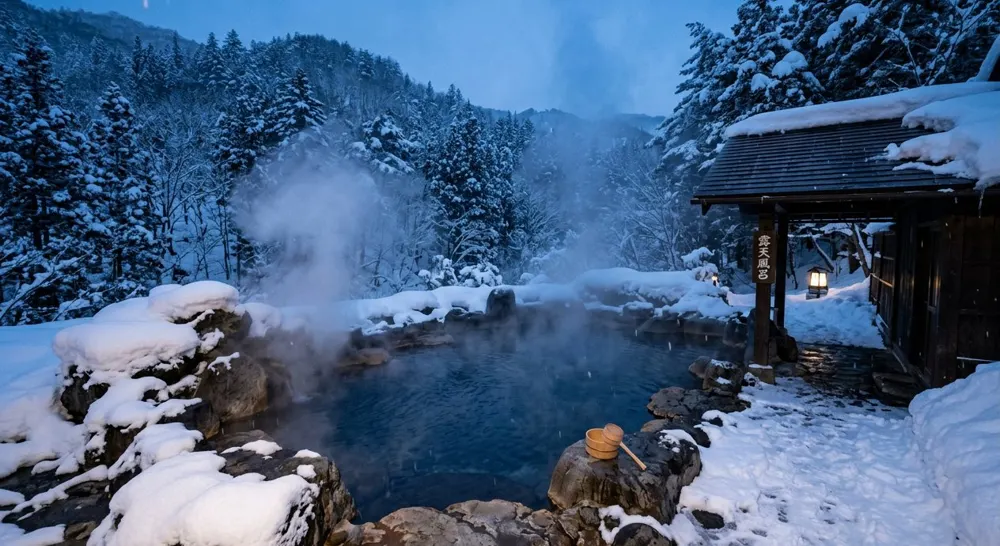
An open-air-only bath at the edge of the Pacific. One of Japan's oldest springs, mentioned in the 8th-century Nihon Shoki; on rough days sea spray reaches the tubs. No roof, no wash stations.
Shirahama's other classic public bath, on the Yuzaki seafront near Saki-no-yu. Its draw: two distinct springs — Mabuyu and Miyukiyu — under one roof. 7 am to 10 pm, ¥420.
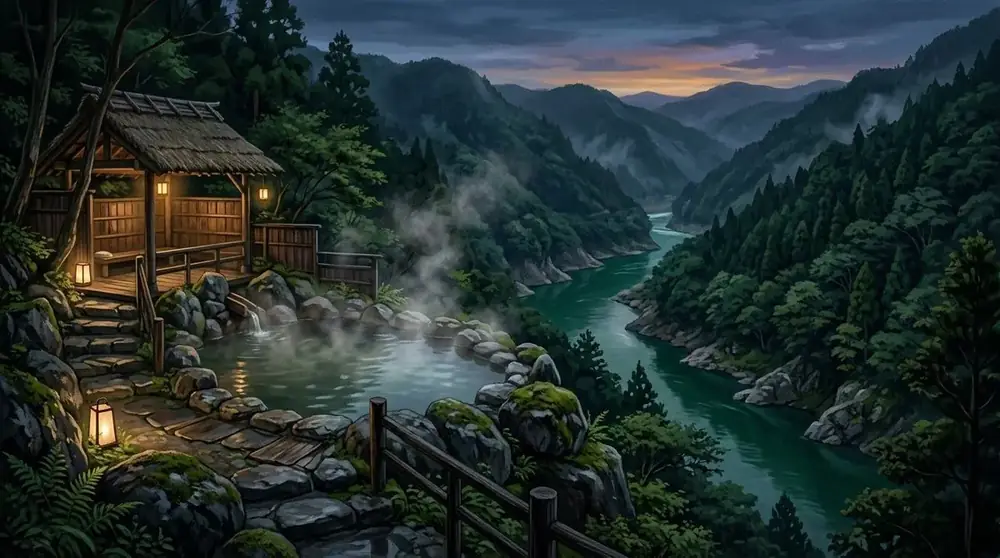
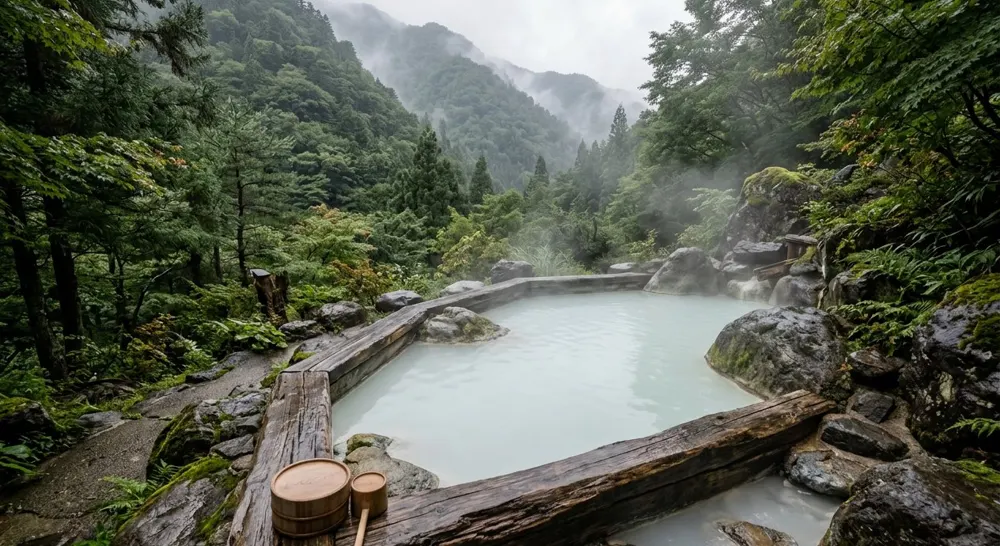
The source bath of Ryujin Onsen, counted with Yunokawa and Kawanaka among Japan's 'three beauty baths'. It stands on the Hidaka River deep in the Kii mountains, with a cypress indoor bath and a rock rotenburo overlooking the stream. The silky bicarbonate water is famous for leaving skin smooth. ¥800, 7:00–21:00, open daily. An hour by car from Koyasan via the Koya-Ryujin Skyline, or about 80 minutes by bus from Kii-Tanabe.
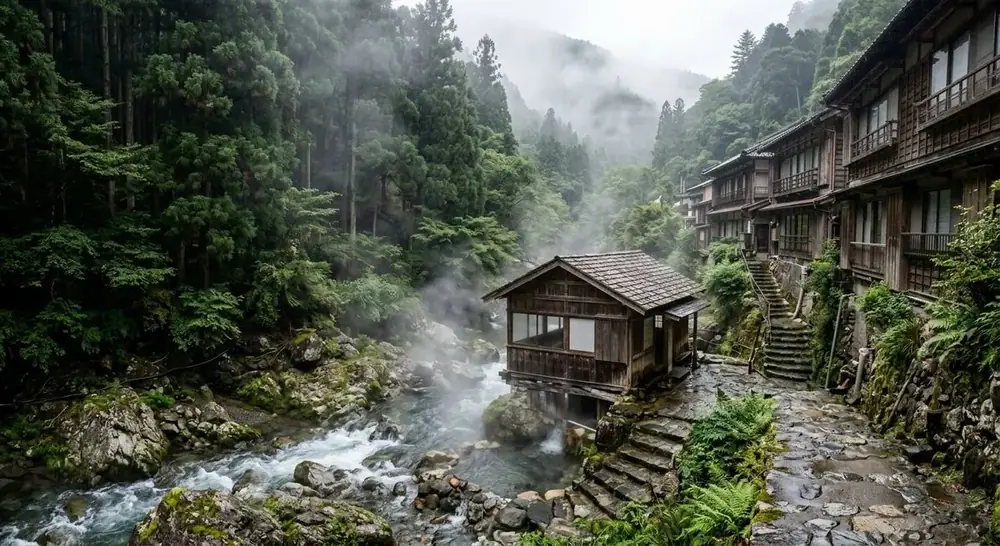
The only hot spring inscribed as a World Heritage Site that you can actually bathe in, listed together with the Kumano Kodo pilgrimage routes. A tiny hut over the stream in Yunomine — said to be Japan's oldest onsen at 1,800 years — shelters a tub hollowed from natural rock that fits two adults. The sulfurous water is said to change colour seven times a day and served pilgrims for ritual purification. Private 30-minute slots, ¥800, sign up at the public bathhouse (6:00–21:00). Waits of several hours are common on holidays; boil onsen eggs in the hot-spring trough while you wait.
At Kawayu, where 73°C spring water bubbles up through the bed of the Ōtō River, a giant outdoor bath is created every December to February by damming the river. Roughly 50 by 15 metres — big enough for 'a thousand people', as the name says — it's tempered to perfection by the river's cold flow. Free (donation box), 6:30–22:00, swimwear required, open to everyone. Bathing is suspended in bad weather or high water and opening dates shift from year to year. In summer you can dig your own pool in the gravel. Combine with Yunomine and Watarase for the three Hongu baths.
A town-run bathhouse right in front of Shirara-hama, the famous white-sand beach. Built like an old-fashioned sentō with an attendant's counter, its second-floor bathroom opens through big windows onto the beach, blue sea and sky — a ¥420 view bath you would never expect in a resort. The 66.8°C sodium-chloride 'Suzushi-yu' source flows freely, and the strongly salty water keeps you warm long after. Open 09:00–11:00 and 14:00–21:30 (last entry 21:00; 07:00–09:00 is residents only), closed Thursdays. Soap and shampoo sold for ¥40; no hair dryers. One of Shirahama's 'sotoyu' circuit with Saki-no-yu and Muro-no-yu — locals rinse off the sand after a swim and come straight in. About 15 minutes by bus from Shirahama Station to 'Shirarahama'.
The public bath at the heart of Yunomine Onsen, one of Japan's oldest springs, where pilgrims purified themselves before Kumano Hongū Taisha. The building, renovated in 2022, also serves as reception for the World Heritage 'Tsuboyu'. There are three bathrooms: the 'Ippan-yu' with hot and tepid tubs (adults ¥400, shampoo provided), the concentrated 'Kusuri-yu' filled with undiluted source water (¥600, no soap allowed) and a 30-minute private family bath (¥700), all sulphur-scented sodium-bicarbonate-chloride water ranging from milky to clear. Tsuboyu (¥800, 30-minute slots) can mean a wait of hours when busy, so the clever order is to take a number and warm up in the public bath first. Open 06:00–21:00 (last entry 20:30), irregular cleaning closures. The village also has the 'Yuzutsu', a 90 °C source where you boil eggs and vegetables, and is the trailhead of the Dainichi-goe section of the Kumano Kodō. About 2 hours by bus from JR Kii-Tanabe or Shingū stations to 'Yunomine Onsen', right by the stop; 46 parking spaces.