Niigata · Tsubame Onsen, Myōkō
Tsubame Onsen Kogane-no-yu (free open-air bath)
燕温泉 黄金の湯(無料野天風呂)
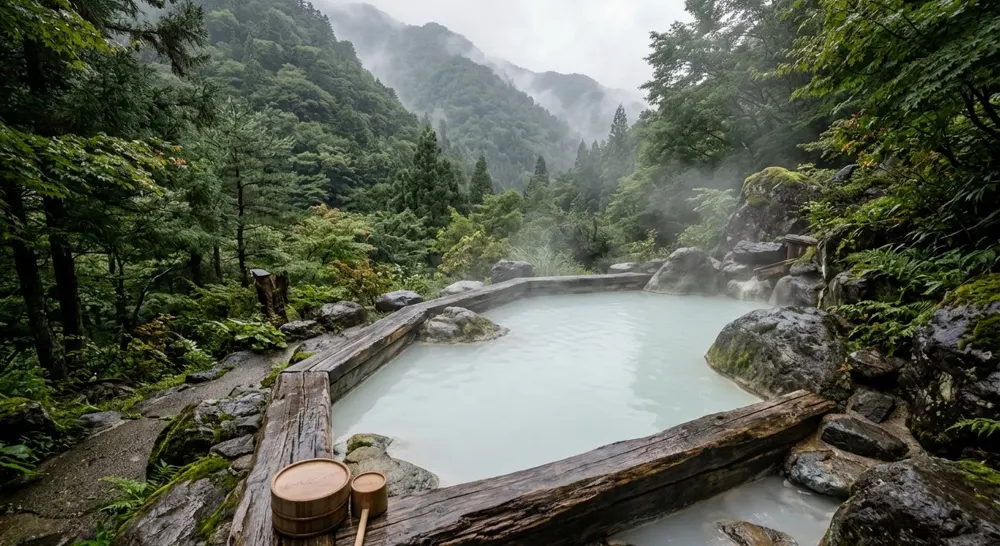
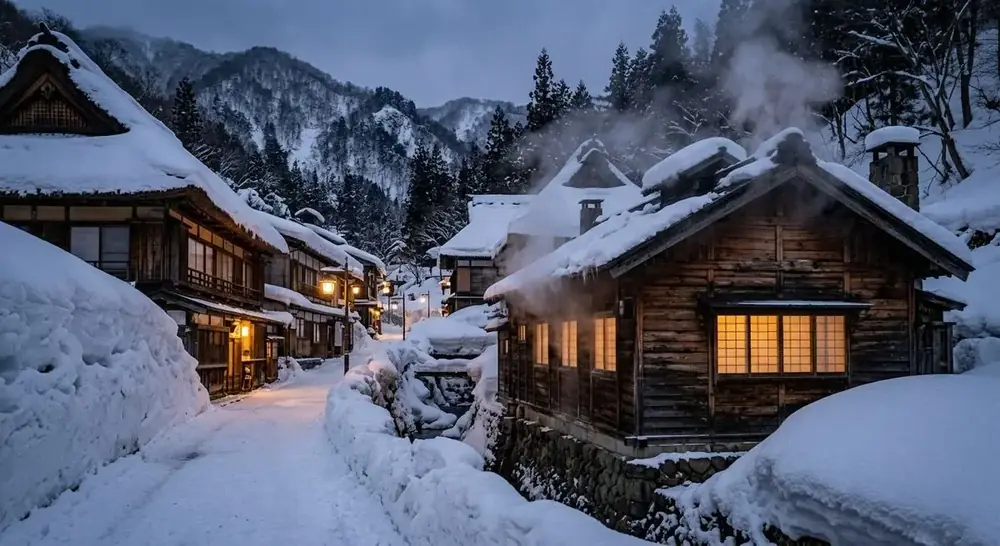
A free, gender-separated open-air bath at the top of Tsubame Onsen, a trailhead village at about 1,100 m on Mt Myōkō. Five minutes up a mountain path from the village you find only a simple plank changing hut and a rock tub, where flakes of 'yunohana' drift in milky sulphur water. Known as a 'triple beauty bath' for combining sulphur, bicarbonate and sulphate, it faces the flanks of Myōkō. Free of charge from sunrise to sunset, open April to November (closed in winter; boots needed while snow lingers); no bathing on Monday and Friday mornings for cleaning. Fifteen minutes further along the gorge is the mixed 'Kawara-no-yu' (Jul–Nov). No soap allowed and minimal changing space, so follow local etiquette. Walk from the terminus of the bus (about 21 min) from Sekiyama Station.
- Price (adult)
- Donation / free
- Hours
- Sunrise to sunset (also at night during the spring illumination period)
- Closed
- Closed in winter (late Nov until the thaw; opens between March and late May depending on the year); cleaning Mon & Fri mornings
- Access
- About 21 min by Keinan bus from Sekiyama Station (Echigo Tokimeki Railway) to the Tsubame Onsen terminus, then 5 min on foot; about 25 min by car from Myōkō-Kōgen IC
- Water type
- Sulfur spring
- Tattoos
- Ask ahead
- Admission
- Free (maintained by the Tsubame Onsen NPO; donations to the box at the entrance welcome). Simple changing huts for each sex; no showers, wash stations, lockers or soap. Bring your own towel. Toilets are in the village. Cloudy water, ordinary onsen etiquette — no swimwear
- Baths
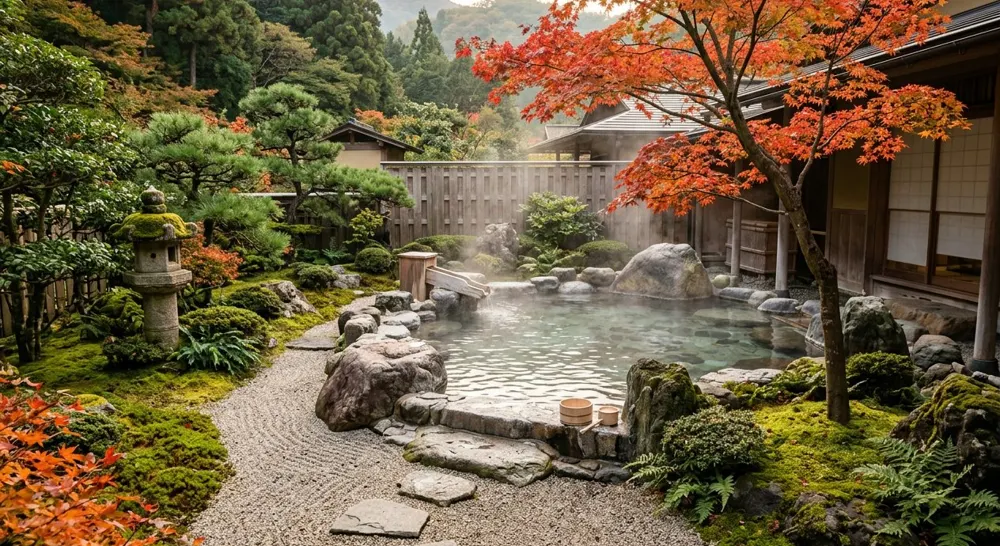
- A wild open-air bath at about 1,100 m at the trailhead of Mt Myoko (2,454 m), 200 m up a mountain path from the Tsubame Onsen village — a 5–10-minute walk. One stone-built pool per sex (fenced, with mountains above the rim), about 43°C. Named 'Kogane' (golden) for the golden leaves that fall into it in autumn. Ten minutes further on is the mixed riverside wild bath 'Kawara-no-yu' (check current status in 2026). Legend says Uesugi Kenshin healed his battle wounds here
- Spring water
- A sulphur spring of the sulphur-bearing calcium-sodium-magnesium bicarbonate-sulphate type, milky white with a sulphur smell hanging in the air, free-flowing at about 43°C (varying with weather and season). A hidden spring born of Mt Myoko's volcanism, traditionally good for neuralgia, rheumatism, skin disease and stomach complaints. In spring 2025 a landslide damaged the source works and the bath opened late, in late May, after repairs
- Access & parking
- 10 min on foot from the free Tsubame Onsen car park (about 30 cars, at the village entrance). By car about 25 min (14 km) from Myoko-Kogen IC on the Joshin-etsu Expressway — a dead-end road, narrow and steep. By bus about 25 min on the Tsubame Onsen route from Sekiyama Station on the Echigo Tokimeki Railway (a few a day), then 5 min on foot from the terminus. Heavy snow closes the road from late November to mid-April
- Phone
- 0255-86-3911
- Official site
- niigata-kankou.or.jp ↗
- Open in Google Maps
- Google Maps ↗
Essentials
Find a stay on Trip.com
Search and book accommodation across Japan on Trip.com. Day-use bathing needs no booking.
Opens partner booking site (affiliate)
Why go
- Free milky open-air bath facing Mt Myōkō
- 'Triple beauty water' of three spring types
- Apr–Nov only; Mon/Fri mornings cleaning
Free milky-white wild bath at 1,100 m on the slopes of Mt Myoko
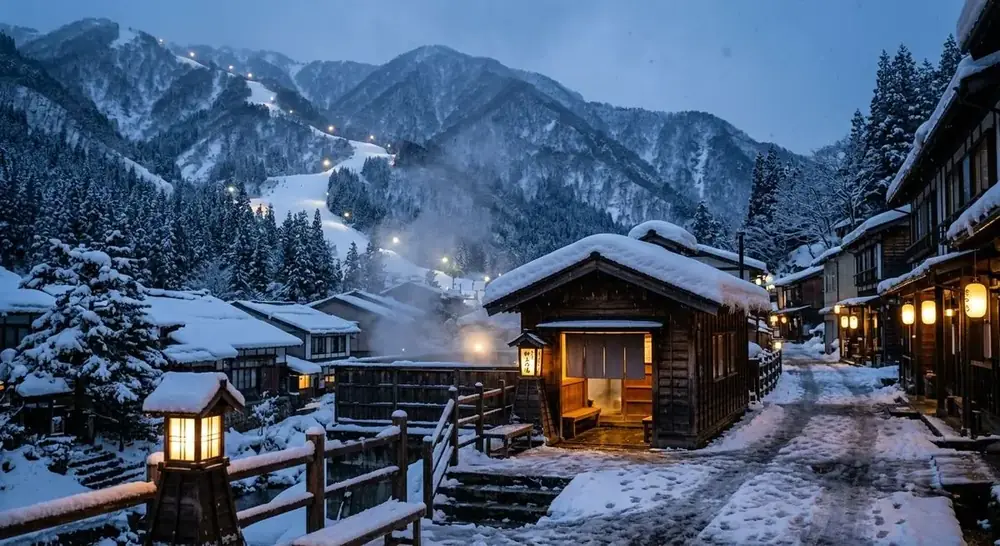
Tsubame Onsen Kogane-no-yu is a free wild open-air bath reached by a 200-metre climb up a mountain path from Tsubame Onsen, a tiny spa village at about 1,100 m at the trailhead of Mt Myoko in Myoko, Niigata. Tsubame opened in 1895 and marked its 130th anniversary in 2025: a hidden valley hamlet of just a few inns where milky sulphur water rises, and where the warlord Uesugi Kenshin is said to have healed his battle wounds. Kogane-no-yu consists of one stone-built pool for each sex, named for the golden leaves that drift down from the surrounding forest onto the water in autumn. Maintained by a local NPO, it is free to all from sunrise to sunset — but it opens only from the spring thaw until late November, so timing is everything.
A 43°C sulphur bath with mountains over the fence — etiquette and what to bring
From the signboard at the end of the village a 5–10-minute walk up the path brings you to small changing huts and stone-rimmed pools. Men and women are separated by a fence, each pool takes five or six bathers, and with no showers, wash stations or soap you simply rinse off the dust with a ladle and get in. The water is milky, richly sulphurous and about 43°C — perfect for a body chilled by the climb — and over the fence you see the forested skirts of Mt Myoko, golden foliage in autumn and lingering snow in late spring. Stirred-up sulphur sediment from the bottom can turn it whiter still. It is closed for cleaning on Monday and Friday mornings, and though free, it is kept up by NPO volunteers, so please leave something in the donation box at the entrance. Bring a towel, a plastic bag for it afterwards, sandals and insect repellent; even outdoors, swimwear is not worn, and photograph only discreetly when no one else is present. The mixed 'Kawara-no-yu' in the gorge ten minutes further on operates intermittently from year to year — ask in the village on the day.
Season, access and a Myoko itinerary
The opening date depends on the thaw and varies by year. In 2024 it opened on 9 March, and from 16 March until the snow was gone it was floodlit from 17:00 with night bathing allowed; in 2025 a landslide wrecked the source works and it did not open until 23 May after repairs. It normally runs until late November, otherwise sunrise to sunset, closed for cleaning on Monday and Friday mornings. Access is 25 minutes by car from Myoko-Kogen IC on the Joshin-etsu Expressway (a narrow dead-end mountain road, closed in winter) or 25 minutes by bus from Sekiyama Station, then a 10-minute walk from the free car park at the village entrance. It is the perfect soak after climbing Mt Myoko (the Tsubame route takes 7–8 hours return); for a lighter day, eat or bathe at a Tsubame inn such as Hanabun or Tsubame Highland Lodge and combine it with Akakura Onsen, Imori Pond and the Myoko Kogen Visitor Centre. Mid-to-late October, when the leaves turn golden, is when it truly earns its name — but the car park fills early, so come in the morning.
Before you go
- No official tattoo policy is published — ask at reception.
- As a communal bath there is no soap or shampoo — bring your own or buy at the shop.
- The water runs hot (43–45°C). Don't add cold water; take short repeated dips instead.
- Open seasonally only — check the official site for operating dates before you go.
- Last entry is 30–60 minutes before closing.
Features
Mood & scenery
Price
Who with
Convenience
Amenities
✔ Verified operating: 2026-09 Operating status and rates cross-checked against the official site and onsen guides (full source notes in Japanese on the JA page)
Prices and hours change. Check official sources before visiting.
More in this area

Yuzawa Onsen Egami Public Bath
A locals' public bath three minutes from the east exit of Echigo-Yuzawa Station, tucked into the shopping street. Indoor pool only, but the slightly hot, soft water that clings to the skin gets praise. Shampoo is provided and a towel set costs ¥400, so you can drop in empty-handed while waiting for the shinkansen. ¥600 since December 2025.

Tsukioka Onsen Bijin-no-izumi
Forty minutes by car from Niigata city, the communal bath of Tsukioka Onsen, which bills itself as the spring that 'makes you beautiful'. The emerald-green water has one of the highest sulfur contents in Japan — you smell it the moment you step in. Indoor pool only, ¥600. On the edge of the ryokan street and popular with locals. 25 minutes by bus from Shibata Station. Closed Tuesdays and the third Wednesday.

Tsukioka Onsen Furinya
An hour by car from Niigata city, a ryokan in Tsukioka Onsen, famed for water that 'makes you beautiful'. Its emerald-green spring, among the most sulfur-rich in Japan, fills indoor and open-air baths, and day use runs late — 15:00–23:00 — so you can soak while the garden is lit up. ¥800 on weekdays (¥1,000 with towel), +¥200 on weekends and holidays. Combine with the free footbath and spring-source park in the village.