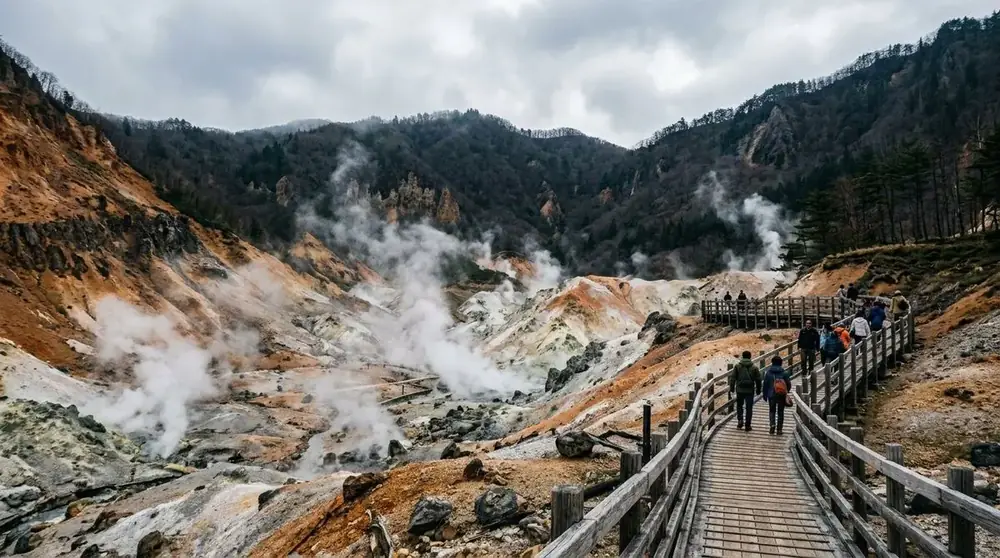
Hokkaido · Noboribetsu Onsen
Dai-ichi Takimotokan
第一滝本館
Hokkaido's flagship onsen ryokan: a vast 5,000 m² bathhouse overlooking Jigokudani with 35 tubs fed by five spring types — sulfur, salt, sulfate and more. Day bathing is accepted from 9:00 to 18:00. An indoor heated pool makes it good for families. Tattoos not permitted.
- Price (adult)
- ¥2,500
- Hours
- day use 09:00–18:00(leave by 21:00)
- Closed
- Open daily(closed Apr 5–15, 2027)
- Access
- 15 min by bus from JR Noboribetsu Station
- Water type
- Sulfur spring
- Tattoos
- Not allowed
- Spring types
- Five spring types in one bathhouse: sulphur; acidic iron-vitriol (acidic sulphur-iron simple spring, pH 2.3); Glauber's salt; salt (Na-Ca chloride); and bicarbonate (Na-Ca-Mg chloride-bicarbonate). Drawn from seven sources at 49–72°C, all free-flowing without recirculation
- Baths
- About 35 tubs in the 5,000 m² 'Onsen Tengoku' hall (men: 12 indoor, 3 open-air, 2 saunas / women: 11 indoor, 4 open-air, 2 saunas). Floor-to-ceiling glass looks straight onto Jigokudani. Also a walking bath, lie-down bath, cold plunge, cascade bath and a swimsuit pool
- Day-use price
- Standard adult rate for entry 9:00–16:00; a discounted 'evening rate' (about 20% off adults, roughly half for children) for entry 16:00–18:00. Bath and face towel rental included. Credit cards accepted. Leave by 21:00. Overnight guests may use the baths 4:00–25:00
- Phone
- 0143-84-2111
- Official site
- takimotokan.co.jp ↗
- Open in Google Maps
- Google Maps ↗
Essentials
Stay in this onsen town
Compare and book stays in Noboribetsu Onsen. Day bathing itself needs no booking.
Opens partner booking site (affiliate)
Why go
- Five spring types, 35 tubs
- Views over Jigokudani
- Day entry until 18:00
History and the 'Onsen Tengoku'
In 1858 Takimoto Kinzō built a bathing hut beside Jigokudani for his wife, who suffered from a skin disease — the event regarded as the founding of Noboribetsu Onsen itself. Her recovery earned it the nickname 'the loving husband's bath'. Today's bathhouse, the 'Onsen Tengoku' (hot-spring heaven), covers about 5,000 m² under a high glass roof, with the steaming Jigokudani valley filling the view. Being able to compare five of Japan's ten official spring types under one roof is rare anywhere in the world: milky sulphur water, greenish acidic iron-vitriol, and clear salt, Glauber's-salt and bicarbonate springs, each different in colour, smell and feel, with in-house 'yumori' bath-keepers adjusting temperatures daily. Day visitors use the very same baths as overnight guests, which makes it the essential stop when combined with a walk through Jigokudani.
How to use it & practical notes
- The day-use entrance is separate from the main lobby: from the basement car park take the lift and escalators, then pass the bath gate with the card key issued at reception.
- Bath towel, face towel, shampoo, body wash and hair dryers are all included — come empty-handed. No loungewear.
- A good order: bicarbonate and salt springs (gentle) → Glauber's salt → sulphur → acidic iron-vitriol (strongest), finishing with plain hot water or the bicarbonate bath to soothe the skin.
- The pH 2.3 acidic spring stings eyes and cuts, and tarnishes silver — remove jewellery. Sulphur leaves a lingering smell, so change into clothes that wash easily.
- Tattoos are not permitted, for day or overnight guests.
- The heated pool (swimsuit required; rental available) and saunas are included in the day rate.
- The 16:00–18:00 evening rate is cheaper, but with a 21:00 exit your stay is shorter.
Access and surroundings
From Noboribetsu Station (JR Muroran Line) the Dōnan Bus takes about 15 minutes to Noboribetsu Onsen bus terminal; walk 5 minutes up through the village to the top, just before the Jigokudani entrance. Highway buses run from New Chitose Airport (about 1 hour) and Sapporo Station (about 1 h 40 min). By car it is 10 minutes from Noboribetsu-Higashi IC, and day visitors may use the hotel's basement car park. Three minutes' walk brings you to the free Jigokudani boardwalk (illuminated at night as the 'Onibi no Michi'), and 10–20 minutes to Ōyunuma lake and the natural foot bath on the Ōyunuma River. The village also has free hand and foot baths and the Enma-dō hall with its mechanical demon show several times a day.
Before you go
- Tattoos are explicitly not allowed, even if covered.
- Ryokan day-use hours are limited and may be suspended in peak season — phone the same morning.
- Last entry is 30–60 minutes before closing.
Features
Convenience
Who with
Mood & scenery
Language support
✔ Verified operating: 2026-09 公式サイト (日帰り 9:00–18:00受付・退館21:00, 16:00以降は夕割料金, タオル付)
Prices and hours change. Check official sources before visiting.
More in this area
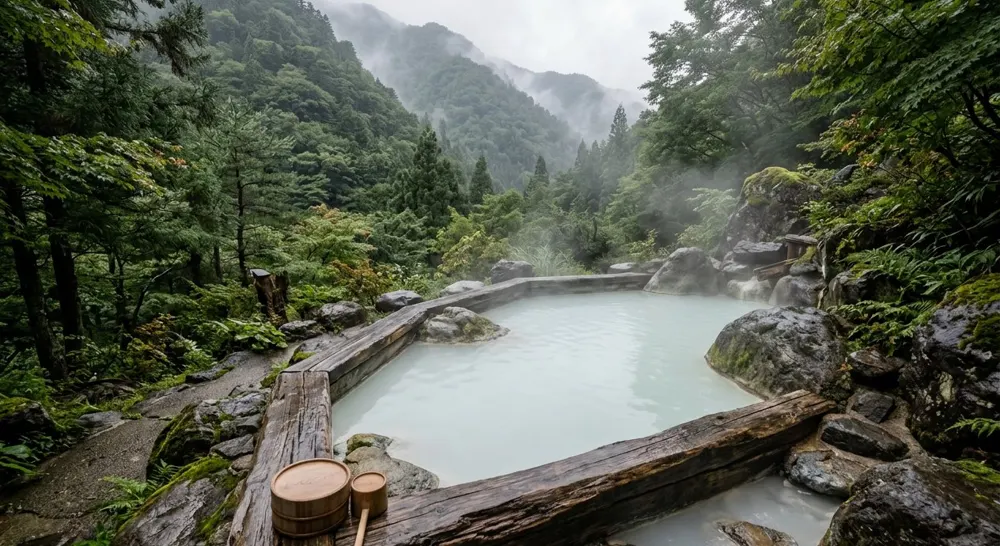
Yumoto Sagiri-yu
The only bathhouse-style onsen in the middle of Noboribetsu's resort strip. Two spring sources piped from Jigokudani — sulfur and the alum 'eye bath' found nowhere else — for ¥500.
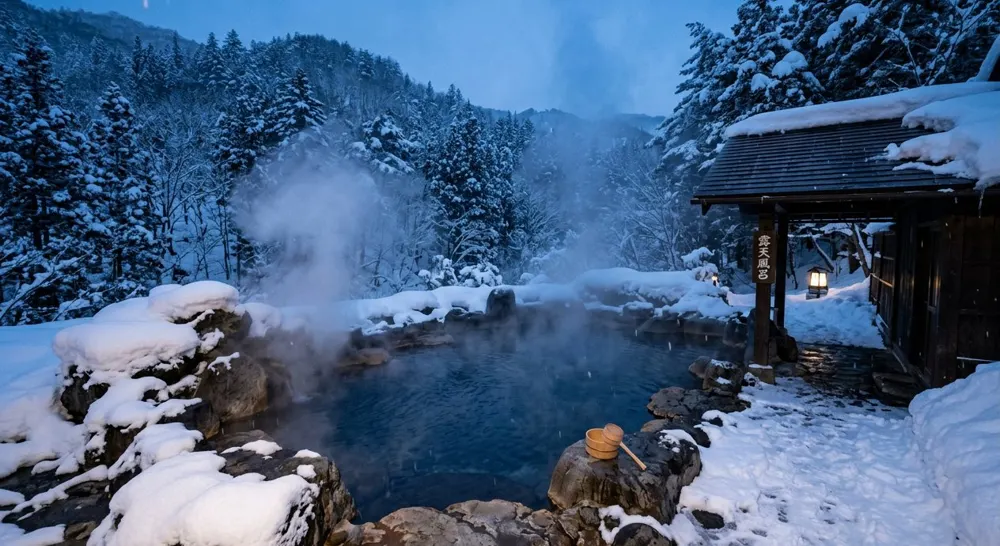
Noboribetsu Sekisuitei (day use)
A large hotel whose top-floor 'sky' open-air baths look over the Noboribetsu hills. Day use in two windows — 5–9 am and 11 am–7 pm — for ¥1,200. A little away from the main strip, so quieter.
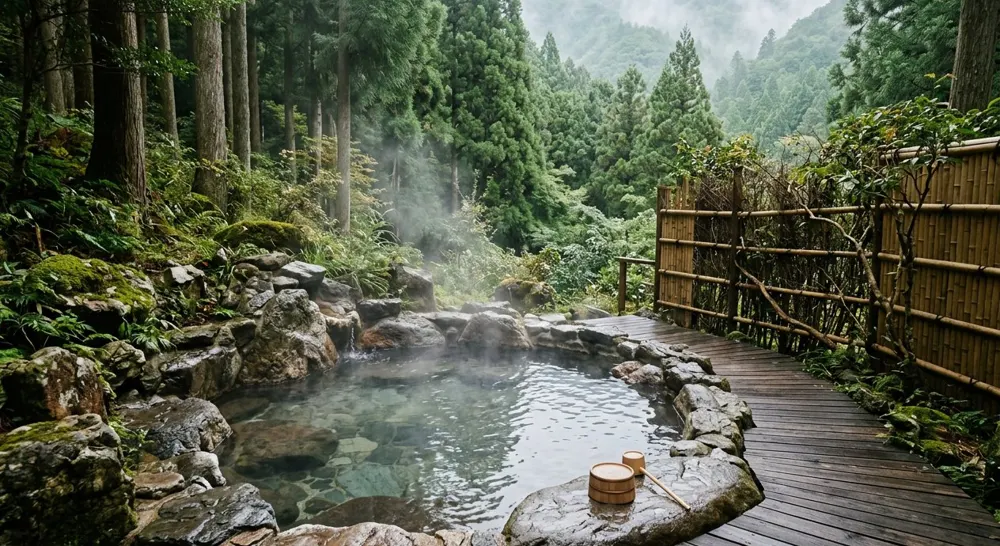
Ōyunuma River natural foot bath
A free foot bath in an actual river of hot spring water flowing out of Ōyunuma pond, at the end of a forest boardwalk. The perfect finish to a Jigokudani walk. Daylight hours; the trail may close in deep snow.