Saitama · Saitama city
Saitama Seiganji Onsen
さいたま清河寺温泉
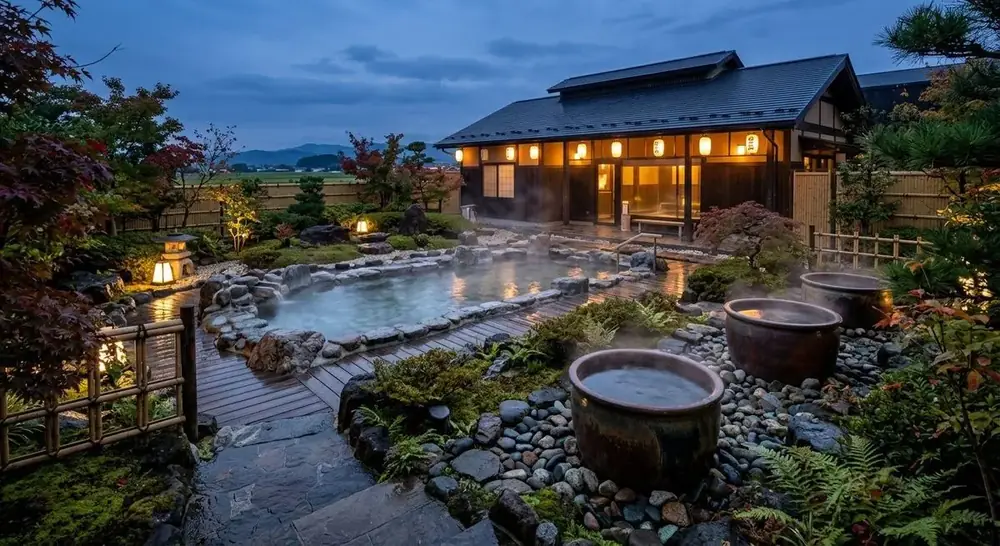
A natural-spring bath complex on a wooded Musashino plot in Saitama's Nishi ward. The source, over 600 litres a minute from 1,500 m down, is a faintly green-tinged amber sodium-chloride water; in the outdoor area the rock bath and 'source tepid bath' are filled free-flowing without heating or dilution, and the place is famous among enthusiasts for its 'nuru-yu culture' of long soaks at around 38 °C. There are also raw-source pot baths, lie-down baths, a high-concentration carbonated bath, a sauna with löyly and a deep cold plunge, and an outdoor rest area facing the trees — remarkably quiet for the suburbs. Adults ¥880 on weekdays, ¥980 on weekends and holidays; children ¥500/¥550; open 10:00–24:00 (last entry 23:30), irregular closures. Restaurant, body care and scrub treatments on site. About 25 minutes by bus from JR Ōmiya Station to 'Seiganji', or by taxi from Ageo or Sashiōgi stations. A must for tepid-bath lovers in the Tokyo area; large car park.
- Price (adult)
- ¥900
- Hours
- 10:00–24:00 (last entry 23:30)
- Closed
- Irregular (a few closure days a year for checks)
- Access
- Seibu or Tōbu bus from JR Ōmiya Station west exit (toward Nishi-Asuma / Sashiōgi), about 25 min to 'Seiganji' then 5 min on foot; about 10 min by taxi from Sashiōgi (Kawagoe Line) or Ageo (Takasaki Line); about 20 min by car from Okegawa-Kitamoto IC
- Water type
- Simple spring
- Tattoos
- Not allowed
- Admission
- Admission adults ¥900 weekdays / ¥1,000 weekends and holidays, children (3 and up to elementary) ¥550/¥600, under 3 free (children still in nappies cannot use the changing room or the baths). A 10-visit ticket book costs ¥8,100 (cash only). Shampoo and body soap provided, towels rented, shoe and changing lockers ¥100 refundable. Restaurant 'Takenawa', bodywork, akasuri and a barber. Cash and cards
- Baths
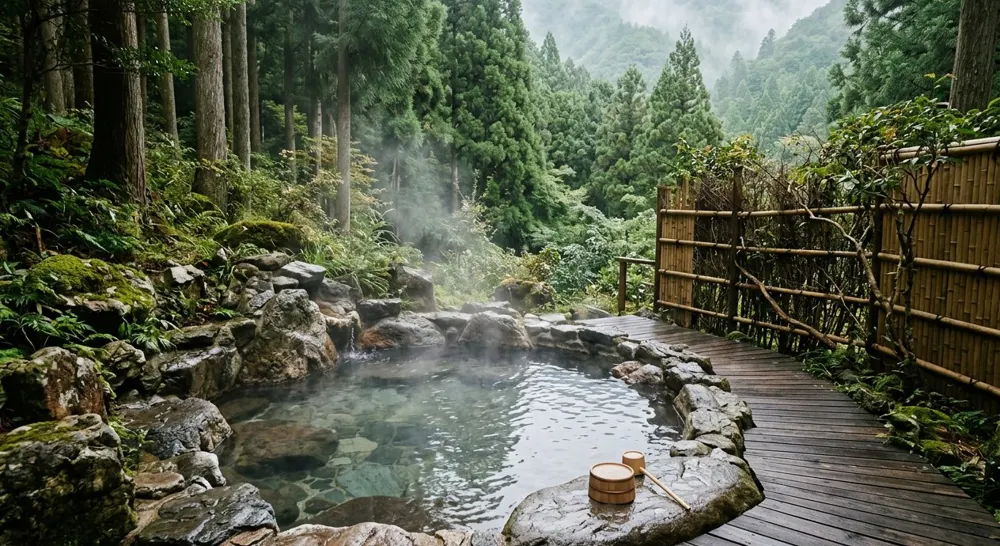
- A large natural onsen opened in 2006 in Nishi Ward, Saitama, on grounds that keep the mixed woodland and bamboo groves of the Musashino plain. Its heart is a broad open-air area of about 170 tsubo for men and women combined, where the 'raw spring' — tepid at a felt 35–38°C — runs free-flowing with no heating and no added water, and it is the most popular tub. There are also a heated two-tier rock bath, two pot tubs, a lying-down tub, a hot tub, and indoors a high-concentration carbonated bath (cypress), a jet bath, a plain hot bath, a sauna and a sizeable plunge, plus open-air cooling spots looking into the bamboo — making it a well-known place among onsen fans for tepid-water bathing in the capital region
- Spring water
- A sodium chloride spring (hypotonic, weakly alkaline, thermal) at 38.3°C drawn from about 1,500 m underground. The water is faintly green-brown (amber) with a clear slickness and good heat retention, and is called a 'beauty-skin spring'. The raw-spring tub in the open-air area runs free-flowing exactly as it comes, with no heating or added water, and is only slightly warmer than body temperature, so it is comfortable for a long soak
- Access & parking
- 18 minutes on foot from the north exit of Nishi-Ōmiya Station on the JR Kawagoe Line. From the west exit of JR Ōmiya Station, Seibu or Tōbu bus (toward Nishi-Asuma or Sashiōgi Station) about 20–25 minutes to 'Seiganji', right there. About 10 minutes by taxi from Sashiōgi Station on the JR Kawagoe Line or Ageo Station on the Takasaki Line. By car 20 min from Okegawa-Kitamoto IC on the Ken-Ō Expressway, 25 min from Ōmiya, 30 min from Tokorozawa. Free parking for about 200
- Phone
- 048-625-7373
- Official site
- seiganji-onsen.com ↗
- Open in Google Maps
- Google Maps ↗
Essentials
Find a stay on Trip.com
Search and book accommodation across Japan on Trip.com. Day-use bathing needs no booking.
Opens partner booking site (affiliate)
Why go
- Famous unheated 38 °C tepid source bath
- Open-air baths and rest area in woodland
- ¥880 weekdays; until midnight; 25 min bus from Ōmiya
An unheated 38.3°C raw spring, a capital-region temple of tepid water
Saitama Seiganji Onsen is a large natural onsen opened in 2006 in Nishi Ward, Saitama, about 25 minutes by bus from Ōmiya, where housing and rice fields mix. The capital region has many big onsen facilities, but this one is spoken of specially by onsen fans for a single reason: the raw spring drawn from about 1,500 m underground at 38.3°C is used exactly as it comes, with neither heating nor added water. Only slightly warmer than body temperature, it feels lukewarm at first, but after about 10 minutes the body warms slowly, and you can stay 30 or 40 minutes without discomfort. The water is a faintly green-brown sodium chloride spring with a clear slickness and high heat retention, and the warmth stays long after you get out, which is why it is called a beauty-skin spring. People travel from a distance for this one tub, making it a representative place of the capital region's tepid-water bathing culture. The grounds keep the mixed woodland and bamboo groves of Musashino, so in the open-air area (about 170 tsubo for men and women combined) you soak with the breeze, birdsong and light coming through the bamboo. Besides the raw-spring tub there are a heated two-tier rock bath, two pot tubs, a lying-down tub and a hot tub, so you can move between temperatures, and indoors there is a high-concentration carbonated bath in cypress, a jet bath, a plain hot bath, a sauna and a sizeable plunge. Hours run from 10 a.m. to midnight (last entry 11:30 p.m.), late even for the capital region, and at ¥900 for adults on weekdays the price is reasonable for the scale and the quality of the spring.
The bamboo-grove open-air area, tub order and how to move through the building
Enter from the free car park (about 200 spaces), put your shoes in a refundable ¥100 locker and pay. Bring towels or rent them; shampoo and body soap are provided. A recommended order: wash in the indoor bath and spend 10 minutes in the high-concentration carbonated bath (the cypress tub) — the bubbles cling to the skin and help circulation; raise your temperature in the jet bath and the plain hot bath; step outside to the open-air area and spend 30–40 minutes in the raw-spring tepid tub — this is what the facility is for; move to the heated two-tier rock bath or a pot tub and rest looking at the bamboo; look up at the sky from the lying-down tub; and finish with 8–10 minutes in the sauna, a minute in the plunge and 5 minutes on the open-air chairs. Because the raw-spring tub is cool, one long stay suits it better than several short ones, and alternating with the hot tubs tires the body quickly, so be careful. The open-air area is enclosed by bamboo and trees and catches the breeze — green in summer, foliage in autumn, and crisp morning air in winter. It holds only about 10 people, so at weekend afternoons you may wait a little. Afterwards eat udon or a set meal at 'Takenawa' (11:00–23:30, last order 22:30), take bodywork or akasuri (10:30–22:00), or use the barber (10:00–19:30); half a day or more can easily be filled. There are power sockets in the rest area, so some people work on laptops, and with hours until midnight (last entry 11:30 p.m.) you can still drop in late from Tokyo or Saitama — a major advantage. Notes: the raw-spring tub is crowded (weekday mornings are comfortable); children under 3 must be out of nappies to bathe; towel rental costs extra; parts of the open-air area may close in bad weather; a few closure days a year for equipment checks. If you are looking for good tepid water in the capital region, this is the first name that comes up.
Practical details and an Ōmiya and Kawagoe route
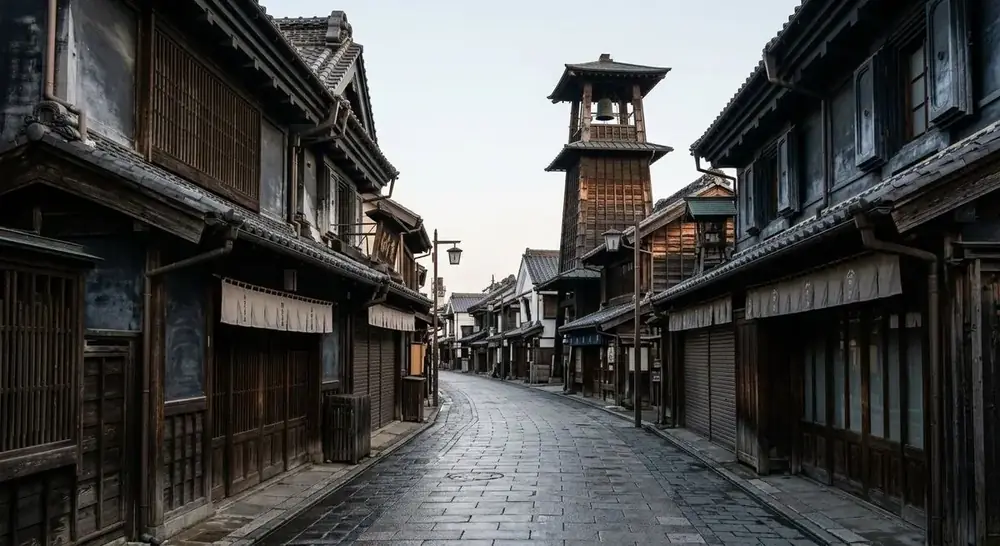
Hours are 10:00–24:00 (last entry 23:30), closures irregular (a few days a year for equipment checks — see the official site); adults ¥900 weekdays / ¥1,000 weekends and holidays, children ¥550/¥600, ticket book ¥8,100 (10 visits), free parking for about 200. The restaurant runs 11:00–23:30 (last order 22:30). Access is 18 minutes on foot from Nishi-Ōmiya Station, 20–25 minutes by bus from Ōmiya Station, 20 minutes from Okegawa-Kitamoto IC. Suggested routes: (1) a day in Kawagoe — the kurazukuri streets and Hikawa Shrine in the morning, soba in Kawagoe for lunch, the raw-spring tepid bath at Seiganji in the afternoon, dinner in front of Ōmiya Station in the evening; (2) a rail journey — riding the Kawagoe Line between Ōmiya and Kawagoe and dropping off at Nishi-Ōmiya for 18 minutes on foot or 5 by taxi to bathe (close to the station, so feasible without luggage); (3) sauna plus tepid water — an afternoon bath, 30 minutes in the raw spring, three sauna sets, finishing in the carbonated bath; (4) families — a morning bath at the weekend, lunch in the restaurant, an afternoon resting in the open-air area; (5) a rainy day — a full day inside (parts of the open-air area may be restricted). Notes: weekend afternoons are crowded; the raw-spring tub is cool, so take care not to catch a chill; the nappy rule for under-3s; check the irregular closures; cash and cards accepted. Seiganji Onsen has settled into its reputation as the best tepid water in the capital region, and suits a rest day in the middle of a Tokyo trip or a stop on the way to Kansai or Tōhoku.
Before you go
- Tattoos are explicitly not allowed, even if covered.
- Last entry is 30–60 minutes before closing.
Features
Sauna & wellness
Price
Amenities
✔ Verified operating: 2026-09 Operating status and rates cross-checked against the official site and onsen guides (full source notes in Japanese on the JA page)
Prices and hours change. Check official sources before visiting.
More in this area

Tamagawa Onsen — Showa Retro Bathhouse
In the hills of Tokigawa, Saitama, a popular day spa styled as a 1950s–60s Japanese town, complete with enamel signs and an old-fashioned sweet shop. Strongly alkaline (pH over 10) 'beauty' water that feels slippery on the skin, indoors and outdoors. Opens at 5 am on weekends for early bathers. ¥980 weekdays. About 1.5 hours from Ikebukuro by Tobu Tojo Line and town bus.

Seibu-Chichibu Station Onsen Matsuri-no-yu
About 80 minutes from Ikebukuro by Laview limited express, a complex hot-spring facility joined to Seibu-Chichibu Station. Themed on the 300-plus festivals Chichibu holds each year, it packs 9–10 tubs per side including open-air baths, a high-concentration carbonated bath and saunas. The food court serves waraji katsu-don and Chichibu soba; the shop sells local sake and miso pickles. ¥1,100 on weekdays, 10:00–22:00; morning baths from 6:00 on weekends.

Chichibu Onsen Mangan no Yu
A day spa on the Hinosawa stream in Oku-Nagatoro, named after Suisen-ji, the final temple of the Chichibu 34 Kannon pilgrimage. Mangan Falls tumbles right in front of the open-air bath—stunning in fresh green and autumn colour. pH 9.4 alkaline water with a pronounced silky feel. ¥980 weekdays (¥750 after 17:00), ¥1,200 weekends. Combine with the Nagatoro river boats or Mt. Hodo.