Onsen towns for bath hopping

Towns where you stroll in a yukata from bath to bath.

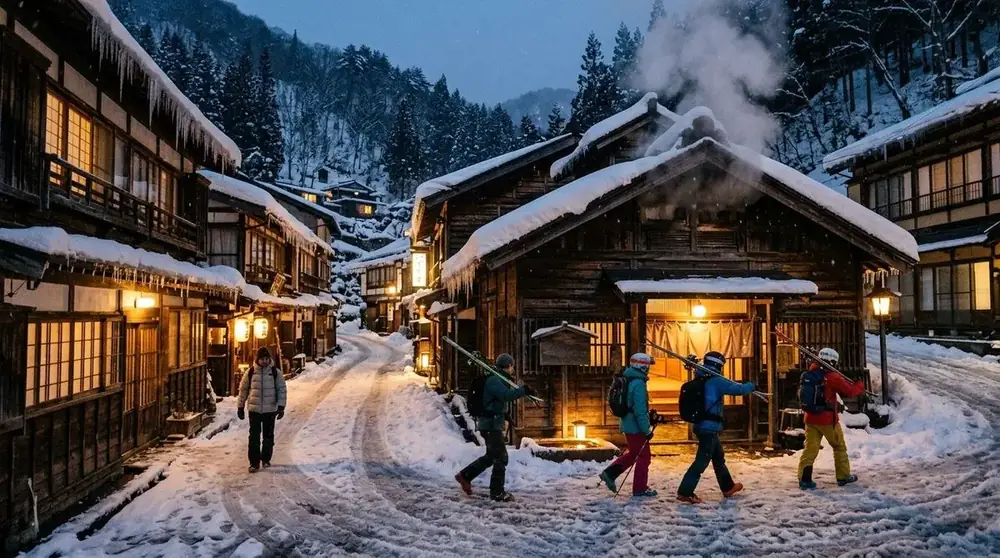
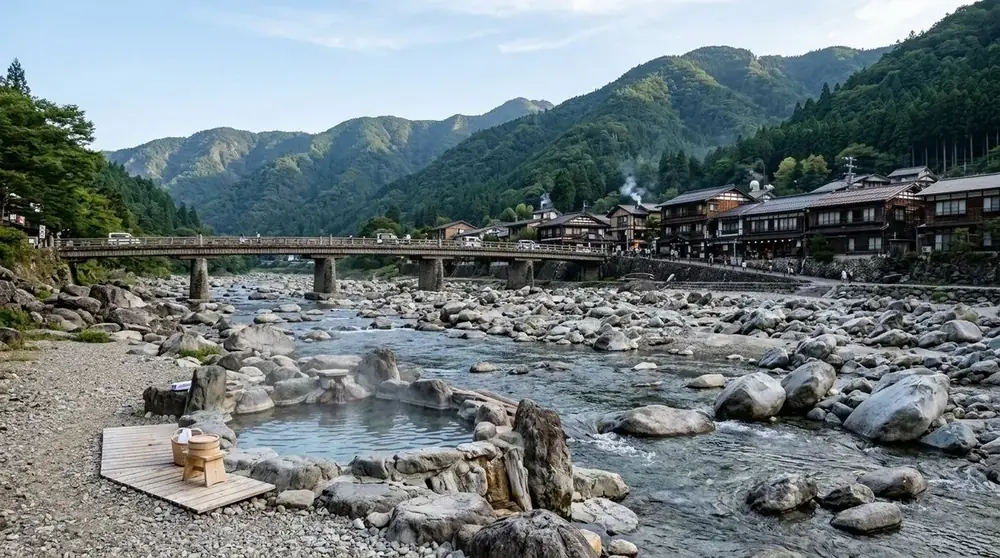
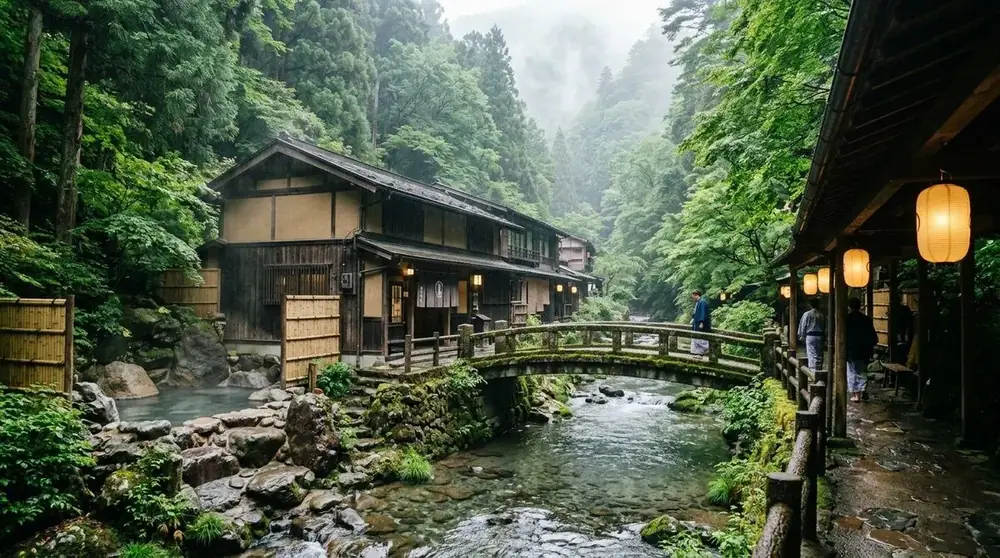
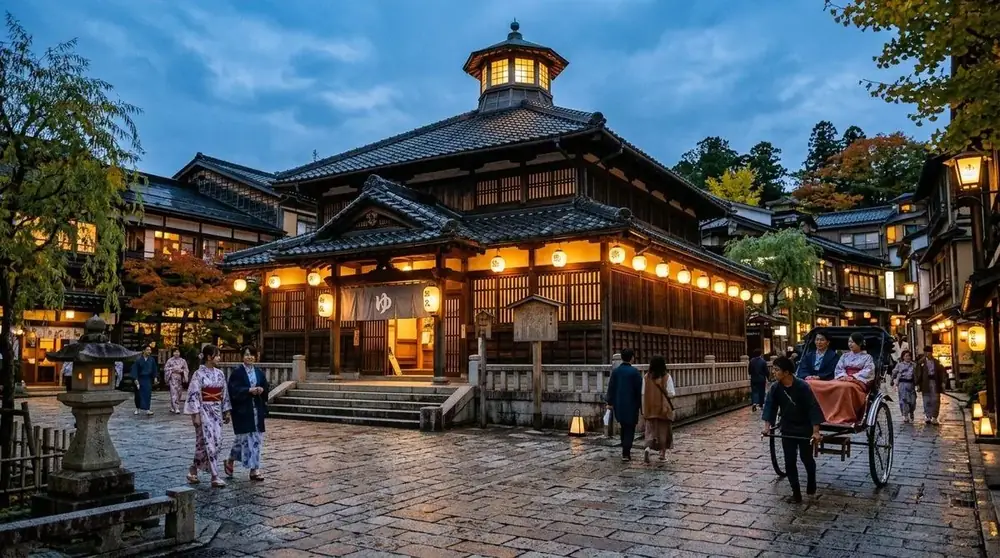
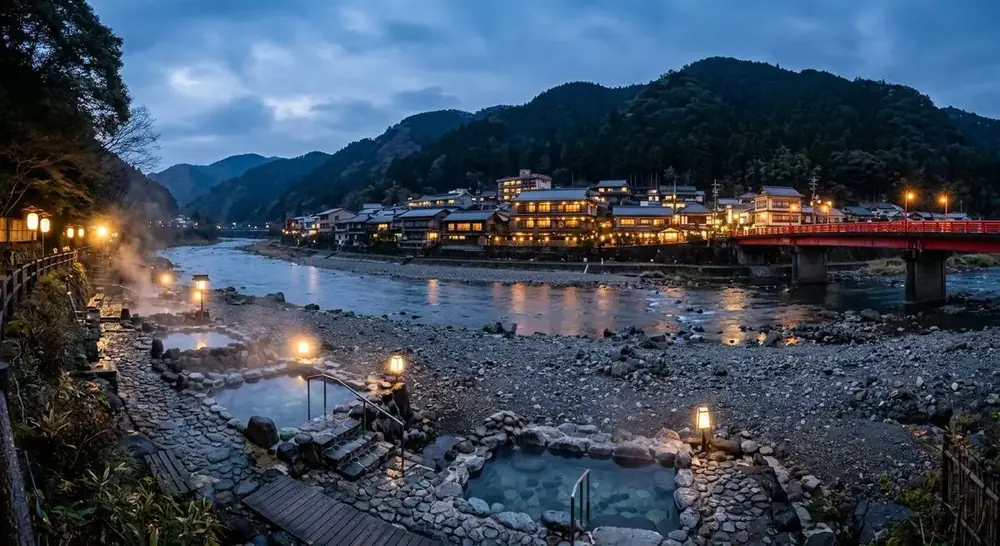
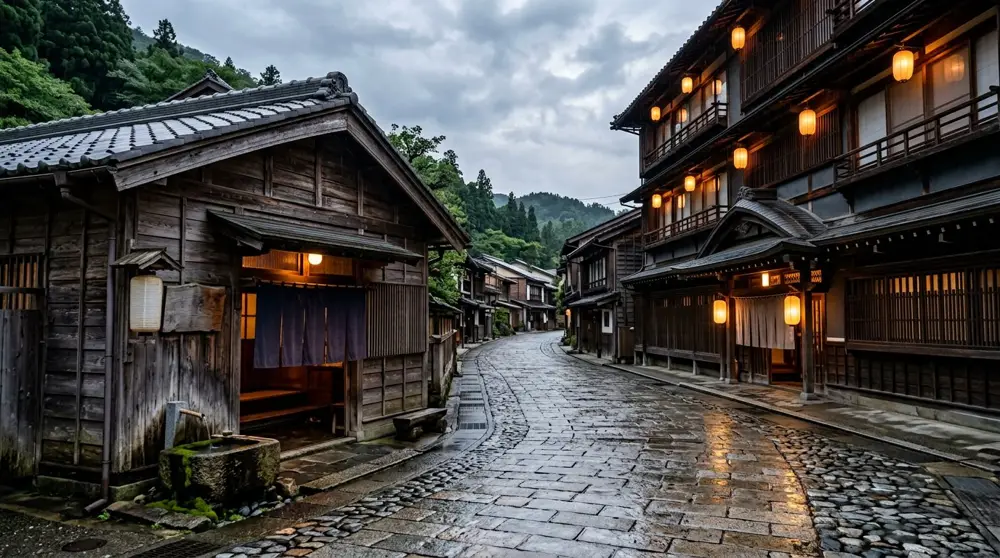
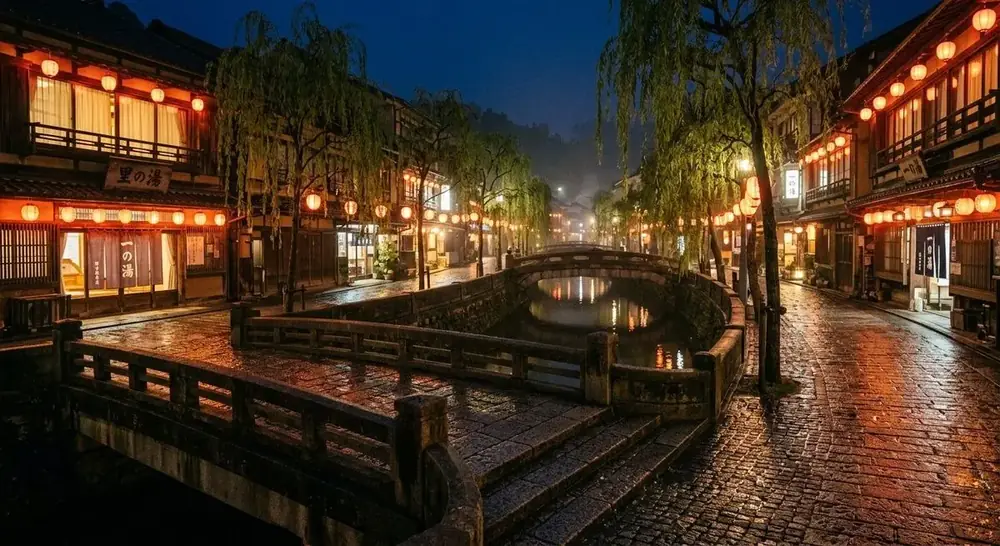
Kinosaki's seven outside baths, Nozawa's thirteen, Shibu Onsen's nine — strolling a spa town in yukata and wooden geta and hopping from bath to bath is the essence of Japanese onsen culture. Staying overnight often includes a free or discounted bath pass, and day visitors can buy combined tickets.

This list gathers the communal baths that anchor a bath-hopping circuit and the facilities where passes are accepted. Ten to fifteen minutes per bath, a stroll through town, then the next one. Keep drinking water so you don't overheat.

36 results
Illustrative onsen mood image
Nagano · Nozawa OnsenTattoos: Allowed

O-yu (Nozawa outer bath)

The centerpiece of Nozawa's 13 public baths, a traditional bathhouse in the middle of the village. Local 'yunakama' associations have cleaned it daily since the Edo period; payment is a donation in the box at the door. Two pools, hot and 'mild' — though even the mild one exceeds 42°C. Adding cold water is bad manners: rinse first, then keep soaks short. No soap or shampoo.

Public bathhouse (sento)Natural hot springDay use Donation / free
Illustrative onsen mood image
Kumamoto · Kurokawa OnsenTattoos: Ask ahead

Kurokawa Onsen Nyuto Tegata (bath-hopping pass)

One cedar 'nyuto tegata' pass (¥1,500) admits you to any three of the rotenburo at Kurokawa's 26-odd ryokan. Valid for six months, and one of the three stickers can be spent on food or souvenirs instead. Most inns accept bathers roughly 8:30–21:00, but hours vary and some close for cleaning or when full. Buy the pass at any ryokan or the association office 'Kaze no Ya'.

Onsen townDay-trip onsenDay use ¥1,500
Illustrative onsen mood image
Fukushima · Iizaka OnsenTattoos: Ask ahead

Iizaka Onsen Sabako-yu

Twenty-five minutes by local train from Fukushima, the emblematic communal bath of Iizaka Onsen, where the poet Basho is said to have bathed. Rebuilt in 1993 as a faithful copy of one of Japan's oldest wooden bathhouses, its granite tub runs with free-flowing spring water above 45°C. Locals don't cool it with tap water; visitors get guidance. ¥400, from 6 am. No soap or shampoo. Start here for a crawl of the town's nine public baths.

Day-trip onsenPublic bathhouse (sento)Day use ¥400
Illustrative onsen mood image
Niigata · Matsunoyama OnsenTattoos: Ask ahead

Matsunoyama Onsen Center Taka-no-yu

The public day bath at the heart of Matsunoyama, counted with Arima and Kusatsu among Japan's 'three great medicinal springs'. The water is fossil seawater some 12 million years old, heated geothermally — salty, slightly oily and hot enough to warm you to the core. Indoor bath plus a small open-air tub, ¥600 (¥500 after 17:00). In this heavy-snow region it becomes a snow bath in winter. Used by inn guests for bath-hopping too, and close to the site of the famous 'groom-tossing' festival.

Day-trip onsenNatural hot springDay use ¥600
Illustrative onsen mood image
Miyagi · Tōgatta OnsenTattoos: Ask ahead

Tōgatta Onsen Kami-no-yu Communal Bath

The signature communal bath of Tōgatta, gateway to the Zao range on the Miyagi side. A wooden bathhouse with nothing but two indoor tubs — a 'hot' one around 44°C and a 'mild' one at 42°C — fed free-flowing by a 400-year-old source. The sodium-calcium sulfate-chloride water is reputed for cuts and skin complaints and keeps you warm long afterwards. ¥400, 9:00–20:30. The source and Tōgatta Shrine sit behind it and a free footbath in front; combine with a stroll through the kokeshi-doll village.

Day-trip onsenPublic bathhouse (sento)Day use ¥400
Illustrative onsen mood image
Wakayama · Kumano Hongu Onsen (Yunomine & Kawayu)Tattoos: Ask ahead

Yunomine Onsen Tsuboyu

The only hot spring inscribed as a World Heritage Site that you can actually bathe in, listed together with the Kumano Kodo pilgrimage routes. A tiny hut over the stream in Yunomine — said to be Japan's oldest onsen at 1,800 years — shelters a tub hollowed from natural rock that fits two adults. The sulfurous water is said to change colour seven times a day and served pilgrims for ritual purification. Private 30-minute slots, ¥800, sign up at the public bathhouse (6:00–21:00). Waits of several hours are common on holidays; boil onsen eggs in the hot-spring trough while you wait.

Day-trip onsenNatural hot springDay use ¥800
Illustrative onsen mood image
Shimane · Arifuku OnsenTattoos: Ask ahead

Arifuku Onsen Gozen-yu

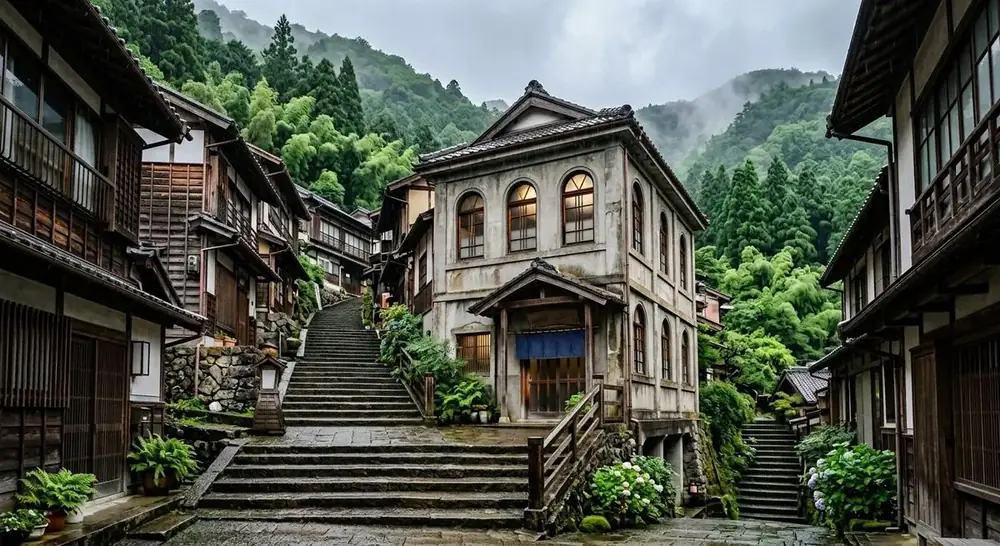
The landmark of Arifuku, a stair-stepped hamlet of wooden inns tucked into the San'in hills. A 1928 reinforced-concrete bathhouse with Western arched windows, it pours colourless alkaline simple-spring water undiluted into the tub — slippery 'beauty water'. ¥400 with soap and shampoo, open 7:00–22:00 for early soaks. A family bath rents for ¥1,200 an hour, and the tatami rest room upstairs displays pre-war photographs. Cars can't enter the sloping village, which also has the Satsuki-yu and Yayoi-yu public baths for a three-bath circuit.

Day-trip onsenPublic bathhouse (sento)Day use ¥400
Illustrative onsen mood image
Akita · Nyūtō OnsenTattoos: Ask ahead

Nyūtō Onsen Ganiba Onsen

A single inn at the end of the Nyūtō bus line, wrapped in old-growth beech forest and named for the river crabs once abundant in the nearby stream. Unusually for Nyūtō, the water is clear and colourless — a bicarbonate spring with drifting white flakes and a gentle feel. The signature is Karako-no-yu, a mixed open-air pool some 50 m from the building in the woods, magical in snow season; there are also separate indoor wooden and rock baths. Day use 9:00–16:30, ¥800. Covered by the Yumeguri-chō pass (¥2,500, valid one year) for all seven Nyūtō inns — the classic combo is with Tsuru-no-yu and Taenoyu. About 50 minutes by bus from Tazawako Station to the Nyūtō Onsen stop.

Day-trip onsenOnsen ryokanDay use ¥800
Illustrative onsen mood image
Nagano · Bessho Onsen, UedaTattoos: Ask ahead

Bessho Onsen Ishiyu public bath

One of the three public 'outer baths' of Bessho Onsen near Ueda, the spa village nicknamed 'Kamakura of Shinshū'. Ishiyu is famed as the hidden bath of warrior Sanada Yukimura in Ikenami Shōtarō's novel Sanada Taiheiki; its tub is built around natural bedrock, filled free-flowing with faintly sulphurous, mildly alkaline water. Open 6:30–21:30 (last entry 21:00), closed Tuesdays, a modest ¥300 with free lockable lockers. Pair it with the other two — Ōyu (closed 1st & 3rd Wed) and Daishiyu (closed 1st & 3rd Thu) — plus Kitamuki Kannon temple and the National Treasure octagonal pagoda of Anrakuji, all on foot. Ten minutes' walk from Bessho-Onsen Station on the Ueda Dentetsu line.

Day-trip onsenPublic bathhouse (sento)Day use ¥300
Illustrative onsen mood image
Kumamoto · Kurokawa OnsenTattoos: Ask ahead

Kurokawa Onsen Ryokan Sanga (open-air baths)

A solitary forest inn five minutes by car from central Kurokawa, where the only sound is the headwaters of the Chikugo River. On roughly 10,000 m² of grounds sit the mixed open-air Moyai-no-yu and the women-only Shiki-no-yu, fed free-flowing from two private springs; the indoor bath has a faint blue tint. Day use covers the open-air baths only, 08:30–21:00, ¥600 for adults, and Kurokawa's 'nyūtō tegata' bath-hopping pass (¥1,500 for three baths) is accepted, so pairing it with inns in the village is the classic plan. There is a free rest corner after bathing. Closures are irregular — phone ahead.

Day-trip onsenOnsen ryokanDay use ¥600
Illustrative onsen mood image
Niigata · Echigo-Yuzawa OnsenTattoos: Ask ahead

Echigo-Yuzawa Yamano-yu communal bath

The oldest communal bath in Echigo-Yuzawa, near the inn where Kawabata Yasunari wrote Snow Country — he is said to have bathed here himself. The tub fits only five or six people, but the sulphur-scented free-flowing spring is a rarity in Yuzawa and the star of the town's five-bath 'sotoyu' circuit. Adults pay ¥850 including bathing tax (revised 2026); open 10:00–21:00 (last entry 20:30), closed Tuesdays. Soap and shampoo provided, towels sold for ¥200. It sits up a slope 25 minutes' walk from Echigo-Yuzawa Station, or 10 minutes from Gala-Yuzawa Station; only 10 parking spaces.

Day-trip onsenPublic bathhouse (sento)Day use ¥850
Illustrative onsen mood image
Yamaguchi · Tawarayama OnsenTattoos: Ask ahead

Tawarayama Onsen Hakuen-no-yu

Tawarayama Onsen, in the hills of Nagato, Yamaguchi, has 1,100 years of history and still lives by 'sotoyu' culture: the inns have no baths of their own, so even overnight guests walk in yukata to the two communal bathhouses, Machi-no-yu and Hakuen-no-yu. Hakuen-no-yu is the newer of the pair, with three tubs — a lukewarm No.1 bath straight from the source, a heated hotter No.2 bath and an open-air bath — showcasing silky pH 9.9 alkaline water. ¥850 for adults, open 12:00–21:00, closed Tuesday to Thursday (Machi-no-yu runs daily 06:00–22:00 for ¥650). A free foot bath sits halfway up the entrance stairs. About 20 minutes by bus from Nagato-Yumoto Station.

Day-trip onsenPublic bathhouse (sento)Day use ¥850
Illustrative onsen mood image
Ōita · Beppu OnsenTattoos: Ask ahead

Kannawa Onsen Shibu-no-yu

Halfway along Ideyu-zaka, the steam-wreathed main street of Beppu's Kannawa district, this communal bath is run by the local residents' association. In typical Beppu style the changing area and bath share one room, and hot sodium-chloride water rich in metasilicic acid flows freely. Visitors pay only ¥100 — technically a coin-locker fee rather than admission. Open 06:30–21:00 daily. No soap or shampoo and minimal washing space, so follow local manners: quiet and quick. There is a toilet on the little square out front, and the Jigoku-mushi steam-cooking workshop and Umi-jigoku are two minutes away, making it an easy stop on a Kannawa stroll. Counts toward the Beppu Hattō Onsen-dō stamp rally.

Day-trip onsenPublic bathhouse (sento)Day use ¥100
Illustrative onsen mood image
Wakayama · Nanki-Shirahama OnsenTattoos: Ask ahead

Shirahama Onsen Shirara-yu

A town-run bathhouse right in front of Shirara-hama, the famous white-sand beach. Built like an old-fashioned sentō with an attendant's counter, its second-floor bathroom opens through big windows onto the beach, blue sea and sky — a ¥420 view bath you would never expect in a resort. The 66.8°C sodium-chloride 'Suzushi-yu' source flows freely, and the strongly salty water keeps you warm long after. Open 09:00–11:00 and 14:00–21:30 (last entry 21:00; 07:00–09:00 is residents only), closed Thursdays. Soap and shampoo sold for ¥40; no hair dryers. One of Shirahama's 'sotoyu' circuit with Saki-no-yu and Muro-no-yu — locals rinse off the sand after a swim and come straight in. About 15 minutes by bus from Shirahama Station to 'Shirarahama'.

Day-trip onsenPublic bathhouse (sento)Day use ¥420
Illustrative onsen mood image
Yamagata · Hijiori OnsenTattoos: Ask ahead

Hijiori Onsen Kami-no-yu communal bath

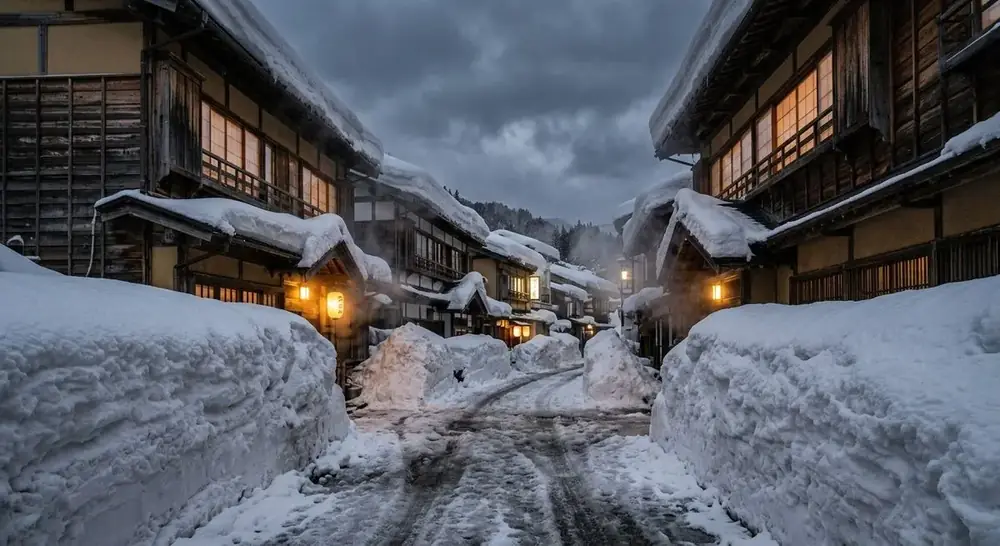
Hijiori Onsen, 1,200 years old, is a cure-spa where inns huddle at the bottom of a caldera in Ōkura village, Yamagata. Right in the middle of the street stands Kami-no-yu, the only communal bath open to visitors. A small bathhouse with an attendant's counter, it has slightly hot free-flowing sodium-chloride/bicarbonate water and a tiny Yakushi shrine in the corner of the tub. Adults pay ¥400 (free for guests of the village inns); open 08:00–18:00 (until 17:00 in winter), no bathing on Thursday mornings for cleaning. The Hijiori way is to pair it with the morning market that sets up from about 5–6 am (Apr–Nov). In winter this is one of Japan's snowiest places, and just walking the street between snow walls is an experience. About 55 minutes by bus from Shinjō Station.

Day-trip onsenPublic bathhouse (sento)Day use ¥400
Illustrative onsen mood image
Kumamoto · Tsuetate OnsenTattoos: Ask ahead

Tsuetate Onsen Moto-yu communal bath

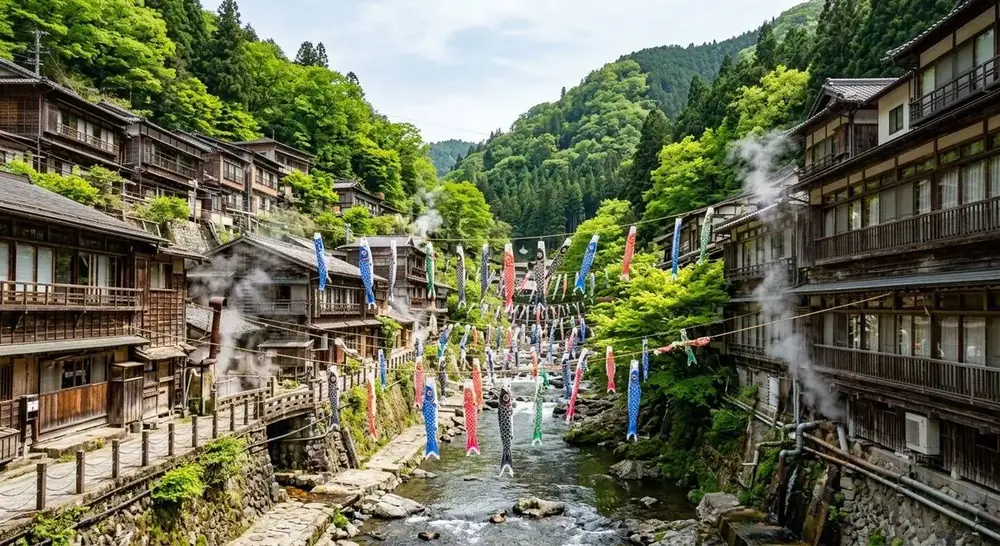
Tsuetate Onsen, where inns line both banks of the Tsuetate River on the Kumamoto–Ōita border, claims 1,800 years of history as the bath water of the infant Emperor Ōjin. Moto-yu is the communal bath said to be its origin: a single half-open tub carved into the rock face beside the riverside promenade — mixed, free and open 24 hours, nothing more. The sodium-chloride water, cooled from a 98°C source, leaves the skin soft. Changing space is basic and screening minimal, so many people wear bathing garments or a wrapped towel; early morning or night is the best time. Combine it with a wander through the 'sedoya' back alleys and, in May–June, the 3,500 carp streamers strung across the river. About 50 minutes by bus from Hita Station.

Day-trip onsenPublic bathhouse (sento)Day use Donation / free
Illustrative onsen mood image
Ōita · Amagase Onsen, HitaTattoos: Ask ahead

Amagase Onsen Yakushi-yu open-air communal bath

Amagase Onsen, where steam rises along the Kusu River in Hita, Ōita, is counted with Beppu and Yufuin among the 'three great springs of Bungo'. Its trademark is the communal open-air baths dotted along the riverbed, and Yakushi-yu is one of the most approachable: a single rock tub, mixed bathing, ¥100 dropped into an unattended box. The 75°C simple sulphur spring is diluted to a comfortable temperature, with a faint whiff of sulphur and a view of the spa street across the river. Open 10:00–22:00 daily; wrapping a bath towel is allowed, which makes it easy for first-timers, and it is lit and atmospheric at night. Stroll the town, rebuilt after the 2020 floods, and try the other riverside baths such as Kanda-yu and Ekimae Onsen. About 10 minutes on foot from JR Amagase Station.

Day-trip onsenPublic bathhouse (sento)Day use ¥100
Illustrative onsen mood image
Ishikawa · Yamashiro Onsen, KagaTattoos: Ask ahead

Yamashiro Onsen Sōyu

The public bathhouse at the heart of Yamashiro Onsen's 'Yu-no-gawa' square in the Kaga hot-spring region, a spa 1,300 years old. In Kaga communal baths are called 'sōyu', and even ryokan guests walk over in yukata. The entrance reuses the gate of the old Yoshinoya inn; inside is spacious and clean, with one big tub of fresh undiluted water (sodium-calcium sulphate-chloride) flowing freely. Adults ¥500, open 06:00–22:00, closed only on the morning of the 4th Wednesday. A ¥900 combined ticket includes the 'Ko-sōyu' opposite (¥700), a recreation of the Meiji-era bathhouse with Kutani-ware tiles and stained glass — comparing the two is the classic plan. Soap and shampoo are sold, not provided. About 10 minutes by bus from Kaga-Onsen Station.

Day-trip onsenPublic bathhouse (sento)Day use ¥500
Illustrative onsen mood image
Shizuoka · Itō OnsenTattoos: Ask ahead

Itō Onsen Wada Jurōjin-no-yu (Wada-yu Kaikan)

The oldest of Itō Onsen's 'Seven Lucky Gods' communal baths, a true locals' bathhouse. The spring is said to have been presented to the third shōgun Tokugawa Iemitsu in the Edo period, and today it runs as the ward-operated Wada-yu Kaikan. The layout is simple — a single indoor bath each for men and women — but the clear, simple-type spring flows in freely and the atmosphere is that of an old-fashioned neighbourhood bath full of regulars. Adults ¥400, children ¥200; open 14:00–22:00, closed Wednesdays (with extra days off in even months — check ahead). Soap and towels are sold, so bring your own. About 15 minutes on foot from JR Itō Station; pair it with the Tōkaikan building and Kinema-dōri street as one stop on the Seven Lucky Gods bath circuit. Parking for 11 cars.

Day-trip onsenPublic bathhouse (sento)Day use ¥400
Illustrative onsen mood image
Yamaguchi · Tawarayama OnsenTattoos: Ask ahead

Tawarayama Onsen Machi-no-yu

One of the two public bathhouses of Tawarayama Onsen in Nagato, Yamaguchi, a cure-spa founded over 1,100 years ago. Most inns here have no bath of their own, so guests still pad through the streets in yukata to the outside baths, and Machi-no-yu is the hub of that life. The silky alkaline simple spring flows in untreated, and there is a drinking fountain. Just a plain indoor bath, but it is open right through from 06:00 to 22:00 and costs only ¥650. A bookable private family bath (¥3,500 for three, 08:00–21:00) is attached. There is no regular closing day — only cleaning breaks in July and December. The other bathhouse, Hakuen-no-yu (¥850, with an open-air bath), closes Tuesday to Thursday, so on weekdays Machi-no-yu is the one to count on. About 25 minutes by bus from JR Nagato-shi Station to 'Tawarayama Onsen', then 3 minutes on foot.

Day-trip onsenPublic bathhouse (sento)Day use ¥650
Illustrative onsen mood image
Shimane · Yunotsu OnsenTattoos: Ask ahead

Yunotsu Onsen Motoyu Sen'yakutō

The founding bath of Yunotsu, the port town that once shipped silver from the World Heritage Iwami Ginzan mine, with a history said to go back 1,300 years. It stands in the preserved townscape district and has a legend of a tanuki healing its wounds here. Two pools: the 'hot' one fed directly by the source and a 'cooler' one that is still around 43°C. The strong sodium-calcium-chloride water, thick with rust-brown mineral flakes, is renowned as a therapeutic spring and can be drunk. Adults ¥450, children ¥200; open 06:00–20:00, irregular closures (closed from 15:00 on the 3rd Monday). No soap and no showers — bathe the old way. Comparing it with the other outside bath, Yakushi-yu (¥500), is the classic routine. About 20 minutes on foot or 5 by bus from JR Yunotsu Station.

Day-trip onsenPublic bathhouse (sento)Day use ¥450
Illustrative onsen mood image
Nagasaki · Unzen OnsenTattoos: Ask ahead

Unzen Yunosato communal bath (Dankyū-buro)

Because drilling is banned inside the national park, every bath in Unzen runs on naturally rising water. This little communal bath on the edge of the spa town, known locally as 'Dankyū-buro', has just one deep oval pool into which the acidic hydrogen-sulphide spring flows fresh; depending on the season and the day it may be milky white or nearly clear. It is hot, 43–44°C, with a faint sulphur scent. Adults ¥200, children ¥100; open 09:00–22:00, closed Tuesdays. No dryers or amenities — soap is sold — but there are lockers, and parking for four cars. After touring the Unzen Hells, a rare chance to taste the local bath for ¥200, a world apart from the big tourist bathhouses.

Day-trip onsenPublic bathhouse (sento)Day use ¥200
Illustrative onsen mood image
Ishikawa · Awazu Onsen, KagaTattoos: Ask ahead

Awazu Onsen Sōyu (Public Bath)

The communal bathhouse at the heart of Awazu Onsen in Komatsu, Hokuriku's oldest spa, said to have been founded in 718 by the priest Taichō. It stands opposite Hōshi, known as the world's oldest inn, and makes a fitting finale to a tour of the four sōyu public baths of the Kaga spa region (Yamanaka, Yamashiro, Katayamazu and Awazu). The clear, silky sodium sulfate-chloride water (mildly alkaline, high-temperature) runs hot, and soaking shoulder to shoulder with locals warms you to the core. There is no open-air bath or sauna – just an indoor pool – but that simplicity lets the water speak for itself. Adults pay ¥500, elementary pupils ¥150 and infants ¥70; open 8:00–22:00 (last entry 21:30), closed Tuesdays, parking for 10 cars. From JR Awazu Station take the Komatsu Bus for Awazu Onsen to Awazu-Onsen Kitaguchi and walk 2 minutes, or drive about 15 minutes from Kaga IC on the Hokuriku Expressway. Combine with Natadera temple, Yunokuni-no-Mori craft village and Komatsu's aviation museum.

Public bathhouse (sento)Day-trip onsenDay use ¥500
Illustrative onsen mood image
Saga · Takeo OnsenTattoos: Ask ahead

Takeo Onsen Sagi-no-Yu Public Bath

Takeo Onsen is famous for its vermilion gate, a National Important Cultural Property designed by Tatsuno Kingo, architect of Tokyo Station. Beyond the gate lie three public baths – Motoyu, Hōraiyu and Sagi-no-Yu – plus the private Tonosama-yu and Karō-yu, and Sagi-no-Yu is the only one with an open-air bath and sauna. Named for the legend of a white heron (sagi) healing its wounds here, its clear, refreshing mildly alkaline simple spring leaves skin smooth. Alongside the stone indoor bath are a rock-lined outdoor tub, a hot sauna, cold plunge and rest room, and generous hours from 6:30 in the morning to midnight (last entry 23:00) suit travellers. Adults pay ¥740 and children from 3 to elementary age ¥370; open daily except a maintenance break in mid-December. Soap and shampoo are provided, towels sold. About 12 minutes on foot from Takeo-Onsen Station on the Nishi-Kyūshū Shinkansen – a base for Takeo City Library, Mifuneyama Rakuen garden and nearby Ureshino Onsen.

Public bathhouse (sento)Day-trip onsenDay use ¥740
Illustrative onsen mood image
Nagasaki · Obama Onsen (Nagasaki)Tattoos: Ask ahead

Obama Onsen Hama-no-Yu Municipal Bath

Obama Onsen in Unzen, Nagasaki, is famed for sunsets over Tachibana Bay and for spring water near 100°C – the highest heat output of any onsen town in Japan. Hama-no-Yu is the city-run, old-fashioned public bath of this seaside spa: a classic sentō layout with an attendant's booth and two deep tubs, hot and tepid, brimming with alkaline simple spring water. No soap or shampoo is provided (sachets are sold) – there is nothing here but the water, and bath lovers cherish that purity. Admission is an astonishing ¥150 for ages 6 and up (Unzen residents ¥100), free under 6; open 6:00–22:00 (last entry 21:30), irregular closures. Park free at the nearby Yūhi-no-Hiroba lot (10 spaces). Along the shore are Japan's longest footbath, the 105 m 'Hot Foot 105', and steam cookers, and it is fun to bath-hop to the Wakihama public bath (¥200). About an hour from Isahaya Station by Shimabara Railway and Shimatetsu bus, or an hour by car from Nagasaki city. Taste Unzen's mountain baths and Obama's sea baths in a single day.

Public bathhouse (sento)Day-trip onsenDay use ¥150