Mixed bathing for first-timers

Mostly mixed baths that allow bathing garments or have women-only hours. Check each listing for rules.

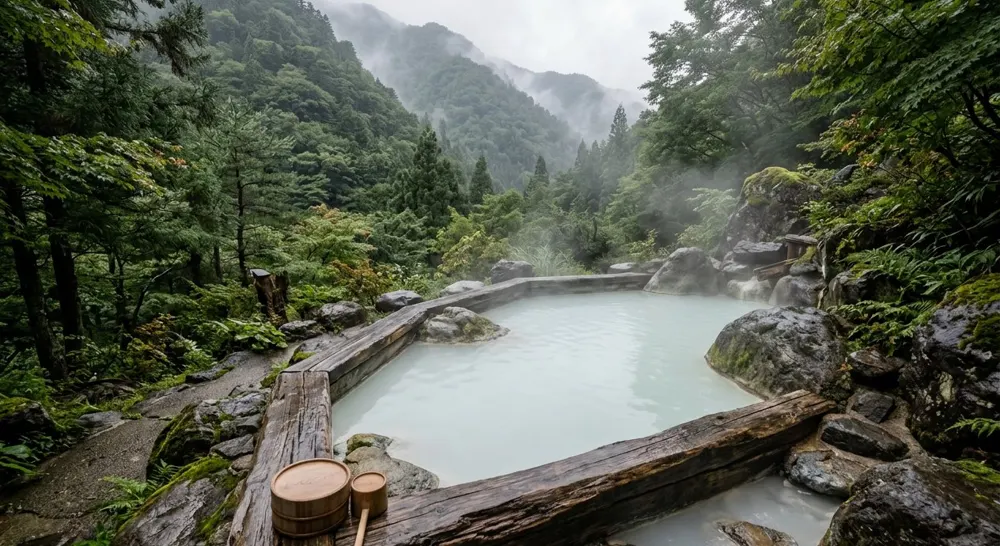
Until the Edo period bathing in Japan was not segregated by sex, and mixed open-air baths survive as a legacy of that in mountain valleys and on riverbeds. Most now allow bathing garments or a wrap towel, and women-only hours are increasingly common.

This list gathers facilities with a mixed-bathing pool. Don't stare, don't photograph, give women who enter their space — follow the old unwritten rules and the sense of freedom is unmatched.

27 results
Illustrative onsen mood image
Okayama · Yubara OnsenTattoos: Ask ahead

Yubara Onsen Sunayu

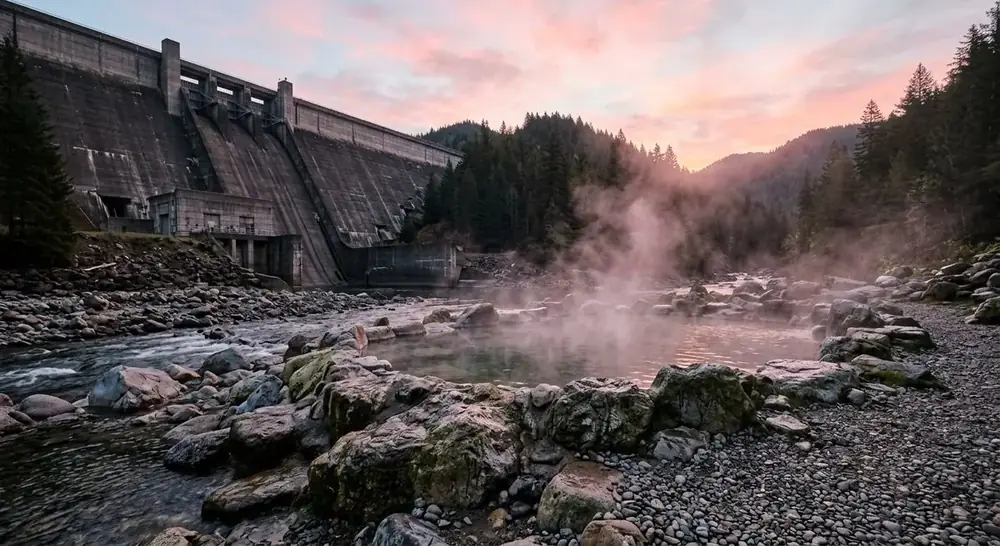
A natural open-air bath on the Asahi River gravel bed right below Yubara Dam, where water bubbles up through the riverbed itself — ranked the 'western grand champion' of Japan's rotenburo. Three pools at different temperatures; mixed, free and open 24 hours. Only a simple changing hut, so women are advised to wear a bathing garment (sold and rented in town). Closed Wednesday mornings for cleaning. Photography strictly forbidden.

Day-trip onsenRemote onsenDay use Donation / free
Illustrative onsen mood image
Iwate · Hanamaki OnsenTattoos: Ask ahead

Osawa Onsen Jisuibu Tojiya

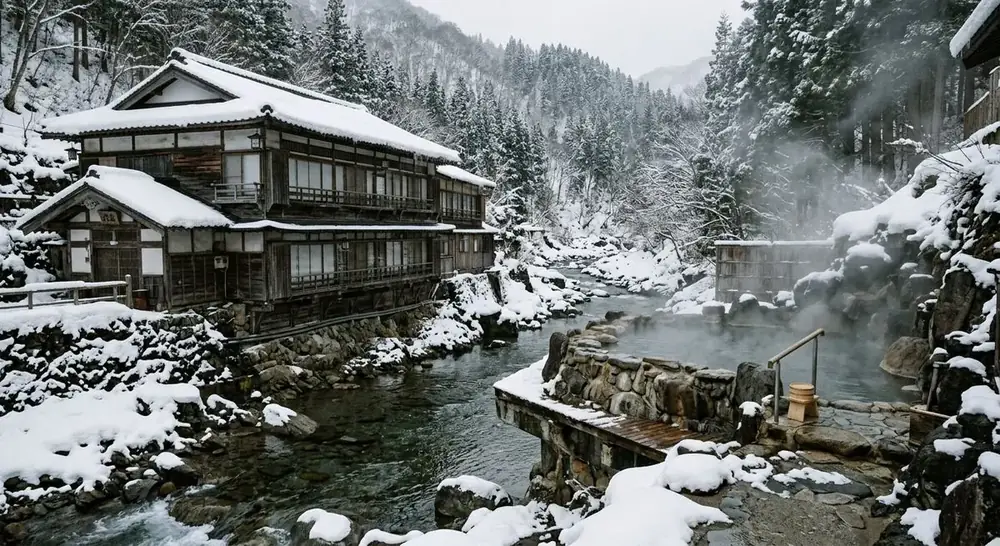
A wooden toji (therapeutic stay) inn over 200 years old on the Toyosawa River in the Hanamaki-Minami onsen area, once frequented by poet Kenji Miyazawa. Its signature is 'Osawa-no-yu', a mixed open-air bath jutting over the river, with women-only hours. Day bathing from 7 am; ¥700 covers three baths. Many linger for lunch and sake at the 'Yahagi' dining room. Free shuttle from Hanamaki Station.

Day-trip onsenOnsen ryokanDay use ¥700
Illustrative onsen mood image
Iwate · Hanamaki OnsenTattoos: Ask ahead

Namari Onsen Fujisan Ryokan

A wooden ryokan founded in 1841 on the Toyosawa River at the far end of the Hanamaki onsen villages. Its signature is 'Hakuen-no-yu', a self-welling rock pool about 1.25 m deep that you stand in — billed as Japan's deepest rock bath. Five springs feed four bathhouses, all 100% free-flowing. Day use ¥800, 10:00–21:00. Hakuen-no-yu is mixed bathing with women-only hours. Free shuttle from Hanamaki Station by reservation.

Day-trip onsenOnsen ryokanDay use ¥800
Illustrative onsen mood image
Tochigi · Nasu OnsenTattoos: Ask ahead

Ōmaru Onsen Ryokan, Oku-Nasu (River Bath)

A lone inn at 1,300 m, the last stop in the Nasu hot-spring range. Spring water gushes out behind the building in such volume that it forms a river, dammed into the vast outdoor 'Kawa-no-yu' — nothing else like it in Japan. Mixed bathing since the inn's founding, but bathing wear is included so beginners can relax. Day use is limited to three hours (reception 11:30–14:30), ¥1,300 with face towel and bathing wear. The outdoor bath closes in bad weather or for cleaning, so phone ahead. Autumn colour and snow seasons are the draw.

Day-trip onsenOnsen ryokanDay use ¥1,300
Illustrative onsen mood image
Aomori · Furōfushi Onsen, FukauraTattoos: Ask ahead

Koganezaki Furōfushi Onsen

The highlight of any Gonō Line journey: a lone inn famous nationwide for its 'seaside open-air bath' set right at the water's edge of the Sea of Japan. Iron-rich chloride water, rust-red and cloudy, seems to merge with sea and sky. Day use is ¥600 — the seaside bath 8:00–16:00 (last entry 15:30), the main-building indoor 'Kogane-no-yu' 8:00–20:00. The mixed outdoor bath allows bathing wear (rental fee); a women-only outdoor bath sits alongside. Sunset soaks are for overnight guests only, so stay if you want one of Japan's 100 best sunsets from the tub.

Day-trip onsenOnsen ryokanDay use ¥600
Illustrative onsen mood image
Wakayama · Kumano Hongu Onsen (Yunomine & Kawayu)Tattoos: Ask ahead

Kawayu Onsen Sennin-buro (winter only)

At Kawayu, where 73°C spring water bubbles up through the bed of the Ōtō River, a giant outdoor bath is created every December to February by damming the river. Roughly 50 by 15 metres — big enough for 'a thousand people', as the name says — it's tempered to perfection by the river's cold flow. Free (donation box), 6:30–22:00, swimwear required, open to everyone. Bathing is suspended in bad weather or high water and opening dates shift from year to year. In summer you can dig your own pool in the gravel. Combine with Yunomine and Watarase for the three Hongu baths.

Day-trip onsenNatural hot springDay use Donation / free
Illustrative onsen mood image
Akita · Nyūtō OnsenTattoos: Ask ahead

Nyūtō Onsen Ganiba Onsen

A single inn at the end of the Nyūtō bus line, wrapped in old-growth beech forest and named for the river crabs once abundant in the nearby stream. Unusually for Nyūtō, the water is clear and colourless — a bicarbonate spring with drifting white flakes and a gentle feel. The signature is Karako-no-yu, a mixed open-air pool some 50 m from the building in the woods, magical in snow season; there are also separate indoor wooden and rock baths. Day use 9:00–16:30, ¥800. Covered by the Yumeguri-chō pass (¥2,500, valid one year) for all seven Nyūtō inns — the classic combo is with Tsuru-no-yu and Taenoyu. About 50 minutes by bus from Tazawako Station to the Nyūtō Onsen stop.

Day-trip onsenOnsen ryokanDay use ¥800
Illustrative onsen mood image
Gunma · Shima OnsenTattoos: OK if covered

Shima Onsen Sekizenkan – Genroku-no-yu (day use)

Founded in 1691 and regarded as Japan's oldest surviving hot-spring inn building, this Shima Onsen institution in Gunma stands across a red bridge; the main house, said to be one of the models for the bathhouse in Spirited Away, is an Important Cultural Property. The celebrated Genroku-no-yu, built in 1930 in Taishō-romantic style, has five tubs set into a stone floor lit by arched windows, with water welling up from below. Shima's sulphate water is counted among Japan's three great baths for digestive ailments and can be drunk. Day use 10:00–17:30 (last entry 17:00), ¥1,500 with face towel, covering Genroku-no-yu, the mixed rock bath and private baths. Tattoos accepted if covered with stickers. About 40 minutes by bus from Nakanojō Station to the Shima Onsen terminus.

Day-trip onsenOnsen ryokanDay use ¥1,500
Illustrative onsen mood image
Kumamoto · Kurokawa OnsenTattoos: Ask ahead

Kurokawa Onsen Ryokan Sanga (open-air baths)

A solitary forest inn five minutes by car from central Kurokawa, where the only sound is the headwaters of the Chikugo River. On roughly 10,000 m² of grounds sit the mixed open-air Moyai-no-yu and the women-only Shiki-no-yu, fed free-flowing from two private springs; the indoor bath has a faint blue tint. Day use covers the open-air baths only, 08:30–21:00, ¥600 for adults, and Kurokawa's 'nyūtō tegata' bath-hopping pass (¥1,500 for three baths) is accepted, so pairing it with inns in the village is the classic plan. There is a free rest corner after bathing. Closures are irregular — phone ahead.

Day-trip onsenOnsen ryokanDay use ¥600
Illustrative onsen mood image
Iwate · Matsukawa Onsen, HachimantaiTattoos: Ask ahead

Matsukawa Onsen Kyōunsō

A lone inn of the Japan Association of Secluded Hot Springs, deep in Hachimantai National Park amid beech and oak forest. The open-air bath is an unusual greenish milky white — free-flowing simple hydrogen-sulphide water — with a mixed outdoor bath, a women-only outdoor bath and separate indoor baths; from the rotenburo you can see the steam of Japan's first geothermal power station. Day use 08:30–19:00 (last entry 18:00), ¥700 for adults, or ¥900 with hall rest 10:00–15:00. Open year-round, and the snow-buried outdoor bath in winter is the highlight. About 1 h 50 min by Iwate Kenpoku bus from Morioka Station to the Matsukawa Onsen terminus.

Day-trip onsenOnsen ryokanDay use ¥700
Illustrative onsen mood image
Okayama · Yubara OnsenTattoos: Ask ahead

Maga Onsenkan (Yubara Onsen area)

The communal bath of Maga Onsen, a tiny hamlet of stone stairways on a slope above a tributary of the Asahi River in the Yubara Onsen area. Legend says a defeated warrior healed his wounds here some 700 years ago. The star is the 'Makuyu', a mixed rock bath of about 1.6 × 2 m and 1.2 m deep, so you soak standing up — often called Japan's smallest mixed bath — with lukewarm 39°C water bubbling up through cracks in the rock floor. The men's and women's baths connect to it and cost ¥250; the Makuyu is ¥400 (max 8 people, one hour) and a private bath ¥1,300 for up to three. Open 08:00–21:00 (last entry 20:10), closed Tuesdays (open on holidays). No towels allowed in the mixed bath, so be prepared. About 20 minutes by car from Chūgoku-Katsuyama Station.

Day-trip onsenPublic bathhouse (sento)Day use ¥250
Illustrative onsen mood image
Tochigi · Kawaji OnsenTattoos: Ask ahead

Kawaji Onsen Yakushi-no-yu

The communal bath of Kawaji Onsen, upstream of Kinugawa on the clear Ojika River. An old cure spa — 'burns to Kinugawa, wounds to Kawaji' went the saying — it uses its own mildly alkaline spring 100% free-flowing with no chlorination. Besides separate indoor and open-air baths there is a mixed rock bath open to the river, where you soak in lukewarm water facing the stream and hills (bathing garments allowed). A low-temperature sauna, private bath (¥4,000 / 50 min) and rest room complete it. Adults pay ¥1,000 (¥500 for Nikkō residents); open 10:00–20:00 (last entry 19:30), closed Wednesdays (next day if a holiday; open through Golden Week). Fifteen minutes on foot from Kawaji-Yumoto Station on the Yagan Railway, or about 15 minutes by car from Kinugawa-Onsen Station — easy to combine with Kinugawa.

Day-trip onsenPublic bathhouse (sento)Day use ¥1,000
Illustrative onsen mood image
Kumamoto · Tsuetate OnsenTattoos: Ask ahead

Tsuetate Onsen Moto-yu communal bath

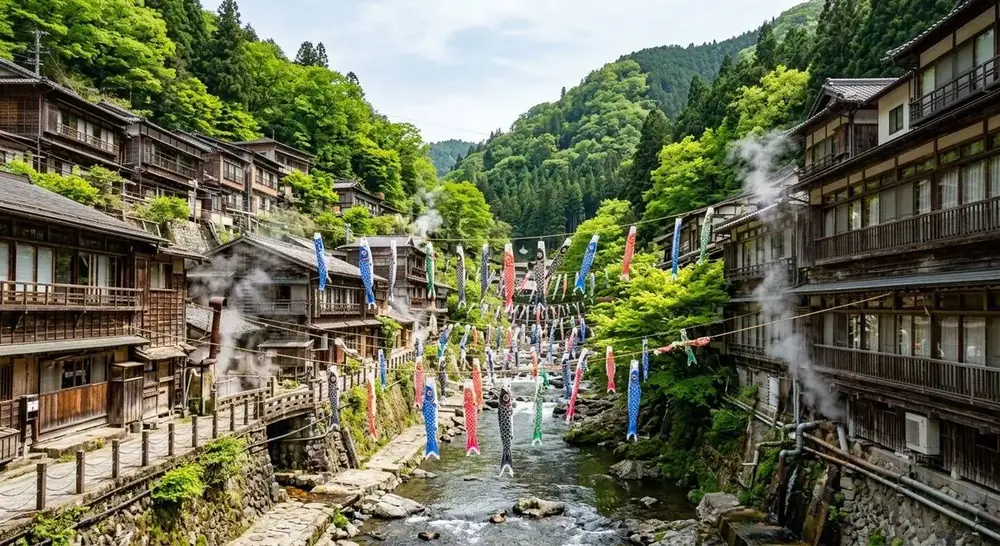
Tsuetate Onsen, where inns line both banks of the Tsuetate River on the Kumamoto–Ōita border, claims 1,800 years of history as the bath water of the infant Emperor Ōjin. Moto-yu is the communal bath said to be its origin: a single half-open tub carved into the rock face beside the riverside promenade — mixed, free and open 24 hours, nothing more. The sodium-chloride water, cooled from a 98°C source, leaves the skin soft. Changing space is basic and screening minimal, so many people wear bathing garments or a wrapped towel; early morning or night is the best time. Combine it with a wander through the 'sedoya' back alleys and, in May–June, the 3,500 carp streamers strung across the river. About 50 minutes by bus from Hita Station.

Day-trip onsenPublic bathhouse (sento)Day use Donation / free
Illustrative onsen mood image
Ōita · Amagase Onsen, HitaTattoos: Ask ahead

Amagase Onsen Yakushi-yu open-air communal bath

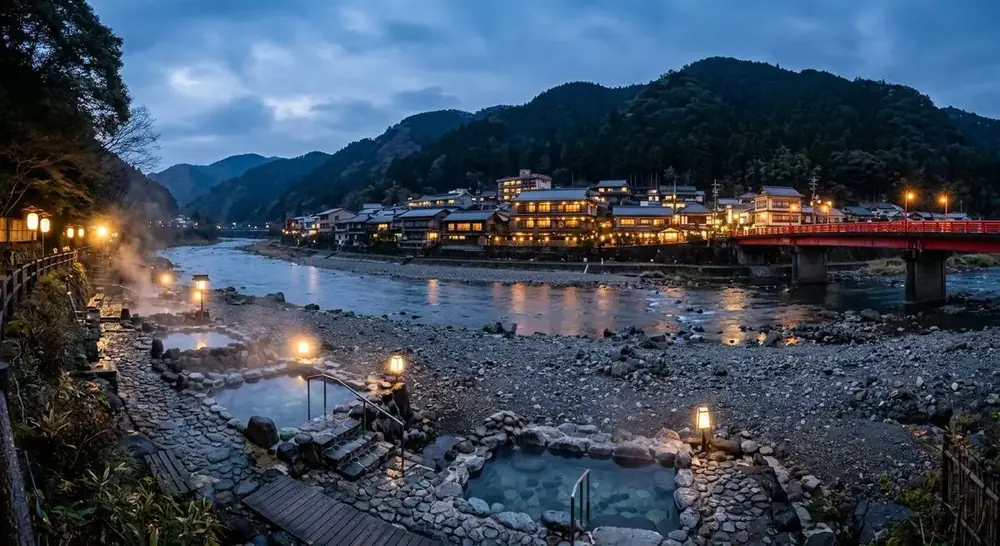
Amagase Onsen, where steam rises along the Kusu River in Hita, Ōita, is counted with Beppu and Yufuin among the 'three great springs of Bungo'. Its trademark is the communal open-air baths dotted along the riverbed, and Yakushi-yu is one of the most approachable: a single rock tub, mixed bathing, ¥100 dropped into an unattended box. The 75°C simple sulphur spring is diluted to a comfortable temperature, with a faint whiff of sulphur and a view of the spa street across the river. Open 10:00–22:00 daily; wrapping a bath towel is allowed, which makes it easy for first-timers, and it is lit and atmospheric at night. Stroll the town, rebuilt after the 2020 floods, and try the other riverside baths such as Kanda-yu and Ekimae Onsen. About 10 minutes on foot from JR Amagase Station.

Day-trip onsenPublic bathhouse (sento)Day use ¥100
Illustrative onsen mood image
Gunma · Manza OnsenTattoos: Ask ahead

Manza Prince Hotel 'Above-the-Clouds' open-air bath

The flagship hotel of Manza Onsen, which at 1,800 m is among the highest hot-spring resorts in Japan reachable by car all year. Perched on a rise, its famous 'Komakusa-no-yu' open-air bath juts from the mountainside so you soak in milky sulphur water while gazing at a sea of clouds, the Jōshin'etsu ranges and, in winter, unbroken snow — literally a bath above the clouds. Besides separate men's and women's sections there is a mixed zone where a wrap towel is worn, making this one of the few Manza inns where mixed bathing is possible. The sulphur content is among Japan's highest and the scent lingers after. Day bathing: adults ¥1,500, children ¥750, reception 11:00–16:00 (bath entry until 15:00), face towel included (bath towel hire ¥300). Weekdays are far quieter than weekends. About 2 hours by Seibu bus from Karuizawa Station, or about 40 minutes by bus from Manza-Kazawaguchi Station; direct ski-slope access in winter.

Day-trip onsenOnsen ryokanDay use ¥1,500
Illustrative onsen mood image
Iwate · Matsukawa Onsen, HachimantaiTattoos: Ask ahead

Tōshichi Onsen Saiunsō, Hachimantai (1,400 m)

The highest hot-spring inn in Tōhoku, at 1,400 m near the top of the Hachimantai Aspite Line. It opens only from Golden Week to late October; in winter it is buried in snow. Five mixed open-air baths scattered down the slope (plus a women-only open-air bath and separate indoor baths) are fed by sulphur water bubbling up directly through the ground, milky white, and the trademark is smearing the mud from the bottom on your skin as a 'mud pack'. Below spread Mt Iwate and a sea of forest; at dawn, cloud seas and sunrise — truly a bath above the clouds. Simple sulphur water at temperatures from tepid to hot. Day bathing: adults ¥650, children ¥350, with a long 08:00–18:00 window, busy with hikers back from the Hachimantai summit trail. The open-air baths are mixed, so bathing garments and wrap towels are allowed. About 2 hours by bus from Morioka Station or 40 minutes by car from Matsuo-Hachimantai IC. Mobile reception is poor.

Day-trip onsenOnsen ryokanDay use ¥650
Illustrative onsen mood image
Kyoto · Rurikei Onsen, NantanTattoos: Ask ahead

ASOBIYUKU Kyoto Rurikei Onsen

A hot-spring resort on the Rurikei plateau in Nantan at about 500 m, roughly an hour by car from Kyoto city, at the entrance to the scenic Rurikei gorge trail. Formerly 'Kyoto Rurikei Onsen for REST RESORT', it was renovated and renamed in 2025. The water is a mildly radioactive radon spring; besides the gender-separated 'Ruri-yu' halls, open-air baths and single-person ceramic pot baths, there is a swimwear zone where couples and families bathe together, along with a pool and saunas. Day admission (including the pool and swimwear area) is ¥800 for adults and ¥400 for children on weekdays, ¥950 and ¥500 on weekends and holidays; towel set ¥300, swimwear rental ¥400. Bedrock baths and the lantern terrace cost extra. Open 11:00–20:00 on weekdays and 10:00–21:00 on weekends and holidays, every day. Barbecue, a kids' area, the GRAX glamping site and a hotel share the grounds, and at night the 'Synesthesia Hills' illumination is a draw. Keihan Kyoto Kōtsū bus to 'Rurikei Onsen', or about 30 minutes by car from Kameoka IC.

Day-trip onsenBath theme parkDay use ¥800