Baths for ¥300 or less

Locals' everyday baths. Bring soap and a towel; keep it quiet and short.

¥300 or less — the price of two canned coffees — still gets you into a genuine free-flowing hot spring in parts of Japan. Almost all are communal baths run for local residents, not tourist facilities.

This list gathers those baths. Bring soap and a towel, rinse before entering, don't hog the washing stations, don't linger chatting in the changing room. You are a guest in someone's daily routine — be quiet and be brief.

31 results
Illustrative onsen mood image
Nagano · Nozawa OnsenTattoos: Allowed

O-yu (Nozawa outer bath)

The centerpiece of Nozawa's 13 public baths, a traditional bathhouse in the middle of the village. Local 'yunakama' associations have cleaned it daily since the Edo period; payment is a donation in the box at the door. Two pools, hot and 'mild' — though even the mild one exceeds 42°C. Adding cold water is bad manners: rinse first, then keep soaks short. No soap or shampoo.

Public bathhouse (sento)Natural hot springDay use Donation / free
Illustrative onsen mood image
Okayama · Yubara OnsenTattoos: Ask ahead

Yubara Onsen Sunayu

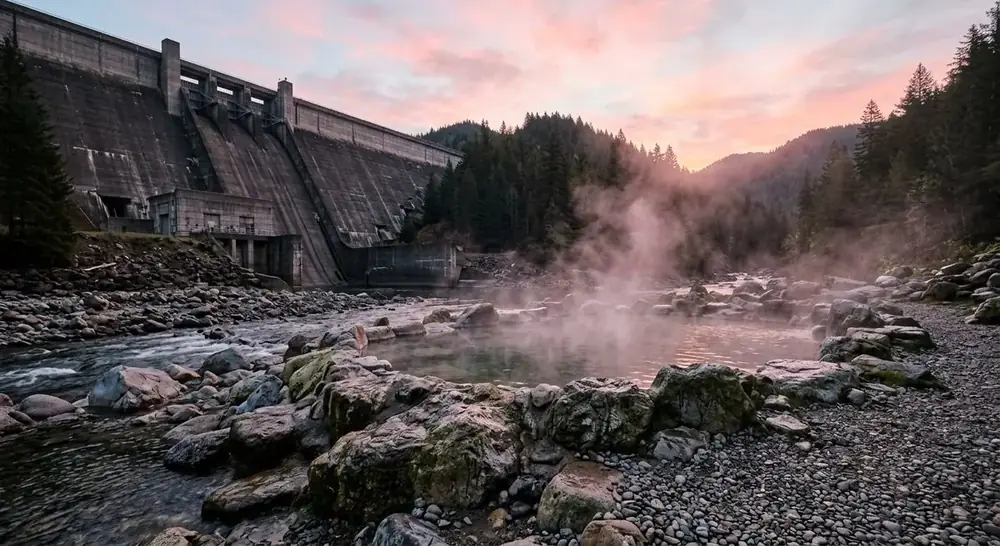
A natural open-air bath on the Asahi River gravel bed right below Yubara Dam, where water bubbles up through the riverbed itself — ranked the 'western grand champion' of Japan's rotenburo. Three pools at different temperatures; mixed, free and open 24 hours. Only a simple changing hut, so women are advised to wear a bathing garment (sold and rented in town). Closed Wednesday mornings for cleaning. Photography strictly forbidden.

Day-trip onsenRemote onsenDay use Donation / free
Illustrative onsen mood image
Miyagi · Akiu OnsenTattoos: Ask ahead

Akiu Onsen Public Bath

The only communal bath in Akiu Onsen, Sendai's classic hot-spring retreat. Among upscale ryokan charging ¥1,000-plus for day use, this humble bathhouse offers free-flowing chloride spring water for ¥300. Near the Yakushi-do temple at the source, it has a single tub and a mostly local crowd; soap is sold, not provided, and a sign asks for 40-minute stays. About 55 minutes by bus from Sendai Station, right by the Yumoto stop.

Day-trip onsenPublic bathhouse (sento)Day use ¥300
Illustrative onsen mood image
Miyazaki · Kyomachi Onsen (Ebino)Tattoos: Ask ahead

Kyomachi Onsen Gyokusenkan

A ryokan founded in the early Taishō era, five minutes on foot from Kyomachi-Onsen Station at the foot of the Ebino plateau. Every tub is free-flowing simple spring water, and a day soak costs just ¥300. Highlights are a cave-style private bath (¥500/hour) and an atmospheric open-air bath that alternates men/women after 18:00. A hidden gem 40 minutes by car from Kagoshima Airport on the way to the Kirishima range.

Day-trip onsenOnsen ryokanDay use ¥300
Illustrative onsen mood image
Wakayama · Kumano Hongu Onsen (Yunomine & Kawayu)Tattoos: Ask ahead

Kawayu Onsen Sennin-buro (winter only)

At Kawayu, where 73°C spring water bubbles up through the bed of the Ōtō River, a giant outdoor bath is created every December to February by damming the river. Roughly 50 by 15 metres — big enough for 'a thousand people', as the name says — it's tempered to perfection by the river's cold flow. Free (donation box), 6:30–22:00, swimwear required, open to everyone. Bathing is suspended in bad weather or high water and opening dates shift from year to year. In summer you can dig your own pool in the gravel. Combine with Yunomine and Watarase for the three Hongu baths.

Day-trip onsenNatural hot springDay use Donation / free
Illustrative onsen mood image
Nagano · Bessho Onsen, UedaTattoos: Ask ahead

Bessho Onsen Ishiyu public bath

One of the three public 'outer baths' of Bessho Onsen near Ueda, the spa village nicknamed 'Kamakura of Shinshū'. Ishiyu is famed as the hidden bath of warrior Sanada Yukimura in Ikenami Shōtarō's novel Sanada Taiheiki; its tub is built around natural bedrock, filled free-flowing with faintly sulphurous, mildly alkaline water. Open 6:30–21:30 (last entry 21:00), closed Tuesdays, a modest ¥300 with free lockable lockers. Pair it with the other two — Ōyu (closed 1st & 3rd Wed) and Daishiyu (closed 1st & 3rd Thu) — plus Kitamuki Kannon temple and the National Treasure octagonal pagoda of Anrakuji, all on foot. Ten minutes' walk from Bessho-Onsen Station on the Ueda Dentetsu line.

Day-trip onsenPublic bathhouse (sento)Day use ¥300
Illustrative onsen mood image
Ōita · Beppu OnsenTattoos: Ask ahead

Beppu Municipal Horita Onsen

One of the Beppu Hattō 'eight springs', Horita sits on the old road towards Yufuin and its municipal bathhouse is among the busiest in Beppu's city-run network. Rebuilt in 2003, it has a bright, airy indoor hall and a seasonal open-air bath set among plantings and rock work; the two differently styled bath wings swap between men and women each week. The water is a gentle simple spring. ¥300; open 6:30–22:30, closed the first Wednesday (next day if a holiday). Afterwards, rest in the lounge overlooking Beppu Bay. Amenities are sold, so bring a towel. About 13 minutes by Kamenoi bus from Beppu Station's west exit to Horita-Onsen-mae, or 3 minutes by car from Beppu IC.

Day-trip onsenPublic bathhouse (sento)Day use ¥300
Illustrative onsen mood image
Gifu · Okuhida Onsen (Hirayu, Shinhotaka)Tattoos: Ask ahead

Tochio Onsen Kōjin-no-yu riverside open-air bath

An open-air-only public bath on the gravel banks of the Gamata River at Tochio Onsen in the Okuhida valley. The rock-ringed men's and women's pools have no screen on the river side, so the rushing Gamata and the Northern Alps fill the view — starry skies at night, snow scenes in winter, wild Okuhida all year. Free-flowing simple spring water; there are changing huts but no reception — drop a donation (about ¥300) in the wooden box at the entrance. Open 8:00–22:00 (from 12:00 Mon, Wed and Fri for cleaning); no closing days, but suspended when the river is high. Bring a towel. An easy stop between the Shinhotaka Ropeway and Hirayu, or a night soak for anyone staying in Tochio's inns.

Day-trip onsenPublic bathhouse (sento)Day use ¥300
Illustrative onsen mood image
Ōita · Nagayu OnsenTattoos: Ask ahead

Nagayu Onsen Chōsei-yu communal bath

Three minutes on foot from Gozen-yu, this is the gender-separated communal bath locals use every day. You pay ¥300 at a ticket machine and walk in — no attendant, and the bathroom holds just one indoor tub. Nagayu's bicarbonate water flows freely and has stained the spout area brown with mineral deposits. Open 06:00–22:00 (last entry 21:30), closed the 4th Wednesday. No soap or shampoo, so bring your own. If you are walking around Nagayu, add this ¥300 locals' bath to Gozen-yu and the free riverside Gani-yu.

Day-trip onsenPublic bathhouse (sento)Day use ¥300
Illustrative onsen mood image
Okayama · Yubara OnsenTattoos: Ask ahead

Maga Onsenkan (Yubara Onsen area)

The communal bath of Maga Onsen, a tiny hamlet of stone stairways on a slope above a tributary of the Asahi River in the Yubara Onsen area. Legend says a defeated warrior healed his wounds here some 700 years ago. The star is the 'Makuyu', a mixed rock bath of about 1.6 × 2 m and 1.2 m deep, so you soak standing up — often called Japan's smallest mixed bath — with lukewarm 39°C water bubbling up through cracks in the rock floor. The men's and women's baths connect to it and cost ¥250; the Makuyu is ¥400 (max 8 people, one hour) and a private bath ¥1,300 for up to three. Open 08:00–21:00 (last entry 20:10), closed Tuesdays (open on holidays). No towels allowed in the mixed bath, so be prepared. About 20 minutes by car from Chūgoku-Katsuyama Station.

Day-trip onsenPublic bathhouse (sento)Day use ¥250
Illustrative onsen mood image
Ōita · Beppu OnsenTattoos: Ask ahead

Kannawa Onsen Shibu-no-yu

Halfway along Ideyu-zaka, the steam-wreathed main street of Beppu's Kannawa district, this communal bath is run by the local residents' association. In typical Beppu style the changing area and bath share one room, and hot sodium-chloride water rich in metasilicic acid flows freely. Visitors pay only ¥100 — technically a coin-locker fee rather than admission. Open 06:30–21:00 daily. No soap or shampoo and minimal washing space, so follow local manners: quiet and quick. There is a toilet on the little square out front, and the Jigoku-mushi steam-cooking workshop and Umi-jigoku are two minutes away, making it an easy stop on a Kannawa stroll. Counts toward the Beppu Hattō Onsen-dō stamp rally.

Day-trip onsenPublic bathhouse (sento)Day use ¥100
Illustrative onsen mood image
Niigata · Tsubame Onsen, MyōkōTattoos: Ask ahead

Tsubame Onsen Kogane-no-yu (free open-air bath)

A free, gender-separated open-air bath at the top of Tsubame Onsen, a trailhead village at about 1,100 m on Mt Myōkō. Five minutes up a mountain path from the village you find only a simple plank changing hut and a rock tub, where flakes of 'yunohana' drift in milky sulphur water. Known as a 'triple beauty bath' for combining sulphur, bicarbonate and sulphate, it faces the flanks of Myōkō. Free of charge from sunrise to sunset, open April to November (closed in winter; boots needed while snow lingers); no bathing on Monday and Friday mornings for cleaning. Fifteen minutes further along the gorge is the mixed 'Kawara-no-yu' (Jul–Nov). No soap allowed and minimal changing space, so follow local etiquette. Walk from the terminus of the bus (about 21 min) from Sekiyama Station.

Day-trip onsenPublic bathhouse (sento)Day use Donation / free
Illustrative onsen mood image
Kumamoto · Tsuetate OnsenTattoos: Ask ahead

Tsuetate Onsen Moto-yu communal bath

Tsuetate Onsen, where inns line both banks of the Tsuetate River on the Kumamoto–Ōita border, claims 1,800 years of history as the bath water of the infant Emperor Ōjin. Moto-yu is the communal bath said to be its origin: a single half-open tub carved into the rock face beside the riverside promenade — mixed, free and open 24 hours, nothing more. The sodium-chloride water, cooled from a 98°C source, leaves the skin soft. Changing space is basic and screening minimal, so many people wear bathing garments or a wrapped towel; early morning or night is the best time. Combine it with a wander through the 'sedoya' back alleys and, in May–June, the 3,500 carp streamers strung across the river. About 50 minutes by bus from Hita Station.

Day-trip onsenPublic bathhouse (sento)Day use Donation / free
Illustrative onsen mood image
Ōita · Amagase Onsen, HitaTattoos: Ask ahead

Amagase Onsen Yakushi-yu open-air communal bath

Amagase Onsen, where steam rises along the Kusu River in Hita, Ōita, is counted with Beppu and Yufuin among the 'three great springs of Bungo'. Its trademark is the communal open-air baths dotted along the riverbed, and Yakushi-yu is one of the most approachable: a single rock tub, mixed bathing, ¥100 dropped into an unattended box. The 75°C simple sulphur spring is diluted to a comfortable temperature, with a faint whiff of sulphur and a view of the spa street across the river. Open 10:00–22:00 daily; wrapping a bath towel is allowed, which makes it easy for first-timers, and it is lit and atmospheric at night. Stroll the town, rebuilt after the 2020 floods, and try the other riverside baths such as Kanda-yu and Ekimae Onsen. About 10 minutes on foot from JR Amagase Station.

Day-trip onsenPublic bathhouse (sento)Day use ¥100
Illustrative onsen mood image
Nagasaki · Unzen OnsenTattoos: Ask ahead

Unzen Yunosato communal bath (Dankyū-buro)

Because drilling is banned inside the national park, every bath in Unzen runs on naturally rising water. This little communal bath on the edge of the spa town, known locally as 'Dankyū-buro', has just one deep oval pool into which the acidic hydrogen-sulphide spring flows fresh; depending on the season and the day it may be milky white or nearly clear. It is hot, 43–44°C, with a faint sulphur scent. Adults ¥200, children ¥100; open 09:00–22:00, closed Tuesdays. No dryers or amenities — soap is sold — but there are lockers, and parking for four cars. After touring the Unzen Hells, a rare chance to taste the local bath for ¥200, a world apart from the big tourist bathhouses.

Day-trip onsenPublic bathhouse (sento)Day use ¥200
Illustrative onsen mood image
Kagoshima · Hinatayama Onsen, KirishimaTattoos: Ask ahead

Hinatayama Onsen Segodon-yu

The oldest naturally rising spring of Hinatayama Onsen, the spa district along the Amori River in Hayato, Kirishima, about 15 minutes by car from Kagoshima Airport. Saigō Takamori is said to have favoured it between hunts, and locals call it 'Segodon's bath'. It is unstaffed — you drop your fee in the box at the entrance — and the price is frozen in the Shōwa era: ¥250 for adults, ¥100 for children. Inside is a simple indoor bathroom with two tubs, hot and moderate, filled free-flowing with clear, slippery bicarbonate water; there is a drinking fountain of the spring too. No open-air bath or restaurant, but it opens 06:00–21:00 (last entry 20:30) and a room-only lodge next door costs ¥1,800 including the bath — a boon for travellers. Closed the fourth Monday. About 5 minutes on foot from JR Hinatayama Station; 10 parking spaces. For anyone wanting an unadorned everyday Kagoshima bath before or after Kirishima Shrine or the airport.

Day-trip onsenPublic bathhouse (sento)Day use ¥250
Illustrative onsen mood image
Yamagata · Kaminoyama OnsenTattoos: Ask ahead

Kaminoyama Onsen Shimo-Ōyu Public Bath

The oldest of the communal baths surviving in the spa town of Kaminoyama, a former castle and post town about 10 minutes on foot from Kaminoyama-Onsen Station on the Yamagata Shinkansen. Moved to its present site in 1624, it is said to have been used by the Zen master Takuan. The big tub is split into hot and tepid halves, filled free-flowing with clear sodium-calcium-chloride-sulphate water. With its flagstone washing area and old-style attendant's counter, it charges an astonishing ¥150 for adults and ¥100 for children (hair washing ¥100 extra), and the tatami hall upstairs can be used for a day's rest for ¥300. Open 06:00–22:00 (from 06:30 December–February; last entry 21:30), every day. Take a morning or evening dip with locals while touring Kaminoyama Castle, the samurai-house street and the town's five foot baths. About 25 minutes by car from Yamagata city, 40 minutes from Zaō Onsen. No soap is provided, so bring your own; park in the shopping-street car park opposite.

Day-trip onsenPublic bathhouse (sento)Day use ¥150
Illustrative onsen mood image
Nagasaki · Obama Onsen (Nagasaki)Tattoos: Ask ahead

Obama Onsen Hama-no-Yu Municipal Bath

Obama Onsen in Unzen, Nagasaki, is famed for sunsets over Tachibana Bay and for spring water near 100°C – the highest heat output of any onsen town in Japan. Hama-no-Yu is the city-run, old-fashioned public bath of this seaside spa: a classic sentō layout with an attendant's booth and two deep tubs, hot and tepid, brimming with alkaline simple spring water. No soap or shampoo is provided (sachets are sold) – there is nothing here but the water, and bath lovers cherish that purity. Admission is an astonishing ¥150 for ages 6 and up (Unzen residents ¥100), free under 6; open 6:00–22:00 (last entry 21:30), irregular closures. Park free at the nearby Yūhi-no-Hiroba lot (10 spaces). Along the shore are Japan's longest footbath, the 105 m 'Hot Foot 105', and steam cookers, and it is fun to bath-hop to the Wakihama public bath (¥200). About an hour from Isahaya Station by Shimabara Railway and Shimatetsu bus, or an hour by car from Nagasaki city. Taste Unzen's mountain baths and Obama's sea baths in a single day.

Public bathhouse (sento)Day-trip onsenDay use ¥150