Milky-white sulfur springs

The most "onsen-like" white water. Take off silver jewellery before bathing.

The rotten-egg smell of sulphur and a cloudy, milk-white bath — for many people this is what a 'real' onsen looks like. Sulphur springs rising in volcanic country are known for antibacterial and circulation-boosting effects, and the scent lingers on your skin.

This list gathers facilities famed for milky sulphur water. Take off silver jewellery — it will tarnish black. The water is strong and can make you light-headed, so keep each soak short and rest often.

29 results
Illustrative onsen mood image
Iwate · Sukawa Onsen, Mt KurikomaTattoos: Ask ahead

Sukawa Kōgen Onsen – Dainichi-yu open-air bath

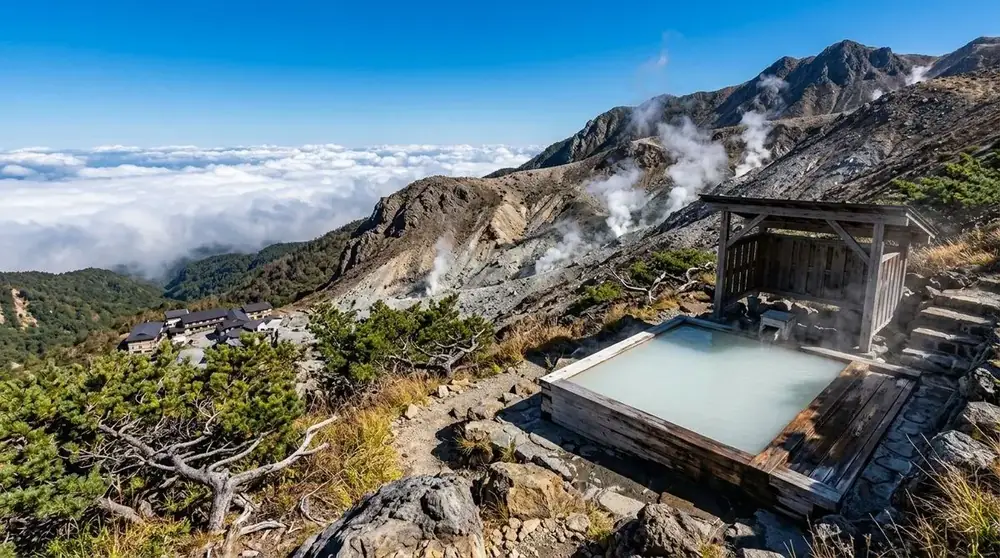
One of Tōhoku's highest hot springs, at 1,126 m on the northern slopes of Mt Kurikoma. Some 6,000 litres a minute flow like a stream; the strongly acidic alum-vitriol water (pH around 2) carries white mineral flakes and tingles on the skin. The famous big open-air Dainichi-yu is an open, rock-backed pool; day use 6:00–21:00 (until 20:00 on Wednesdays), ¥900. The indoor baths and the 'oiran' steam bath run 9:00–16:00. Because of the altitude, the road and the onsen close in winter (early November to early May). About 95 minutes by bus from Ichinoseki Station to the Sukawa Onsen terminus; it is also the Kurikoma trailhead, busiest in autumn colour season (late Sept–early Oct).

Day-trip onsenOnsen ryokanDay use ¥900
Illustrative onsen mood image
Gunma · Manza OnsenTattoos: Ask ahead

Manza Onsen Yunohana Ryokan

At 1,800 m in Manza Onsen — said to have the highest sulphur content in Japan — this is the most rustic of the old spa-cure inns. The wooden bathhouse holds just one indoor tub per gender, but the milky acidic sulphur water is thick and hot enough to leave you drowsy afterwards. It is known for its 'Sarunokoshikake-yu', in which extract of a bracket fungus has long been added to the water. Day use 10:00–16:00, ¥700 for adults, towels sold for ¥250. For onsen fans who want an old-school cure-bath feel amid Manza's big resort hotels. The building has tilted due to ground subsidence, so phone ahead to confirm it is operating. About 40 minutes by bus from Manza-Kazawaguchi Station.

Day-trip onsenOnsen ryokanDay use ¥700
Illustrative onsen mood image
Fukushima · Dake Onsen, NihonmatsuTattoos: Ask ahead

Dake Onsen Dake-no-yu

A public bathhouse (doubling as a self-catering lodge) in the centre of Dake Onsen, about 600 m up the slopes of Mt Adatara. The acidic spring is rare nationally; piped roughly 8 km from the source, the water cools on the way and arrives milky white with a slight tingle. The basement bath is indoor only but 100% free-flowing. Day use 10:00–19:00 (last entry), ¥400 for adults, closed Tuesdays. The sloping resort street keeps traces of the town's playful 'Nikoniko Republic' era and has a free foot bath. About 25 minutes by bus from Nihonmatsu Station; popular with hikers coming down Mt Adatara and skiers.

Day-trip onsenPublic bathhouse (sento)Day use ¥400
Illustrative onsen mood image
Toyama · Murodō, Tateyama (Mikurigaike)Tattoos: Ask ahead

Mikurigaike Onsen (Murodō, Tateyama)

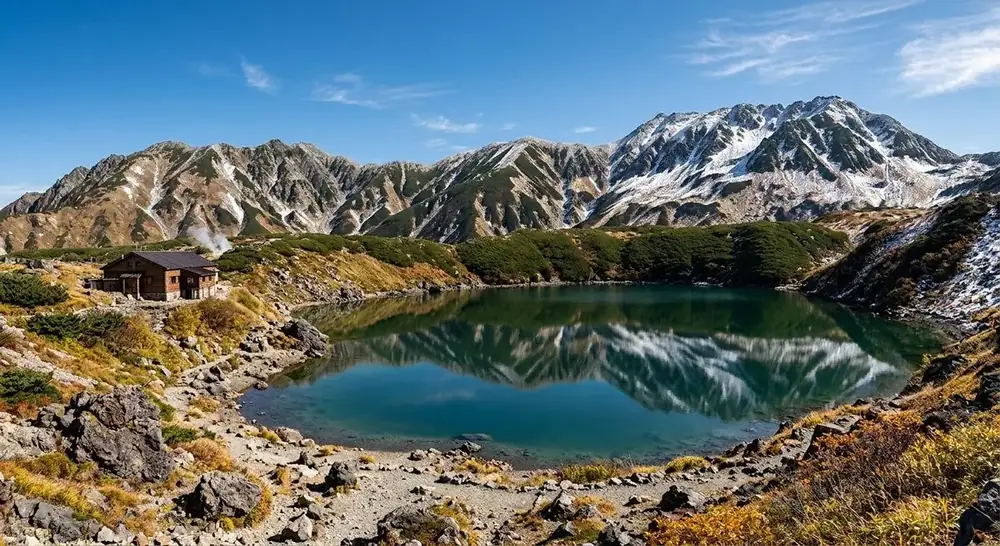
About 12 minutes on foot from Murodō terminal, the hub of the Tateyama-Kurobe Alpine Route, this inn at 2,410 m is Japan's highest hot-spring lodging. Milky acidic sulphur water piped from Jigokudani flows 100% free, and outside the window is another world: the 3,000-metre Tateyama range and the volcanic lake Mikurigaike. The bath is indoor only; day use 09:00–16:00, ¥1,100 for adults. The café's blueberry soft-serve and curry are favourites. Open only during the mountain season, mid-April to late November; closed in winter. Especially busy during the Snow Corridor (Apr–Jun) and autumn colours (late Sep–early Oct). With the altitude and strong water, keep your soak short.

Day-trip onsenOnsen ryokanDay use ¥1,100
Illustrative onsen mood image
Iwate · Matsukawa Onsen, HachimantaiTattoos: Ask ahead

Matsukawa Onsen Kyōunsō

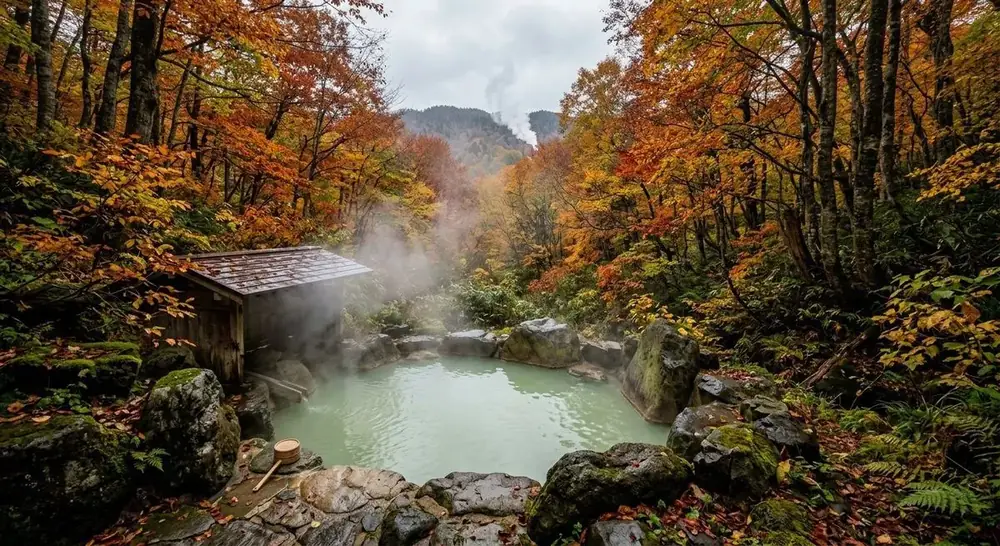
A lone inn of the Japan Association of Secluded Hot Springs, deep in Hachimantai National Park amid beech and oak forest. The open-air bath is an unusual greenish milky white — free-flowing simple hydrogen-sulphide water — with a mixed outdoor bath, a women-only outdoor bath and separate indoor baths; from the rotenburo you can see the steam of Japan's first geothermal power station. Day use 08:30–19:00 (last entry 18:00), ¥700 for adults, or ¥900 with hall rest 10:00–15:00. Open year-round, and the snow-buried outdoor bath in winter is the highlight. About 1 h 50 min by Iwate Kenpoku bus from Morioka Station to the Matsukawa Onsen terminus.

Day-trip onsenOnsen ryokanDay use ¥700
Illustrative onsen mood image
Akita · Goshōgake Onsen, HachimantaiTattoos: Ask ahead

Goshōgake Onsen (day use)

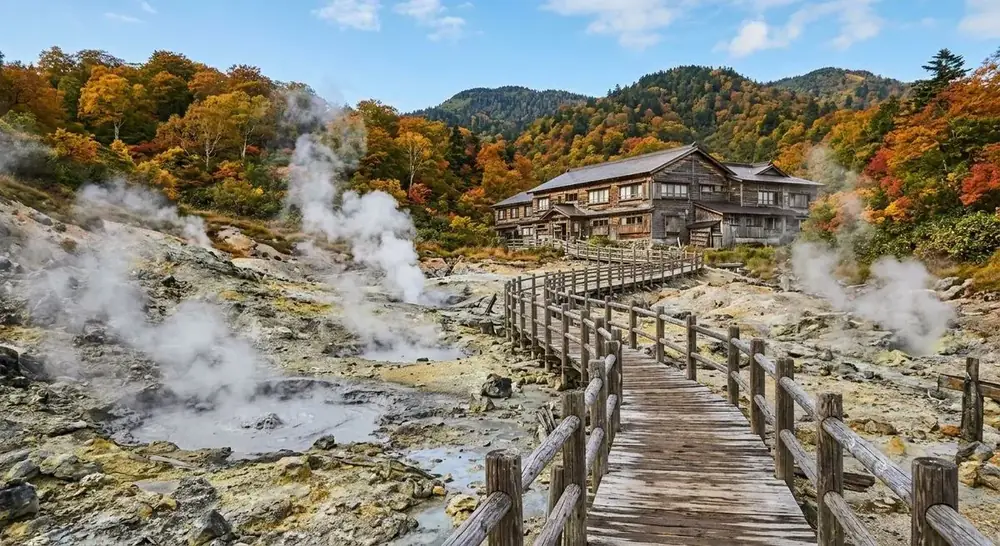
A lone inn in a steaming fumarole field at about 1,000 m on the Akita side of Hachimantai. One of Tōhoku's great cure spas — 'arrive on horseback, leave on your own two feet', as the saying went — it is also famous for its ondol-heated cure wing. The main bathhouse lines up seven kinds of tubs: the signature box steam bath, a mud bath, a cascade bath, a 'volcano bath' and an open-air bath, all fed by milky acidic sulphur water. Day use 10:30–15:00 (last entry 14:00), ¥800 for adults, closed Tuesdays (plus maintenance days). Behind the inn a nature trail loops past mud volcanoes and vents in about 40 minutes. About 1 h 55 min by bus from Tazawako Station on the Hachimantai summit line (usually late Apr–mid-Oct); in winter come by local bus from Kazuno-Hanawa Station or by car.

Day-trip onsenOnsen ryokanDay use ¥800
Illustrative onsen mood image
Niigata · Tsubame Onsen, MyōkōTattoos: Ask ahead

Tsubame Onsen Kogane-no-yu (free open-air bath)

A free, gender-separated open-air bath at the top of Tsubame Onsen, a trailhead village at about 1,100 m on Mt Myōkō. Five minutes up a mountain path from the village you find only a simple plank changing hut and a rock tub, where flakes of 'yunohana' drift in milky sulphur water. Known as a 'triple beauty bath' for combining sulphur, bicarbonate and sulphate, it faces the flanks of Myōkō. Free of charge from sunrise to sunset, open April to November (closed in winter; boots needed while snow lingers); no bathing on Monday and Friday mornings for cleaning. Fifteen minutes further along the gorge is the mixed 'Kawara-no-yu' (Jul–Nov). No soap allowed and minimal changing space, so follow local etiquette. Walk from the terminus of the bus (about 21 min) from Sekiyama Station.

Day-trip onsenPublic bathhouse (sento)Day use Donation / free
Illustrative onsen mood image
Gunma · Manza OnsenTattoos: Ask ahead

Manza Prince Hotel 'Above-the-Clouds' open-air bath

The flagship hotel of Manza Onsen, which at 1,800 m is among the highest hot-spring resorts in Japan reachable by car all year. Perched on a rise, its famous 'Komakusa-no-yu' open-air bath juts from the mountainside so you soak in milky sulphur water while gazing at a sea of clouds, the Jōshin'etsu ranges and, in winter, unbroken snow — literally a bath above the clouds. Besides separate men's and women's sections there is a mixed zone where a wrap towel is worn, making this one of the few Manza inns where mixed bathing is possible. The sulphur content is among Japan's highest and the scent lingers after. Day bathing: adults ¥1,500, children ¥750, reception 11:00–16:00 (bath entry until 15:00), face towel included (bath towel hire ¥300). Weekdays are far quieter than weekends. About 2 hours by Seibu bus from Karuizawa Station, or about 40 minutes by bus from Manza-Kazawaguchi Station; direct ski-slope access in winter.

Day-trip onsenOnsen ryokanDay use ¥1,500
Illustrative onsen mood image
Nagasaki · Unzen OnsenTattoos: Ask ahead

Unzen Yunosato communal bath (Dankyū-buro)

Because drilling is banned inside the national park, every bath in Unzen runs on naturally rising water. This little communal bath on the edge of the spa town, known locally as 'Dankyū-buro', has just one deep oval pool into which the acidic hydrogen-sulphide spring flows fresh; depending on the season and the day it may be milky white or nearly clear. It is hot, 43–44°C, with a faint sulphur scent. Adults ¥200, children ¥100; open 09:00–22:00, closed Tuesdays. No dryers or amenities — soap is sold — but there are lockers, and parking for four cars. After touring the Unzen Hells, a rare chance to taste the local bath for ¥200, a world apart from the big tourist bathhouses.

Day-trip onsenPublic bathhouse (sento)Day use ¥200
Illustrative onsen mood image
Iwate · Matsukawa Onsen, HachimantaiTattoos: Ask ahead

Tōshichi Onsen Saiunsō, Hachimantai (1,400 m)

The highest hot-spring inn in Tōhoku, at 1,400 m near the top of the Hachimantai Aspite Line. It opens only from Golden Week to late October; in winter it is buried in snow. Five mixed open-air baths scattered down the slope (plus a women-only open-air bath and separate indoor baths) are fed by sulphur water bubbling up directly through the ground, milky white, and the trademark is smearing the mud from the bottom on your skin as a 'mud pack'. Below spread Mt Iwate and a sea of forest; at dawn, cloud seas and sunrise — truly a bath above the clouds. Simple sulphur water at temperatures from tepid to hot. Day bathing: adults ¥650, children ¥350, with a long 08:00–18:00 window, busy with hikers back from the Hachimantai summit trail. The open-air baths are mixed, so bathing garments and wrap towels are allowed. About 2 hours by bus from Morioka Station or 40 minutes by car from Matsuo-Hachimantai IC. Mobile reception is poor.

Day-trip onsenOnsen ryokanDay use ¥650
Illustrative onsen mood image
Akita · Mizusawa Onsen, Tazawako plateauTattoos: Ask ahead

Rotenburo Mizusawa Onsen, Tazawako Kōgen

The representative drop-in bath of the Mizusawa spa cluster on the Tazawako plateau, on the road up to Nyūtō Onsen. Less famous than Nyūtō's hidden inns, it nonetheless runs an abundant sulphur-calcium-magnesium-sulphate-chloride spring free-flowing, and its bluish milky water is praised as 'silky and moisturising'. The standout is an open-air bath about a metre deep in which you soak standing up — one of only two such deep outdoor baths in the area. Men and women each have two indoor and two outdoor baths, and the waterfall massage runs all the time. Adults ¥900, primary-school children and under free; open 10:00–20:00 (building closes 21:00), irregular closures (open through Golden Week, Obon and New Year). Lodging is available, and it makes a good alternative when Nyūtō is crowded or a stop after Tazawako ski slopes or a climb of Mt Akita-Komagatake. About 25 minutes by Ugo Kōtsū bus for Nyūtō Onsen from JR Tazawako Station to 'Mizusawa Onsenkyō', right by the stop; 60 parking spaces.

Day-trip onsenOnsen ryokanDay use ¥900