Tochigi · Nikkō (town & Kiyotaki)
Nikkō Wanoshiro Onsen Yashio-no-yu
日光和の代温泉 やしおの湯
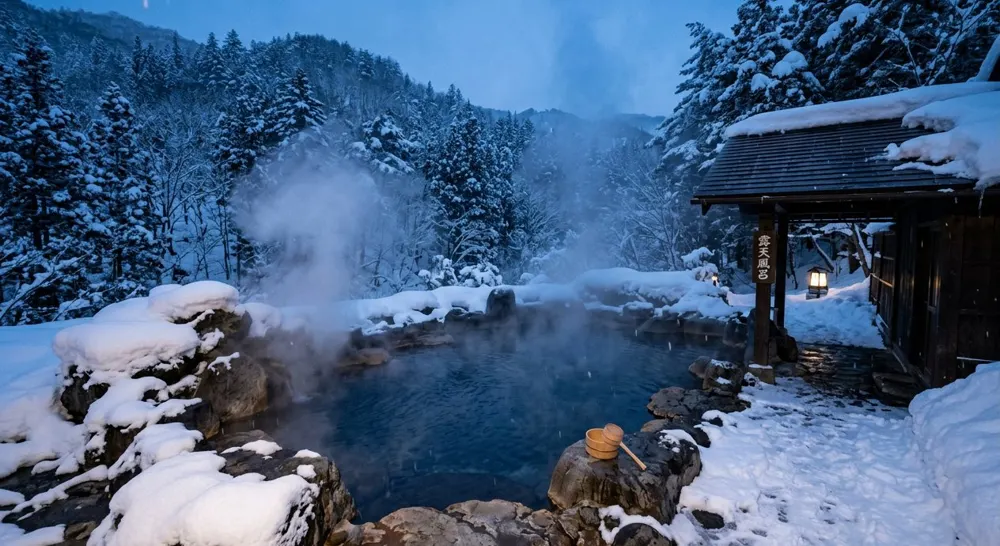
A city-run day spa in the Kiyotaki valley, between Nikkō's World Heritage shrines and the Irohazaka switchbacks. The all-granite main bath has a sauna and jacuzzi, and the garden-style rock rotenburo looks out to the Nikkō mountains. The alkaline simple spring is clear and silky — a 'beauty bath'. Open 10:00–21:00 (last entry 20:30), closed Thursdays (next day if a holiday) and over New Year. Adults from outside the city pay ¥1,000 (¥500 for residents). The canteen serves soba, udon and other light meals. About 20 minutes by bus from JR/Tōbu Nikkō Station to the 'Yashio-no-yu' stop — a popular finish after Tōshōgū or a trip to Lake Chūzenji and Kegon Falls.
- Price (adult)
- ¥1,000
- Hours
- 10:00–21:00 (last entry 20:30)
- Closed
- Thursdays (next day if holiday), 30 Dec–1 Jan, occasional closures
- Access
- About 20 min by Tōbu bus (Okuhosoo line via Yashio-no-yu) from JR/Tōbu Nikkō Station to 'Yashio-no-yu'; about 5 min by car from Kiyotaki IC
- Water type
- Alkaline simple
- Tattoos
- Ask ahead
- Admission
- Non-residents of Nikko: adults and 65+ ¥1,000, elementary ¥700, under 4 free (raised in 2024–25 from ¥700). Residents: adults ¥500, 65+ ¥300, elementary ¥250. Tickets from a machine, towels from a vending machine, shampoo provided, lockers free (¥100 refundable). Main bath (warm and hot tubs), stone-built rotenburo, sauna and plunge. Restaurant (soba, set meals), tatami rest room, massage chairs. A plain municipal facility
- Baths
- A hot-spring recreation centre run by the city of Nikko. About 5 km from Nikko Toshogu, a single-storey building on the Daiya River in the quiet Kiyotaki district at the foot of the Irohazaka climb. A main bath lit through large windows and a stone-built rotenburo looking out to the Nikko ridges, plus a sauna. A 'locals' bath' used more by residents and hikers than tourists. One of the most accessible day facilities among Nikko town's hot springs (the other being the municipal baths on the Kinugawa/Kawaji side). An easy stop on the way back from Lake Chuzenji and Kegon Falls
- Spring water
- Nikko Wanoshiro Onsen, an alkaline simple spring (hypotonic, alkaline, high-temperature, around pH 9 and about 45°C at source), heated, recirculated and disinfected. Colourless and odourless with a 'torori' silkiness that softens the skin — a beauty bath. Indicated for neuralgia, muscle and joint pain, poor circulation, fatigue and skin care. One of the sources closest to the town centre among the Nikko mountain springs
- Access & parking
- From JR/Tobu Nikko Station, Tobu bus toward Chuzenji Onsen or Yumoto Onsen about 15 min to 'Kiyotaki 1-chome' then 10 min on foot (or alight at 'Yashio-no-yu Iriguchi' — check the route), or 15 min by taxi (about ¥2,500). By car 3 min from Kiyotaki IC on the Nikko-Utsunomiya Road, about 2 h from Tokyo. Free parking for about 60. Nikko Toshogu 10 min, Irohazaka and Lake Chuzenji 25 min by car
- Phone
- 0288-53-6611
- Official site
- city.nikko.lg.jp ↗
- Open in Google Maps
- Google Maps ↗
Essentials
Find a stay on Trip.com
Search and book accommodation across Japan on Trip.com. Day-use bathing needs no booking.
Opens partner booking site (affiliate)
Why go
- Rock rotenburo facing the Nikkō peaks
- Silky alkaline 'beauty bath'
- After Tōshōgū or Lake Chūzenji
Five kilometres from Toshogu: the municipal onsen at the mountain's foot where Nikko residents bathe
Nikko Wanoshiro Onsen Yashio-no-yu is a hot-spring recreation centre run by the city of Nikko, Tochigi, about 5 km from the World Heritage Nikko Toshogu in the Kiyotaki district just before the Irohazaka climb. Day-use hot springs are surprisingly scarce around Nikko town, and this is the nearest place for travellers to wash off after the shrines and temples and a trip to Lake Chuzenji and Kegon Falls before heading home. Named after the yashio azalea, Nikko's city flower that colours the spring hills, the building is a plain single storey, yet the main bath is lit through large windows, the stone-built rotenburo looks out to the ridges of the Nikko range, and there are a sauna and plunge, a restaurant and a tatami rest room. The alkaline simple water has a 'torori' silkiness that earns the name 'beauty bath'; residents pay ¥500 (¥300 for 65+), but non-residents now pay ¥1,000 after the 2024–25 revision, making the value merely average. Even so it is cheaper than day bathing at tourist hotels (¥1,500–2,000), and the unpretentious mix of locals and hikers back from Mt Nantai and Oku-Nikko is its charm. Closed Thursdays, open 10:00–21:00; 15 minutes by bus plus a 10-minute walk from Nikko Station, or 3 minutes by car from Kiyotaki IC — especially handy for rental-car travellers.
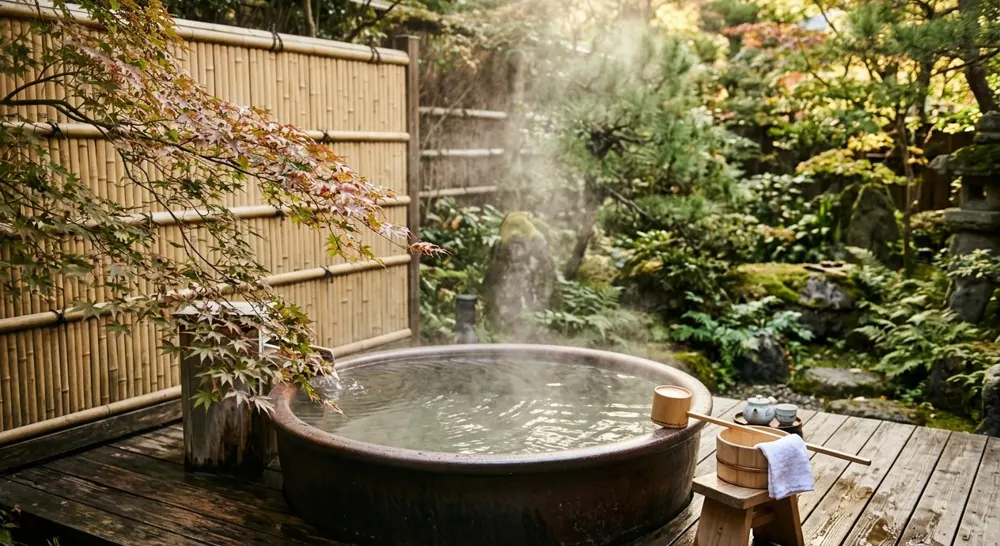
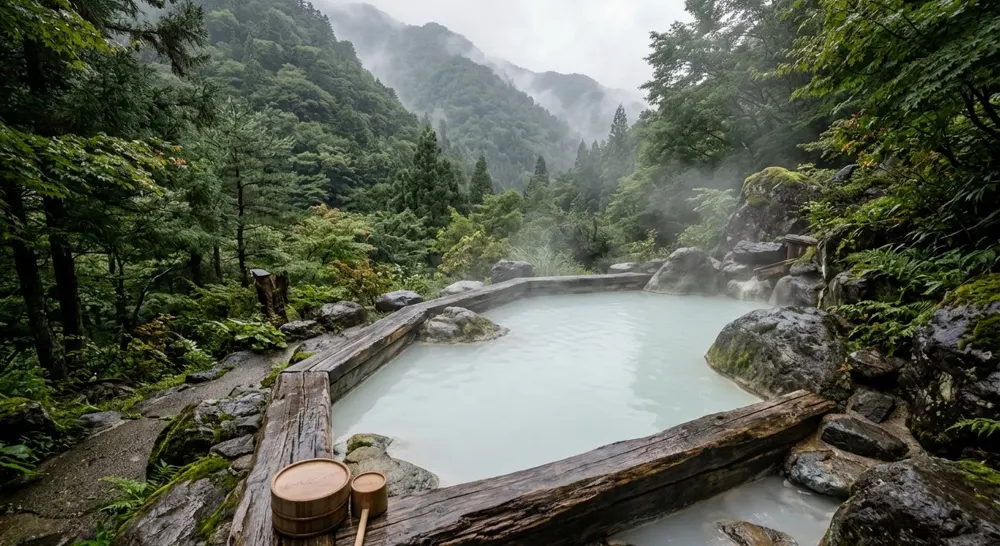
A glass-walled main bath and stone rotenburo — the hikers' post-descent soak
From the car park enter the single-storey building, buy a ticket at the machine (¥1,000 for non-residents) and hand it in at reception. If you have no towel, buy one from the vending machine; shampoo and body soap are provided. The changing room is plain, as befits a public facility, with ¥100 refundable lockers, and one wall of the bathroom is a large window that floods it with daylight. Indoors are two tubs of differing temperature (a milder 40°C and a hotter 42–43°C), a plunge and a sauna; the alkaline slickness is unmistakable, your skin feeling lotioned when you stroke it. The rotenburo is a simple stone-built pool, but the Nikko mountains are in view — yashio azaleas in spring, maples in autumn, snowy peaks and crisp air in winter that make the warmth of the bath all the sweeter. The facilities are not flashy like a super-sento and wash stations are limited, so there may be a wait at busy times. Weekday afternoons bring local seniors; weekend afternoons bring hikers down from Mt Nantai, Mt Shirane and Oku-Nikko, so 15:00–18:00 on weekends is busiest, and after 7 p.m. is quiet if you come after sightseeing. Afterwards rest in the tatami room, and the restaurant serves Nikko's famous yuba soba and set meals, though it may close early, so check. Because resident and non-resident prices differ widely, being asked where you live at reception is normal procedure. Tattoo rules are on the strict side for a public facility, so follow the posted notice.
Practical details and a Nikko sightseeing route
Hours are 10:00–21:00 (last entry 20:30), closed Thursdays (next day if a holiday), 30 December to 1 January, and occasional extra days. Non-residents: adults and 65+ ¥1,000, elementary ¥700, under 4 free (residents ¥500/¥300/¥250); towels sold, parking free. Access is 15 minutes by Tobu bus from Nikko Station plus a 10-minute walk (the stop differs by route, so check), 15 minutes by taxi, or 3 minutes by car from Kiyotaki IC. Suggested routes: (1) the classic Nikko day — Toshogu, Rinno-ji and Futarasan Shrine (the World Heritage 'two shrines and a temple') in the morning, a yuba lunch, up Irohazaka in the afternoon to Kegon Falls and Lake Chuzenji (heavy jams in mid-to-late October foliage), back down for a bath at Yashio-no-yu, then the limited express from Nikko Station to Tokyo; (2) with a hike — a post-descent soak after Mt Nantai (open May–October, 6–7 hours return) or the Senjogahara marsh walk in Oku-Nikko; (3) winter — warming up after skiing at Yumoto Onsen or a snowy Lake Chuzenji. Nikko also offers the milky sulphur springs of Yumoto Onsen in Oku-Nikko (many inns open for day bathing) and the municipal baths of Kinugawa and Kawaji, so two baths in a day lets you enjoy the 'difference in waters'. On autumn-foliage weekends Irohazaka jams for hours, so start early and bathe in the evening; given the ¥1,000 non-resident fee, set your expectations at 'a clean municipal bath with tourist-friendly access' and you will be satisfied.
Before you go
- No official tattoo policy is published — ask at reception.
- Last entry is 30–60 minutes before closing.
Features
Sauna & wellness
Mood & scenery
Price
Who with
Amenities
✔ Verified operating: 2026-09 Operating status and rates cross-checked against the official site and onsen guides (full source notes in Japanese on the JA page)
Prices and hours change. Check official sources before visiting.
More in this area

Moto-yu Shika-no-yu
The 1,300-year-old birthplace of Nasu Onsen. Inside the wooden bathhouse, tubs are graded from 41 to 48°C, all fed with milky, strongly acidic sulfur water. No showers, no soap — start with the traditional head-dousing ritual.

Kojika-no-yu
A day-use facility on the same source as Shika-no-yu, open every day until 9 pm with an open-air bath and private rooms. Ideal for families or anyone daunted by Shika-no-yu's rituals — the milky water is identical.

Kinugawa Onsen Niouson Plaza (day bathing)
A small riverside hotel on the south side of Kinugawa Onsen, five minutes from Tobu World Square Station. While the big hotels stop day bathing around 15:00, this one welcomes walk-ins 9:00–21:00 for ¥700. Its own alkaline sulfur spring (43.6 °C) flows 100% free into a quirky set of baths: a rotenburo made from an actual Kinugawa river-cruise boat, a rock rotenburo, indoor baths and a swimsuit mixed bath. The slightly cool, silky water is highly rated by onsen fans.