Okayama · Kurashiki & Kojima (Yuga Onsen)
Kurashiki Yuga Onsen Hotel Santōka
倉敷由加温泉 ホテル山桃花
A white-walled onsen hotel in the hills between Kojima, at the foot of the Great Seto Bridge, and the pilgrim path up Mt Yuga. Yuga Onsen has long refreshed worshippers at the Yuga Daigongen shrine-temple; the spacious bath hall lines up a source tub, waterfall shower, jet bath and bubble bath, with a garden that flowers through the seasons beyond the windows. Day use 11:00–15:00 (last entry 14:30), ¥1,980 including bath and face towel rental. The lunch-plus-bath set (¥3,960) is popular, with a third-floor rest room. 30 minutes by car from Kurashiki's Bikan quarter; combine with Kojima Jeans Street or the bridge. Open daily.
- Price (adult)
- ¥1,870
- Hours
- 11:00–15:00 (last entry 14:30)
- Closed
- Open daily (maintenance closures)
- Access
- 15 min by car from JR Kojima Station (or about 20 min by Shimoden bus for Yugasan to Yuga Onsen); 15 min by car from Kojima IC
- Water type
- Radon spring
- Tattoos
- Ask ahead
- Admission
- Day bathing adults ¥1,870, elementary ¥880, children 2–6 ¥550, plus ¥150 bath tax (junior high and up). Bath and face towels included (come empty-handed), shampoo and amenities provided. Bath-plus-lunch set adults ¥3,630, elementary ¥1,760 (popular; booking advised). 3rd-floor rest room available. Cash and cards. Pricey, but towels are included and it is quiet
- Baths
- A white-walled onsen hotel (26 rooms, a 'hideaway for grown-ups') beside the approach to Rendai-ji temple and Yuga Shrine, 1,200 years old, on Mt Yuga, reached by a mountain road from the Kojima district by the Seto Ohashi Bridge. Gender-separated main baths overlooking the garden with a source tub, cascade bath, jets and bubble bath; no sauna or outdoor bath (views of a garden in seasonal bloom). A quiet mountain atmosphere and kaiseki dinners of Seto Inland Sea seafood. Mt Yuga is the sacred site of the 'double pilgrimage' custom paired with Konpira (Kotohira)
- Spring water
- Yuga Onsen, a simple-spring type with a cool source heated for use (check on-site notices for the full analysis); a source tub sits beside heated tubs, with recirculation and disinfection. Colourless, odourless, soft and mild — suited to seniors and families. Indicated for neuralgia, muscle pain, poor circulation and fatigue. Yuga Daigongen is said to have drawn pilgrims since ancient times as a place where miraculous water wells up
- Access & parking
- 15 min by car (taxi) from Kojima Station on the JR Seto-Ohashi Line, 30 min from Kurashiki Station, 40 min from Okayama city. 10 min from Kojima IC or 15 min from Mizushima IC on the Seto-Chuo Expressway. Free parking. Pick-up for overnight guests from Kojima (15:15, 16:15) and Kurashiki (16:30) stations by reservation. Shimoden bus to 'Yugasan' then 5 min on foot (very infrequent)
- Phone
- 086-477-5588
- Official site
- santo-ka.com ↗
- Open in Google Maps
- Google Maps ↗
Essentials
Find a stay on Trip.com
Search and book accommodation across Japan on Trip.com. Day-use bathing needs no booking.
Opens partner booking site (affiliate)
Why go
- Historic spring tied to Mt Yuga pilgrimage
- Garden-view bath hall, ¥1,980 incl. towels
- Between Kurashiki, Kojima and the bridge
A grown-ups' hideaway on the Yuga pilgrimage path — lunch and a bath with a garden view
Kurashiki Yuga Onsen Hotel Santoka is a white-walled hot-spring hotel beside the pilgrimage path on Mt Yuga, fifteen minutes up a mountain road from the Kojima district beneath the Seto Ohashi Bridge in Kurashiki, Okayama. Mt Yuga is a 1,200-year-old sacred site of both Buddhism and Shinto, home to Rendai-ji, said to have been founded by Gyoki in 733, and Yuga Shrine; in the Edo period it flourished through the 'double pilgrimage' custom of visiting both here and Konpira across the sea in Shikoku, and it remains famous for prayers against misfortune. With just 26 rooms the hotel styles itself a 'hideaway for grown-ups', admits non-guests for day bathing from 11:00 to 15:00, and its set plans pairing a Seto Inland Sea seafood lunch with a bath are popular. The main bath is an indoor hall overlooking a garden in seasonal bloom, with a source tub, cascade bath, jets and bubble bath; there is no rotenburo or sauna, but in their place the hush of the mountains and the calm of a place rarely visited by tour groups. At ¥1,870 plus bath tax it is dear for a day bath, but towels are included so you can come empty-handed, and sitting between the Kurashiki Bikan quarter, Kojima Jeans Street and Mt Washu with its bridge views, it makes a fine lunch-and-onsen pause on a drive.
An indoor bath over the garden, and the lunch set
Park on the pilgrimage path, enter the hotel lobby and pay for the bath (or the lunch set) at the front desk to receive bath and face towels. The main bath lies at the back of the ground floor; the changing room is quiet in the manner of an inn and well supplied with amenities. Through the big windows a manicured Japanese garden marks the seasons — cherry and azalea in spring, fresh green in summer, maples in autumn, camellia in winter. The tubs comprise a small 'source tub' of raw, tepid spring water, a heated main pool, a cascade bath that pounds your shoulders, and jet and bubble baths; the water is clear, odourless and soft, comfortable for the elderly and children. With no rotenburo or sauna it disappoints anyone expecting 'facilities', but on weekdays it is nearly private, and the value lies in soaking unhurriedly while gazing at the garden. Most popular is the bath-plus-lunch set (¥3,630): Seto Inland Sea sashimi and a small kaiseki-style lunch in the restaurant, a rest in the 3rd-floor lounge, then the bath — a complete half day, best reserved. Day bathing is a short 11:00–15:00 window, so keep to it; after 15:00 the baths are for guests only. Afterwards walk five minutes to Rendai-ji and Yuga Shrine (prayers against misfortune, a giant Bishamonten statue) and stop at the ankoro-mochi sweet shops along the path.
Practical details and a Kurashiki–Kojima drive
Day bathing runs 11:00–15:00 (last entry 14:30) with no fixed closing day (occasional maintenance closures); adults ¥1,870, elementary ¥880, infants ¥550, plus ¥150 bath tax, towels included. Booking is advised for the bath-plus-lunch set (adults ¥3,630). Access is 15 minutes by car from JR Kojima Station (taxi about ¥2,500), 30 from Kurashiki Station, or 10 from Kojima IC on the Seto-Chuo Expressway, with free parking; buses are so infrequent that a car or taxi is the realistic choice. A suggested day: the Kurashiki Bikan quarter in the morning (Ohara Museum of Art, white-walled storehouses, boat rides on the Kurashiki river), 30 minutes by car to Mt Yuga for Rendai-ji and Yuga Shrine, lunch and a bath at Santoka (11:00–15:00), Kojima Jeans Street in the afternoon (birthplace of Japanese denim, select shops), sunset over the Seto Ohashi Bridge and islands from the Mt Washu lookout, and a night in Kurashiki or Okayama. Kotohira-gu (Konpira) in Shikoku is an hour's drive across the bridge, so a two-day trip recreating the Edo-era 'double pilgrimage' has its own charm. Mt Yuga is crowded with worshippers seeking protection in January and February, and lovely in cherry and maple seasons. This is a grown-up place for garden, quiet and lunch rather than facilities; if you want a rotenburo or sauna, Kurashiki city's other day-spas suit better.
Before you go
- No official tattoo policy is published — ask at reception.
- Ryokan day-use hours are limited and may be suspended in peak season — phone the same morning.
- Last entry is 30–60 minutes before closing.
Features
Baths
Mood & scenery
Price
Who with
Amenities
✔ Verified operating: 2026-09 Operating status and rates cross-checked against the official site and onsen guides (full source notes in Japanese on the JA page)
Prices and hours change. Check official sources before visiting.
More in this area

Yubara Onsen Sunayu
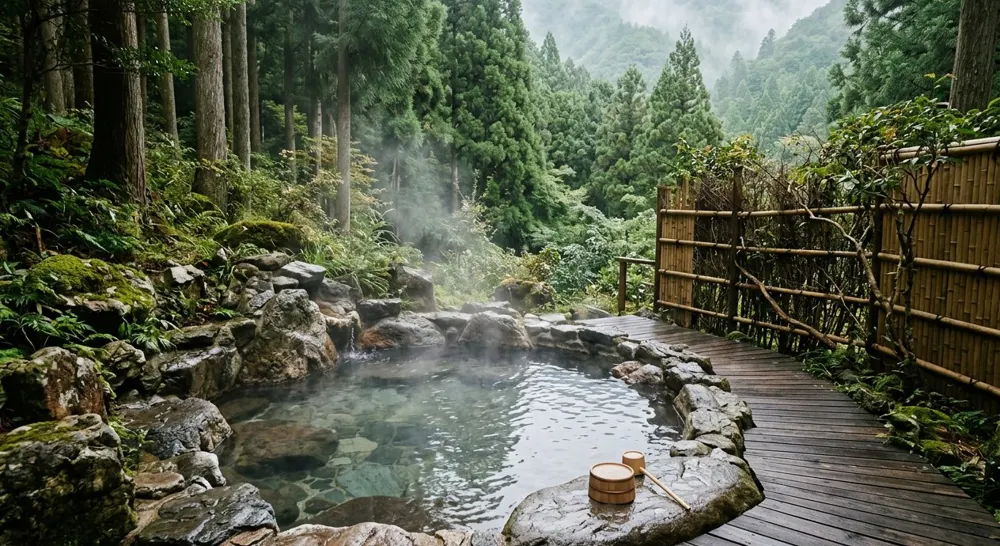
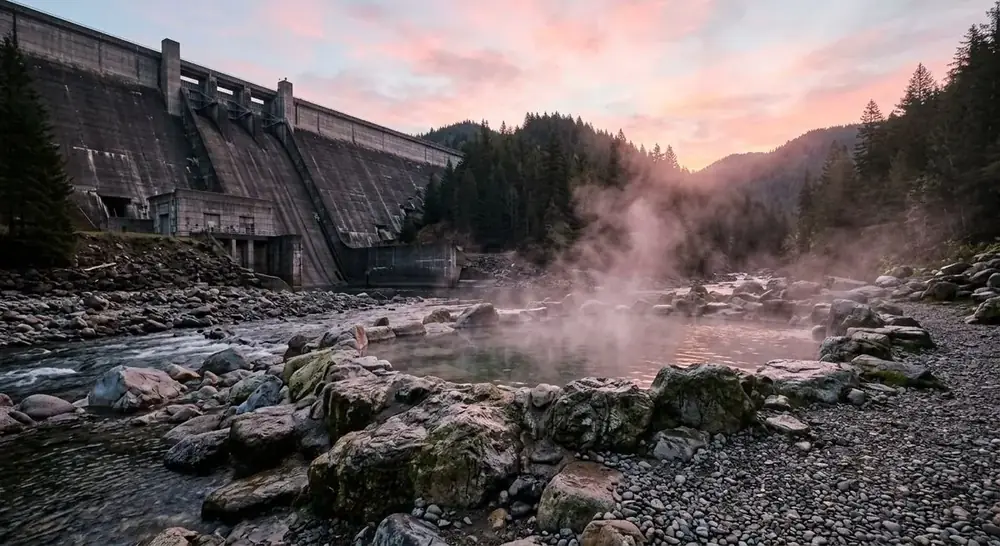
A natural open-air bath on the Asahi River gravel bed right below Yubara Dam, where water bubbles up through the riverbed itself — ranked the 'western grand champion' of Japan's rotenburo. Three pools at different temperatures; mixed, free and open 24 hours. Only a simple changing hut, so women are advised to wear a bathing garment (sold and rented in town). Closed Wednesday mornings for cleaning. Photography strictly forbidden.

Yunogo Onsen Sagi Onsen-kan
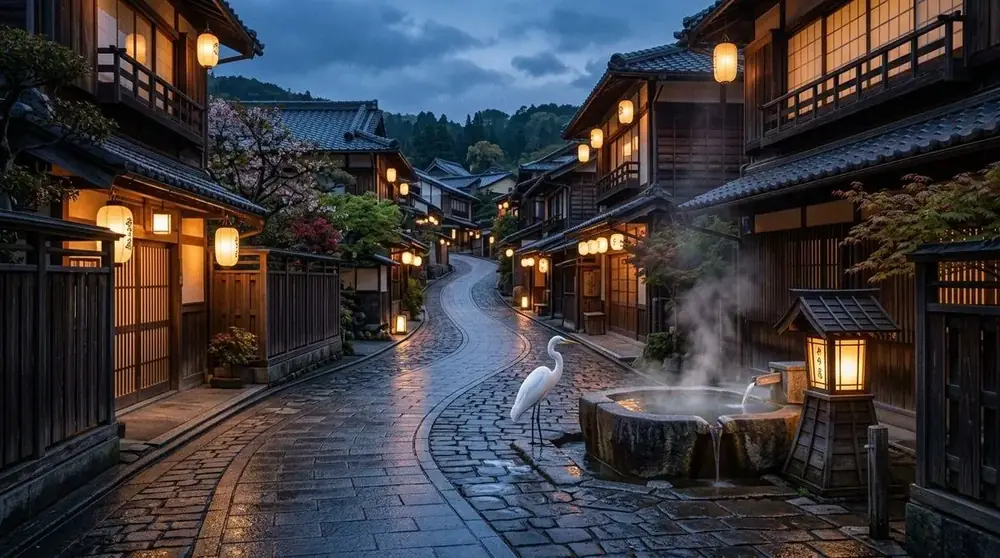
The source bath of Yunogo Onsen, where legend says the monk Ennin found an egret healing its wounds some 1,200 years ago. One of the three famed Mimasaka hot springs, an hour by car from Okayama. The town-run bathhouse charges ¥960 for indoor and open-air baths across two bathing wings linked by a moving walkway, alternating daily. Open 8:00–21:00; the 'all-day rest' plan lets you come and go until closing. Bring your own food.

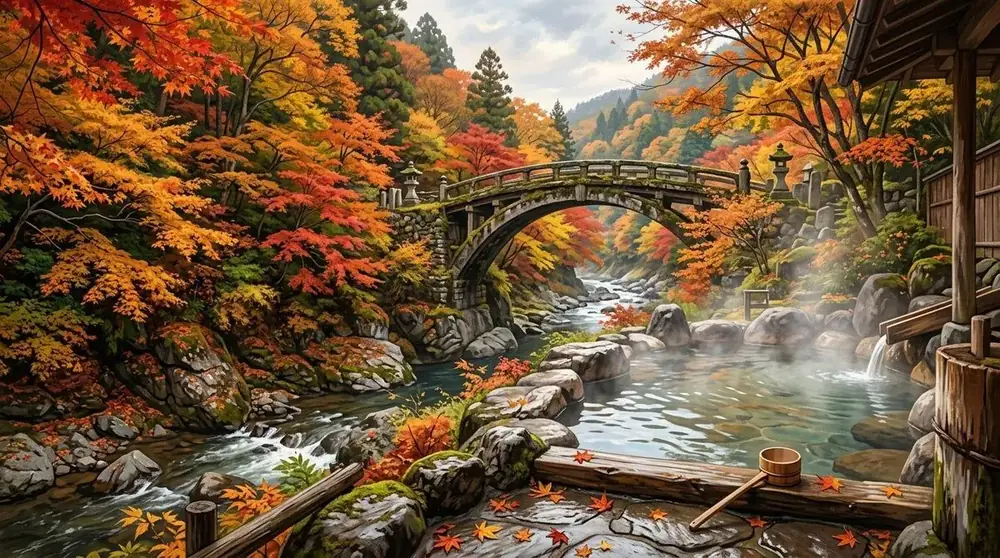
Okutsu Onsen Hanabijin-no-Sato
A town-run day spa at Okutsu Onsen, one of the three Mimasaka hot springs and famous for the autumn colours of Okutsu Gorge. The airy, high-ceilinged main bath holds pH 9-plus alkaline 'beauty water', with a rotenburo, family baths and sauna. ¥880, 10:00–19:00, closed Thursdays. The gorge trail is within walking distance, so it fills up after leaf-viewing in autumn. Forty minutes by car from Tsuyama.