Kyoto · Amanohashidate Onsen
Amanohashidate Onsen Chie-no-yu
天橋立温泉 智恵の湯
The only public bath in Miyazu, right next to Amanohashidate Station on the Kyoto Tango Railway — the gateway to one of Japan's Three Views. Named after the Monju bodhisattva of wisdom, it looks like a small ryokan. Magnesium-rich chloride water fills an indoor bath and hand-and-foot bath, with a free footbath outside. ¥800, 12:00–21:00. Perfect for a rinse while waiting for your train after walking the sandbar.
- Price (adult)
- ¥800
- Hours
- 12:00–21:00 (last entry 20:30)
- Closed
- Wed & Thu
- Access
- Adjacent to Amanohashidate Station (1 min); about 2 h from Kyoto by Ltd. Exp. Hashidate
- Water type
- Simple spring
- Tattoos
- Ask ahead
- Admission
- Adults (junior high and up) ¥800, elementary ¥400, one infant free per adult (formerly ¥700/¥350). Ticket machine. Shampoo and body soap provided, towels sold. Lockers ¥100 refundable. The foot bath in front of the building is free (whole family welcome). Discount coupons sometimes available at the tourist office or inns
- Baths
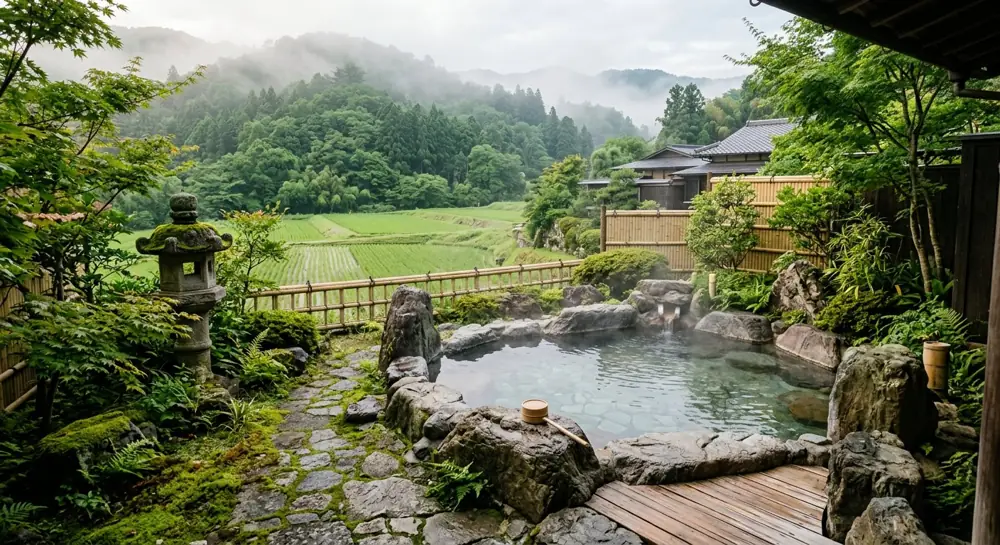
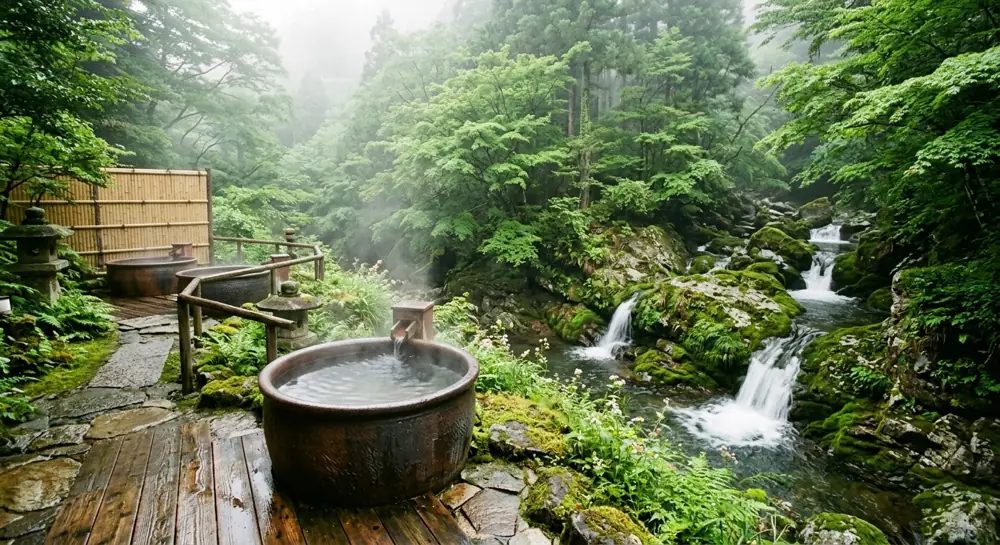
- Miyazu city's only public bathhouse, right beside Amanohashidate Station on the Kyoto Tango Railway along the tracks (opened in the 2000s). A Momoyama-style storehouse building of white walls and black tiles, with an atmospheric dimly lit bathroom. Gender-separated indoor pools (about 10 bathers), a small outdoor 'pot bath', an 'arm bath' for hands and forearms and a seated foot bath. No sauna. Tatami rest room upstairs. Free foot bath outside and a storage tank by the tracks. A simple bath for quiet soaking to the sound of wind in the pines
- Spring water
- Source 'Amanohashidate Onsen'; the analysis sheet gives a sodium bicarbonate spring (hypotonic, neutral) at 38.9°C, pH 7.22, 87 L/min, with radon 13.2×10⁻¹⁰ Ci/kg (weakly radioactive). Signage also calls it a 'sodium chloride spring'. Pale yellow and faintly cloudy with a slight earthy smell, no taste though sometimes a hint of salt. Heated and recirculated. Indicated for joint pain, poor circulation, cuts, gynaecological complaints and fatigue. Amanohashidate Onsen was created by a 1,500 m bore in 1999 and supplies the hotels and inns around the station
- Access & parking
- No dedicated parking (use the paid lots around the station; often full in peak season). 1 min on foot (29 m) to the right of the exit of Amanohashidate Station on the Kyoto Tango Railway. About 2 h from Kyoto Station on the 'Hashidate' limited express, about 2.5 h from Osaka on the 'Kounotori' plus a transfer, 2–2.5 h by express bus from Kyoto or Osaka. 10 min by car from Miyazu-Amanohashidate IC on the Kyoto Jukan Expressway. 5 min on foot to Chion-ji (Monju) and the Amanohashidate swing bridge, 5 min to the View Land chairlift
- Phone
- 0772-22-1515
- Official site
- amanohashidate.jp ↗
- Open in Google Maps
- Google Maps ↗
Essentials
Find a stay on Trip.com
Search and book accommodation across Japan on Trip.com. Day-use bathing needs no booking.
Opens partner booking site (affiliate)
Why go
- Next to Amanohashidate Station
- Miyazu's only public bath
- Free footbath outside
By the station at Amanohashidate, one of Japan's three great views — Miyazu's only public bath
Amanohashidate Onsen Chie-no-yu is Miyazu city's only dedicated day-bathhouse, standing right beside Amanohashidate Station on the Kyoto Tango Railway — the gateway to Amanohashidate, counted with Matsushima and Miyajima among 'Japan's three great views' in Kyoto prefecture. Amanohashidate is a 3.6 km sandbar lined with some 5,000 pines across Miyazu Bay, famous for the 'matanozoki' view taken bending over and looking between your legs; at its southern Monju end stands Chion-ji, the temple behind the proverb 'three heads together have the wisdom of Monju', from which the bath's name 'chie' (wisdom) derives. Amanohashidate Onsen is a relatively young spring drilled near the station in 1999 and piped to the hotels and inns, but Chie-no-yu is the only place non-residents can bathe in it. The white-walled building in Momoyama storehouse style holds gender-separated indoor pools, a small outdoor pot bath, an 'arm bath' for forearms only and a free foot bath; open 12:00 to 21:00 (closed Wednesdays and Thursdays) for ¥800, it is just right for a soak before your train.
Pale-yellow water, an arm bath and the sound of wind in the pines
Buy a ticket from the machine and you step into a changing room and bathroom with the high ceiling and dim lighting of a converted storehouse — small but atmospheric. The indoor bath is a single tiled pool for ten or so; the water is pale yellow and faintly cloudy with a whiff of earth up close, and on some days a touch of salt. The 38.9°C source is heated to 41–42°C, and thanks to chloride, bicarbonate and a trace of radon it keeps you warm long after — a 'warming bath'. Beyond the glass door sits a small single-person pot bath where you soak to the sound of wind through the pines and trains arriving at the station; braving the fierce winter winds off the Sea of Japan has its own appeal. The curiosity is the 'arm bath', a seated tub for hands and forearms only on the principle that warming the extremities warms the whole body, set beside a foot bath you can use fully clothed. There is no sauna or restaurant, but a tatami rest room upstairs. With few wash stations and one tub it can get crowded just after trains arrive and from 18:00 to 20:00, so aim for the noon opening or before 20:00 after coming down from View Land at dusk.
Practical details and a day at Amanohashidate
Hours are 12:00–21:00 (last entry around 20:30), closed Wednesdays and Thursdays. Adults ¥800, elementary ¥400, one infant free per adult; shampoo is provided and towels are sold. With no car park of its own, drivers use the paid lots around the station (often full in peak season); by train it is about 2 hours from Kyoto on the 'Hashidate' limited express, then 1 minute to the right of the station exit. The classic day: Chion-ji and the swing bridge in the Monju district in the morning, then walk the 3.6 km sandbar or rent a bicycle (20 min) to Kasamatsu Park on the northern Fuchu side (cable car or lift) for the famous upside-down 'matanozoki' view, Motoise Kono Shrine, back to Monju by sightseeing boat, up to Amanohashidate View Land on the south side (chairlift, 5 min on foot) for the 'flying dragon' view at sunset, a bath at Chie-no-yu, and your train or inn from the station. Winter (November–March) brings snow-crab cuisine in Miyazu and Ine, spring cherry blossom on Miyazu Bay and summer the beach inside the sandbar, and the Ine boathouses 30 minutes away complete a Tango day. As a bathhouse right by the station, it is the simplest way to add 'and an onsen' to seeing Amanohashidate.
Before you go
- No official tattoo policy is published — ask at reception.
- Payment is usually by ticket machine in cash — bring coins.
- Last entry is 30–60 minutes before closing.
Features
Baths
Convenience
Price
Mood & scenery
Amenities
✔ Verified operating: 2026-09 Operating status and rates cross-checked against the official site and onsen guides (full source notes in Japanese on the JA page)
Prices and hours change. Check official sources before visiting.
More in this area

Kyoto Arashiyama Onsen Fufu-no-yu
Four minutes from Hankyu Arashiyama Station and a short walk from Togetsukyo Bridge, Arashiyama's only dedicated day-use onsen. Mildly alkaline simple spring water in indoor, open-air, silky and sauna baths. Easy to slot between sights, with towel rental so you can come empty-handed. The changing room is small, so avoid peak hours. ¥1,200 weekdays, ¥1,400 weekends and holidays.

Sagano Onsen Tenzan-no-yu
Four minutes from Arisugawa Station on the Randen tram near Arashiyama, a day spa in Kyoto-style timber architecture. Chloride water from 1,200 m below fills rock rotenburo, pot baths and a spacious indoor pool; the men's side has a 'theater' sauna, the women's two saunas. Open until midnight, so it works after a day in Arashiyama. Restaurant on site. ¥1,200 weekdays; closed the third Monday.

Kurama Onsen
A mountain hot spring in the temple-gate village of Kurama, about 30 minutes from central Kyoto on the Eizan railway, home of the tengu legends. The open-air Hōroku-yu sits in a cedar grove facing the Kitayama hills and becomes a snow-viewing bath in winter. The simple hydrogen-sulphide water carries a faint whiff of sulphur that suits the mountain air. The open-air-only course is ¥1,500 weekdays / ¥1,600 weekends (towels extra); the full day course with indoor bath, open-air bath, sauna, lounge, towels and robe is around ¥2,600 on weekdays. Open 10:00–21:00 every day, no reservation. Ten minutes on foot from Kurama Station or by free shuttle. The classic way to end a visit to Kurama-dera or the hike over to Kibune — for anyone who wants a genuine onsen in Kyoto.